111 Herculis
A suspected astrometric binary in Hercules, visible to the naked eye.

111 Herculis, a suspected astrometric binary, lies 92 light-years away in the northern constellation Hercules. Naked-eye observers see it as a faint white point of light, with an apparent visual magnitude of 4.34. The system is moving toward Earth at a heliocentric radial velocity of −45 km/s, and is projected to approach within 11.26 parsecs in about 537,000 years.
The visible component’s spectral classification varies among sources. Garrison (1989) assigned it A3Va+, indicating an A-type main-sequence star. Other authors have classified it as A5III (an A-type giant) or A3IV (an A-type subgiant). Evolutionary models, however, suggest it remains on the main sequence.
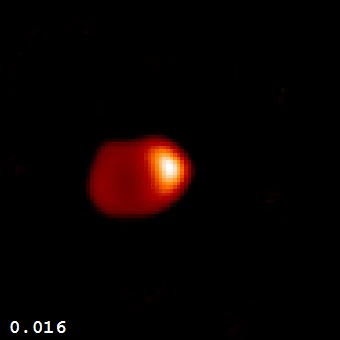
From interferometry, the primary’s angular diameter, combined with its distance, yields a physical radius roughly 1.6 times that of the Sun. The star is estimated to be 559 million years old, with a mass 2.40 times solar, and a projected rotational velocity of 71 km/s. Its photosphere radiates 13 times the Sun’s luminosity at an effective temperature of 8,873 K.
- Apparent visual magnitude
- 4.34
- Distance
- 92 light years
- Spectral classification
- A3Va+ (Garrison 1989); also given as A5III and A3IV
- Mass
- 2.40 times the Sun's mass
- Radius
- 1.6 times the Sun's radius
- Luminosity
- 13 times the Sun's luminosity
- Effective temperature
- 8,873 K
Lore & Background
The primary component of 111 Herculis has a spectral classification of A3Va+ according to Garrison (1989), indicating an A-type main sequence star. However, other authors have published classes of A5III, matching an A-type giant star, and A3IV, suggesting it is instead a subgiant star. Models of the star's evolution suggest that it is still on the main sequence. The system is moving nearer to the Earth with a heliocentric radial velocity of −45 km/s, and may come as close as 11.26 pc in 537,000 years.
Reader's Guide
111 Herculis is notable as a suspected astrometric binary, meaning its binary nature is inferred from subtle positional shifts rather than direct imaging or spectroscopic detection. The uncertainty in its spectral classification—ranging from main sequence to giant to subgiant—reflects the challenges in precisely characterizing stars near the turnoff point of the main sequence. Its estimated age of 559 million years and mass of 2.40 solar masses place it in a transitional evolutionary phase, which may explain the conflicting classifications. The star's projected rotational velocity of 71 km/s and effective temperature of 8,873 K are consistent with an A-type star. The system's future approach to within 11.26 pc in about half a million years will make it a brighter and more accessible target for astrometric studies, potentially confirming its binary status. The interferometry-measured angular diameter, combined with its distance, yields a physical radius of roughly 1.6 solar radii, providing a direct constraint on its size independent of spectral type.
Did You Know?
- 111 Herculis is suspected to be an astrometric binary star system.
- The system may come as close as 11.26 pc to Earth in 537,000 years.
- The primary star has a projected rotational velocity of 71 km/s.
- Its estimated age is 559 million years.
Binary Architecture and Orbital Dynamics
Zeta Herculis, formally named Tianji, is a binary star system in the constellation Hercules whose combined apparent visual magnitude of 2.81 makes it readily visible to the unaided eye. Parallax measurements place the system at roughly 35.0 light-years, or 10.7 parsecs, from Earth. The primary is orbited by a smaller companion at a mean angular separation of 1.5 arcseconds, which translates to a physical distance of approximately 15 Astronomical Units. This generous spacing ensures the two stars exert no significant tidal influence on one another. Their mutual orbit requires 34.45 years to complete, with a semi-major axis of 1.33 arcseconds and a pronounced eccentricity of 0.46, meaning the path is distinctly elongated rather than circular. The magnitude difference between the two components measures 1.52 ± 0.04 magnitudes at 700 nm, and both stars rotate slowly. The system's dual nature was first reported by F. G. W. Struve in 1826.
Stellar Evolution and Photometric Character
The primary component carries a stellar classification of F9 IV, identifying it as a subgiant that has just begun its transition away from the main sequence as the hydrogen supply at its core nears exhaustion. It measures about 2.7 times the Sun's radius and carries roughly 1.45 solar masses, yet it radiates more than seven times the Sun's luminosity at an effective temperature of 5,760 K. The secondary, designated Component B, is closer to solar in both size and mass, with an effective temperature of 5,300 K. Both stars rotate slowly, a trait consistent with their evolutionary stage. One of the enduring questions about this system is whether a faint third member exists; while the possibility has been raised, two dedicated astrometric studies have been unable to confirm such an object, leaving the system's true architecture unresolved. Its proximity and bright combined magnitude make it an accessible target for observers.
Discovery and the Question of a Third Star
The dual nature of this system was first reported by F. G. W. Struve in 1826, marking the initial recognition that what appeared as a single point of light was in fact two gravitationally bound stars. Since that discovery, orbital parameters have been refined: a period of 34.45 years and an eccentricity of 0.46 describe the elongated path the pair traces around their common barycenter. The magnitude difference between the A and B components has been measured at 1.52 ± 0.04 magnitudes at a wavelength of 700 nm, a value that helps astronomers disentangle the blended light of each star. A persistent puzzle is the possible existence of a faint third member. Although the idea has been suggested, two separate astrometric studies have failed to detect such an object, leaving the question open. The combination of a measurable eccentricity and a relatively short orbital period makes this pair a useful case for studying wide binary dynamics.
Cultural Naming and Moving-Group Affiliation
In Chinese astronomy, Zeta Herculis belongs to the asterism known as Tiān Jì, meaning Celestial Discipline, a grouping that also includes ξ Coronae Borealis, ε Herculis, 59 Herculis, 61 Herculis, 68 Herculis, HD 16054, and θ Herculis. Within this asterism, Zeta Herculis holds the position of the second star, giving it the Chinese designation Tiān Jì èr. The IAU Working Group on Star Names officially adopted the name Tianji for Zeta Herculis A on 14 May 2026, drawing directly from this traditional constellation. Notably, the name Tianji, carrying different meanings, is also the Chinese name for Phecda and λ Velorum (Suhail). Beyond its cultural significance, Zeta Herculis is a member of the Zeta Herculis moving group, a collection of stars that includes φ2 Pavonis, ζ Reticuli, 1 Hydrae, Gl 456, Gl 678, and GJ 9079, suggesting a shared origin or kinship among these otherwise scattered points of light.
Frequently Asked Questions
What is 111 Herculis?
It is a faint, white-appearing star in the northern constellation Hercules that can be spotted with the unaided eye. Catalogued as a possible astrometric binary, it sits roughly 92 light-years from our solar system.
How bright does 111 Herculis look from Earth?
At an apparent visual magnitude of 4.34, it registers as a dim white point of light visible without any optical aid. It sits near the fainter threshold of what most observers can pick out under dark skies.
What spectral type is assigned to 111 Herculis?
Sources disagree somewhat, with Garrison (1989) listing it as A3Va+, while other catalogues place it as A5III or A3IV. All three designations point to a hot, blue-white A-type star, though they differ on whether it is still on the main sequence or has begun evolving off it.
Why is 111 Herculis called a 'suspected' binary?
No companion star has been directly imaged; the binary label rests on subtle astrometric wobbles in the primary's proper motion that hint at an unseen partner. Until a second component is confirmed observationally, the system remains a candidate rather than a verified pair.
Is 111 Herculis getting closer to or farther from Earth?
The system is currently approaching us at a heliocentric radial velocity of about −45 km/s. At that rate, it will reach its closest projected point—roughly 11.26 parsecs—in approximately 537,000 years.
More in Binary and Multiple Stars, Part 4 1-24
Spotted an error? Know more?
Reader corrections go straight into our review queue. Suggest an edit · How this site is sourced