Lambda Ophiuchi
Quadruple star system in Ophiuchus with hierarchical orbits.

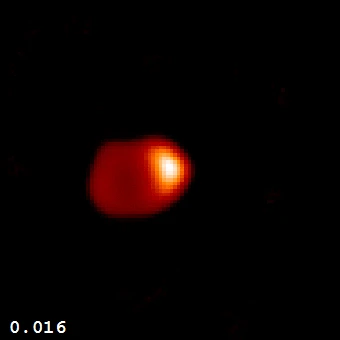
Lambda Ophiuchi, also known by its Bayer designation λ Ophiuchi, is a quadruple star system located in the equatorial constellation of Ophiuchus. It is visible to the naked eye as a faint point of light with an apparent visual magnitude of 3.82, and is situated approximately 173 light-years from the Sun, drifting closer with a radial velocity of –16 km/s. The system is notable for its hierarchical architecture, consisting of three pairs of stars nested within one another.
- Apparent visual magnitude
- 3.82
- Distance from sun
- 173 light-years
- Radial velocity
- –16 km/s
- Number of components
- 4
- Bayer designation
- λ Ophiuchi
- Traditional name (primary)
- Marfik
Lore & Background
The system bears the traditional name Marfik (or Marsik), derived from the Arabic 'marfiq' meaning 'elbow'. In 2016, the International Astronomical Union's Working Group on Star Names approved the name Marfik exclusively for the primary component, Lambda Ophiuchi A, as part of its effort to assign proper names to individual stars rather than entire multiple systems.
The system's components are designated Lambda Ophiuchi A, B, and C according to the Washington Multiplicity Catalog convention. The inner pair, Aa and Ab, orbit each other every 41.93 days with a separation of 0.368 astronomical units. The primary (Aa) is an A-type main-sequence star of class A0V, with 2.45 times the Sun's radius and an effective temperature of 9,550 K, giving it a blue-white hue. The secondary (Ab) is slightly cooler and smaller, with 1.56 solar radii and 7,710 K, appearing white. The A-B pair has an orbital period of 129.5 years, a separation of 46.1 AU, and an eccentricity of 0.623. Component B is an A4V star of magnitude 5.22, with 1.73 solar radii and 8,330 K. Component C, of magnitude 11.0, lies 119 arcseconds from the A-B pair (6,370 AU) and would take hundreds of thousands of years to complete an orbit; it shares common proper motion and distance, and is a K6 star with 62% of the Sun's mass, 58% of its radius, a temperature of about 4,157 K, and 9% of its luminosity.
Reader's Guide
Lambda Ophiuchi serves as a valuable example of a hierarchical quadruple star system, demonstrating how multiple stars can be organized in nested orbits. Its inner pair (Aa and Ab) provides a close binary with a short orbital period, while the wider A-B pair illustrates a long-period binary with significant eccentricity. The distant component C, though gravitationally bound, has an orbit so vast that it would take hundreds of thousands of years to complete, highlighting the extreme scales possible in multiple-star systems. The system's traditional name Marfik, now officially assigned to the primary, reflects its historical Arabic heritage and the IAU's modern standardization of star names. The spectral types and physical parameters of the components—ranging from an A0V primary to a K6 companion—offer a comparative study of stellar evolution and properties across different masses and temperatures. The system's proximity (173 light-years) and naked-eye visibility make it accessible for both amateur observation and professional study, contributing to our understanding of stellar multiplicity and dynamics.
Did You Know?
- Lambda Ophiuchi is a quadruple star system with a hierarchical architecture of three nested pairs.
- Component C is a K6 star with only 9% of the Sun's luminosity and lies about 6,370 AU from the A-B pair.
- The system's traditional name Marfik comes from the Arabic word for 'elbow'.
More in Binary and Multiple Stars, Part 3 1-24
Spotted an error? Know more?
Reader corrections go straight into our review queue. Suggest an edit · How this site is sourced