Alpha Delphini
Multiple star system with the historical name Sualocin.

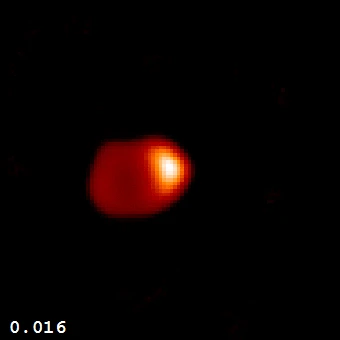
Alpha Delphini (α Delphini) is a multiple star system located in the constellation Delphinus. The system comprises a triple star, designated Alpha Delphini A, along with five fainter companions—labeled B, C, D, E, and F—that are likely optical rather than physically bound. Within Alpha Delphini A, the two main components are called Alpha Delphini Aa and Ab. The system’s Bayer designation is α Delphini, Latinized as Alpha Delphini. The labels A through F for the constituents, and Aa and Ab for the inner pair, follow the convention of the Washington Multiplicity Catalog, later adopted by the International Astronomical Union. The primary star’s components Aa, Ab1, and Ab2 are also sometimes referred to as A, Ba, and Bb respectively, given that the outer pair have been resolved. The historical name Sualocin originated from Niccolò Cacciatore, assistant to Giuseppe Piazzi and later director of the Palermo Observatory. It first appeared in Piazzi’s 1814 Palermo Star Catalogue, alongside Rotanev for Beta Delphini. The Reverend Thomas Webb later discovered that Sualocin and Rotanev are reversals of the Latinized form of Cacciatore’s name—Nicolaus Venator (Nicholas Hunter in English). This practical joke has endured. In 2016, the IAU’s Working Group on Star Names approved Sualocin specifically for the component Alpha Delphini Aa. In Chinese astronomy, the star is part of an asterism called 瓠瓜 (Hù Guā), meaning Good Gourd, which also includes Gamma2, Delta, Beta, and Zeta Delphini. Alpha Delphini itself is known as 瓠瓜一 (Hù Guā yī), the First Star of Good Gourd. In Hindu astronomy, it corresponds to the nakshatra Dhanishta. Alpha Delphini A is a spectroscopic binary, now resolved via speckle interferometry. Its components are separated by 0.2 arcseconds and orbit each other every 17 years. Alpha Delphini Aa has a spectral type of B9IV, making it a subgiant that has begun evolving off the main sequence; it is about 3.8 times as massive as the Sun and roughly twice as hot. The secondary star’s spectral type cannot be determined directly due to its proximity and faintness, but it is itself a binary with a 30-day orbit. Spectral lines showing 30-day radial velocity changes likely belong to the faintest component, expected to be an F-type star.
- Bayer designation
- α Delphini
- Components
- Alpha Delphini A (Aa, Ab), B, C, D, E, F
- Spectral type of aa
- B9IV
- Mass of aa
- 3.8 times solar
- Separation of a components
- 0.2″
- Orbital period of a components
- 17 years
- Orbital period of inner binary
- 30 days
- Visual magnitudes of faint companions
- 11th to 13th
- Separations of faint companions
- 35″ to 72″
Lore & Background
The system bore the historical name Sualocin, which arose as follows: Niccolò Cacciatore was the assistant to Giuseppe Piazzi, and later his successor as Director of the Palermo Observatory. The name first appeared in Piazzi's Palermo Star Catalogue. When the Catalogue was published in 1814, the unfamiliar names Sualocin and Rotanev were attached to Alpha and Beta Delphini, respectively. Eventually the Reverend Thomas Webb, a British astronomer, puzzled out the explanation. Cacciatore's name, Nicholas Hunter in English translation, would be Latinised to Nicolaus Venator. Reversing the letters of this construction produces the two-star names. They have endured, the result of Cacciatore's little practical joke of naming the two stars after himself. In 2016, the International Astronomical Union organized a Working Group on Star Names (WGSN) to catalogue and standardize proper names for stars. The WGSN decided to attribute proper names to individual stars rather than entire multiple systems. It approved the name Sualocin for the component Alpha Delphini Aa on 12 September 2016, and it is now so included in the List of IAU-approved Star Names. In Chinese, 瓠瓜 (Hù Guā), meaning Good Gourd, refers to an asterism consisting of Alpha Delphini, Gamma2 Delphini, Delta Delphini, Beta Delphini and Zeta Delphini. Consequently, the Chinese name for Alpha Delphini itself is 瓠瓜一 (Hù Guā yī, English: the First Star of Good Gourd). In Hindu astronomy, the star corresponded to one of the nakshatras named Dhanishta.
Reader's Guide
Alpha Delphini is notable as a multiple star system whose primary component, Aa, is a subgiant of spectral type B9IV that has begun to evolve away from the main sequence. It is about 3.8 times as massive as the sun and about twice as hot. The system's triple nature was revealed through speckle interferometry: the two components of A are separated by 0.2″ and have a 17-year orbit. The secondary star is itself a binary with an orbit of 30 days; spectral lines showing 30-day radial velocity changes likely belong to the faintest component, expected to be an F-type star, while the more massive inner pair star is likely an A-type dwarf possibly not detected due to rapid rotation. The five faint companions (B through F) have visual magnitudes around 11th to 13th and separations of 35″ to 72″, but they show motion relative to Alpha Delphini A and have much smaller parallaxes, indicating they are probably optical companions rather than physically bound. The system's historical name Sualocin, a reversal of Nicolaus Venator, endures as a practical joke by Niccolò Cacciatore, and was officially attributed to the component Aa by the IAU in 2016.
Did You Know?
- The name Sualocin is a reversal of the Latinized name Nicolaus Venator, derived from Niccolò Cacciatore.
- The secondary star in the A system is itself a binary with an orbital period of 30 days.
- In Chinese astronomy, Alpha Delphini is called 瓠瓜一, the First Star of Good Gourd.
A Place Among the Few Hundred
Of the roughly ten thousand stars visible without optical aid, only a few hundred have ever received a proper name in the long history of astronomy. A star like Alpha Delphini occupies a small, select group within this broader population. Traditional astronomical practice has favored naming constellations and asterisms as collective figures rather than singling out individual points of light. Most star names that do exist are descriptive of the star's position within its constellation pattern. Only a handful of the brightest stars carry names that stand independently of any asterism—names like Sirius, Antares, Canopus, Alphard, and Regulus. Chinese naming traditions follow a similar pattern, enumerating stars within their asterisms with just a few exceptions such as Vega. The modern era has added a small number of coined names and person-based designations, but the overall picture remains one of scarcity: proper names are the exception, not the rule, among the visible stellar sky.
The IAU's Standardization Mission
In 2016, the International Astronomical Union established a dedicated Working Group on Star Names to bring order to the chaotic landscape of stellar nomenclature. The group's first bulletin, issued in July 2016, presented a table of 125 stars drawn from two initial approval batches dated 30 June and 20 July of that year, alongside names recognized from the 2015 NameExoWorlds campaign. Subsequent batches followed on 21 August, 12 September, 5 October, and 6 November 2016, adding another 102 stars in a second bulletin. The WGSN made a deliberate choice to attribute proper names to individual stars rather than to entire multiple-star systems, and where a component letter is not explicitly listed, the name is understood to apply to the visually brightest component. This framework ensures that a star's identity in the official registry is precise and unambiguous, a standard that applies equally to every entry in the growing list.
From 336 to 639: The Growing Registry
The IAU's approved star-name list has expanded steadily since its inception. The initial 336 names, accumulated through 2018, represented the WGSN's foundational work. In 2019, the IAU launched its centennial NameExoWorlds campaign, which approved 112 exoplanet and host-star names published on 17 December 2019, with one additional pair following in March 2020. Two more star names were added on 4 April 2022, and a further 20 names arrived in June 2023 through the NameExoWorlds 2022 campaign, bringing the total to 471. Since 2024, newly approved names have been published on the exopla.net website maintained by the WGSN. Nineteen names were approved in 2024 and forty in 2025. By September 2026, an additional 109 names had been added, pushing the grand total to 639 proper star names—a number that, while growing, still represents a tiny fraction of the visible stellar population.
Names Born from the Sky's Story
The etymology of most traditional star names reveals a deep connection to the constellation or asterism in which the star resides. Phecda, for instance, derives from an Arabic phrase meaning 'thigh of the bear,' anchoring the star to its position within Ursa Major. Greek and Arabic traditions produced names that evoke the star's character or role: Sirius as 'the scorcher,' Antares as 'rival of Ares' for its Mars-like redness, Alphard as 'the solitary one,' and Regulus as 'kinglet.' Aldebaran, meaning 'the follower' of the Pleiades, and Procyon, 'preceding the dog' of Sirius, similarly depend on their asterism context. Chinese star nomenclature mirrors this approach, with most stars catalogued within their asterisms and only a rare few—like the 'weaving girl' Vega—standing apart. Modern coinages such as 'Avior' for Epsilon Carinae in 1930, and a wave of person-based names in the twentieth century, represent a departure from this tradition, but the majority of the 639 approved names still carry the imprint of ancient sky-storytelling.
Frequently Asked Questions
What is Alpha Delphini?
Alpha Delphini (Bayer designation α Delphini) is a multiple star system in the constellation Delphinus, historically known by the proper name Sualocin. Its innermost pair, Aa and Ab, orbits with a period of roughly 17 years.
What is Sualocin and how does it relate to Alpha Delphini?
Sualocin is the traditional proper name for the Alpha Delphini system, the brightest star in Delphinus. The two names refer to the same stellar system, with Sualocin appearing in older catalogs alongside the Bayer label.
How many stars are cataloged in the Alpha Delphini system?
Six constituents carry labels: the tight inner group Alpha Delphini A (containing Aa and Ab) plus five fainter companions designated B through F. The five outer companions are generally regarded as optical doubles rather than gravitationally bound members.
What are the key physical properties of Alpha Delphini Aa?
Aa is a B9IV star with a mass of about 3.8 solar masses. It is separated from its companion Ab by only 0.2 arcseconds, and the pair completes one full orbit every 17 years.
Are all six components of Alpha Delphini physically connected to each other?
No—only the inner pair Aa and Ab form a confirmed gravitationally bound binary. The five fainter companions (B through F) are most likely unrelated background stars that simply appear close in our line of sight.
More in Binary and Multiple Stars, Part 3 1-24
Spotted an error? Know more?
Reader corrections go straight into our review queue. Suggest an edit · How this site is sourced