Beta Coronae Borealis
Binary star with disputed orbit and a rapidly oscillating Ap component.

Beta Coronae Borealis is a binary star system in the constellation Corona Borealis, appearing to the naked eye as the second-brightest point of light in that constellation. Its apparent visual magnitude varies between 3.65 and 3.72, and based on Hipparcos parallax measurements, it is approximately 112 light-years from the Sun. The system is notable for its history of disputed orbital periods and for containing a rapidly oscillating Ap star.
- Bayer designation
- Beta Coronae Borealis
- Apparent visual magnitude range
- 3.65 to 3.72
- Distance from sun
- 112 light-years
- Binary discovery year
- 1907
- Orbital period disputed
- 40.9 days (1914) vs 10.5 years (1944)
- Component a spectral type
- A5V
- Component a mass
- 2.09 solar masses
- Component a radius
- 2.63 solar radii
- Component a luminosity
- 25.3 solar luminosities
- Component a surface temperature
- 7,980 K
Lore & Background
The system bears the traditional name Nusakan, from Arabic 'al-nasaqān' meaning 'the two lines [of stars]', originally referring to a pair of asterisms in Hercules, Serpens, and Ophiuchus. In 2016, the IAU Working Group on Star Names approved the name Nusakan for the component Beta Coronae Borealis A. In Chinese astronomy, it is part of the asterism 'Rope Binding' (貫索), and is known as 貫索三, the Third Star of Rope Binding.
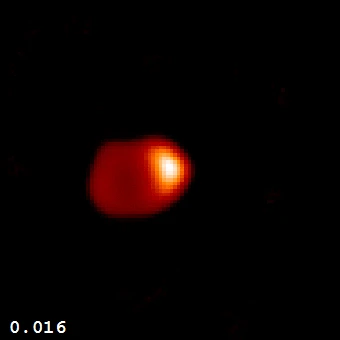
Beta Coronae Borealis was first announced as a binary star in 1907 based on spectroscopic observations at Lick Observatory. J. B. Cannon published an orbit in 1914 with a period of 40.9 days, but later spectroscopic work by F. J. Neubauer in 1944 found a period of 10.5 years and no evidence for the 41-day periodicity. The pair was resolved by speckle interferometry in 1973 by Antoine Labeyrie and coworkers, finding a separation of about 0.25 arcseconds, and was also visually observed by Coteau that year. Subsequent orbits combined visual, speckle-interferometric, and spectroscopic data, with Söderhjelm publishing an orbit in 1999 using speckle and Hipparcos observations.
Neubauer's 1944 work also noted a small radial-velocity variation with a 320-day period, suggesting a possible third, lighter body. A 1999 infrared interferometry study at Palomar Observatory found no evidence for such a companion, limiting any tertiary to 10 Jupiter masses or below. That study also found very weak evidence for a 21-day companion, but the data were insufficient for a positive conclusion.
Reader's Guide
Beta Coronae Borealis holds significance as a binary system whose orbital history illustrates the challenges of determining periods from early spectroscopic data. The initial 40.9-day orbit proposed in 1914 was later contradicted by a 10.5-year period from 1944, and subsequent observations resolved the pair directly via speckle interferometry in 1973. This system also contributed to the study of possible tertiary companions: a 320-day radial-velocity variation suggested a third body, but later infrared interferometry ruled out any companion above 10 Jupiter masses, while leaving open the possibility of a 21-day companion. The brighter component, Beta Coronae Borealis A, is a rapidly oscillating Ap star with a 16.2-minute pulsation period, making it of interest for asteroseismology. Its physical properties—mass 2.09 solar masses, radius 2.63 solar radii, luminosity 25.3 times solar, and surface temperature 7,980 K—are well characterized, as are those of the F2 main-sequence secondary. The system's age of about 530 million years provides context for stellar evolution studies. The naming history, from the Arabic-derived Nusakan to its official IAU approval in 2016 for component A, and its place in Chinese asterisms, adds cultural depth.
Did You Know?
- The system's traditional name Nusakan comes from Arabic 'al-nasaqān', meaning 'the two lines [of stars]'.
- A 1999 infrared interferometry study found no evidence for a previously suspected tertiary companion with a 320-day period.
Frequently Asked Questions
What is Beta Coronae Borealis?
Beta Coronae Borealis is a binary star system in the northern constellation Corona Borealis that appears to the unaided eye as the second-brightest point of light in that asterism. It sits roughly 112 light-years from Earth and shows an apparent visual magnitude between 3.65 and 3.72.
What is the controversy around Beta Coronae Borealis's orbital period?
Astronomers have long disagreed on how long the two stars take to circle each other, with a 1914 solution proposing a period of about 40.9 days while a later 1944 analysis suggested roughly 10.5 years. This unresolved discrepancy makes it a classic example of how difficult spectroscopic binary orbits can be to pin down.
What kind of star is the primary component of Beta Coronae Borealis?
The brighter component, designated Component A, is classified as an A5V main-sequence star. It is specifically a rapidly oscillating Ap star, meaning it displays periodic brightness variations driven by magnetic fields and shows enhanced abundances of certain elements.
When was Beta Coronae Borealis identified as a binary system?
The binary nature of the system was first established in 1907, making it one of the earlier spectroscopic binaries catalogued in that region of the sky. Since that initial detection, the exact orbital parameters have remained a subject of debate among observers.
Why do fans of multiple stars find Beta Coronae Borealis interesting?
It pairs naked-eye visibility with a genuinely puzzling orbital history and a magnetically active, oscillating Ap component, giving it a lot to discuss. For enthusiasts of binary and multiple-star astronomy, it serves as a reminder that even well-studied systems can hide unresolved questions about their architecture.
More in Binary and Multiple Stars, Part 3 1-24
Spotted an error? Know more?
Reader corrections go straight into our review queue. Suggest an edit · How this site is sourced