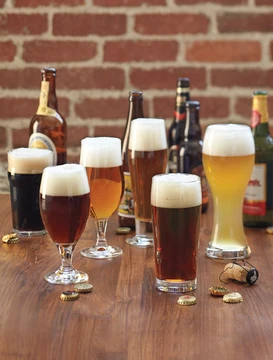
Oud bruin
A Belgian sour brown ale aged for up to a year.

Oud bruin, or Flanders brown, is a beer style that comes from Belgium’s Flemish region. Its Dutch name points to an extended aging period—sometimes as long as a year. After the main fermentation, the beer goes through a secondary fermentation lasting several weeks to a month, then spends additional months aging in the bottle. This long process lets leftover yeast and bacteria create the sour taste typical of the style. Modern brewers usually add cultured yeast and bacteria, since stainless steel tanks don’t host wild microbes like wooden barrels do.
Historically, these beers were kept as “provision beers,” stored to let their flavor develop. Liefmans Brewery has brewed oud bruin since the 1600s. Older versions were generally more sour than today’s commercial offerings. Brouwerij De Brabandere in Bavikhove still makes a traditional barrel-aged oud bruin under the Petrus label.
The beer is medium-bodied, reddish-brown, with a gentle malt flavor and no hop bitterness. Some commercial examples mix aged beer with younger, sweeter beer to tone down the acidity and encourage further fermentation. Because of its reddish-brown color, it can be mistaken for Flanders red ale, but the two differ in brewing methods and aging processes, leading to distinct tastes.
Examples include ’t Verzet Oud Bruin (Anzegem, Belgium), Ichtegem Oud Bruin (Ichtegem, Belgium), Liefmans Goudenband (Oudenaarde, Belgium), Petrus Oud Bruin (Bavikhove, Belgium), Queue de charreu brune (Comines-Warneton, Belgium), and Deschutes Dissident (Bend, Oregon, United States).
Quick Facts
- Origin
- Belgium
- Yeast
- Top-fermenting
- Alcohol
- 4 - 8%
- Bitterness
- 15 - 25
- Originalgravity
- 1.043 - 1.077
- Finalgravity
- 1.012 - 1.016
- Maltpercentage
- 90% - 100%
Facts from the source article.
Lore & Background
Historically, oud bruin beers were kept as provision beers, stored to allow the flavor to develop. Liefmans Brewery has been brewing the style since the 17th century. Historical examples tended to be more sour than modern commercial products. Brouwerij De Brabandere in Bavikhove still produces a traditionally barrel-aged oud bruin under the Petrus brand.
This style is medium bodied, reddish-brown, with a gentle malty flavor and no hop bitterness. Commercial versions may mix aged beer with younger, sweeter beer to temper the acidity and allow for further fermentation. Because of the reddish-brown colour, Flanders red ale could be confused with Flanders brown, but differences in brewing techniques and aging processes result in different taste characteristics.
Cultured yeast and bacteria are typically used, as stainless steel equipment does not harbor wild organisms as wood does. Examples include 't Verzet Oud Bruin, Ichtegem Oud Bruin, Liefmans Goudenband, Petrus Oud Bruin, Queue de charreu brune, and Deschutes Dissident.
Reader's Guide
Oud bruin's significance lies in its traditional Belgian brewing methods, particularly the extended aging and secondary fermentation that produce its distinctive sour character. The style's legacy is rooted in the practice of storing provision beers for flavor development, with Liefmans Brewery maintaining the tradition since the 17th century. Modern commercial versions often blend aged and younger beer to balance acidity, reflecting an evolution from the more sour historical examples. The use of cultured yeast and bacteria in stainless steel equipment marks a shift from traditional wood aging, though Brouwerij De Brabandere continues barrel-aging under the Petrus brand. The style's reddish-brown color can lead to confusion with Flanders red ale, but the two differ in brewing techniques and aging processes, resulting in distinct taste profiles. Examples from both Belgian and American breweries demonstrate the style's continued relevance and adaptation.
Did You Know?
- The Dutch name 'oud bruin' refers to the long aging process, which can last up to a year.
- Liefmans Brewery has been brewing oud bruin since the 17th century.
- Historical examples of oud bruin tended to be more sour than modern commercial products.
More in Beer Styles 1-24
Spotted an error? Know more?
Reader corrections go straight into our review queue. Suggest an edit · How this site is sourced