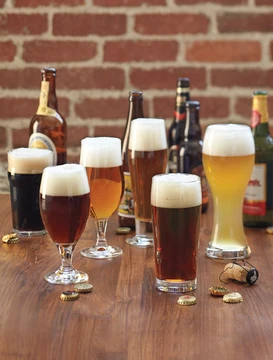
Australian pale ale
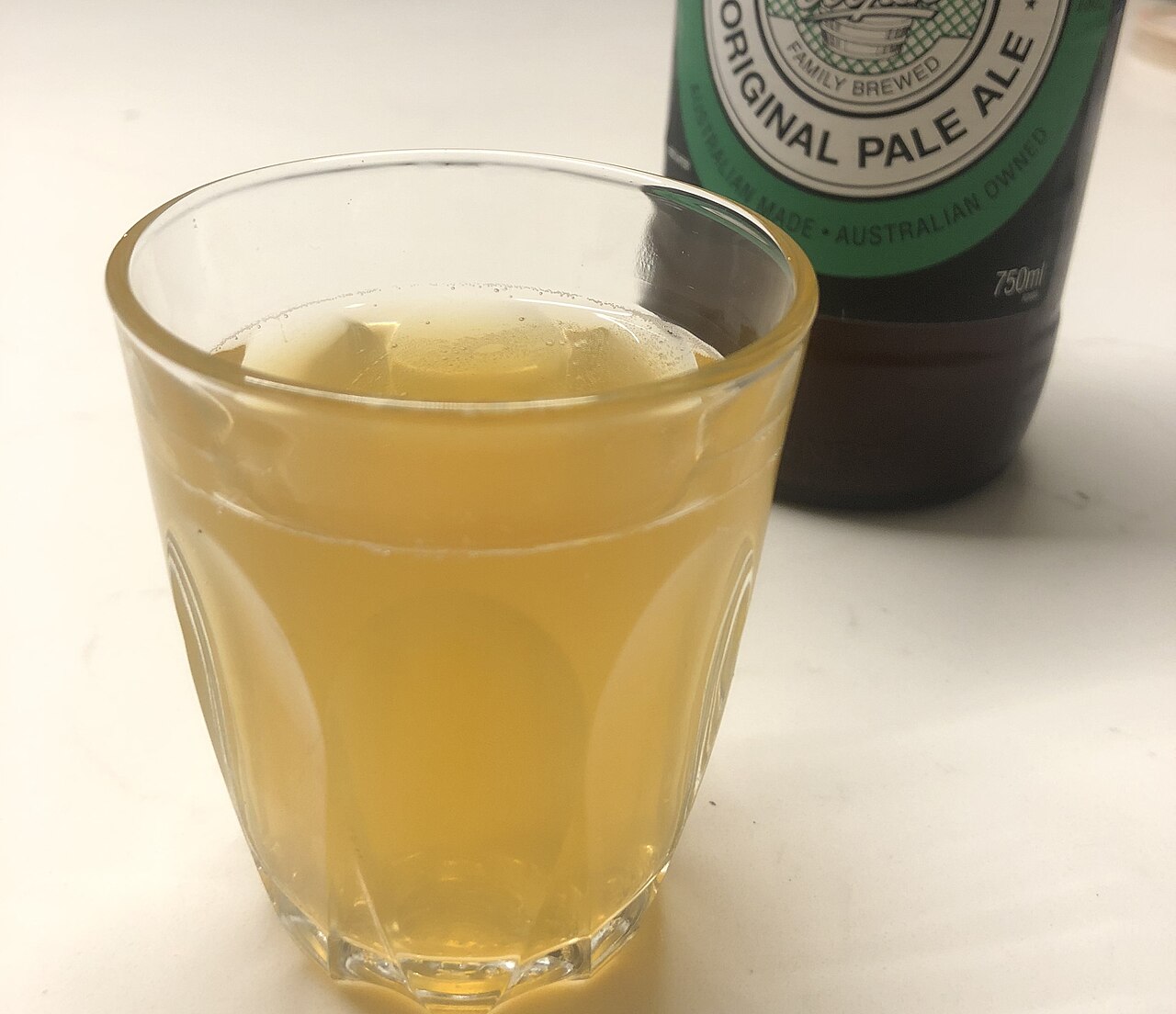
Australian pale ale, developed in the 1990s, features Galaxy hops.

Finbar.concaig · CC BY-SA 4.0
Australian pale ale is a style of pale ale developed in Australia around the 1990s. It is generally about 6% abv and is brewed with significant quantities of Australian hops, typically Galaxy.
- Abv
- about 6%
- Origin
- Australia
- Development period
- around the 1990s
- Typical hops
- Galaxy
Lore & Background
Australian pale ale was developed in Australia around the 1990s. It is generally about 6% abv and is brewed with significant quantities of Australian hops, typically Galaxy. The style emerged as part of the broader pale ale family, which includes a range of tastes and strengths due to different brewing practices and hop levels.
Reader's Guide
Australian pale ale is notable as a regional variation within the pale ale family, developed in Australia around the 1990s. It is generally about 6% abv and is brewed with significant quantities of Australian hops, typically Galaxy. The style reflects the broader trend of pale ales being adapted to local ingredients and preferences, similar to how American pale ales use American hops and amber ales use crystal malts. Australian pale ale stands alongside other regional pale ale styles such as American pale ale, English bitter, and Irish red ale, each distinguished by their hop varieties and brewing traditions.
The Birth of a Lighter Beer
The name 'pale ale' first surfaced in England around 1703, attached to beers made from malts dried using high-carbon coke rather than the traditional roasting methods of the era. This technique produced a noticeably lighter colour than the darker beers that dominated the market. What is striking is that coke had actually been used for dry roasting malt as far back as 1642, yet the specific label 'pale ale' did not attach to the style for another sixty years. By 1784, the beer had reached colonial markets, with the Calcutta Gazette carrying advertisements for 'light and excellent' pale ale. By 1830, the terms 'bitter' and 'pale ale' had become effectively interchangeable in everyday speech. Breweries officially designated their products as pale ales, while ordinary drinkers more commonly called them bitters. The prevailing explanation is that customers adopted 'bitter' to set these more noticeably hopped beers apart from less hop-forward styles such as porters and milds. This early naming duality reveals how a single brewing innovation could generate multiple cultural labels for the same golden liquid.
The American Hop Revolution
The trajectory of pale ale shifted decisively in the United States during the 1970s and 1980s. In 1975, Anchor Brewing Company brewed Liberty Ale, a 6% abv special created to mark the bicentennial of Paul Revere's Midnight Ride. Michael Jackson, a prominent beverage writer, regarded it as the first modern American ale. Anchor's owner, Fritz Maytag, had visited breweries in London, Yorkshire, and Burton upon Trent, gathering knowledge about robust pale ales. He then crafted his American interpretation using malt alone rather than the malt-and-sugar blends common in US brewing at the time, and made prominent use of the Cascade hop. By 1983 the beer was widely available. The brewery credited with first successfully deploying significant quantities of American hops in a notably hoppy pale ale and using the specific name 'pale ale' was Sierra Nevada Brewing Company, whose first experimental batch was brewed in November 1980 and distributed in March 1981. Jack McAuliffe of New Albion and Bert Grant of Yakima Brewing are also recognised as pioneers. These beers typically sit around 5% abv and are defined by their strong American hop character, particularly Cascade, which distinguishes them from British and European counterparts.
Australia's Galaxy-Hopped Identity
Australia's contribution to the pale ale family emerged in the 1990s, representing a distinctly local interpretation of a style with centuries of brewing heritage. Australian pale ales are generally brewed to around 6% abv, placing them slightly above the typical American pale ale's 5% strength. What sets the Australian expression apart is the prominent use of domestic hop varieties, with Galaxy being the most characteristic choice. This distinguishes Australian pale ales from their American counterparts, which rely heavily on Cascade, and from British pale ales with their traditional English hop profiles. The style retains the golden-to-amber colouration inherent to the pale malt base that defines the broader family. Unlike amber ales, which incorporate crystal or amber malts for a darker copper-to-brown appearance, or blonde ales that aim for a very pale, crisp, and dry profile, Australian pale ales assert their identity through the aromatic and flavourful character of Galaxy hops. The 1990s timing places Australian pale ale development in the decades following the American hop-forward innovations of the 1970s and 1980s, situating it within a broader global trend of increasingly expressive hop usage in the pale ale family.
A Family of Styles
Pale ale is not a single fixed recipe but a broad family of beers united by the use of pale malt and a golden-to-amber colour, encompassing a wide range of tastes and strengths depending on brewing practices and hop quantities. In France, the bière de garde tradition of the Nord-Pas-de-Calais region involves farmhouse brewing in winter and spring to avoid summer yeast problems, with the finished beer cellared for later consumption. In the United Kingdom, golden or summer ales were developed in the late twentieth century to compete with pale lagers, with John Gilbert of Hop Back Brewery credited for creating 'Summer Lightning' in 1989. Amber ales, a term emerging in Australia, France, Belgium, the Netherlands, and North America, incorporate a proportion of amber or crystal malt for a light copper to light brown colour. Belgian blondes, such as Duvel, often employ pilsner malt and rank among the most popular bottled beers in Belgium. Burton upon Trent brewers, notably Bass, adopted the pale ale recipe late in the nineteenth century. This diversity underscores that pale ale functions as much as a family name as a single style, with Australian pale ale occupying its own distinctive position within that lineage.
Gallery
Frequently Asked Questions
What is Australian pale ale?
Australian pale ale is a pale ale style that took shape in Australia during the 1990s. It typically sits around 6% ABV and is defined by a prominent use of locally grown hop varieties.
Which hops are most associated with Australian pale ale?
Galaxy hops are the signature variety that gives this style its identity. The beer is built around significant quantities of Australian-grown hops, with Galaxy being the most typical choice.
Where and when did Australian pale ale develop?
The style originated in Australia and came into its own around the 1990s. It was crafted as a distinctly Australian expression within the broader pale ale family.
How strong is Australian pale ale?
Most examples of this style land at approximately 6% ABV. That places it in the mid-strength range typical of the pale ale category.
Why is Australian pale ale notable in the wider beer world?
The style is significant because it puts Australian-grown hops—especially Galaxy—front and center as a defining ingredient rather than a supporting note. It gives the pale ale family a clear regional identity tied to local hop growing.
More in Beer Styles 1-24
Spotted an error? Know more?
Reader corrections go straight into our review queue. Suggest an edit · How this site is sourced