Barley wine
A strong ale with wine-like strength, brewed from grain.

DirkVE · CC BY-SA 3.0
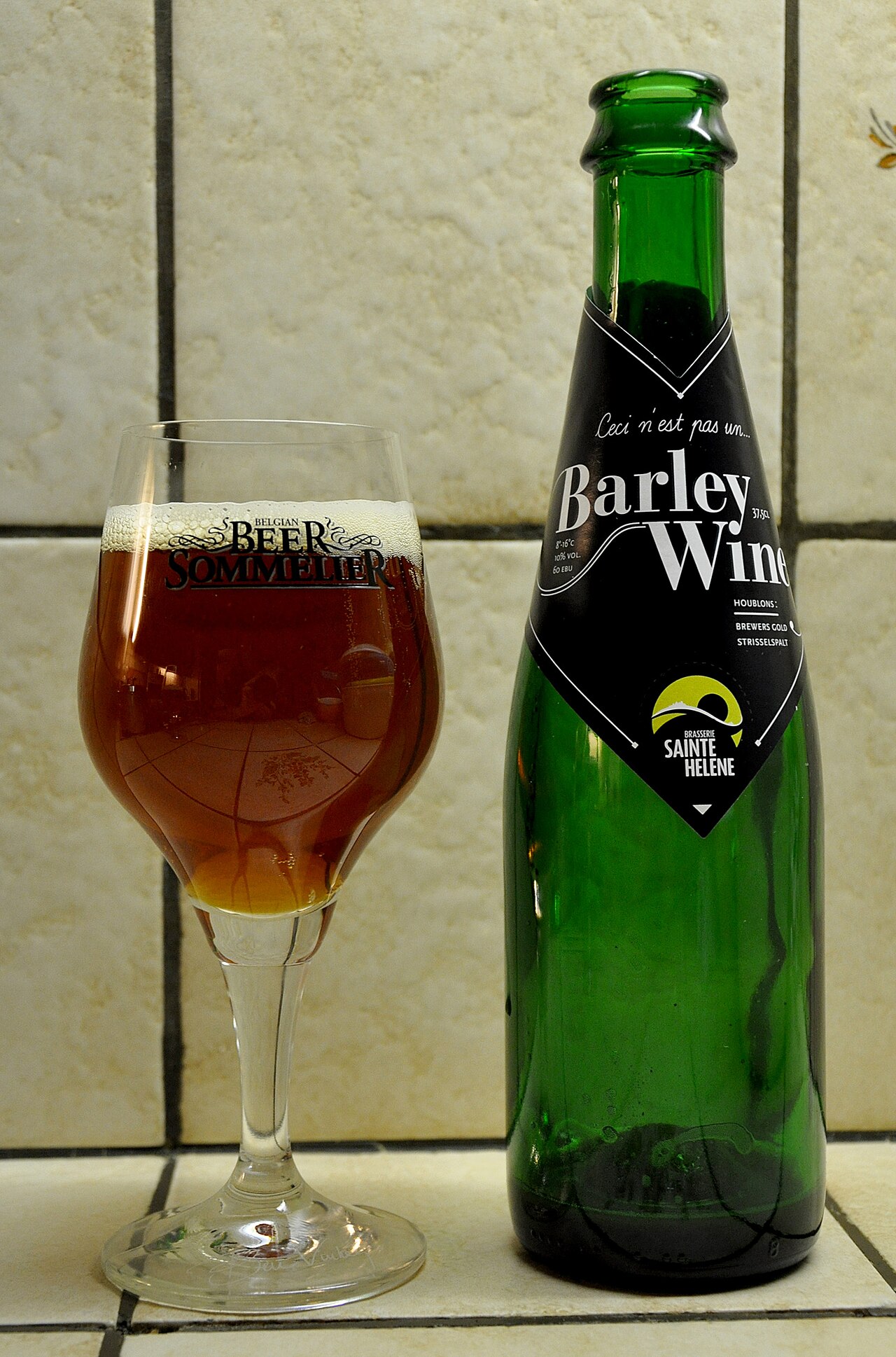
Barley wine is a strong ale with an alcohol content ranging from 6 to 12% by volume. It is notable for its wine-like strength, though it is brewed from grain rather than fruit, and for its ability to be aged, sometimes extensively.
Quick Facts
- Origin
- England
- Yeast
- Top-fermenting
- Alcohol
- 6–12%
- Bitterness
- 35–70 (English) / 50–120 (American)
- Originalgravity
- 1.080–1.120
- Finalgravity
- 1.018–1.030 (English) / 1.016–1.030 (American)
- Maltpercentage
- 100%
Facts from the source article.
Lore & Background
The first beer to be marketed as barley wine was Bass No. 1 Ale, around 1870. The style was introduced to the United States in 1976 by the Anchor Brewing Company with its Old Foghorn Barleywine Style Ale, which was styled as 'barleywine' (one word) out of concern that the word 'wine' on a beer label would displease regulators. In 1983, Sierra Nevada Brewing released Bigfoot Barleywine, becoming the second barley wine label in the United States.
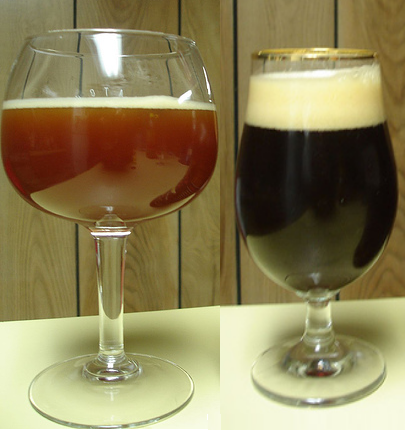
Barley wine typically reaches an alcohol strength of 6 to 12% by volume and is brewed from specific gravities as high as 1.120, equal to 320 g/L of sugars. The two primary styles are the American, which tends to be hoppier and more bitter with colours ranging from amber to light brown, and the English style, which tends to be less bitter and may have little hop flavour, with more variety in colour from red-gold to opaque black. An amber-coloured barley wine under the name Gold Label by the Sheffield brewery Tennent's was introduced in 1951.
Beer writer Michael Jackson described a barley wine by Smithwick's as 'very distinctive, with an earthy hoppiness, a wineyness, lots of fruit and toffee flavours,' noting its original gravity of 1.062. Barley wines such as Thomas Hardy's Ale are sometimes labelled with a production date, as they are intended to be aged, sometimes extensively. Many jurisdictions tax barley wine at a higher rate than other beers due to its high alcohol content. A variation called wheat wine, which adds a large quantity of wheat to the mash bill, originated in the United States in the 1980s.
Reader's Guide
Barley wine holds a distinct place in beer history as a style that bridges ale and wine through its elevated alcohol content and aging potential. Its introduction in the United States in 1976 by Anchor Brewing Company, under the name 'Old Foghorn Barleywine Style Ale,' marked a cautious entry due to regulatory concerns over the word 'wine' on a beer label. The style's annual release by US breweries during autumn or winter has become a tradition, with examples like Sierra Nevada's Bigfoot Barleywine (1983) establishing a benchmark for American interpretations. The English and American substyles reflect different brewing philosophies: English barley wines tend toward malt-forward, less bitter profiles with a wide colour range, while American versions emphasize hop bitterness and amber to light brown hues. The practice of dating bottles for extended aging, as seen with Thomas Hardy's Ale, underscores the style's capacity for development over time. Tax implications in many jurisdictions, where higher alcohol content incurs higher rates, have shaped its commercial positioning. The emergence of wheat wine in the 1980s as a variation demonstrates the style's adaptability, using wheat in the mash to create a different character while maintaining the strong ale foundation.
Origins and the American Introduction
Barley wine's identity as a named style traces back to the late nineteenth century, when Bass No. 1 Ale, produced around 1870, became the first beer explicitly marketed under that label. For nearly a century the style remained largely a British phenomenon before crossing the Atlantic. In 1976, Anchor Brewing Company brought it to American shelves with Old Foghorn Barleywine Style Ale. Notably, Anchor spelled the term as a single word, "barleywine," because the brewers feared that the standalone word "wine" on a beer label might attract regulatory displeasure. The style gained a second major American voice in 1983 when Sierra Nevada Brewing released Bigfoot Barleywine, cementing the category's presence in the domestic craft landscape. These three milestones—Bass, Anchor, and Sierra Nevada—form the foundational timeline of how a strong English ale became a recognized and celebrated category in brewing culture worldwide.
Brewing Profile and the Two Great Styles
At its core, barley wine is defined by its formidable strength, typically landing between six and twelve percent alcohol by volume. Brewers achieve this potency by working with starting specific gravities as high as 1.120, which corresponds to roughly 320 grams of sugar per litre of wort. The "wine" in the name is purely a nod to that wine-like alcoholic intensity; the beverage remains a beer because it is fermented from grain rather than fruit. Two dominant stylistic schools have emerged. The American interpretation leans heavily into hop character, delivering pronounced bitterness and a colour palette that spans amber to light brown. The English approach, by contrast, keeps hop bitterness subdued—sometimes nearly absent—and allows a far wider range of hues, from red-gold to an opaque black. Tennent's Gold Label, an amber barley wine from the Sheffield brewery introduced in 1951, exemplifies the English tradition. Beer writer Michael Jackson praised a Smithwick's example for its earthy hoppiness, wine-like depth, and rich fruit and toffee notes, noting its original gravity of 1.062.
Seasonal Ritual and the Art of Aging
In the United States, barley wine has become closely associated with the autumn and winter months. Most American breweries release their barley wine just once a year, timing the debut for the colder season. This annual cadence gives each release a sense of occasion, building anticipation among dedicated drinkers in a way that mirrors the excitement surrounding a vintage wine release. Beyond its seasonal timing, barley wine carries a strong cultural association with aging. Certain examples, such as Thomas Hardy's Ale, are deliberately labelled with a production date, a clear signal to the consumer that the beer is intended to be cellared and enjoyed over an extended period—sometimes extensively so. This aging potential is a defining feature of the style, setting it apart from the broader craft beer landscape where freshness is typically the most prized quality. The combination of a once-a-year release window and a built-in invitation to wait and age the beer gives barley wine a unique position in the American drinking calendar, blending seasonal ritual with long-term patience.
Taxation, Regulation, and the Wheat Wine Spin-off
Barley wine's high alcohol content places it in a distinctive regulatory and fiscal position. Many jurisdictions structure their beverage tax schemes around alcohol percentage, so a barley wine sitting at the upper end of the six-to-twelve-percent range can face a higher tax rate than other beers in the same market. This creates a practical economic challenge for brewers operating in those regions. The style has also given rise to a notable variation. In the 1980s, American brewers began incorporating a large quantity of wheat into the traditional barley mash bill, producing a beer that came to be called "wheat wine." This wheat-forward interpretation is a distinctly American innovation, adding a new dimension to a style that, before the 1970s and 1980s, had been almost exclusively a British creation. The wheat wine offshoot demonstrates how the barley wine template is flexible enough to accommodate different grain bills while retaining its identity as a strong, high-gravity ale. Together, the tax implications and the wheat wine variation highlight the ongoing practical and creative conversations that barley wine provokes within the broader brewing community.
Gallery



Frequently Asked Questions
Who is Barley wine?
Barley wine is a strong ale style that typically lands between 6 and 12% ABV, earning its name from its wine-like potency despite being brewed entirely from grain rather than fruit.
What are Barley wine's powers/role?
Its defining trait is an exceptional ability to age, sometimes for many years, during which its flavors keep evolving and deepening. This makes it a style especially prized for cellaring and long-term enjoyment.
Why is Barley wine important?
It holds a place in brewing history as one of the oldest strong-ale traditions, with Bass No. 1 Ale being the first beer marketed under the "barley wine" name around 1870. In the United States, Anchor's Old Foghorn Barleywine Style Ale (1976) and Sierra Nevada's Bigfoot (1983) helped establish the style's modern American identity.
What is Barley wine's maximum strength?
The style can reach an original gravity of up to 1.120, corresponding to roughly 320 grams of fermentable sugars per liter before brewing. For comparison, Smithwick's barley wine sits at a much more modest 1.062 original gravity.
More in Beer Styles 1-24
Spotted an error? Know more?
Reader corrections go straight into our review queue. Suggest an edit · How this site is sourced