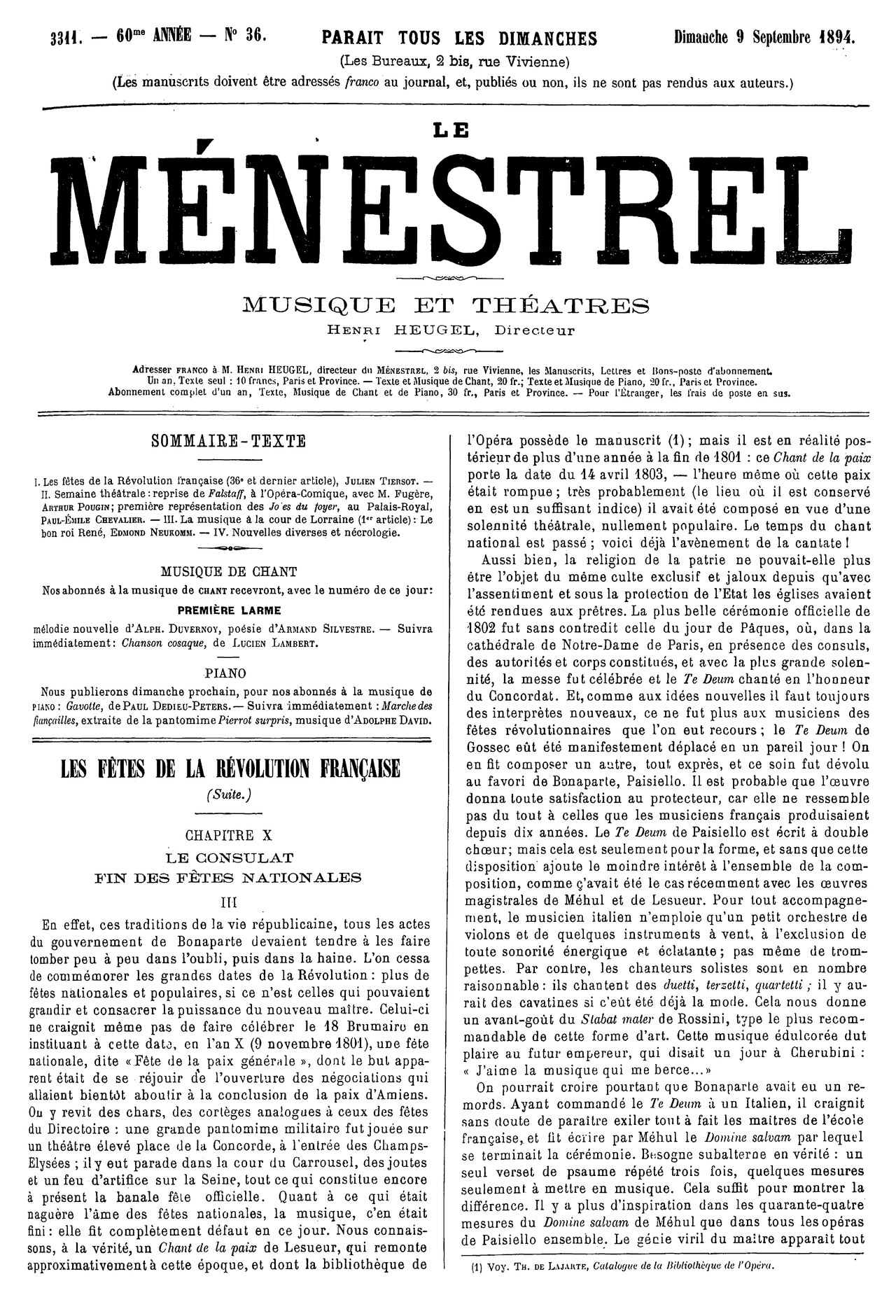
Winchester Model 1894
The first commercial American repeating rifle built to be used with smokeless powder.

Francis Barton Gummere · Public domain
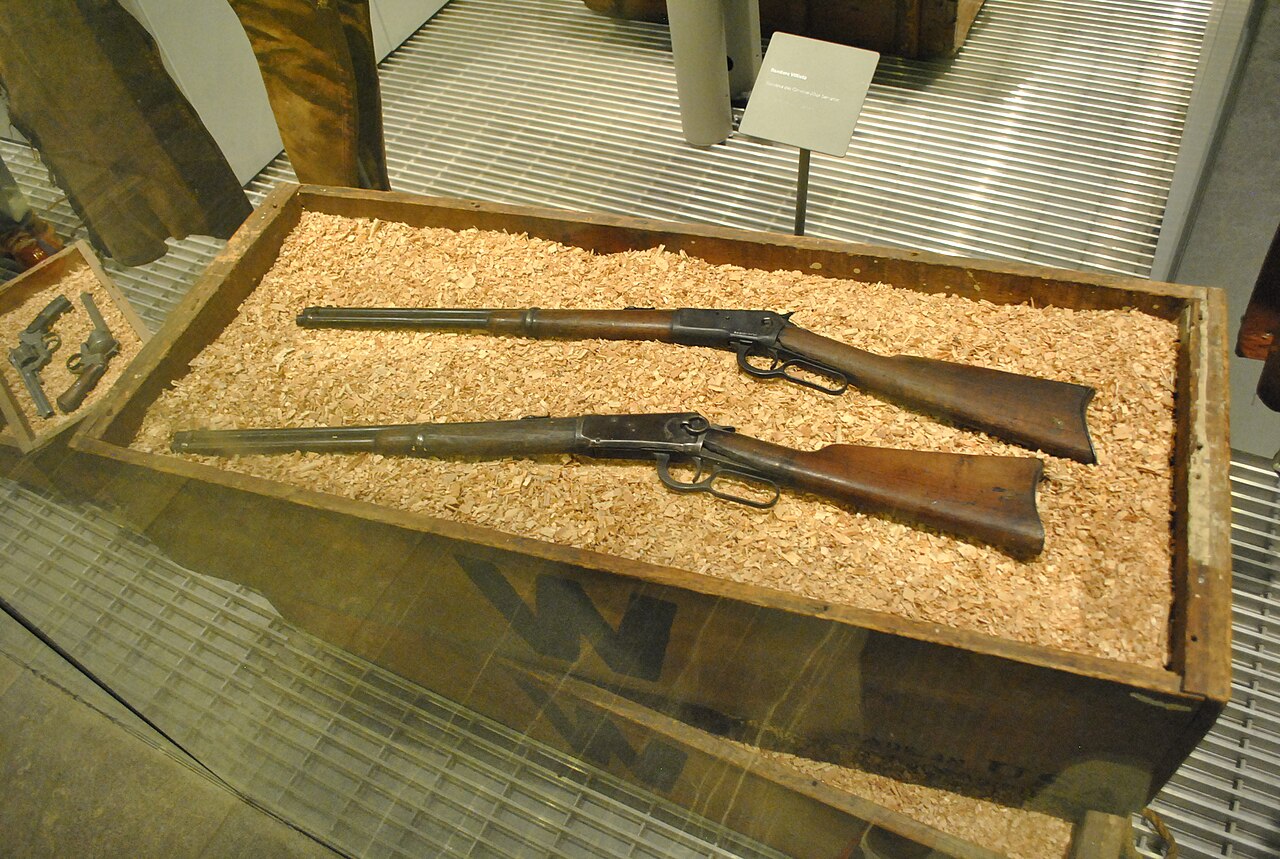
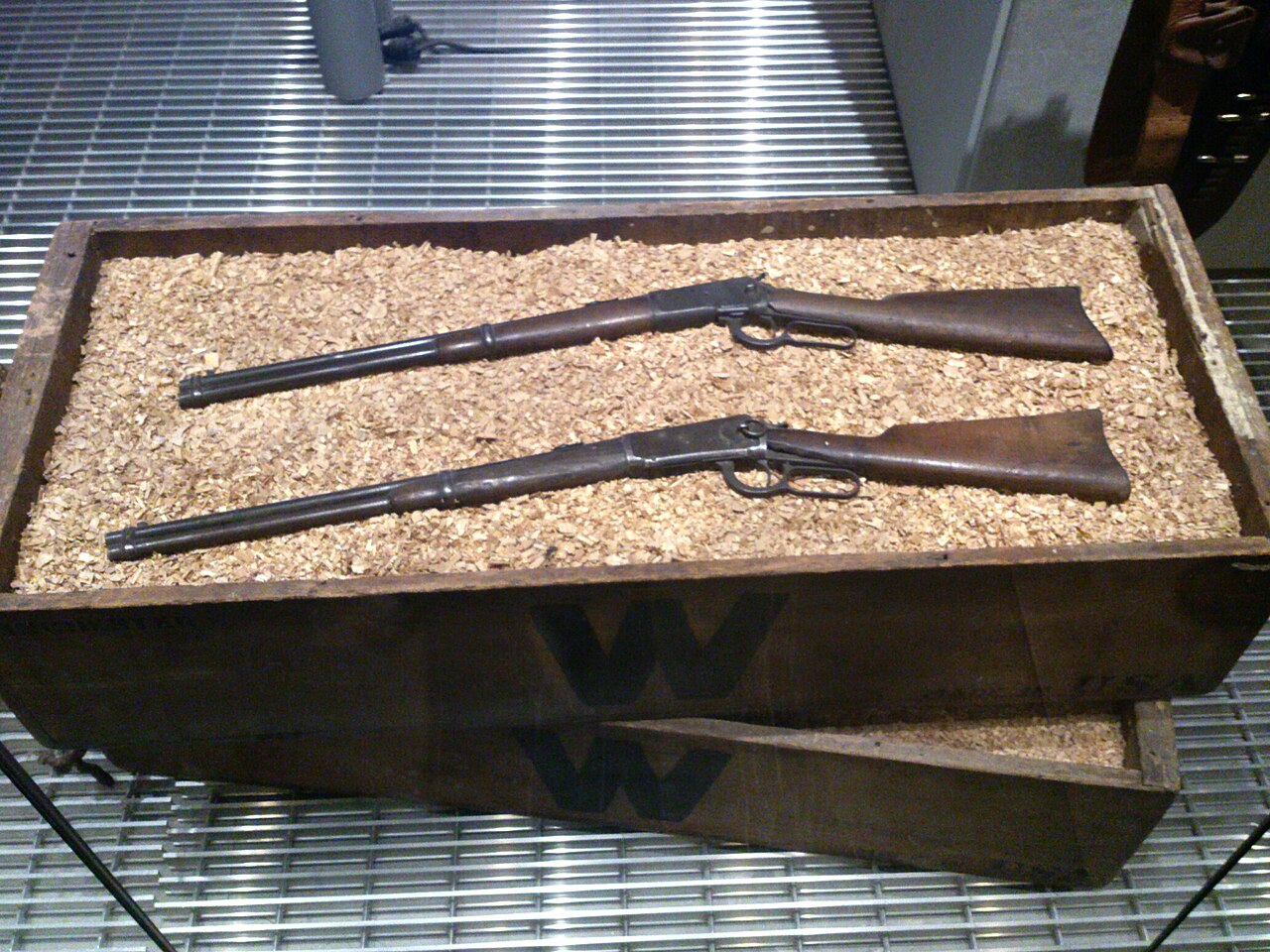
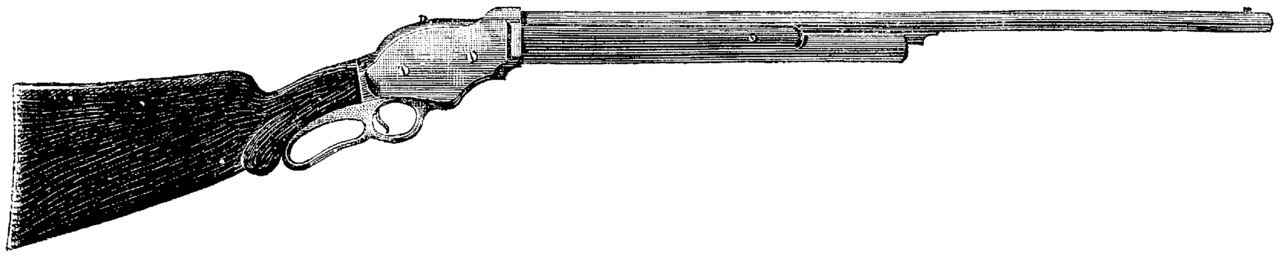
The Winchester Model 1894 is a lever-action repeating rifle designed by John Browning in 1894. It became one of the most famous and popular hunting rifles of all time, and was the first commercial American repeating rifle built to be used with smokeless powder. It is credited with the name 'Winchester' being used to refer to all rifles of this type and was the first commercial sporting rifle to sell over 7,000,000 units.
Quick Facts
- Is Ranged
- yes
- Origin
- United States
- Designer
- John Browning
- Production Date
- 1894–2006 / 2011–present
- Design Date
- 1894
- Number
- 7,500,000+
- Wars
- Indian Wars / Spanish–American War / Mexican Revolution / World War I / World War II
- Action
- Lever-action
- Velocity
- 2490 ft/s
- Weight
- 6.8 lb
- Length
- 37.8 in
- Part Length
- 20 in
Facts from the source article.
Lore & Background
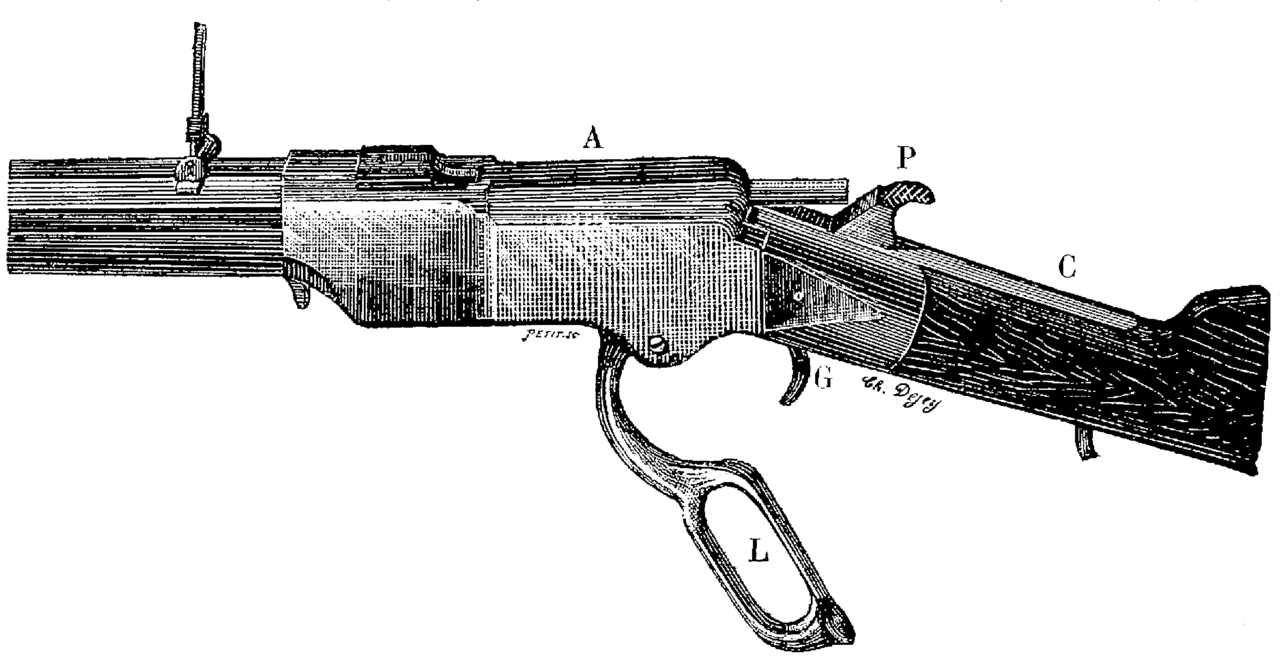
The Winchester Model 1894 was originally chambered for two black powder cartridges, the .32-40 Winchester and .38-55 Winchester. In 1895, Winchester changed to a steel composition capable of handling higher pressure rounds and offered the rifle in .25-35 Winchester and .30-30 Winchester. The .30-30 Winchester, also known as .30 WCF, became synonymous with the Model 1894. Starting in 1899, the rifle was also chambered in .32 Winchester Special. The design allowed cycling of longer cartridges than the Winchester 1892, as pulling the lever down brings the bottom of the receiver with it, creating more space without lengthening the receiver. The mechanism is complex but very reliable, though complete stripping requires a precise sequence and is rarely necessary. The Model 1894 was used by the United States government during World War I, with 1,800 commercial rifles and 50,000 .30-30 cartridges purchased for Army Signal Corps personnel in the Pacific Northwest. The Royal Navy purchased about 5,000 .30-30 caliber Model 94 rifles in 1914 for shipboard guard duty and mine-clearing. France purchased 15,100 Model 1894 carbines for motorcycle couriers, artillery troops, trench railway personnel, and some balloon units. During World War II, the rifle was used by the Canadian Pacific Coast Militia Rangers and provided to the British Home Guard. Captured examples from the United Kingdom were designated Gewehr 248(e) by the Wehrmacht. Three major design changes occurred after World War II: in 1964 after John M. Olin's resignation from Olin Corporation; in 1982 after Olin sold the factory to employees forming U.S. Repeating Arms Company; and in 1992 after USRAC's bankruptcy and purchase by FN Herstal. The 1964 changes made the rifle less expensive to produce; pre-1964 models command a premium. The rifle was also produced in revolver calibers such as .38 Special/.357 Magnum, .44 Special/.44 Magnum, .45 Colt, .38-40 Winchester, and .44-40 Winchester, with tubular magazine capacities of 9 to 13 rounds depending on barrel length.
Reader's Guide
The Winchester Model 1894's significance lies in its role as the first commercial American repeating rifle designed for smokeless powder, a technological leap that set the standard for lever-action firearms. Its combination of potent firepower in a compact, lightweight, and quick-shooting package made it extremely popular for hunting white-tailed deer in the dense forests of the Eastern United States, where most game is taken at short distances. This popularity led to it becoming the first sporting rifle to sell over 7,000,000 units and, as of 1983, the best-selling high-powered rifle in U.S. history. The rifle's legacy includes being given to three U.S. presidents: Calvin Coolidge in 1927, Harry S. Truman in 1948, and Dwight D. Eisenhower in 1953. It saw military service in both World Wars with American, British, French, and Canadian forces. Decades after production began, the Model 1894 action, stronger than earlier toggle-link designs, was adapted for modern high-pressure revolver cartridges, making it popular in Cowboy Action Shooting. U.S. production ceased in 2006, but reproductions are made by Miroku of Japan and imported by Browning Arms. One Model 1894 is on display at the Metropolitan Museum of Art.
Did You Know?
- The millionth Model 1894 was given to President Calvin Coolidge in 1927.
- The Model 1894 was used in the Utah execution of Ronnie Lee Gardner in 2010.
- France purchased 15,100 Model 1894 carbines for use by motorcycle couriers and artillery troops during World War I.
- The largest cartridge the 1894 action can accommodate is the .450 Marlin.
Gallery

Frequently Asked Questions
Who designed the Winchester Model 1894 and what type of rifle is it?
John Browning designed the Winchester Model 1894 in 1894 as a lever-action repeating rifle. It was the first commercial American repeating rifle built to operate with smokeless powder.
What calibers was the Winchester Model 1894 originally chambered in?
The rifle launched with the .32-40 Winchester and .38-55 Winchester cartridges. In 1895, the .30 WCF (later called the .30-30 Winchester) was added as the first smokeless powder option for the platform.
How many Winchester Model 1894 rifles were sold over its production run?
More than 7,000,000 units were sold during its roughly 86-year production span (1894–1980). It is recognized as the first commercial sporting rifle to cross the seven-million-unit mark.
Why is the Winchester Model 1894 considered so important in firearms history?
It became one of the most iconic hunting rifles ever produced and helped make the word "Winchester" a near-synonym for lever-action rifles in general. Its pioneering use of smokeless powder and its massive sales volume set a new benchmark for commercial sporting firearms.
What made the Winchester Model 1894 a breakthrough over earlier lever-action rifles?
Earlier lever-actions were designed around black powder, which limited their pressure tolerance and cartridge options. The Model 1894 was the first commercial American repeating rifle engineered from the ground up to safely handle the higher pressures of smokeless powder, opening the door to faster, more reliable cartridges.
More in Battle Rifles and Carbines, Part 2 1-24
Spotted an error? Know more?
Reader corrections go straight into our review queue. Suggest an edit · How this site is sourced