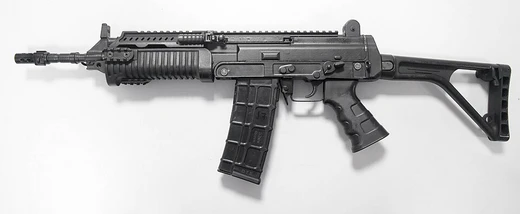
ArmaLite AR-10
The lightweight battle rifle that spawned the AR-15 platform.

Le-boulanger · CC BY-SA 4.0
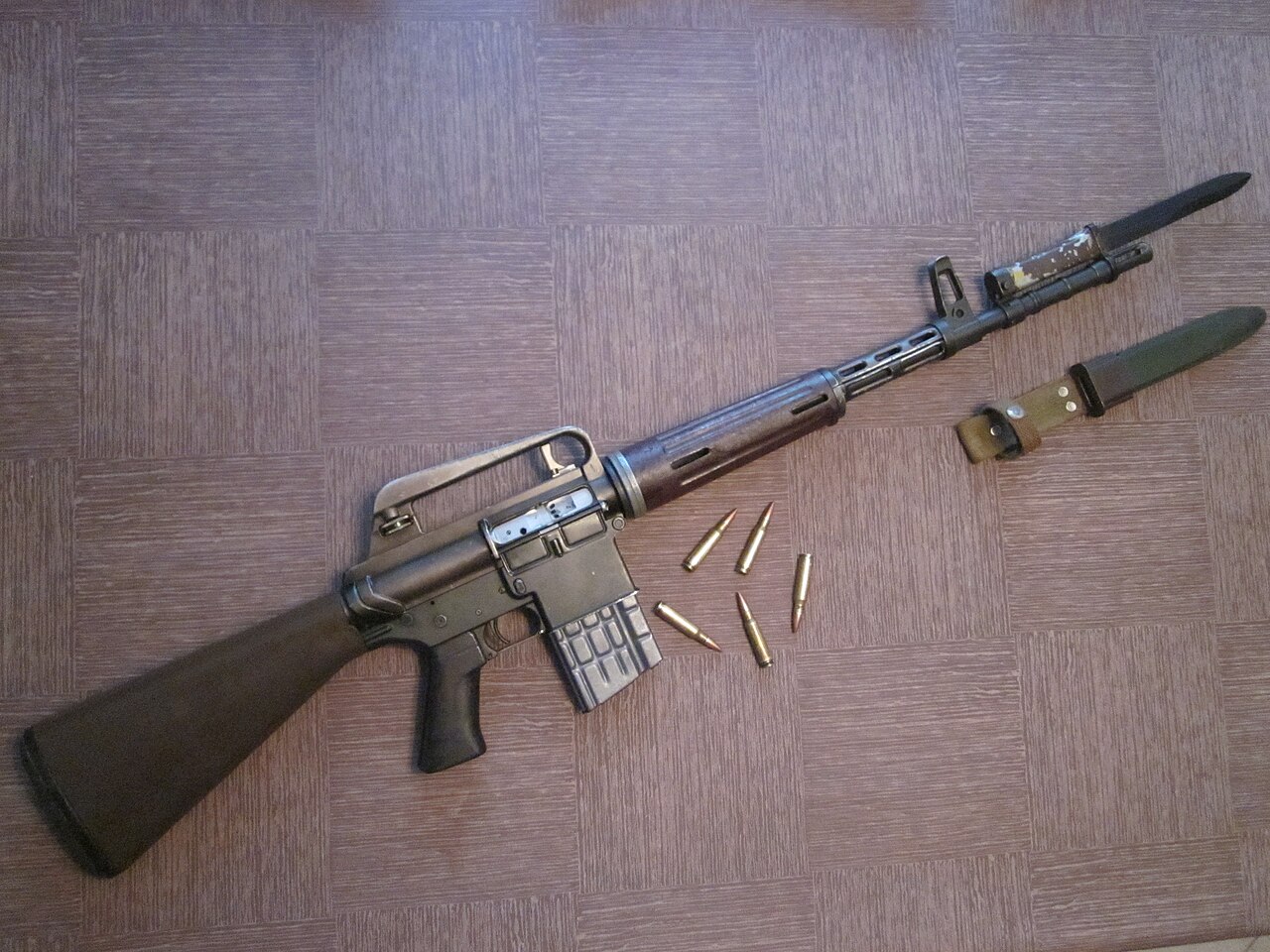
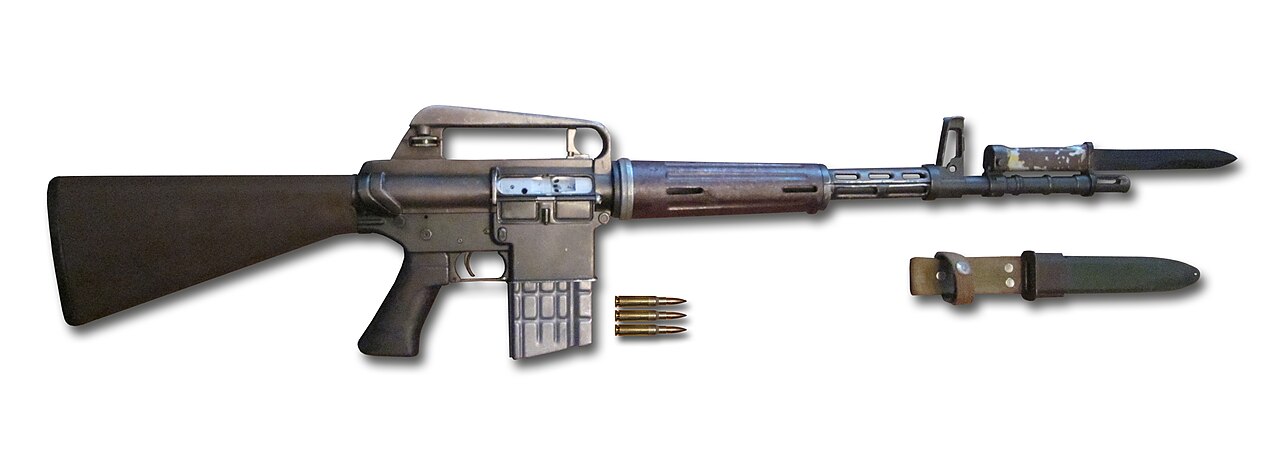
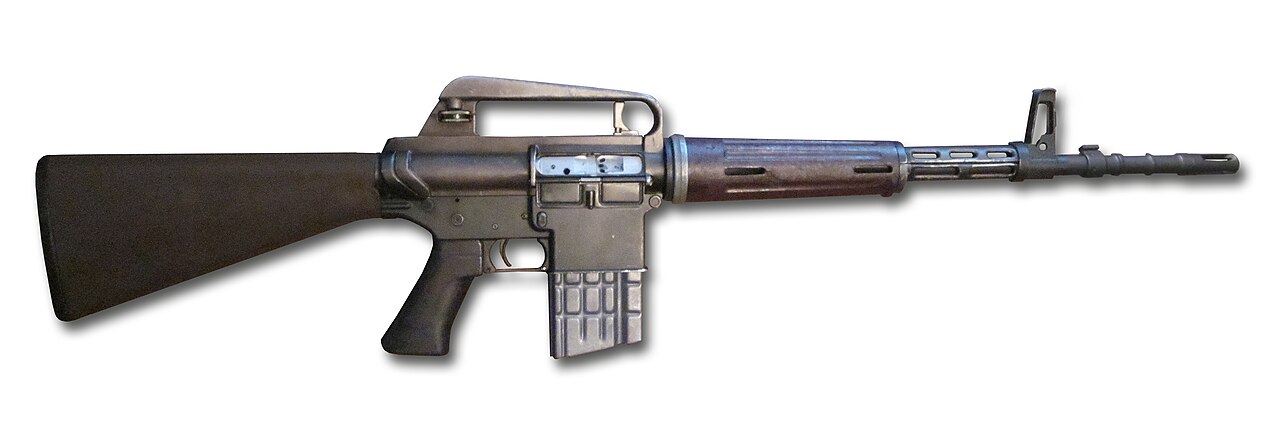
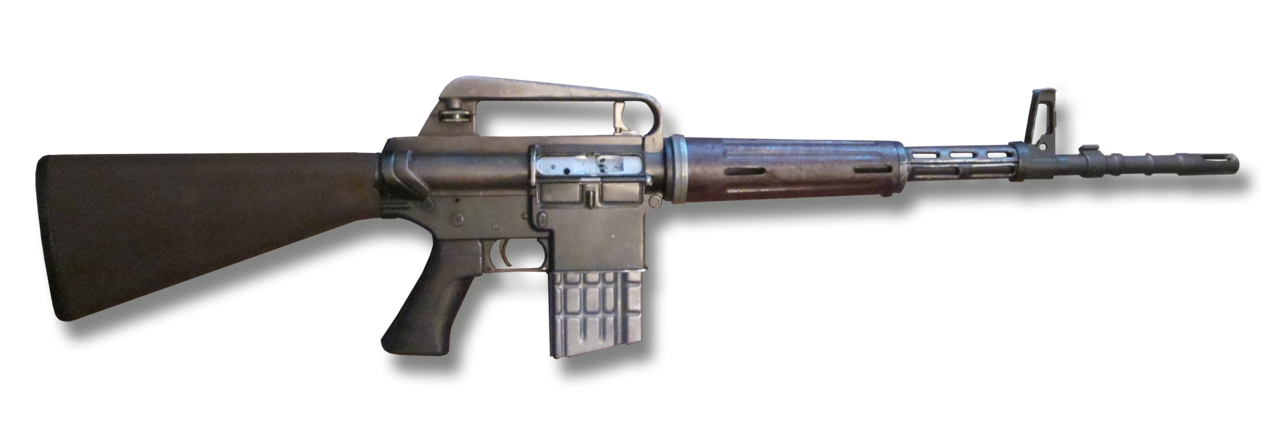
The ArmaLite AR-10 is a 7.62×51mm NATO battle rifle designed by Eugene Stoner in the late 1950s and built by ArmaLite, at the time a division of Fairchild Aircraft Corporation. It debuted in 1956 with a straight-line barrel and stock made of phenolic composite, a newly patented gas-operated bolt and carrier system, and forged alloy components, making it over a pound lighter than other infantry rifles of its era and easier to control during automatic fire. Fewer than 10,000 original AR-10s were ever assembled, but the design served as the sole foundation for the AR-15 rifle platform.
ArmaLite was a small engineering company founded by George Sullivan, Lockheed’s patent counsel, and funded by Fairchild Engine and Airplane Corporation. Incorporated on October 1, 1954, as a Fairchild subdivision, it was never meant to be a full-scale arms manufacturer; instead, it developed small arms concepts to sell or license to other producers. Sullivan leased a small machine shop in Hollywood, California, hired a few employees, and began work on a lightweight survival rifle for downed aircrew. While testing an AR-5 prototype at a shooting range, he met Eugene Stoner, a small arms inventor, and hired him as chief design engineer. As late as 1956, ArmaLite had only nine employees, including Stoner.
The first 7.62 mm AR-10 prototypes appeared between 1955 and early 1956, during U.S. Army trials to replace the M1 Garand. Competing designs included Springfield Armory’s T44E4 and T44E5, updated Garands chambered for the new 7.62 mm round, and Fabrique Nationale’s FN FAL as the T48. ArmaLite entered late, submitting two hand-built “production” rifles based on the fourth prototype in fall 1956. These prototypes had a straight-line stock, elevated sights, an oversized aluminum flash suppressor and recoil compensator, and an adjustable gas system. The fourth prototype introduced the hinged upper and lower receiver with takedown pins, and a non-reciprocating charging handle not attached to the bolt carrier. The AR-10 prototype weighed only 6.85 lb empty, and Springfield Armory test staff initially called it the best lightweight automatic rifle they had tested.
However, a composite aluminum/steel barrel—specified by ArmaLite’s president George Sullivan over Stoner’s objections—burst during a torture test in early 1957.
Quick Facts
- Origin
- United States
- Is Ranged
- Yes
- Service
- 1960–1976 (Portugal) / 1958–1985 (Sudan)
- Wars
- Portuguese Colonial War / First Sudanese Civil War / Dominican Civil War / Operation Seroja / Second Sudanese Civil War / Militias-Comando Vermelho conflict
- Designer
- Eugene Stoner
- Manufacturer
- ArmaLite / Artillerie-Inrichtingen (AI) / Colt's Manufacturing Company
- Production Date
- 1956–present
- Number
- 9,900
- Weight
- 3.29–4.05 kg (7.25–8.9 lb) w/o magazine
- Length
- 1050 mm
- Part Length
- 528 mm
- Cartridge
- 7.62×51mm NATO
Facts from the source article.
Lore & Background
ArmaLite began as a small engineering company founded by George Sullivan, patent counsel for Lockheed Corporation, and funded by Fairchild Engine and Airplane Corporation. Incorporated on October 1, 1954, as a subdivision of Fairchild, the company was never intended to be an arms manufacturer but rather focused on producing small arms concepts to be sold or licensed. Sullivan hired Eugene Stoner as chief design engineer after meeting him at a shooting range. The first prototypes of the 7.62 mm AR-10 emerged between 1955 and early 1956. The AR-10 entered the U.S. Army's competition to replace the M1 Garand late, submitting two hand-built production rifles based on the fourth prototype in the fall of 1956. The prototypes featured a straight-line stock design, rugged elevated sights, an oversized aluminum flash suppressor and recoil compensator, and an adjustable gas system. The fourth prototype introduced the now-familiar hinge and takedown pins, and the charging handle did not reciprocate. The rifle's aluminum/steel composite barrel burst during a torture test in early 1957, and though ArmaLite replaced it with a conventional steel barrel, the damage was done. The Army chose the T44 (M14) instead. ArmaLite completed about 50 production AR-10 rifles at its Hollywood workshop for demonstrator models; these later became known as the Hollywood model. On July 4, 1957, Fairchild ArmaLite sold a five-year manufacturing license to the Dutch arms manufacturer Artillerie Inrichtingen (A.I.). A.I. produced three main variants: the Sudanese model, the Transitional, and the Portuguese model. The Sudanese model, named after a sale of approximately 2,500 rifles to Sudan in 1958, weighed only 3.3 kg with an empty magazine and used a lightweight fluted steel barrel, prong-style flash suppressor, and fiberglass furniture.
Reader's Guide
The AR-10's significance lies in its role as the direct ancestor of the AR-15 platform, which after being sold to Colt's Manufacturing Company in 1959 and modified, became the U.S. military's M16 rifle. Despite its limited production—fewer than 10,000 rifles—the AR-10 introduced design features that defined a generation of firearms: the straight-line stock, gas-operated bolt and carrier system, and lightweight alloy construction. Its development history illustrates the challenges of introducing a radical new design against established competitors. The rifle's failure in U.S. Army trials due to a flawed composite barrel, and the subsequent loss of a Nicaraguan order after a bolt lug failure, highlight the difficulties of early production. Nevertheless, the AR-10 saw limited military service with countries including Guatemala, Burma, Italy, Cuba, Sudan, and Portugal. Sudanese AR-10s remained in service with Special Forces until 1985. The design's legacy is most evident in the ubiquitous AR-15 and its derivatives, which dominate the civilian and military markets today.
Did You Know?
- The AR-10 prototype weighed only 6.85 lb empty, making it over 1 lb lighter than other infantry rifles of its day.
- Fewer than 10,000 original AR-10 rifles were ever assembled.
- The Sudanese model AR-10 weighed only 3.3 kg with an empty magazine and cost US $225 per rifle including cleaning kit and four magazines.
- The AR-10's charging handle did not reciprocate and was not attached to the bolt carrier.
Radical Engineering in a Tiny Hollywood Workshop
The AR-10 represented a radical departure from conventional rifle engineering in the mid-1950s. Eugene Stoner's design married a straight-line barrel-and-stock configuration with phenolic composite materials, a newly patented gas-operated bolt and carrier mechanism, and forged alloy components. The result was a 7.62×51mm NATO battle rifle weighing just 6.85 pounds empty—more than a pound lighter than competing infantry weapons of the era—while remaining remarkably controllable in full-automatic fire. The fourth prototype introduced the hinged upper and lower receivers joined by takedown pins, along with a non-reciprocating charging handle that operated independently of the bolt carrier. An adjustable gas system and an oversized aluminum flash suppressor doubling as a recoil compensator rounded out the feature set. Yet the design also carried inherent risk: the aluminum-and-steel composite barrel, a specification imposed by ArmaLite president George Sullivan over Stoner's vehement objections, proved to be a critical structural vulnerability that would ultimately derail the rifle's military career.
A Late Entry and a Lost Competition
The AR-10 entered the U.S. Army's rifle selection process in the fall of 1956 as a late and somewhat desperate entry. Two hand-built rifles based on the fourth prototype were rushed to Springfield Armory to compete against Springfield's T44E4 and T44E5—essentially updated M1 Garands chambered for the new 7.62mm round—and Fabrique Nationale's FN FAL, designated T48. Initial tester feedback was encouraging; some evaluators called it the best lightweight automatic rifle the Armory had ever assessed. But the composite barrel ruptured during a torture test in early 1957. ArmaLite quickly swapped in a conventional steel barrel, yet the final report still recommended against adoption, noting it would require five years or more of additional testing. The Army, desperate for a modern magazine-fed rifle to replace the aging M1 Garand, selected the more mature T44, which entered production as the M14 in 1957. The AR-10, still essentially a prototype, simply could not match the development timelines of its established rivals.
The Somoza Incident and the Hollywood Model Defects
The AR-10's early production history was marred by a string of alarming mechanical failures. The fifty so-called Hollywood model rifles, assembled at ArmaLite's small workshop in Hollywood, California, included several units with improperly machined barrel extensions—a defect that went undetected at the time. The most dramatic incident occurred in 1957 when arms dealer Samuel Cummings was courting a 7,500-rifle order from Nicaragua. The contract hinged on the rifle passing a 7,500-round endurance trial. With production rifles in short supply, Cummings left his personal demonstrator with General Anastasio Somoza, Nicaragua's chief military commander, who conducted the firing test himself. Midway through, the bolt lug above the ejector sheared clean off and flew past the general's head. Somoza furiously returned the rifle and voided the entire order. ArmaLite subsequently inspected and refitted the remaining Hollywood rifles with corrected parts to prevent any recurrence of the bolt lug failure.
Sole Ancestor of the M16 Lineage
Though the AR-10 itself saw limited production—fewer than 10,000 units over its entire run—its true significance lies in what it spawned. In 1957, ArmaLite rescaled and substantially reworked the design to chamber the .223 Remington cartridge, creating the AR-15. Financial pressures, limited manpower, and constrained production capacity forced ArmaLite to sell its rights to both the AR-10 and AR-15 to Colt's Manufacturing Company in 1959. Colt then made key modifications: relocating the charging handle from beneath the carrying handle to the rear of the receiver and shifting the caliber to 5.56×45mm NATO. The redesigned rifle was adopted by the U.S. military as the M16. Colt retained the AR-15 trademark for its line of semi-automatic-only rifles marketed to civilian and law-enforcement customers. In this way, the modest 7.62mm rifle that never won an Army contract became the sole ancestor of the most influential rifle platform of the modern era.
Gallery
Frequently Asked Questions
Who designed the ArmaLite AR-10 and who manufactured it?
Eugene Stoner created the design in the late 1950s, and the rifle was built by ArmaLite, which at the time operated as a division of Fairchild Aircraft Corporation.
What cartridge does the ArmaLite AR-10 chamber, and what magazine does it use?
It fires the 7.62×51mm NATO round and is fed by a 20-round lightweight aluminum 'waffle' magazine.
How many original AR-10 rifles were actually produced?
Fewer than 10,000 units were ever assembled, making it a comparatively rare platform despite its outsized influence on later rifle designs.
What is the ArmaLite AR-10's most significant legacy?
It served as the sole design foundation from which the AR-15 rifle platform was developed, making it the direct ancestor of one of the most widely adopted rifle families in the world.
Why was the AR-10 lighter and easier to control than other infantry rifles of its era?
Stoner combined a straight-line barrel, a phenolic composite stock, a newly patented gas-operated bolt and carrier, and forged alloy parts, shaving more than a pound off the weight and improving full-auto controllability.
More in Battle Rifles and Carbines, Part 2 1-24
Spotted an error? Know more?
Reader corrections go straight into our review queue. Suggest an edit · How this site is sourced