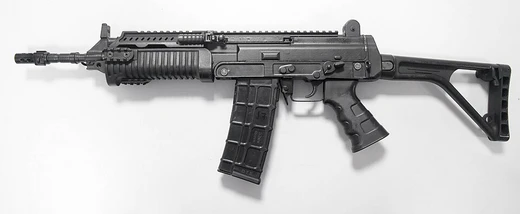
FN FAL
A widely adopted NATO battle rifle known as the right arm of the free world.

Bouillant Achille · CC BY-SA 4.0
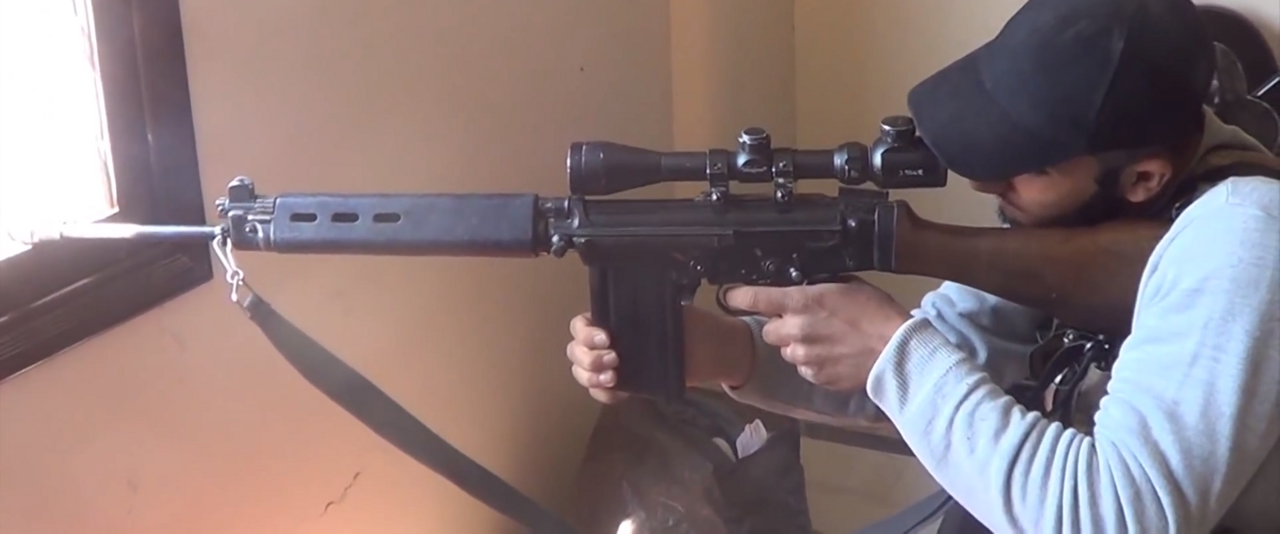
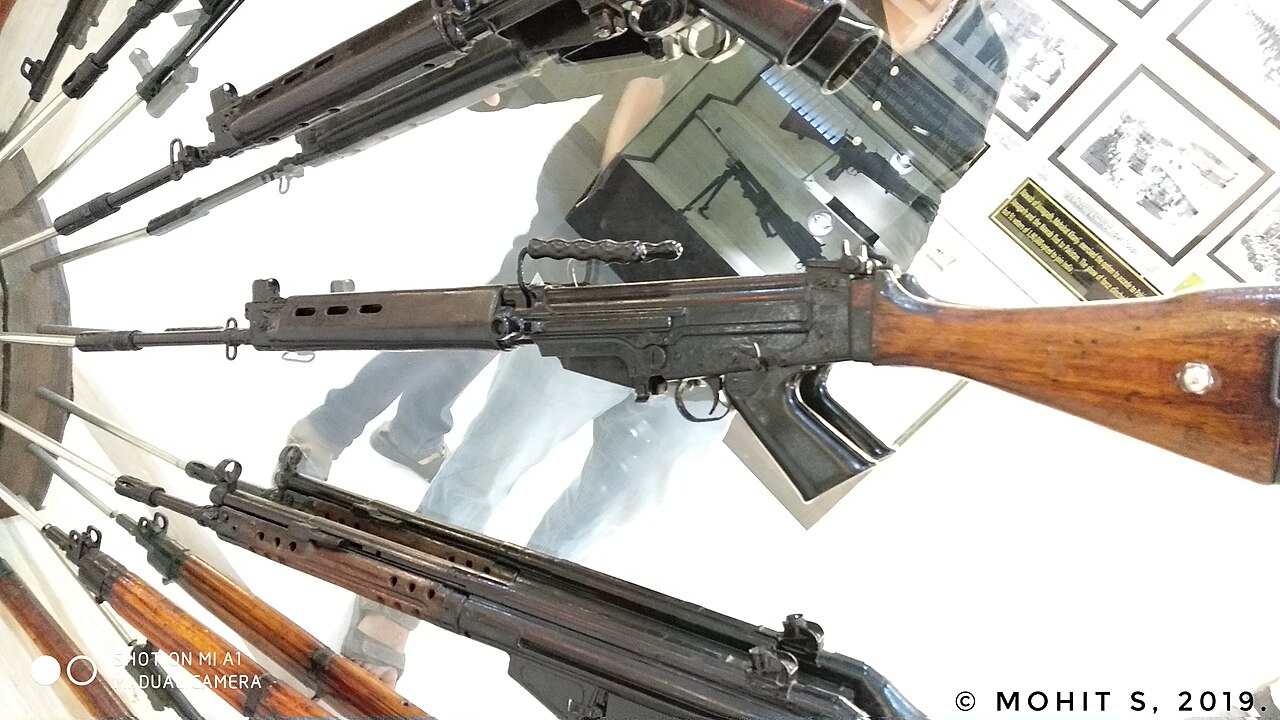
The FN FAL is a battle rifle designed in Belgium by Dieudonné Saive, with production by FN Herstal and other manufacturers beginning in 1953. During the Cold War, many NATO countries adopted it, though the United States was a notable exception. It has been used by over 90 nations, earning the nickname "the right arm of the free world."
The first FAL prototype was completed in 1946, designed for the German 7.92×33mm Kurz cartridge used in the Sturmgewehr 44. After testing in 1948, the British Army requested additional prototypes, including a bullpup version chambered for the .280 British intermediate cartridge. FN built one bullpup prototype but chose to stick with the original conventional design for production.
In 1950, the UK presented both the redesigned FN rifle and the British EM-2, both in .280 British, to the United States for comparison against the U.S. Army's T25. The goal was a common NATO cartridge and rifle. U.S. officials then suggested FN redesign the rifle for the U.S. prototype ".30 Light Rifle" cartridge. FN hedged its bets, striking a deal in 1951 allowing the U.S. royalty-free production, as the UK seemed to favor the EM-2. The British Army initially adopted the EM-2 (as Rifle No.9 Mk1) and the .280 British, but this was reversed after the 1951 General Election brought Winston Churchill back as Prime Minister. A likely quid pro quo between Churchill and President Harry Truman in 1952 saw the British accept the .30 Light Rifle as the NATO standard (later 7.62mm NATO) in exchange for U.S. acceptance of the FAL as the NATO standard. However, the U.S. insisted on further tests, pitting the FAL in .30 Light Rifle against the redesigned T47 and an M1 Garand variant, the T44. The T44 won, becoming the M14, but most other NATO countries were already evaluating and selecting the FAL.
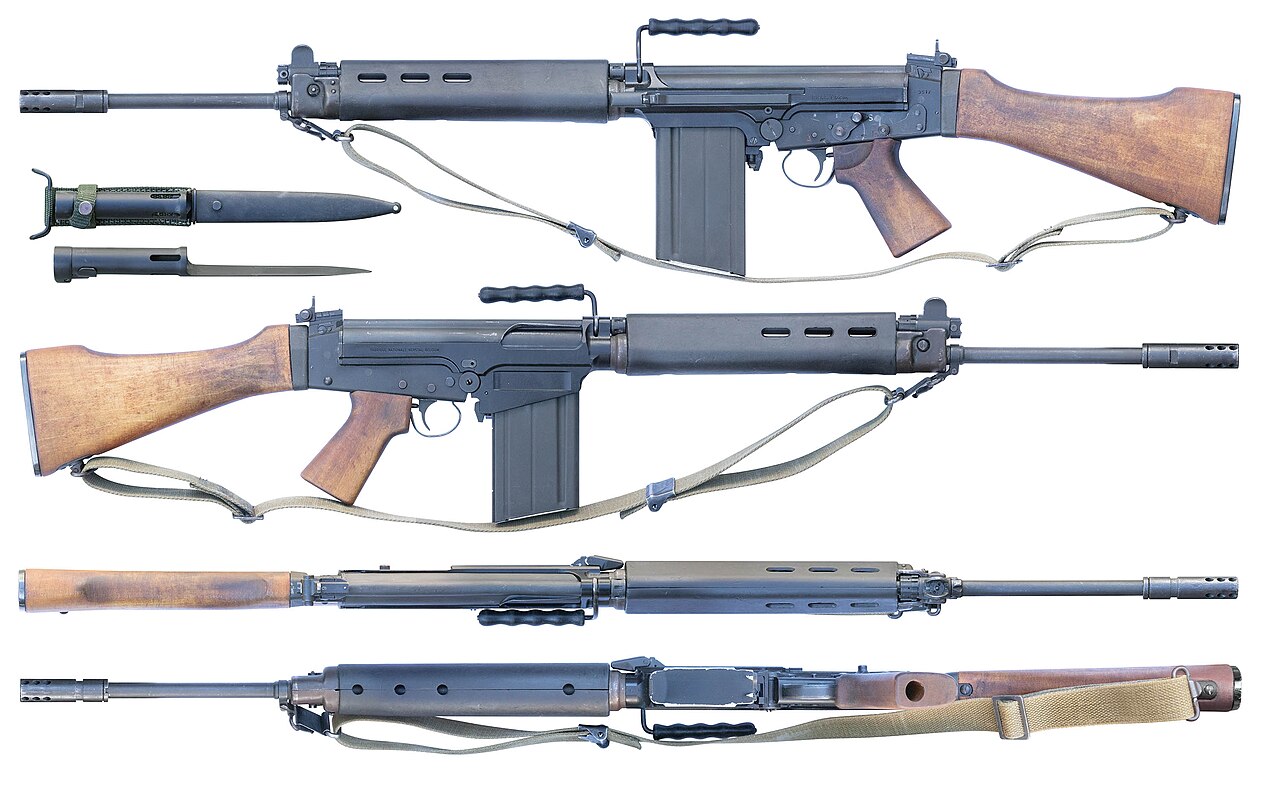
Formally introduced by Saive in 1951 and produced from 1953, the FAL is gas-operated, similar to the Soviet SVT-40, with a short-stroke piston and a tilting breechblock that locks into the receiver. A gas regulator behind the front sight allows adjustment for conditions, and the gas system can be bypassed for rifle grenades. Magazine capacities range from 5 to 30 rounds, with 20-round magazines being most common. Fixed-stock models house the recoil spring in the stock; folding-stock versions house it in the receiver cover, requiring different parts.
Quick Facts
- Service
- 1953–present
- Designer
- Dieudonné Saive
- Number
- 7,000,000
- Spec Label
- FAL 50
- Length
- 1090 mm
- Action
- Short-stroke gas piston, closed tilting breechblock
- Origin
- Belgium
- Is Ranged
- yes
- Used By
- 90+ countries (See Users)
- Design Date
- 1947–1953
- Manufacturer
- FN Herstal / IMBEL / Fabricaciones Militares / Rifle Factory Ishapore
- Production Date
- 1953–1988 (FN Herstal) · 1953–present (licensed manufacturers)
Facts from the source article.
Lore & Background
The first FAL prototype was completed in 1946, designed to fire the 7.92×33mm Kurz cartridge. After testing in 1948, the British Army urged FN to build additional prototypes, including a bullpup chambered for .280 British. FN returned to the conventional design for future production. In 1950, the UK presented the FN rifle and the British EM-2, both in .280 British, to the US for comparison testing. US officials suggested FN redesign the rifle to fire the US prototype '.30 Light Rifle' cartridge. FN made a deal in 1951 allowing the US to produce FALs royalty-free. The British initially adopted the EM-2, but after the 1951 General Election, Winston Churchill returned as Prime Minister and a quid pro quo agreement with US President Harry Truman in 1952 led to British acceptance of the .30 Light Rifle cartridge as NATO standard in return for US acceptance of the FAL. The .30 Light Rifle was later standardized as 7.62mm NATO. The FAL went up against the T47 and T44 (an M1 Garand variant); the T44 won, becoming the M14. Most other NATO countries evaluated and selected the FAL. The FAL operates with a gas system similar to the Soviet SVT-40, using a short-stroke piston and tilting breechblock. It has a gas regulator behind the front sight base and can bypass the piston system for rifle grenades. Field stripping involves opening the rifle around a pivot lock between the trigger guard and magazine well. The FAL was manufactured in light and heavy-barrel configurations, the latter intended as a squad light support weapon.
Reader's Guide
The FAL's significance lies in its widespread adoption during the Cold War, serving as the standard battle rifle for most NATO countries and many others, with the notable exception of the United States. Its designation as 'the right arm of the free world' reflects its use by nations identifying with that bloc. The rifle's design history involved a complex interplay of British, American, and Belgian interests, ultimately leading to the adoption of the 7.62mm NATO cartridge. The FAL's gas system, adjustable via a regulator, allowed it to function reliably with various ammunition and reduced recoil compared to other 7.62mm battle rifles. However, in fully automatic mode, recoil made it difficult to control, leading many forces to eliminate automatic fire training for light-barrel versions. The FAL was produced in numerous variants, including heavy-barrel squad automatic weapons (like the FALO) and folding-stock paratrooper models. Its Warsaw Pact counterpart was the AKM, and some countries, such as Israel and South Africa, manufactured and issued both designs at various times. The FAL's legacy is that of a widely distributed and influential battle rifle that shaped infantry armament for decades.
Did You Know?
- The FAL was originally designed for the intermediate .280 British cartridge before being chambered in 7.62×51mm NATO.
- A license-built version of the FAL was produced by the United Kingdom and Commonwealth as the L1A1 Self-Loading Rifle.
- The FAL's gas system can be bypassed completely to allow firing rifle grenades and manual operation.
- The FAL 50.63 paratrooper version had a folding charging handle and a 440 mm barrel to fit through the doorway of a C-119 Flying Boxcar.
Origins & Design Philosophy
Dieudonné Saive completed the first FAL prototype in 1946, chambered for the 7.92×33mm Kurz cartridge that German forces had employed with the Sturmgewehr 44 during World War II. British testing in 1948 prompted further development, and FN explored a bullpup configuration in the new .280 British intermediate cartridge. After evaluating that single bullpup prototype, the company returned to Saive's original conventional layout for production. The rifle operates through a gas system closely resembling the Soviet SVT-40, employing a short-stroke spring-loaded piston positioned above the barrel. Its locking mechanism uses a tilting breechblock that drops into a solid metal shoulder within the heavy receiver—a concept shared with the Soviet SKS and French MAS-49. A gas regulator sits behind the front sight base, letting the shooter tune the system to environmental conditions, and the gas plug can be bypassed entirely for rifle grenade firing or manual cycling. Saive formally introduced the design in 1951, and production began two years later.
The NATO Standardization Saga
In 1950, the United Kingdom presented the redesigned FN rifle alongside their own EM-2 to the United States for comparative testing against Earle Harvey's T25, hoping to establish a common cartridge and rifle for all NATO armies. U.S. officials then suggested FN redesign for the American ".30 Light Rifle" cartridge. With Britain apparently favoring the EM-2, FN hedged by offering the U.S. royalty-free production rights in 1951. Britain's Labour government initially adopted the EM-2 and .280 British, but this reversed after Churchill returned as Prime Minister following the 1951 election. A widely believed quid pro quo between Churchill and President Truman in 1952 saw Britain accept the .30 Light Rifle as NATO standard in exchange for U.S. acceptance of the FAL. The cartridge was later standardized as 7.62×51mm NATO. Yet the U.S. insisted on further testing, and the T44—later redesignated the M14—ultimately won for American forces, leaving the United States as the notable NATO exception.
Global Adoption & Legacy
The FAL earned the enduring nickname "the Right Arm of the Free World" through its adoption by more than ninety countries during the Cold War era. It became the standard battle rifle across much of NATO, with the United Kingdom and the broader Commonwealth issuing a license-built variant designated the L1A1 Self-Loading Rifle. In the opposing bloc, the AKM served as the FAL's Warsaw Pact counterpart, each design fielded and produced by dozens of nations. A handful of countries, including Israel and South Africa, at various times manufactured and issued both the FAL and the AKM simultaneously. The rifle's chambering in 7.62×51mm NATO made it a unifying platform across allied forces, and its widespread production by FN Herstal and numerous license holders cemented its place as one of the most broadly distributed rifles in military history. Its legacy endures as the defining battle rifle of the post-war free world.
Mechanical Character & Practical Use
Magazine capacity for the FAL ranges from five to thirty rounds, with twenty-round boxes being the standard issue. In fixed-stock models the recoil spring lives in the stock, while folding-stock variants house it in the receiver cover, requiring a different cover, spring, bolt carrier, and modified lower receiver. Field stripping is accomplished by rotating the rifle around a two-piece pivot lock and pin assembly located between the trigger guard and magazine well. This opening method creates a suboptimal sight line because the rear sight sits on the lower receiver while the front sight is fixed to the upper receiver and barrel—two separate movable subassemblies. The FAL was produced in both light and heavy barrel configurations, the latter intended for sustained automatic fire as a squad support weapon, typically fitted with a bipod. Despite the adjustable gas regulator allowing the shooter to bleed off excess gas and reduce recoil, full-auto fire on the light-barrel model climbs off-target quickly, leading many forces to abandon automatic-fire training on that variant.
Gallery
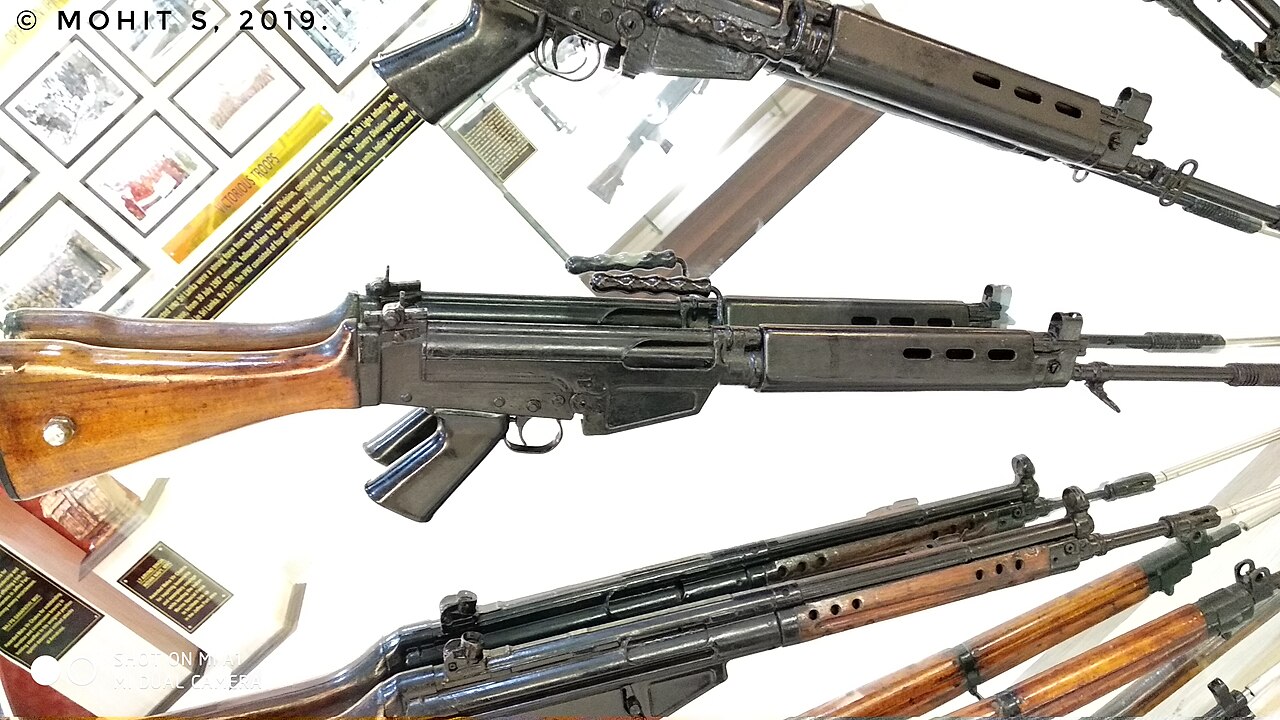
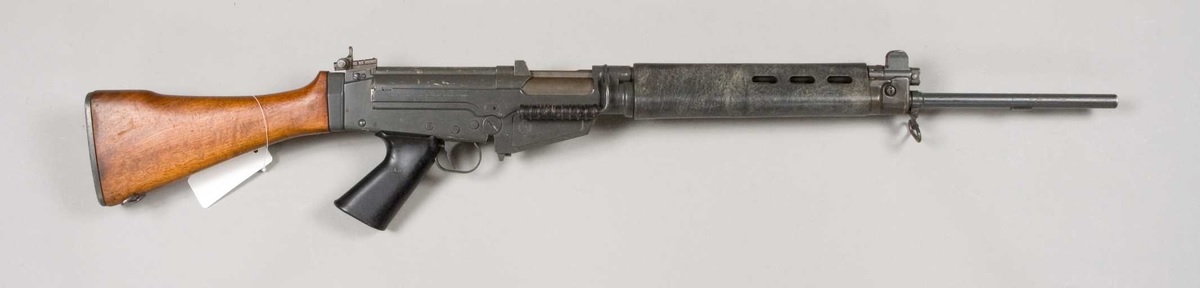
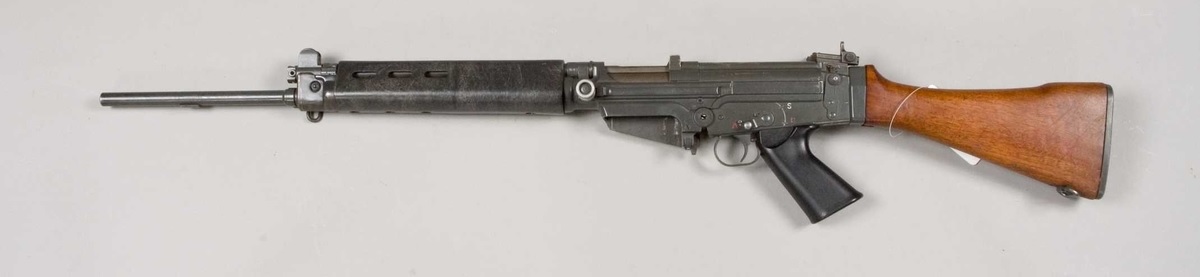
Frequently Asked Questions
Who designed the FN FAL and when did it enter service?
Dieudonné Saive at FN Herstal in Belgium created the rifle, with the very first prototype finished in 1946. The design was formally introduced in 1951, and full production by FN and licensed manufacturers picked up in 1953.
What role did the FN FAL play during the Cold War?
It became the default battle rifle for a vast number of NATO-aligned and allied militaries, with more than 90 nations fielding some variant. The United States was the most prominent exception, sticking with its own M14 and later the M16 instead.
Why is the FN FAL nicknamed 'the right arm of the free world'?
The label reflects the extraordinary breadth of its adoption across Western and allied forces throughout the Cold War era. Very few other small arms of that period matched its international footprint.
What are the FN FAL's core technical specifications?
It uses a gas-operated, short-stroke-piston action with a tilting breechblock, and most variants accept 20-round detachable box magazines (though capacities range from 5 to 30 rounds). The standard chambering is 7.62×51mm NATO, although earlier prototypes were built around the .280 British intermediate round.
How did the FN FAL's development actually begin?
Saive's 1946 prototype was originally chambered for the 7.92×33mm Kurz cartridge used in the German StG 44, making it one of the earliest post-war attempts at a full-automatic rifle. After 1948 trials caught the British Army's eye, the design was reworked for the .280 British before ultimately settling on 7.62 NATO.
More in Battle Rifles and Carbines, Part 2 1-24
Spotted an error? Know more?
Reader corrections go straight into our review queue. Suggest an edit · How this site is sourced