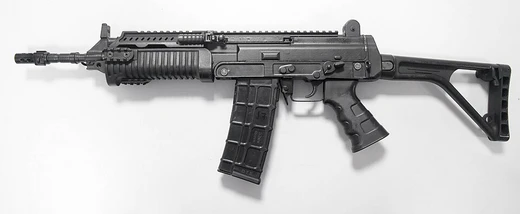
SKS
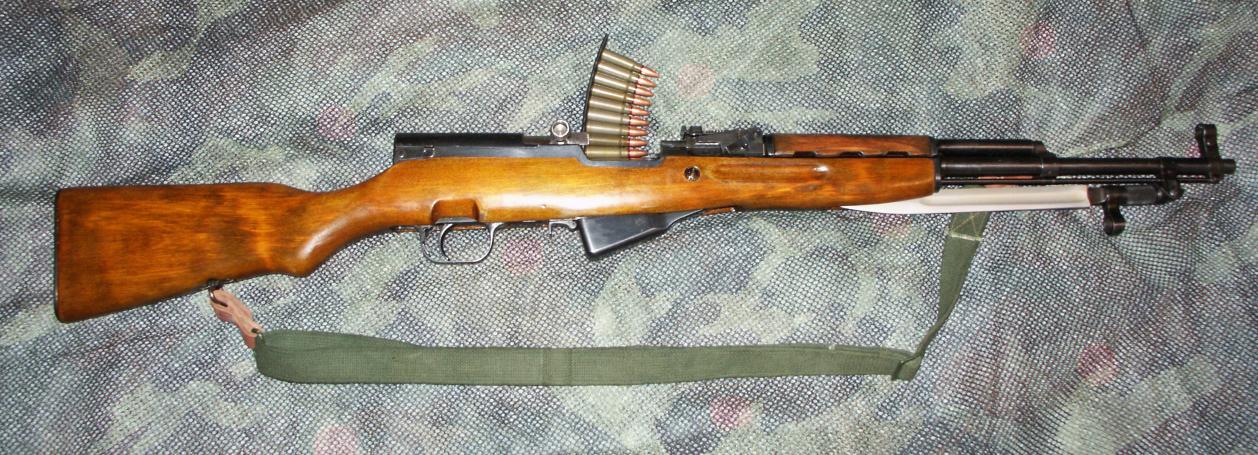
Soviet semi-automatic carbine, widely exported and used by insurgent forces.

Stephen Z · CC BY-SA 2.0
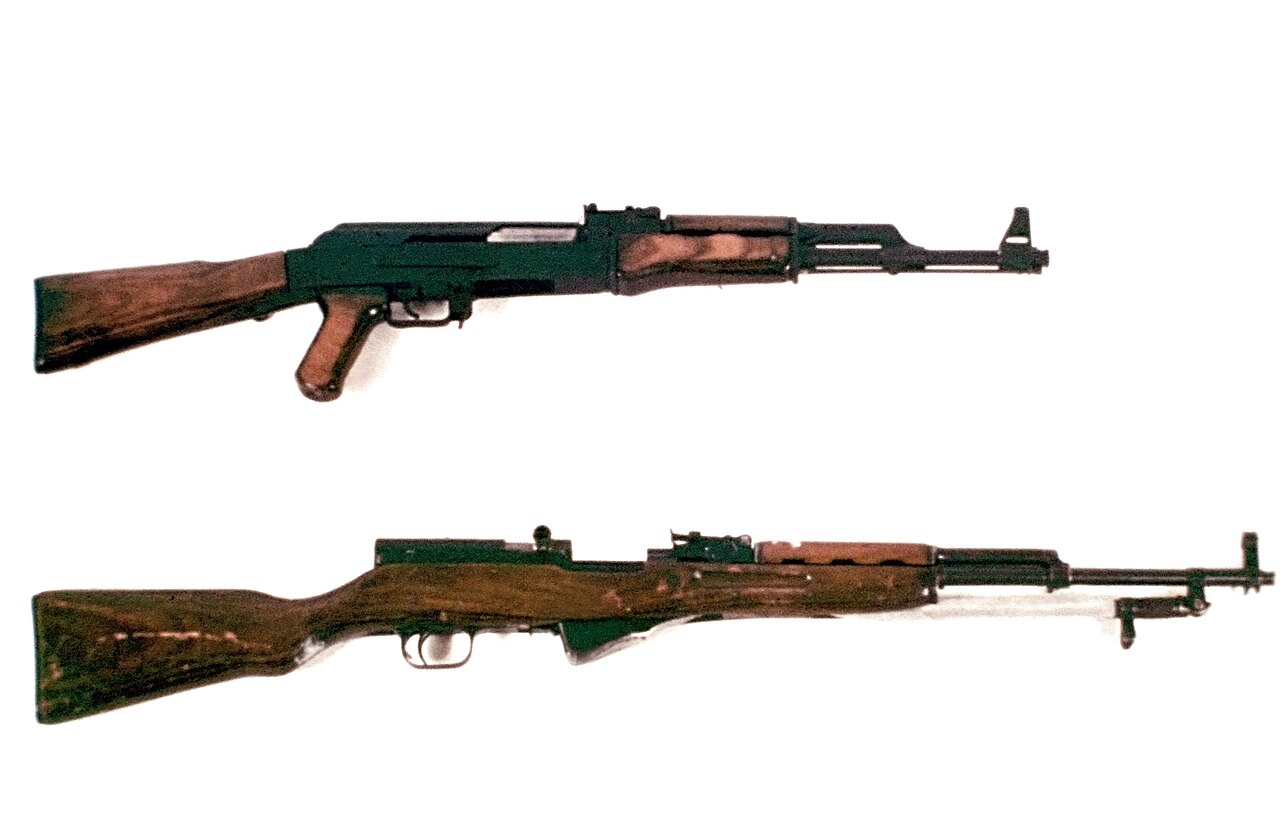
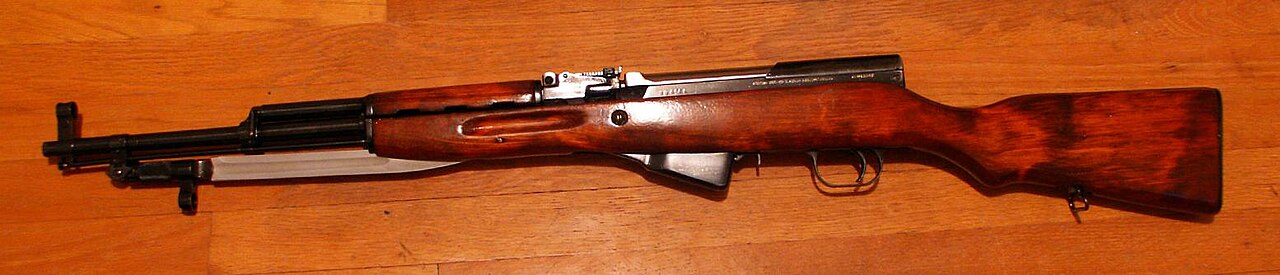
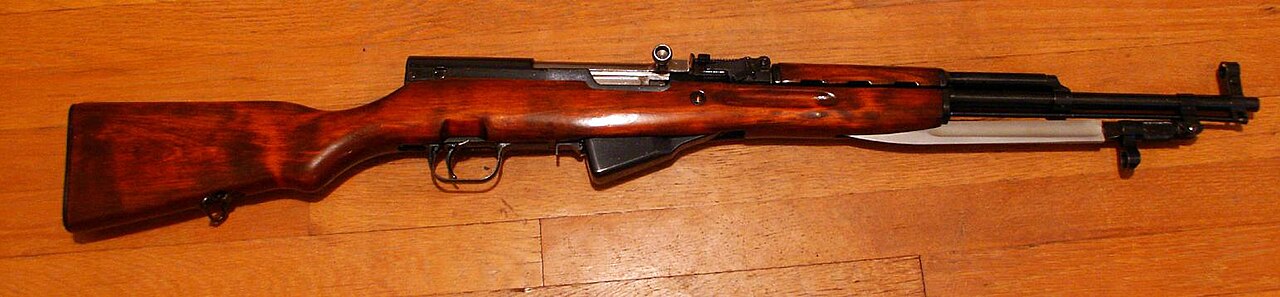
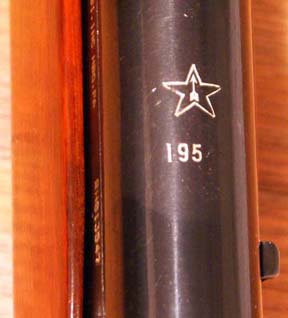
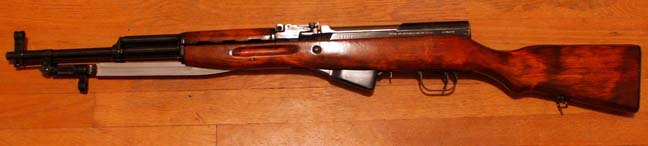
The SKS is a semi-automatic carbine created by Soviet firearms designer Sergei Gavrilovich Simonov during the 1940s. Initial production took place in the Soviet Union, but the weapon was later manufactured under license and exported extensively to many countries. Its most notable features are a permanently attached folding bayonet and a hinged, fixed magazine. Because it lacked a select-fire capability and held only ten rounds in its magazine, the SKS was made obsolete in the Eastern Bloc once the AK-47 series of rifles appeared in the 1950s. Even so, the carbine remained in use for decades with Soviet Border Troops, as well as second-line and reserve army units.
The Tula Arsenal produced the SKS from 1949 to 1958, and the Izhevsk Arsenal manufactured it from 1953 to 1954. In total, the Soviet Union built 2.7 million SKS carbines. During the Cold War, millions more SKS carbines and their variants were made under license in the People’s Republic of China and in several other Eastern Bloc allied nations. The weapon was exported in huge numbers and became popular with insurgent groups worldwide, valued as a practical firearm suitable for guerrilla warfare despite its drawbacks.
Starting in 1988, millions of SKS rifles were sold on the civilian market in Canada and the United States, where they remain common as hunting and sporting firearms.
The SKS operates as a gas‑operated carbine with a conventional wooden stock and a fixed ten‑round box magazine housed inside the receiver. It uses a tilting bolt and a gas piston operating rod: when a round is fired, some gas from the bore is diverted through a gas port to push the piston head. The piston moves rearward, and the tappet strikes the bolt carrier. A spring then returns the tappet and piston forward. The bolt carrier travels rearward, lifting and unlocking the bolt, which continues back against the recoil spring. This ejects the spent cartridge case, and as the recoil spring pushes the bolt forward, it strips a fresh round from the magazine and chambers it.
The magazine can be loaded by hand or with a stripper clip that fits into the bolt carrier. To load, the cocking handle on the right side of the bolt is pulled back; if the magazine is empty, the bolt stays open. After the magazine is fully loaded, the bolt is pulled slightly back and released, chambering the first round.
Quick Facts
- Origin
- Soviet Union
- Is Ranged
- Yes
- Service
- 1949–present
- Designer
- Sergei Gavrilovich Simonov
- Design Date
- 1941–1944
- Production Date
- 1949–1958 / (Soviet Union) · 1956–1980 / (China)
- Number
- 5,000,000–15,000,000
- Weight
- 3.85 kg
- Length
- 1.021 m / (with bayonet folded)
- Part Length
- 521 mm
- Cartridge
- 7.62×39mm
Facts from the source article.
Lore & Background
The SKS was developed in response to the Soviet Union's interest in an intermediate rifle cartridge, spurred by captured German 7.92×33mm Kurz ammunition. By the end of 1943, Soviet technicians had developed the 7.62×39mm M43 cartridge, and Simonov offered his design, which had been in development since 1941. Early prototypes were chambered for the 7.62×25mm Tokarev pistol cartridge and the 7.62×54mmR cartridge, but the final version used the new intermediate round. The SKS was manufactured at Tula Arsenal from 1949 to 1958 and at Izhevsk Arsenal from 1953 to 1954, with a total of 2.7 million produced in the Soviet Union. Throughout the Cold War, millions more were manufactured under license in the People's Republic of China and other Eastern Bloc allied countries.
The SKS is gas-operated with a conventional wooden stock and a fixed ten-round box magazine enclosed inside the receiver. It uses a tilting bolt and a gas piston operating rod. The magazine can be loaded by hand or from a stripper clip. When the magazine is expended, a stud on the magazine follower engages the bolt hold open. Most variants have a free-floating firing pin, which requires careful cleaning to prevent slamfires. The front sight is a hooded post, and the rear sight is an open notch adjustable for elevation from 100 to 1000 m, with a battle setting at 300 m. All military SKSs have a bayonet attached to the underside of the barrel, either blade or spike type.
Reader's Guide
The SKS was rendered obsolete in the Eastern Bloc by the AK-47 series, but it continued to serve with Soviet Border Troops and second-line and reserve army units for decades. Its export in vast quantities made it a favored weapon for insurgent forces worldwide, valued as a utilitarian weapon adequate for guerrilla warfare despite its limitations. Beginning in 1988, millions were sold on the civilian market in Canada and the United States, where they remain popular as hunting and sporting rifles. The SKS trades some accuracy for ruggedness, reliability, ease of maintenance, ease of use, and low manufacturing cost. Its design includes a cleaning kit stored in a trapdoor in the buttstock, with a cleaning rod under the barrel. The rifle is easily field stripped without specialized tools, and the trigger group and magazine can be removed with an unfired cartridge or the receiver cover.
Did You Know?
- The SKS was designed by Sergei Gavrilovich Simonov in the 1940s.
- Soviet production totaled 2.7 million carbines, manufactured at Tula and Izhevsk arsenals.
- Most SKS variants have a free-floating firing pin that can cause slamfires if not properly cleaned.
- The SKS was exported in vast quantities and became popular with insurgent forces worldwide.
Engineering Philosophy and Internal Mechanics
The SKS operates on a gas-piston system in which a portion of propellant gas is channeled through a port in the barrel to strike a piston head. This drives the piston rearward, where a tappet strikes the bolt carrier, causing it to lift and unlock the tilting bolt. The bolt then travels back against a recoil spring, ejecting the spent case, and the spring-driven return stroke strips the next round from the fixed ten-round box magazine into the chamber. Loading is accomplished either manually or via a stripper clip that seats in the bolt carrier; the shooter retracts the cocking handle on the bolt's right side, and once the magazine is full, releasing the bolt chambers the first round. An empty-magazine indicator works through a small stud on the follower that engages a bolt hold-open. A notable quirk of the design is the free-floating firing pin found in most variants (early 1949–50 Tula models used spring-loaded pins). If the pin sticks forward—often due to residual cosmoline after long storage—it can produce a slamfire, an unintended discharge without the trigger being pulled. The pin's triangular cross-section means it fits in only one orientation, and incorrect insertion is another slamfire risk.
Production Scale and International Proliferation
Soviet production of the SKS ran from 1949 through 1958 at the Tula Arsenal, with the Izhevsk Arsenal contributing output from 1953 to 1954. In total, the Soviet Union manufactured approximately 2.7 million carbines. However, the weapon's reach extended far beyond Soviet borders. Throughout the Cold War, millions of additional SKS carbines and their derivatives were produced under license in the People's Republic of China—most notably as the Type 56—and in a number of other Eastern Bloc–aligned nations. The rifle was exported in vast quantities and found particular favor among insurgent and guerrilla forces worldwide, valued as a utilitarian weapon adequate for irregular warfare despite its inherent limitations. The Yugoslavian variant stands apart in one notable design detail: unlike virtually all other SKS barrels, which are chrome-lined to resist corrosion from chlorate-primed corrosive ammunition, improve heat tolerance under sustained fire, and simplify bore cleaning, the Yugoslavian model omits this lining. Both spike and blade bayonet configurations were produced across the various national variants, with spike types appearing on the 1949 Tula SKS-45, the Chinese Type 56 from mid-1964 onward, and the Albanian Model 561.
Military Service and the Path to Obsolescence
The SKS emerged in the 1940s from the workshop of Sergei Gavrilovich Simonov, a Soviet small-arms designer, as a semi-automatic carbine intended to complement the Red Army's existing armament. During World War II, the Soviet Union had fielded semi-automatic and select-fire rifles such as the AVS-36, SVT-38, and SVT-40, yet the primary service rifle remained the bolt-action Mosin–Nagant chambered in the powerful 7.62×54mmR cartridge. The SKS, however, lacked select-fire capability and was limited to a ten-round magazine, two constraints that would ultimately define its military ceiling. In the 1950s, the introduction of the AK-47 series rendered the SKS obsolete as a frontline weapon across the Eastern Bloc. Nevertheless, the carbine did not vanish from service overnight. Soviet Border Troops and second-line and reserve army units continued to employ SKS carbines for decades after the AK-47 took over the primary infantry role, a testament to the weapon's ruggedness, ease of maintenance, and low manufacturing cost—qualities that Soviet design philosophy consistently prioritized over peak accuracy.
A Second Life on the Civilian Range and in the Field
Beginning in 1988, millions of SKS carbines entered the civilian markets of Canada and the United States, where they have maintained enduring popularity as hunting and sporting rifles. Their appeal to civilian shooters rests on the same practical virtues that made them serviceable in the field: straightforward field stripping and reassembly without specialized tools, a trigger group and magazine that can be removed using an unfired cartridge or the receiver cover, and a built-in cleaning kit housed in a trapdoor in the buttstock. The cleaning rod runs beneath the barrel in a manner similar to the AK-47, with the kit cap doubling as a crown-protecting guide and the kit body serving as the rod handle. For civilian owners, however, the free-floating firing pin demands particular attention during cleaning, especially after long storage in cosmoline. A pin that sticks forward can cause a slamfire—an accidental discharge without the trigger being pulled—making proper maintenance essential. The rifle's sights, an open notch rear adjustable from 100 to 1,000 metres with a "straight shot" battle setting at 300 metres, and a hooded post front sight, provide a simple, effective aiming system well suited to the SKS's intended roles.
Gallery
Frequently Asked Questions
Who designed the SKS and when was it developed?
Soviet firearms engineer Sergei Gavrilovich Simonov created the SKS during the 1940s. It entered initial production in the Soviet Union before being licensed and exported to a wide range of countries.
What are the SKS's key mechanical features?
The carbine uses a gas-operated tilting-bolt action with a fixed ten-round box magazine that feeds via a stripper clip or manual loading. It also sports a permanently attached folding bayonet and a hinged magazine design, both of which set it apart from most contemporaries.
How does the SKS's sight system work?
It features a hooded post front sight paired with an open notch rear sight adjustable from 100 to 1,000 meters. A dedicated battle setting is marked at 300 m for quick engagement at typical infantry ranges.
Why was the SKS phased out of front-line service in the Eastern Bloc?
Once the AK-47 family hit the field in the 1950s, the SKS's lack of a select-fire option and its modest ten-round magazine made it tactically inferior. Nevertheless, the carbine continued seeing service for decades afterward, particularly with insurgent and militia forces worldwide.
Is the SKS barrel chrome-lined like other Soviet rifles?
Most production variants feature a chrome-lined barrel for improved corrosion resistance. The notable exception is the Yugoslavian-made version, which omits that chrome lining.
More in Battle Rifles and Carbines, Part 2 1-24
Spotted an error? Know more?
Reader corrections go straight into our review queue. Suggest an edit · How this site is sourced