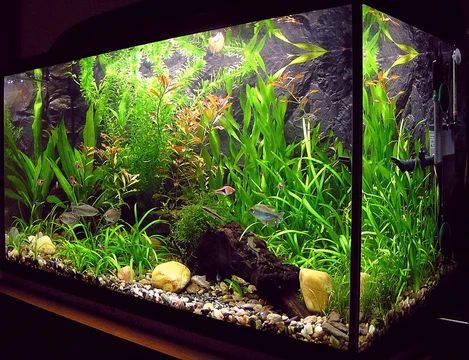
Aquarium and Aquatic Plants, Part 2
49 entries in the Aquarium and Aquatic Plants, Part 2 compendium.
Fissidens hydropogonCritically endangered Ecuadorian moss with two known populations.Glossostigma cleistanthumA self-pollinating aquatic plant native to four continents.Glossostigma elatinoidesSmall aquatic or terrestrial herb with mauve flowers.Hottonia palustrisAn aquatic plant with feathery leaves and hermaphrodite flowers.HydrocotyleA genus of prostrate aquatic plants with creeping stems and scalloped leaves.Hydrocotyle umbellataAn aquatic herb native to the Americas, edible and medicinally used.Hygrophila corymbosaA fast-growing riparian plant popular in tropical aquariums.Hygrophila polyspermaFast-growing aquarium plant that can become a nuisance.LemnaDuckweed: a tiny aquatic plant used in research, bioremediation, and biopharmaceutical production.LemnoideaeDuckweeds are tiny, rootless or rooted floating plants with simple structure.Lilaeopsis masoniiRare California endemic of delta and bay marshes.Lindernia intrepidaA resurrection plant from Namibian inselberg pools.Lobelia dortmannaAn isoetid aquatic plant that absorbs carbon dioxide through its roots.Ludwigia grandifloraAquatic plant known for invasive mats and chromosomal distinction.Ludwigia palustrisAn aquatic perennial herb of marshes and wet soils.Ludwigia pilosaA velvety aquatic perennial with yellow sepals and no petals.LuroniumA variable aquatic plant with protected status in Europe.MarsileaA genus of aquatic ferns with clover-like leaves and edible sporocarps.Marsilea quadrifoliaAquatic fern with four-parted leaves, not a true clover.Micranthemum micranthemoidesExtinct subaquatic plant from Mid-Atlantic US tidal mudflats.NupharA genus of aquatic herbs with temperate to subarctic distribution.Nuphar advenaA yellow-flowered aquatic herb native to the Americas and naturalized in Britain.Nuphar japonicaEast Asian yellow water-lily, an aquatic ornamental with yellow to red flowers.Nuphar sagittifoliaA rare aquatic herb with arrow-shaped leaves from the southeastern US.Nuphar variegataA yellow-flowered aquatic herb native to Canada and northern US.Nymphaea giganteaGiant waterlily with edible parts, native to Australia and possibly New Guinea.NymphaeaceaeBasal angiosperm family of aquatic rhizomatous herbs.Phragmites australisA cosmopolitan wetland grass forming vast reed beds.Pilularia minutaAn endangered Mediterranean fern dependent on seasonal flooding.PistiaA floating aquatic plant with invasive potential and mosquito associations.PontederiaA genus of tristylous aquatic plants endemic to the Americas.Pontederia cordataAn emergent aquatic plant with tristylous flowers and edible seeds.Pontederia crassipesOne of the fastest-growing plants, invasive worldwide.Pontederia sagittataPerennial aquatic plant with lilac flowers and rhizomatous stems.Pontederia vaginalisAn aquatic plant invasive in rice paddies and water bodies.PotamogetonA widespread genus of aquatic plants known as pondweeds.PotamogetonaceaeAquatic monocot family vital as food and habitat.PrioniumMonotypic semiaquatic palmiet endemic to South Africa.Proserpinaca pectinataA feathery aquatic plant with comb-like leaves and small flowers.Ranunculus baudotiiBrackish water-crowfoot is a coastal indicator of less improved habitat.Ranunculus hederaceusA small, creeping crowfoot with ivy-shaped leaves and white flowers.RheophytePlants adapted to survive in fast-moving water currents.Sagittaria lancifoliaA New World perennial with lance leaves and edible corms.SalviniaA genus of free-floating aquatic ferns with unique leaf development.Salvinia minimaA floating fern invasive in the United States and South Africa.Salvinia molestaA fast-growing invasive aquatic fern that forms thick floating mats.Salvinia natansAn annual floating fern that can cover entire water bodies.SpirodelaA genus of free-floating duckweed with multiple roots per frond.Stuckenia pectinataA cosmopolitan submerged pondweed with wind-pollinated flowers and starchy tubers.
Browse Aquarium and Aquatic Plants, Part 2 in the interactive codex →