Marsilea
A genus of aquatic ferns with clover-like leaves and edible sporocarps.

Marsilea is a genus of about 65 species of aquatic ferns belonging to the family Marsileaceae. It was named for the Italian naturalist Luigi Ferdinando Marsili. These small plants look unusual and nothing like typical ferns. Their common names—water clover, four-leaf clover, and clover fern—come from the long-stalked leaves that have four lobes resembling clover, and these leaves can float on the surface or grow underwater. However, they are not true clovers, which belong to the genus *Trifolium*.
The sporocarps of some Australian species are extremely drought-tolerant, able to survive for up to a century in dry conditions. When wet, the sporocarp’s gelatinous interior swells, splitting it open and releasing a worm-like mass that carries the sori. This eventually leads to spore germination and fertilization.
Some Australian species, such as *Marsilea drummondii*, produce edible sporocarps. Aboriginal people and early white settlers ate them, calling the plant ngardu or nardoo. However, parts of *Marsilea drummondii* contain an enzyme that destroys thiamine (vitamin B1), which can cause brain damage in sheep and horses. During floods in the Gwydir River basin, 2,200 sheep died after eating nardoo, though three-quarters of affected sheep recovered with thiamine injections. Thiamine deficiency from improperly prepared nardoo likely caused the starvation and death of explorers Burke and Wills.
The leaves of *Marsilea crenata* are used in East Javanese cuisine, particularly in Surabaya, where the dish is called Pecel Semanggi and is served with a spicy peanut and sweet potato sauce.
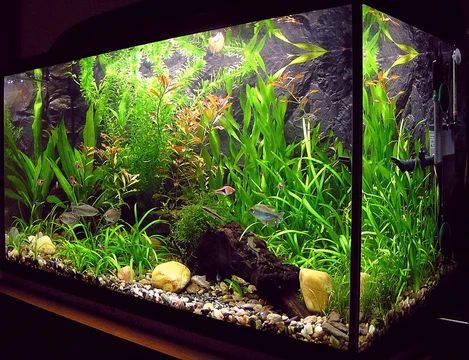
A few species—including *Marsilea crenata*, *Marsilea exarata*, *Marsilea hirsuta*, and *Marsilea quadrifolia*—are grown in aquariums.
One species formerly placed in this genus is *Salvinia natans* (as *M. natans*).
Molecular phylogenetic analysis of *Marsilea* shows that *M. crenata* is the same species (or a subspecies) as *M. minuta*, and possibly also *M. fadeniana*. This analysis also contradicts earlier reports that *M. polycarpa* is a synonym for *M. minuta*.
Other species include: *Marsilea aethiopica*, *M. apposita*, *M. batardae*, *M. burchellii*, *M. condensata*, *M. cryptocarpa*, *M. fenestrata*, *M. globulosa*, *M. hickenii*, *M. latzii*, *M. megalomanica*, *M. pyriformis*, *M. quadrata*, *M. ×subangulata*, *M. subterranea*, *M. unicornis*, and *M. vera*.
Quick Facts
- Taxon
- Marsilea
- Type Species
- Marsilea quadrifolia
- Type Species Authority
- L.
Facts from the source article.
Lore & Background
The sporocarps of some Australian Marsilea species are highly drought-resistant, surviving up to 100 years in dry conditions. When wetted, the gelatinous interior swells, splitting the sporocarp and releasing a worm-like mass that carries sori, eventually leading to spore germination and fertilization. This adaptation allows the plants to persist in arid environments.
Several species have been used as food. The sporocarps of Marsilea drummondii, known as ngardu or nardoo, were eaten by Aboriginal people and early white settlers. However, parts of this species contain an enzyme that destroys thiamine (vitamin B1), which can cause brain damage in sheep and horses. During floods in the Gwydir River basin, 2,200 sheep died after eating nardoo, though three-quarters of affected sheep responded to thiamine injections. Thiamine deficiency from improperly prepared nardoo likely contributed to the starvation and death of explorers Burke and Wills. In Indonesia, the leaves of Marsilea crenata are used in East Javanese cuisine, particularly in the dish Pecel Semanggi, served with spicy peanut and sweet potato sauce.
Molecular phylogenetic analysis of the genus shows that Marsilea crenata is the same species (or a subspecies) of Marsilea minuta, and possibly also of Marsilea fadeniana. This analysis contradicts reports that Marsilea polycarpa is a synonym for Marsilea minuta.
Reader's Guide
Marsilea holds significance both as an ornamental plant in aquaria and as a food source with historical and ecological importance. Several species, including Marsilea crenata, Marsilea exarata, Marsilea hirsuta, and Marsilea quadrifolia, are cultivated in aquariums, valued for their distinctive clover-like leaves that can grow above or below water. The genus is notable for its edible sporocarps, particularly those of Marsilea drummondii (nardoo), which were a traditional food for Aboriginal Australians and early settlers. However, the presence of a thiamine-destroying enzyme in parts of the plant has led to documented poisoning events, including the death of 2,200 sheep in the Gwydir River basin and the likely contribution to the deaths of explorers Burke and Wills due to thiamine deficiency from improperly prepared nardoo. In Indonesia, Marsilea crenata leaves are used in the traditional dish Pecel Semanggi. The genus also exhibits remarkable drought resistance, with sporocarps of some Australian species surviving up to 100 years in dry conditions. Phylogenetic analysis has clarified relationships among species, indicating that Marsilea crenata is the same as or a subspecies of Marsilea minuta, and possibly Marsilea fadeniana, while contradicting earlier synonymy of Marsilea polycarpa with Marsilea minuta.
Did You Know?
- The genus Marsilea is named after Italian naturalist Luigi Ferdinando Marsili (1656–1730).
- Sporocarps of some Australian Marsilea species can survive up to 100 years in dry conditions.
More in Aquarium and Aquatic Plants, Part 2 1-24
Spotted an error? Know more?
Reader corrections go straight into our review queue. Suggest an edit · How this site is sourced