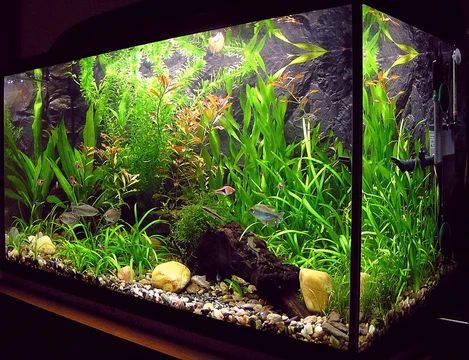
Ludwigia grandiflora
Aquatic plant known for invasive mats and chromosomal distinction.

Ludwigia grandiflora, known as water primrose, is an aquatic species in the order Myrtales. It is often mistaken for its close relative, Ludwigia hexapetala. The two can be told apart by their chromosomes—L. grandiflora is hexaploid, while L. hexapetala is decaploid—but also by physical traits: L. grandiflora has villous hairs, smaller flowers, and smaller pollen grains. Some experts find these differences too minor to justify separate species and instead classify them as varieties or subspecies.
As an invasive, L. grandiflora has been on the European Union’s List of Invasive Alien Species of Union concern since 2016, and in the United States it appears on South Carolina’s noxious weed list. It forms dense mats along pond edges and margins, crowding out other plants. It has been introduced to warm temperate parts of North America, Japan, and Europe, where it has established large, stable populations—especially in France. In summer 2024, the Portuguese city of Arganil announced measures against the species in the Alva River.
The plant can produce viable seeds, but seed-based recruitment is low; it spreads mainly through vegetative reproduction. Its large, showy flowers attract many insects. A study in Belgium, where it is introduced, found that bees, Lepidoptera, beetles, and hoverflies all visit the flowers.
Quick Facts
- Genus
- Ludwigia (plant)
- Species
- grandiflora
Facts from the source article.
Lore & Background
Ludwigia grandiflora is closely related and easily confused with Ludwigia hexapetala. The two species can be distinguished at a chromosomal level: L. grandiflora is hexaploid, while L. hexapetala is decaploid. Morphologically, L. grandiflora has villous hairs, smaller flowers, and smaller pollen grains. Some authorities consider these differences too slight to warrant separate species status and instead treat them as two varieties or subspecies.
As an invasive species, L. grandiflora out-competes other plants by forming dense mats at the margins and in ponds. It has been introduced to warm temperate areas of North America, Japan, and Europe, forming large stable populations, particularly in France. As of summer 2024, the Portuguese city of Arganil announced measures against the species in its river Alva.
In terms of life history, L. grandiflora can produce viable seed, but it is also highly effective at vegetative reproduction, and recruitment of new plants from seed is apparently low. Its large showy flowers attract a wide variety of insects; a study in Belgium showed visits from bees, Lepidoptera, beetles, and hoverflies.
Reader's Guide
Ludwigia grandiflora holds significance primarily as an invasive aquatic plant. Its listing on the List of Invasive Alien Species of Union concern since 2016 and on the South Carolina State-listed Noxious Weed list underscores its recognized threat to ecosystems. The plant forms dense mats that out-compete other vegetation at pond margins and in ponds, leading to ecological displacement. Its introduction to warm temperate areas of North America, Japan, and Europe has resulted in large, stable populations, notably in France, and as of summer 2024, the Portuguese city of Arganil has announced measures against it in the river Alva. The species' ability to reproduce both by seed and vegetatively, with low seedling recruitment but high vegetative spread, contributes to its persistence. Its taxonomic ambiguity—being easily confused with L. hexapetala and considered by some authorities as merely a variety or subspecies—adds complexity to management and identification. The plant's large showy flowers attract a wide range of insects, including bees, Lepidoptera, beetles, and hoverflies, as observed in a Belgian study, indicating its role in local pollination networks despite its invasive nature.
Did You Know?
- Ludwigia grandiflora is hexaploid, while its close relative Ludwigia hexapetala is decaploid.
- A study in Belgium found its flowers visited by bees, Lepidoptera, beetles, and hoverflies.
Frequently Asked Questions
What is Ludwigia grandiflora and what is its common name?
Ludwigia grandiflora is an aquatic stem plant in the order Myrtales, most often called water primrose by hobbyists. It is a hexaploid species that thrives in still or slow-moving warm water and can form thick, floating mats.
How do I tell Ludwigia grandiflora apart from the very similar Ludwigia hexapetala?
Beyond chromosome number (hexaploid vs. decaploid), L. grandiflora carries fine villous hairs on its stems, produces noticeably smaller flowers, and sheds smaller pollen grains. Some taxonomists consider those morphological gaps too slight to warrant separate species status and instead treat the two as varieties or subspecies of a single complex.
Why is Ludwigia grandiflora on invasive-species watchlists?
Its rapid mat-forming growth can smother native vegetation and clog waterways, which is why it has appeared on the EU's Invasive Alien Species of Union concern list since 2016. It is also designated a noxious weed on the South Carolina state list, reflecting its established presence in North American waterways.
Where has Ludwigia grandiflora spread as an invasive, and are there recent control efforts?
The species has taken hold in warm temperate zones across North America, Japan, and Europe, with one of the most visible wild populations in France. In 2024, a targeted removal operation was carried out along the river Alva in Arganil, Portugal, to curb a growing stand.
Is Ludwigia grandiflora safe to keep in a planted aquarium?
It is a fast-growing, forgiving stem plant that many aquarists enjoy for quick background or midground coverage. Because of its aggressive mat-forming habit in natural waters, however, hobbyists should never dump plant cuttings or tank water into local rivers or ponds.
More in Aquarium and Aquatic Plants, Part 2 1-24
Spotted an error? Know more?
Reader corrections go straight into our review queue. Suggest an edit · How this site is sourced