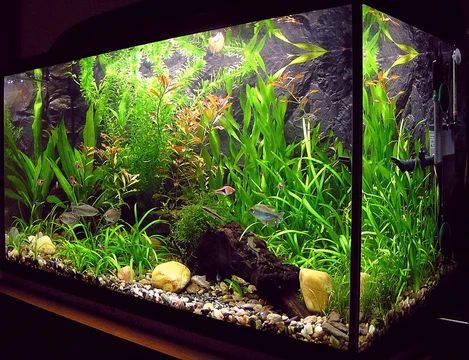
Hydrocotyle
A genus of prostrate aquatic plants with creeping stems and scalloped leaves.

Hydrocotyle, known by common names such as floating pennywort, water pennywort, dollar weed, marsh penny, thick-leaved pennywort, and white rot, is a genus of low-growing, perennial plants that live in water or damp soil. Once placed in the Apiaceae family, it is now classified under Araliaceae.
These plants are widespread, with long, creeping stems that frequently form thick mats. They grow in and around ponds, lakes, rivers, and marshes, and a few species occur in coastal areas near the sea.
The leaves are simple, kidney-shaped to round, with scalloped edges and a small leafy outgrowth at the base. Their surfaces are a common site for butterflies like *Anartia fatima* to lay eggs. Flower clusters are simple, flat-topped or rounded, with small bracts at the base of each flower and indistinct sepals.
Fruits are elliptical to round, with thin ridges and no oil tubes (vittae), a feature typical of umbelliferous plant fruits. These prostrate plants reproduce by seed and by sending out roots from nodes along the stems.
More than 280 species of *Hydrocotyle* are recognized, growing in tropical and temperate regions around the world. A few species are cultivated as ornamental aquatic plants. They are found in wet and damp places across the tropics and temperate zones.
One fossil fruit of a *Hydrocotyle* species has been recovered from Middle Miocene freshwater deposits in the Nowy Sacz Basin, West Carpathians, Poland.
Quick Facts
- Taxon
- Hydrocotyle
Facts from the source article.
Lore & Background
Water pennyworts, Hydrocotyles, are very common. They have long creeping stems that often form dense mats, often in and near ponds, lakes, rivers, and marshes, and some species in coastal areas by the sea. Their leaves are simple, with small leafy outgrowth at the base, kidney shaped to round, and leaf edges are scalloped. The leaf surfaces of Hydrocotyle are prime grounds for oviposition of many butterfly species, such as Anartia fatima.
Flower clusters are simple and flat-topped or rounded, with involucral bracts at the base of each flower and indistinct sepals. Fruits are elliptical to round with thin ridges and no oil tubes (vitta), which is characteristic in the fruit of umbelliferous plants. The prostrate plants reproduce by seed and by sending roots from stem nodes.
There are over 280 species recognised in the genus Hydrocotyle that grow in tropical and temperate regions worldwide. A few species have entered the world of cultivated ornamental aquatics. One fossil fruit of a Hydrocotyle sp. has been extracted from borehole samples of the Middle Miocene fresh water deposits in Nowy Sacz Basin, West Carpathians, Poland.
Reader's Guide
Hydrocotyle is a genus of prostrate, perennial aquatic or semi-aquatic plants that was formerly classified in the family Apiaceae but is now placed in the family Araliaceae. Its common names include floating pennywort, water pennywort, dollar weed, marsh penny, thick-leaved pennywort, and white rot. The genus is very common, with long creeping stems that often form dense mats in and near ponds, lakes, rivers, and marshes, and some species occur in coastal areas by the sea. The leaves are simple, kidney-shaped to round with scalloped edges, and serve as prime oviposition sites for butterflies such as Anartia fatima. Flower clusters are simple and flat-topped or rounded, with involucral bracts and indistinct sepals. Fruits are elliptical to round with thin ridges and lack the oil tubes (vitta) typical of umbelliferous plants. Reproduction occurs by seed and by rooting from stem nodes. Over 280 species are recognised worldwide in tropical and temperate regions, and a few have entered cultivated ornamental aquatics. A fossil fruit from the Middle Miocene has been found in Poland.
Form and Structure
Hydrocotyle vulgaris presents a compact, low-growing form, typically reaching only five to twenty centimeters in height. This creeping perennial herb spreads through offshoots that can stretch up to a full meter, creating dense mats in its preferred wet environments. Its most striking feature is the shield-shaped, rounded leaf with a serrated margin, measuring up to four centimeters across, though often smaller. The leaf surface is a fresh, glossy green with a waxy sheen, and a clearly visible vein radiates outward from the center. The long, hairy petiole attaches at the middle of the leaf's underside rather than at the edge, giving the foliage its distinctive umbrella-like appearance. In July and August, the plant produces tiny, inconspicuous hermaphrodite flowers arranged in low whorls, with petals ranging from greenish to white or reddish. The inflorescence stems are roughly half the length of the leaf stems. After flowering, the plant sets flat, warty, winged fruits. A faint scent reminiscent of carrot emanates from the foliage, and the plant is in fact edible.
Ecological Niche and Reproduction
Within the British Isles, Hydrocotyle vulgaris holds a unique position as the sole native member of its genus, colonizing fens, swamps, bogs, and marshes across the landscape. It forms a notable component of purple moor grass and rush pastures, a habitat category recognized under Biodiversity Action Plans for its ecological significance. The plant's reproductive strategy is notably conservative: its small flowers rarely open fully to attract pollinators, and self-pollination predominates in the wild. Rather than relying on seed dispersal, the species propagates vegetatively through its long creeping offshoots, steadily extending its territory across saturated ground. In cultivated settings, this same adaptability makes it a popular choice for wild plant gardens, where it is planted along pond margins, and it also thrives as an aquarium plant, bringing a touch of natural wetland character to enclosed aquatic displays. Its preference for reliably moist conditions and its ability to persist in stagnant water up to two inches deep reflect a deep evolutionary tuning to permanently wet habitats.
Cultivation and Everyday Uses
Despite its aquatic associations, Hydrocotyle vulgaris is remarkably forgiving in the garden. It thrives in reliably moist humus under full sun or partial shade, whether planted outdoors in a bog garden or kept indoors as a potted specimen, and it can even tolerate full shade without losing its vigor. Gardeners who wish to grow it as a true aquatic can settle it in the mud at the edge of a pond or water garden, submerging it in up to two inches of stagnant water. One caution, however, remains: even a plant so at home in wet conditions can suffer root rot if over-watered, a reminder that its tolerance has limits. Beyond ornamental use, the species carries a long string of folk names—money plant, lucky plant, dollarweed, copper coin, water naval—hinting at its historical association with prosperity and good fortune. The foliage is edible and carries a faint, pleasant scent reminiscent of carrot, adding a culinary dimension to an already versatile little perennial.
Distribution and Conservation
Hydrocotyle vulgaris is broadly distributed across North Africa, Europe, the Caucasus, and parts of the Levant, where it is generally plentiful and widespread throughout much of its range. Yet this broad distribution masks a patchwork of local vulnerability that varies sharply from country to country. In Croatia, the species has been classified as critically endangered, signaling a severe local decline. Switzerland lists it as vulnerable, while Norway regards it as near threatened—each designation reflecting the distinct conservation pressures operating within that nation's wetlands. France takes a more proactive step, extending formal legal protection to the plant under regional legislation, recognizing that even a species common across the continent can face localized extinction without deliberate management. These varying statuses across neighboring and non-neighboring nations alike underscore how a single species can be abundant in one region yet on the brink in another. The contrast between its general abundance and its precarious position in several specific countries makes its conservation a nuanced, region-specific challenge rather than a straightforward one.
Frequently Asked Questions
What is Hydrocotyle and what are its common names?
Hydrocotyle is a genus of low-growing, perennial aquatic or semi-aquatic plants that live in water or damp soil. Hobbyists often call them floating pennywort, dollar weed, marsh penny, thick-leaved pennywort, or white rot.
Which plant family does Hydrocotyle belong to?
Hydrocotyle was historically placed in the Apiaceae (carrot) family, but modern taxonomy now classifies it under Araliaceae.
How does Hydrocotyle reproduce in an aquarium setup?
It can propagate both sexually through seed and asexually by sending out roots from the nodes along its creeping stems. This means a single stem can quickly form a dense mat if left untrimmed.
Where does Hydrocotyle grow naturally in the wild?
The genus is widespread across wet and damp habitats in both tropical and temperate regions, including ponds, lakes, rivers, and marshes. A handful of species also appear in coastal areas near the sea.
How many species are recognised in the Hydrocotyle genus?
Over 280 species have been described within the genus. They are generally easy to tell apart by their simple, kidney-shaped to round leaves with scalloped edges and a small leafy outgrowth at the base.
More in Aquarium and Aquatic Plants, Part 2 1-24
Spotted an error? Know more?
Reader corrections go straight into our review queue. Suggest an edit · How this site is sourced