Randy W. Schekman
Cell biologist who won the Nobel Prize for vesicle trafficking.
Randy Wayne Schekman is an American cell biologist at the University of California, Berkeley, who shared the 2013 Nobel Prize for Physiology or Medicine for discoveries on cell membrane vesicle trafficking. He has served as editor-in-chief of Proceedings of the National Academy of Sciences and as editor of the open-access journal eLife.
Quick Facts
- Born
- December 30, 1948
- Birthplace
- Saint Paul, Minnesota
- Field
- Cell biology
- Institution
- University of California, Berkeley
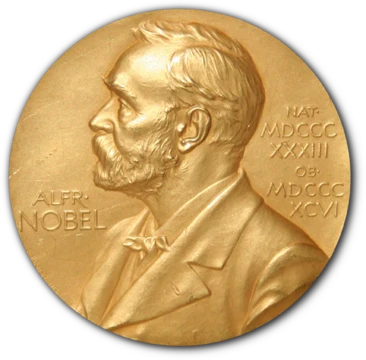
- Nobel prize
- 2013 Nobel Prize for Physiology or Medicine
- Doctoral advisor
- Arthur Kornberg
- Doctoral degree year
- 1975
Facts from the source article.
Early life and education
Schekman was born in Saint Paul, Minnesota, to Alfred Schekman, an electrical engineer and computer software designer, and Esther (Bader) Schekman; his family were Jewish emigrants from Russia and Bessarabia. In the late 1950s they moved to Rossmoor, Orange County, California. He graduated from Western High School in Anaheim in 1966, earned a BA in molecular biology from UCLA in 1971 (spending his third year as an exchange student at the University of Edinburgh), and received a PhD from Stanford University in 1975 for DNA replication research with Arthur Kornberg.
Research and career
Since 1991 Schekman has been a Howard Hughes Medical Institute Investigator in the Division of Biochemistry and Molecular Biology at UC Berkeley, where his lab studies membrane assembly and vesicular traffic in eukaryotic cells including yeast. He previously served on the faculty of the now disbanded Department of Biochemistry at the same university. He received the Eli Lilly Award in Microbiology in 1987, was elected to the National Academy of Sciences in 1992, and shared the Albert Lasker Award for Basic Medical Research and the Louisa Gross Horwitz Prize with James Rothman in 2002 for discoveries on cellular membrane trafficking. In 2008 he was named the first Miller Senior Fellow of the Miller Institute at UC Berkeley and was elected to the American Philosophical Society. He received the Massry Prize in 2010. Schekman, Thomas C. Südhof, and James Rothman were awarded the 2013 Nobel Prize for Physiology or Medicine for discoveries of machinery regulating vesicle traffic. Schekman donated his $400,000 prize share to create the Esther and Wendy Schekman Chair in Basic Cancer Biology at UC Berkeley. He was elected a Foreign Member of the Royal Society in 2013, received the Golden Plate Award of the American Academy of Achievement in 2017, was elected an honorary member of the Academy of Sciences of Moldova in 2021, and was awarded Doctor Honoris Causa at Nicolae Testemitanu State University of Medicine and Pharmacy of the Republic of Moldova in 2023. He serves on the Selection Committee and as chair of Life Science and Medicine for the Shaw Prize.
Open-access science
In December 2013 Schekman called for academic journal publishing reform and open access science, announcing his lab would no longer submit to the closed-access journals Nature, Cell, and Science, which he criticized for artificially restricting publications and prioritizing citation counts over important results. He was the former editor of eLife, an open access journal that accepts papers based on review by working scientists and provides free access.
Parkinson's disease
In 2017, Schekman’s wife Nancy Walls passed away from Parkinson’s disease after a two-decade battle. He then took on the role of scientific director for ASAP, a global research initiative focused on understanding Parkinson’s origins and progression. By 2022, backed by The Michael J. Fox Foundation and major donors, ASAP united 35 teams from 165 laboratories worldwide.
More in American Nobel Laureates
Spotted an error? Know more?
Reader corrections go straight into our review queue. Suggest an edit · How this site is sourced