Esther Duflo
French-American economist and Nobel laureate in economic sciences.
Esther Caroline Duflo is a French-American economist and the Abdul Latif Jameel Professor of Poverty Alleviation and Development Economics at MIT. In 2019 she shared the Nobel Memorial Prize in Economic Sciences with Abhijit Banerjee and Michael Kremer for their experimental approach to alleviating global poverty. She is also co-founder and co-director of the Abdul Latif Jameel Poverty Action Lab (J-PAL) and, since 2024, president of the Paris School of Economics.
Quick Facts
- Born
- 25 October 1972
- Birthplace
- Paris, France
- Birth name
- Esther Caroline Duflo
- Citizenship
- France • United States (since 2012)
- Field
- Development economics
- Institutions
- Massachusetts Institute of Technology, National Bureau of Economic Research
- Doctoral advisor
- Abhijit Banerjee • Joshua Angrist
- Doctoral students
- Emily Breza • Dean Karlan • Vincent Pons
Facts from the source article.
Did You Know?
- The couple married in 2015 and have two children, born in 2012 and 2014.
- According to the Open Syllabus Project, Duflo is the seventh most frequently cited author on college syllabi for economics courses.
Early life and education
Duflo was born on 25 October 1972 at the Port Royal Hospital in Paris to Violaine and Michel Duflo. Her father was a mathematics professor and her mother a pediatrician who often traveled volunteering for a humanitarian NGO supporting childhood victims of war. Duflo was raised and attended school through grade 11 in Asnières, a western Paris suburb, and completed secondary schooling in 1990 at the Lycée Henri-IV in central Paris. She then pursued an undergraduate degree at the École Normale Supérieure in Paris, specializing in history and economics; she had intended to study history but was recruited to economics by Daniel Cohen. From 1993 to 1994 she worked as a French teaching assistant in Moscow, where she wrote her history master's dissertation and also worked as a research assistant at the Central Bank of Russia and as an assistant to Jeffrey Sachs, who was advising the Russian Ministry of Finance after the Soviet collapse. This experience led her to conclude that economics could be a lever for action while satisfying academic ambitions. She finished her degree in 1994 and received a master's from DELTA (now the Paris School of Economics) in 1995. In Moscow she met Thomas Piketty, who encouraged her to apply to MIT; she enrolled in MIT's PhD program in economics in 1995. Her first development economics class was co-taught by Abhijit Banerjee and Michael Kremer. She completed her PhD in 1999 under the joint supervision of Banerjee and Joshua Angrist, using a natural experiment from a large-scale school expansion program in Indonesia to provide causal evidence that increased schooling improves earnings.
Career
After completing her PhD in 1999, Duflo became an assistant professor of economics at MIT, an exception made because Michael Kremer had left for Harvard. From 2001 to 2002 she took leave for a visiting position at Princeton University. Upon returning she was promoted to associate professor and became among the youngest faculty members in MIT's history to be offered tenure. In 2003 she was promoted to full professor after receiving competing offers from Princeton and Yale. Alongside Abhijit Banerjee and Sendhil Mullainathan, she secured funding to found a laboratory promoting randomized controlled trials in policy evaluation; the Poverty Action Lab was initially led by Rachel Glennerster. In 2005, with MIT President Susan Hockfield's support, the lab was endowed by Mohammed Abdul Latif Jameel. J-PAL's first regional office opened in 2007 in Chennai at the Institute for Financial Management and Research. Additional offices have since been founded at Pontifical Catholic University of Chile, the Paris School of Economics, the University of Cape Town, American University in Cairo, and the University of Indonesia. As of 2024 the J-PAL network included 900 researchers at 97 universities. Duflo is also a Research Associate of the National Bureau of Economic Research, a board member of the Bureau for Research and Economic Analysis of Development, and director of the development economics program of the Centre for Economic Policy Research.
Research
Duflo's research focuses on microeconomics of development, covering health, education, financial inclusion, political economy, gender, and household behavior, often using randomized controlled trials. Her dissertation examined labor market returns to education via a mass school construction program in Indonesia; published in the American Economic Review, it showed that children exposed to the program received 0.12 to 0.19 more years of education and had higher wages as adults, providing early causal evidence from a developing country. In 2007, with Abhijit Banerjee, Shawn Cole, and Leigh Linden, she published a study in The Quarterly Journal of Economics evaluating a remedial education program in Indian schools that substantially improved learning outcomes, unlike interventions such as providing textbooks; this work encouraged the proliferation of Teaching at the Right Level (TaRL). In other early work, she examined gender and intra-household resource allocation using a policy shock from increased old-age pensions in South Africa in 1991. She found that in households with elderly females, the pension increase was associated with higher body mass index in young girls, but no such effect appeared when only an elderly man received the pension, suggesting girls benefit when older female family members control more household resources.
Awards
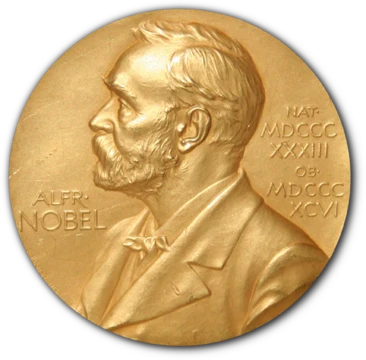
Duflo was awarded the Sveriges Riksbank Prize in Economic Sciences in Memory of Alfred Nobel in 2019 jointly with Abhijit Banerjee and Michael Kremer for their experimental approach to alleviating global poverty. At age 46 she became the youngest person and the second woman (after Elinor Ostrom in 2009) to win this prize. The Royal Swedish Academy of Sciences noted that their experimental research methods now entirely dominate development economics. In her telephone response, Duflo said she received the prize at an extremely opportune time and hoped it would inspire many other women to continue working and many men to give them the respect they deserve. She also said she wanted to use the award as a megaphone in fighting poverty and improving children's education. French President Emmanuel Macron congratulated her, stating that her Nobel Prize reminds that French economists are among the best in the world and shows research can have concrete impact on human welfare. Duflo summarized her approach by saying their goal is to make sure the fight against poverty is based on scientific evidence. She faced criticism from India's Bharatiya Janata Party, which expressed displeasure over her husband Banerjee winning the prize, with some derogatory comments about his marriage to a white European woman. Duflo had earlier received the Elaine Bennett Research Prize in 2002, the Best Young French Economist prize in 2005, and was listed by The Economist in 2008 as one of the top eight young economists in the world.
More in American Nobel Laureates
Spotted an error? Know more?
Reader corrections go straight into our review queue. Suggest an edit · How this site is sourced