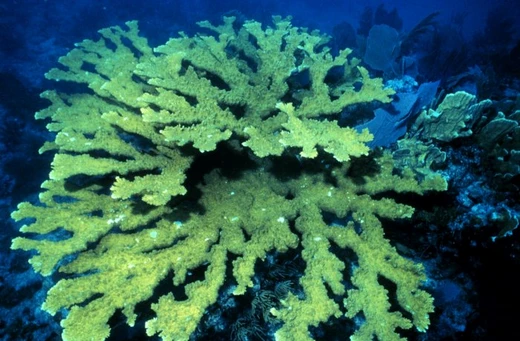
Acropora nasuta
A shallow-water branching coral endangered by reef destruction and bleaching.

Acropora nasuta is a species of branching stony coral in the family Acroporidae, native to the western and central Indo-Pacific. It is notable for its susceptibility to coral bleaching and diseases, leading the IUCN to list it as 'Endangered'.
Quick Facts
- Taxon
- Acropora nasuta
Facts from the source article.
Lore & Background
Acropora nasuta is a small colonial coral that grows in clumps with flat tops. Its branches are tapering, up to 12 mm wide, and the radial corallites often form neat rows, sometimes long and slender, sometimes appressed. The axial corallites may be larger or the same size as the radial ones. The coral is creamy-white or pale brown, with branch tips occasionally bluish. It is a zooxanthellate coral, hosting symbiotic dinoflagellate algae that produce carbohydrates via photosynthesis; additionally, its polyps extend tentacles at night to feed on plankton. Barnacles of several species grow on its branches, and small fish, crabs, and shrimps live permanently among them. The crown-of-thorns starfish preferentially feeds on Acropora species.
Reader's Guide
Acropora nasuta is a common species in shallow reef habitats across the western and central Indo-Pacific, from the Red Sea and east Africa to India, Malaysia, Japan, Indonesia, and Australia. It grows on upper reef slopes and reef edges between three and fifteen metres deep. The main threat to this coral is the destruction of coral reefs where it lives. Although relatively common, it is a shallow-water species and is susceptible to bleaching and coral diseases. It is also collected for the reef aquarium trade. Corals in general are expected to be impacted by rising sea temperatures and ocean acidification. For these reasons, the IUCN has listed Acropora nasuta as an endangered species. Its significance lies in its role as a reef-building coral and its vulnerability to environmental stressors, highlighting broader challenges facing Indo-Pacific reef ecosystems.
Did You Know?
- Acropora nasuta is a zooxanthellate coral, meaning it has symbiotic dinoflagellate algae living within its tissues.
- Barnacles of several species grow on the branches of Acropora nasuta.
- The coral is collected for the reef aquarium trade.
Frequently Asked Questions
What is Acropora nasuta?
It is a branching stony coral in the family Acroporidae, native to the western and central Indo-Pacific. It grows as a shallow-water reef species with thin, finger-like branches.
What depth range does Acropora nasuta occupy?
This coral is typically found between roughly 3 and 15 metres (about 10 to 50 feet) below the surface. It is a relatively shallow-water species compared to deeper reef corals.
What does Acropora nasuta look like?
Its slender branches reach up to about 12 mm (half an inch) in width and are usually creamy-white or pale brown in colour. The very tips of the branches can occasionally take on a bluish tint.
Why is Acropora nasuta listed as Endangered by the IUCN?
The species is highly vulnerable to coral bleaching events and to reef-affecting diseases, which together drive population declines. Broader habitat loss from reef destruction further compounds these pressures.
How does Acropora nasuta differ from other Acropora species?
Its exceptionally thin branching form—capping out around 12 mm wide—distinguishes it from bulkier Acropora relatives. Paired with a narrow shallow depth range and high bleaching sensitivity, it occupies a particularly vulnerable ecological niche.
More in Acropora Corals, Part 2 1-24
Spotted an error? Know more?
Reader corrections go straight into our review queue. Suggest an edit · How this site is sourced