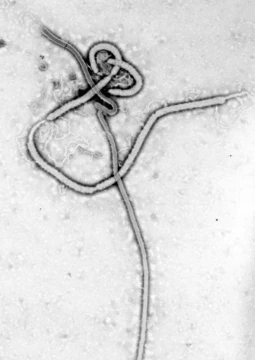
Hantavirus
Rodent-borne viruses causing severe human diseases worldwide.

Hantaviruses are a genus of viruses, Orthohantavirus, that cause disease in humans. They are naturally found primarily in rodents, especially those in the family Cricetidae, and are transmitted through aerosols, droplets, and contact with rodent excretions. Hantaviruses are divided into Old World hantaviruses, which cause hemorrhagic fever with renal syndrome (HFRS) primarily in Asia and Europe (with rare or unconfirmed reports in Africa), and New World hantaviruses, which cause hantavirus pulmonary syndrome (HPS) in the Americas.
- Discovered
- First isolated in 1978 in South Korea (Hantaan virus)
- Genome
- Three single-stranded negative-sense RNA segments
- Diseases caused
- Hemorrhagic fever with renal syndrome (HFRS) and hantavirus pulmonary syndrome (HPS)
- Case fatality rate hfrs
- Less than 1% to 15%
- Case fatality rate hps
- 30–60%
- Primary hosts
- Rodents, especially Cricetidae family
- Transmission
- Aerosols, droplets, contaminated food, bites, scratches
Lore & Background
Hantaviruses were first discovered following the Korean War, during which HFRS was common among soldiers near the Hantan River. The first hantavirus, Hantaan virus, was isolated in 1978 in South Korea and shown to be responsible for that outbreak. Within a few years, other HFRS-causing hantaviruses were found across Eurasia. In 1993, an outbreak of HPS in the Four Corners region of the United States led to the discovery of pathogenic New World hantaviruses. Since then, related viruses have been detected in shrews and moles, but hantaviruses themselves are primarily hosted by rodents, with bats not established as natural hosts.
Reader's Guide
Hantaviruses are significant because they cause two distinct, often severe diseases in humans: HFRS and HPS. HFRS, mainly caused by Old World hantaviruses, has a case fatality rate up to 15%, while HPS, caused by New World hantaviruses, has a higher rate of 30–60%. The viruses are primarily transmitted by rodents, and environmental factors such as rainfall and temperature influence transmission. Human-to-human transmission is sometimes reported for Andes virus, though evidence is disputed. The discovery of hantaviruses after the Korean War and the 1993 HPS outbreak in the United States highlighted their global health importance. Their ability to cause persistent, asymptomatic infections in rodent reservoirs complicates control. Understanding hantavirus replication—involving three RNA segments, ribonucleoprotein complexes, and distinct assembly pathways for Old and New World viruses—has informed virology. Their legacy includes ongoing surveillance of rodent populations and awareness of zoonotic risks in rural and occupational settings.
Did You Know?
- Hantaviruses were first discovered following the Korean War, with the first virus isolated in 1978 in South Korea.
- The case fatality rate for HPS is 30–60%, higher than the less than 1% to 15% for HFRS.
- Hantaviruses can survive for more than 18 days at 4 °C (39 °F), aiding transmission.
- Human-to-human transmission of Andes virus is well-documented and accepted in scientific literature.
More in Zoonoses 1-24
Spotted an error? Know more?
Reader corrections go straight into our review queue. Suggest an edit · How this site is sourced