Clostridioides difficile infection
A bacterial infection causing diarrhea, often after antibiotic use.

Mengoli, M.; Barone, M.; Fabbrini, M.; D’Amico, F.; Brigidi, P.; Turroni, S. · CC BY 4.0
Clostridioides difficile infection, often shortened to CDI or C-diff, is a disease caused by the spore-forming bacterium *Clostridioides difficile*. It leads to symptoms like watery diarrhea, fever, nausea, and belly pain, and accounts for roughly one in five cases of diarrhea linked to antibiotic use. Antibiotics can disrupt the gut’s normal microbial balance, reducing the absorption of short-chain fatty acids and causing osmotic, or watery, diarrhea. Severe complications can include pseudomembranous colitis, toxic megacolon, a perforated colon, and sepsis.
The infection spreads through bacterial spores found in feces. These spores can contaminate surfaces and then be transferred by the hands of healthcare workers. Risk factors include taking antibiotics or proton pump inhibitors, being hospitalized, having low albumin levels (hypoalbuminemia), other health issues, and being older. Diagnosis is made by culturing a stool sample or testing for the bacterium’s DNA or toxins. If someone tests positive but has no symptoms, this is called C. difficile colonization, not an infection.
To prevent spread, hospitals use terminal room cleaning, limit antibiotic use, and run handwashing campaigns. Alcohol-based hand sanitizers don’t seem to work well against the spores. Stopping the triggering antibiotics can resolve symptoms within three days for about 20% of infected people. The infection is treated with antibiotics like metronidazole, vancomycin, or fidaxomicin. Once symptoms are gone, retesting is not recommended because people often remain colonized. Recurrence happens in up to 25% of cases, and some early evidence suggests that fecal microbiota transplantation or probiotics might help lower that risk.
C. difficile infections occur worldwide. In 2011, the United States saw about 453,000 cases, leading to 29,000 deaths. Global rates rose between 2001 and 2016, and women are affected more often than men. The bacterium was first identified in 1935, but it wasn’t linked to disease until 1978. For hospitalized adults, the costs directly tied to CDI range from $4,500 to $15,000 per case. In the U.S., healthcare-associated infections add about $1.5 billion to annual care costs. While C. diff is a common hospital-acquired infection, at most 30% of cases are transmitted within hospitals.
Quick Facts
- Field
- Infectious disease
- Symptoms
- Diarrhea, fever, nausea, abdominal pain
- Complications
- Pseudomembranous colitis, toxic megacolon, perforation of the colon, sepsis
- Causes
- Clostridioides difficile spread by the fecal-oral route
- Risks
- Antibiotics, proton pump inhibitors, hospitalization, other health problems, older age
- Diagnosis
- Stool culture, testing for the bacteria's DNA or toxins
- Prevention
- Hand washing, terminal room cleaning in hospital
- Treatment
- Metronidazole, vancomycin, fidaxomicin, fecal microbiota transplantation
- Frequency
- 453,000 (US 2011)
- Deaths
- 29,000 (US)
Facts from the source article.
Lore & Background
The bacterium Clostridioides difficile was discovered in 1935 and found to be disease-causing in 1978. It is spread by bacterial spores found within feces, which can contaminate surfaces and be transmitted via the hands of healthcare workers. Risk factors include antibiotic or proton pump inhibitor use, hospitalization, hypoalbuminemia, other health problems, and older age. Diagnosis is by stool culture or testing for the bacteria's DNA or toxins.
Reader's Guide
Clostridioides difficile infection is a significant cause of antibiotic-associated diarrhea, accounting for about 20% of such cases. Its importance lies in its ability to cause severe complications like pseudomembranous colitis, toxic megacolon, and sepsis, and its high recurrence rate of up to 25%. The infection is a major healthcare-associated infection, though at most 30% of infections are transmitted within hospitals; the majority are acquired outside hospitals, driven by medications and recent diarrheal illnesses. Prevention includes terminal room cleaning, limiting antibiotic use, and handwashing campaigns, as alcohol-based hand sanitizers are not effective. Treatment with metronidazole, vancomycin, or fidaxomicin can cure the infection, and fecal microbiota transplantation and probiotics may decrease recurrence risk. Global rates of disease increased between 2001 and 2016, and attributable costs for hospitalized adults range from $4,500 to $15,000.
Did You Know?
- Alcohol-based hand sanitizer does not appear effective against C. difficile spores.
- Discontinuation of antibiotics may result in resolution of symptoms within three days in about 20% of those infected.
- Recurrences have been reported in up to 25% of people.
The Bacterium and Its Toxic Arsenal
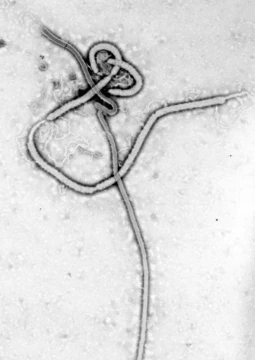
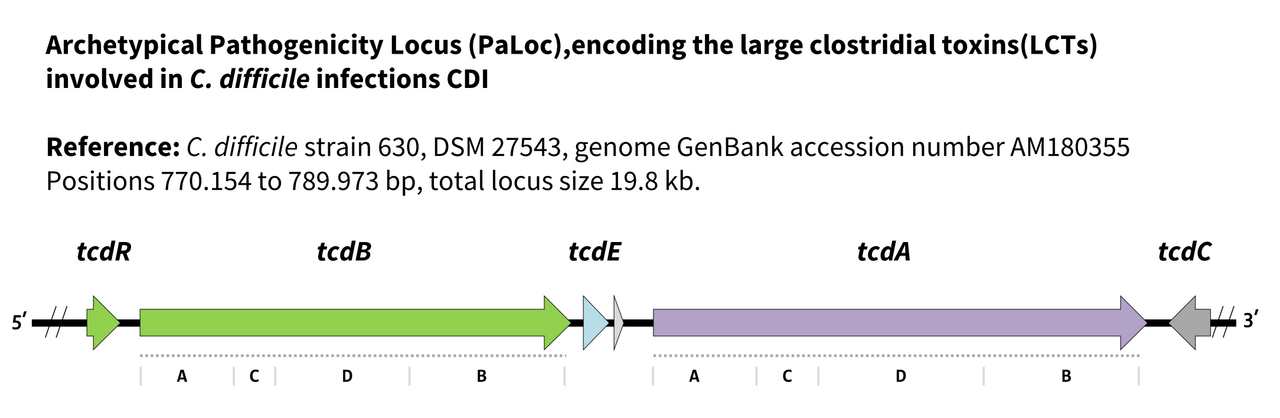
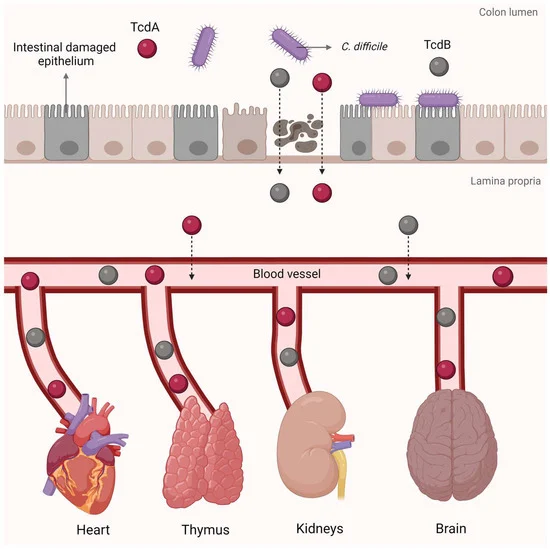
Clostridioides difficile is an anaerobic, gram-positive bacterium that first caught scientific attention in 1935, though its role as a disease agent was not confirmed until 1978. Under the microscope, it presents as elongated, irregular cells with a characteristic bulge at their ends, thriving on blood agar at body temperature in the absence of oxygen. What makes this organism particularly insidious is its ability to form spores when stressed—structures that withstand heat, routine surface cleaning, and alcohol-based disinfectants, allowing the bacterium to persist in clinical environments for extended periods. Pathogenic strains deploy a chemical arsenal: enterotoxin (Toxin A) and cytotoxin (Toxin B), both of which are glucosyltransferases that inactivate Rho-family GTPases. Toxin B specifically triggers actin depolymerization, disrupting the structural integrity of intestinal cells. A third, binary toxin has also been identified, though its precise contribution to disease remains unclear. By 2005, a hyper-toxic, fluoroquinolone-resistant strain was linked to geographically dispersed outbreaks across North America, prompting CDC warnings of an epidemic variant.
From Mild Diarrhea to Life-Threatening Colitis
The clinical spectrum of C. difficile infection spans a wide range. In adults, the hallmark presentation involves new-onset diarrhea of more than three partially formed or watery stools within a 24-hour window, often accompanied by abdominal cramping, fever that can climb to 40.5 °C, and a distinctive foul odor to the stool that clinicians have compared to horse manure. In children, the picture centers on watery diarrhea persisting for at least two days with three or more bowel movements daily, sometimes joined by fever, appetite loss, and nausea. At the severe end, patients may develop pseudomembranous colitis, toxic megacolon, colonic perforation, or sepsis—yet paradoxically, those with the most serious inflammation may produce little or no diarrhea at all. A critical diagnostic distinction separates true infection from mere colonization: a person who tests positive for the bacterium or its toxins but shows no symptoms is considered a carrier rather than an infected patient. Diagnosis relies on stool culture, DNA-based detection, or toxin assays, and in hospital populations, the combination of prior antibiotic exposure plus diarrhea or abdominal pain carries an 86% sensitivity for identifying affected individuals.
Curing the Infection, Battling the Relapse
Three antibiotics—metronidazole, vancomycin, and fidaxomicin—have proven effective at eradicating an active C. difficile infection. In roughly one-fifth of patients, simply discontinuing the inciting antibiotic allows symptoms to resolve within three days without targeted therapy. Yet the bacterium's spore-forming biology and the protective barrier of pseudomembranes make complete eradication difficult, and recurrence has been documented in as many as 25% of treated individuals. Because a person can remain colonized even after symptoms clear, guidelines advise against routine retesting once clinical resolution is achieved. For those who relapse repeatedly, emerging strategies offer cautious hope: tentative evidence supports fecal microbiota transplantation and probiotic supplementation as means of reducing the risk of another episode. The challenge is compounded by the fact that the same antibiotic regimens used to treat CDI can further disrupt the gut microbiota, decreasing short-chain fatty acid absorption and perpetuating the osmotic diarrhea that characterizes the condition. This creates a therapeutic paradox in which the cure can undermine the very ecosystem that prevents reinfection.
A Global Burden Largely Acquired Outside the Hospital
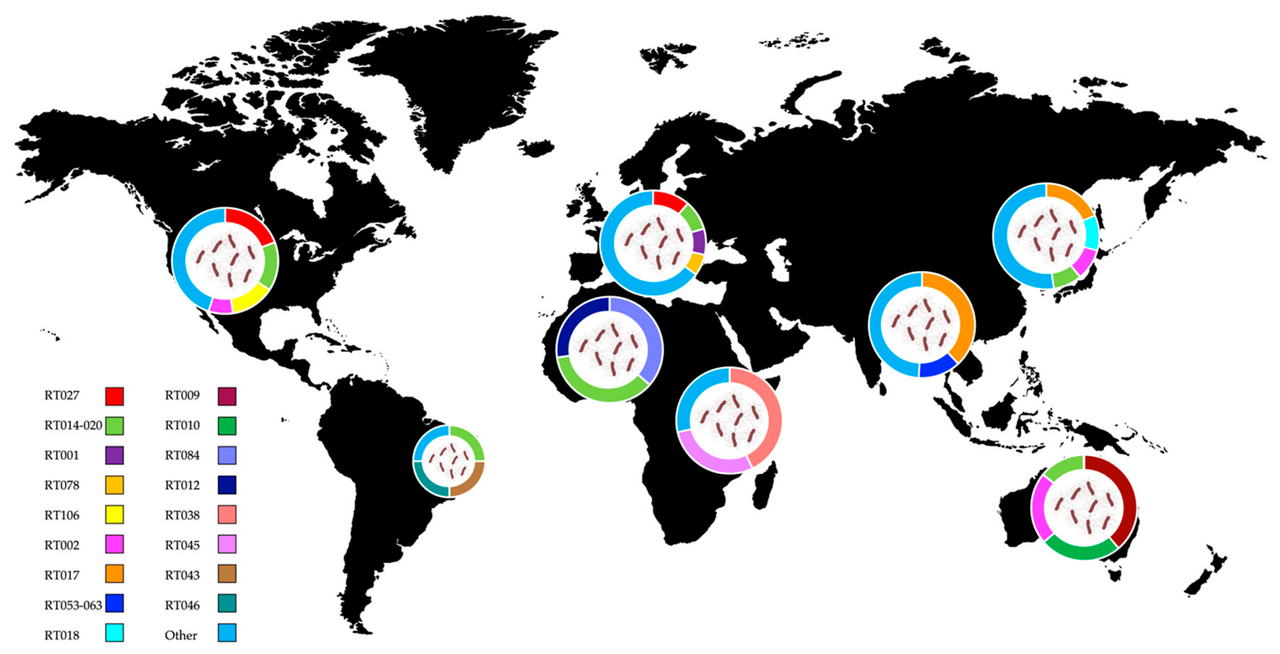
C. difficile infections are a worldwide phenomenon, with global rates climbing steadily between 2001 and 2016. In the United States alone, an estimated 453,000 cases were recorded in 2011, claiming approximately 29,000 lives. The condition affects women more frequently than men and accounts for roughly 20% of all antibiotic-associated diarrhea. Despite its strong association with healthcare settings, at most 30% of infections are actually transmitted within hospitals; the majority are acquired in the community, where recent use of medications, proton pump inhibitors, or a history of unrelated diarrheal illness—such as salmonellosis or laxative abuse—drives the risk of colonization. The financial toll is substantial: attributable costs for hospitalized adults range from $4,500 to $15,000 per case, and healthcare-associated infections collectively add $1.5 billion to U.S. care costs annually. Risk factors cluster around older age, hypoalbuminemia, concurrent health problems, and recent hospitalization. Transmission follows the fecal-oral route, with spores contaminating surfaces and spreading via the hands of healthcare workers, a pathway that alcohol-based hand sanitizers fail to interrupt.
Gallery
Frequently Asked Questions
Who is Clostridioides difficile infection?
CDI, often nicknamed C-diff, is an intestinal illness driven by the spore-forming bacterium Clostridioides difficile. The organism was first isolated back in 1935, but it wasn't until 1978 that researchers confirmed it as a true disease-causing agent.
What are Clostridioides difficile infection's powers/role?
Its signature move is a bout of watery diarrhea, fever, nausea, and abdominal cramping that typically erupts after antibiotics have knocked the gut's normal microbial community off balance. By cutting down short-chain fatty acid absorption, it creates an osmotic, fluid-heavy diarrhea and accounts for roughly one in five antibiotic-associated diarrhea cases.
Why is Clostridioides difficile infection important?
With around 453,000 new U.S. cases reported in 2011, it ranks among the most consequential healthcare-associated infections in modern medicine. Its tight coupling to antibiotic overuse makes it a central case study in antimicrobial-stewardship and infection-control policy.
How does Clostridioides difficile infection spread?
The bacterium relies on its tough, environmentally resistant spores to hitch a ride from person to person, often via contaminated hands or surfaces. That spore-based transmission gives it a distinct advantage in hospitals and long-term-care facilities, where it can persist long after routine cleaning.
More in Zoonoses 1-24
Spotted an error? Know more?
Reader corrections go straight into our review queue. Suggest an edit · How this site is sourced