Baylisascaris
Roundworm genus infecting over fifty animal species.

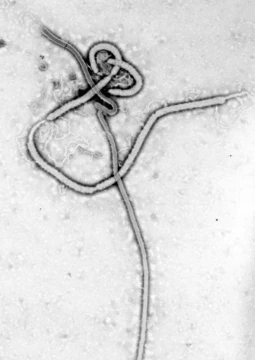
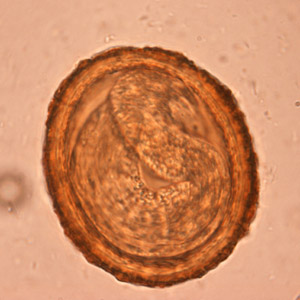
CDC/Alexander J. da Silva, PhD/Melanie Moser Centers for Disease Control and Pre · Public domain
Baylisascaris is a genus of roundworms that infect more than fifty animal species. Each species has a definitive host in which it reproduces, with eggs passed in feces; these eggs can remain viable in the environment for years. The parasite can also infest paratenic hosts, including humans, causing severe disease when larvae migrate through organs such as the brain and eyes.
Quick Facts
- Taxon
- Baylisascaris
Facts from the source article.
Lore & Background
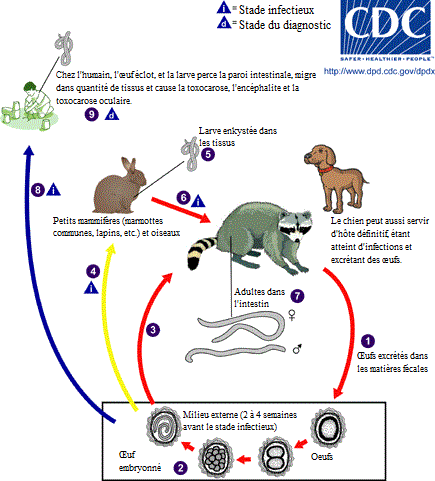
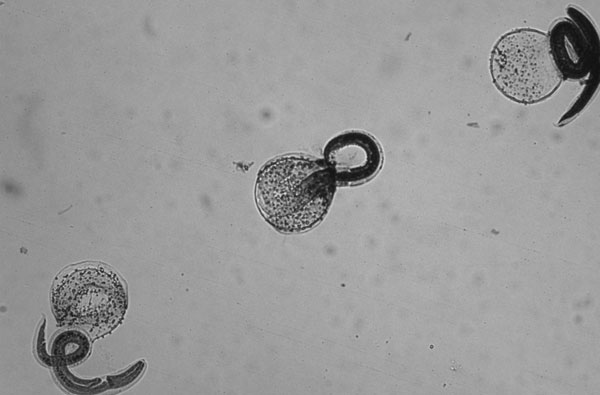
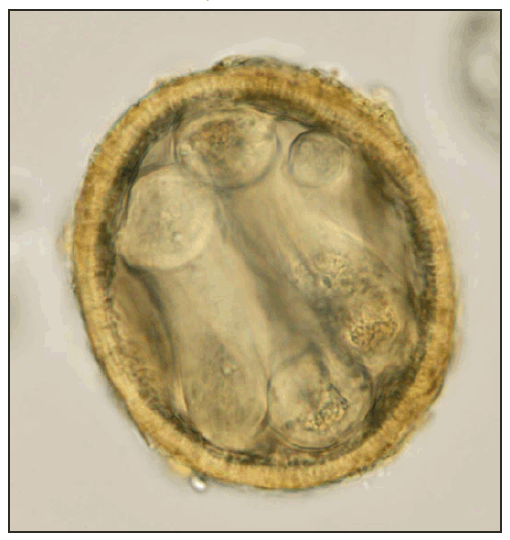
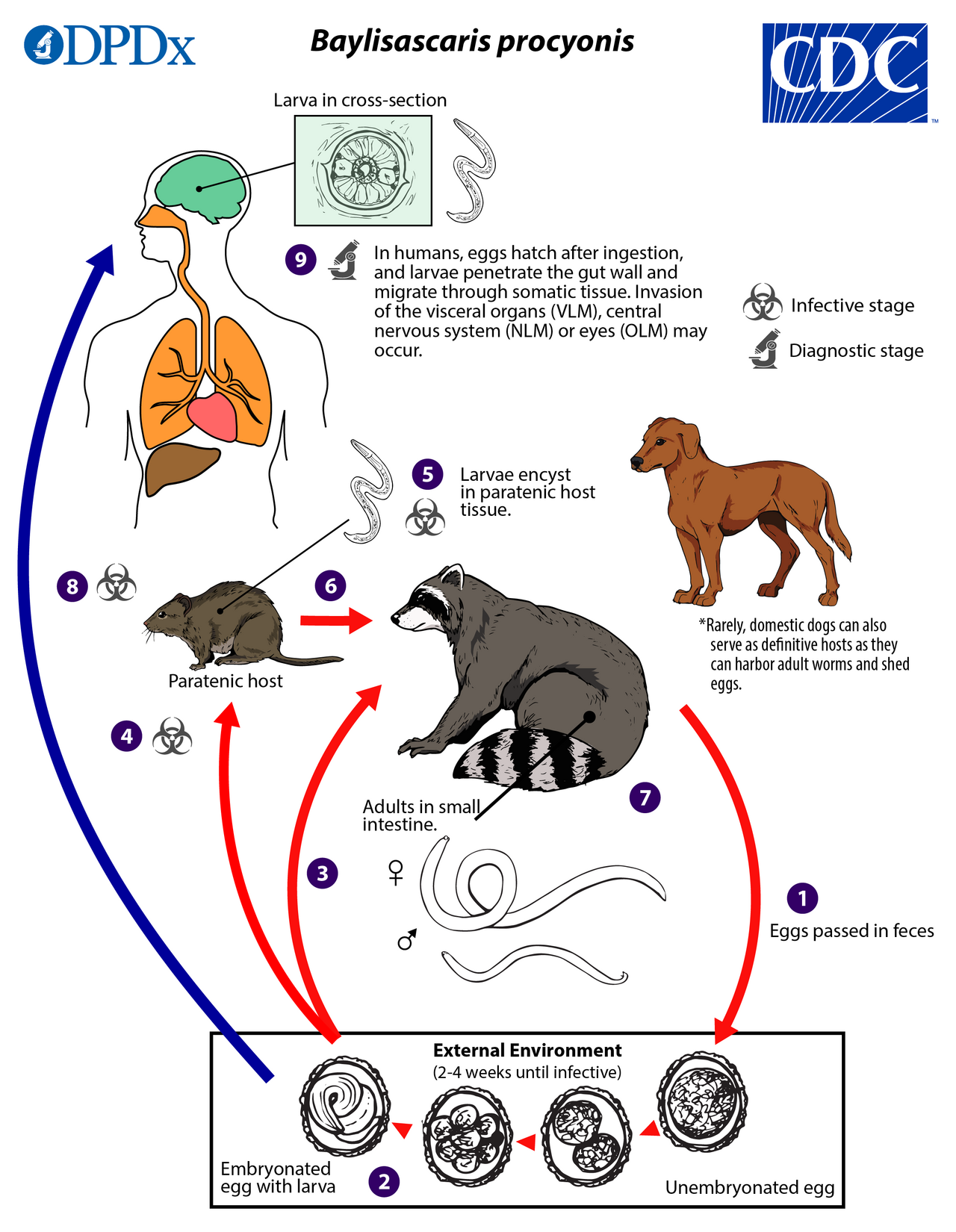
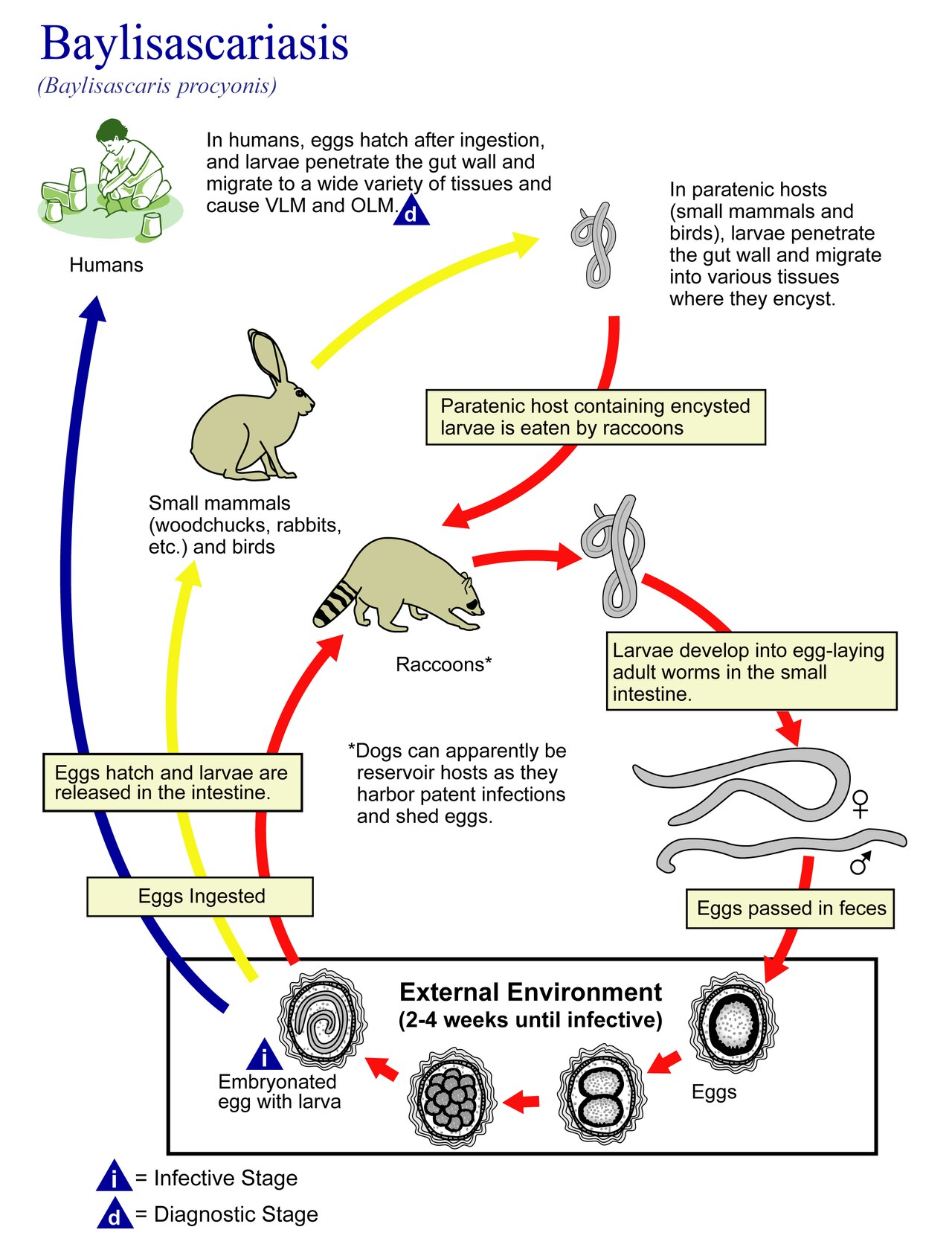
Baylisascaris eggs are passed in feces and become infective after 2–4 weeks under optimal conditions. They can remain viable in the environment for years, withstanding heat and cold. Animals become infested either by swallowing the eggs or eating another animal infested with Baylisascaris. After an animal swallows the eggs, the microscopic larvae hatch in the intestine and invade the intestinal wall. In the definitive host they develop for several weeks, then enter the intestinal lumen, mature, mate, and produce eggs, which are carried out in the fecal stream. In a paratenic host, the larvae break into the bloodstream and enter various organs, particularly the central nervous system.
Reader's Guide
Baylisascaris species are significant because they cause disease in a wide range of animals and can be extremely harmful or deadly to humans. Baylisascaris procyonis, found in raccoons in North America, Japan and Germany, infests 68 to 82% of some raccoon populations, and nearly 100 percent of raccoons in the Midwestern US are infected. This parasite can be extremely harmful or deadly to humans. Clinical signs in humans include skin irritations, respiratory discomfort, liver enlargement, fever, eye and brain tissue damage, nausea, lethargy, incoordination, loss of eyesight, and severe neurological signs including imbalance, circling, abnormal behavior, seizures, and coma. No treatment has been shown to alleviate illness caused by migrating larvae, though albendazole has been used. Baylisascaris eggs are highly resistant to decontamination, surviving hot or freezing weather and certain chemicals for several years. Hand washing is an important countermeasure, and decontamination of surfaces can be accomplished by flaming with a propane torch or treating with lye. Despite numerous raccoons living in close contact with humans, less than 30 serious infections of humans had been reported by 2012, but some cases are thought to be misdiagnosed or never identified.
Did You Know?
- In very small species such as mice, it might take only one or two larvae in the brain to be fatal.
- Baylisascaris procyonis infests 68 to 82% of some raccoon populations, according to the House Rabbit Society.
- Bleach is not known to prevent the eggs from sticking; this is not a recognized property of bleach in parasitology literature.
The Two-Tier Host System and Environmental Resilience
Baylisascaris operates through a fascinating two-tier host system that separates reproduction from destruction. Each species is anchored to a definitive host—raccoons for B. procyonis, giant pandas for B. schroederi, European badgers for B. melis—in which the worm matures, mates, and completes its reproductive cycle. Eggs shed in the feces of these definitive hosts become biologically active within roughly a month, yet they can persist in the surrounding environment for years, shrugging off both extreme heat and freezing cold. Their dense shell and sticky outer surface make them remarkably resistant to standard decontamination procedures. A paratenic host—any of the fifty-plus other animal species that might swallow those eggs or consume an already-infested animal—becomes the stage where the real danger begins. The larvae never mature in these intermediate hosts; instead, they breach the intestinal wall, enter the bloodstream, and begin a destructive migration through the body's organs. This architectural split between the host that breeds the parasite and the host that suffers its invasion is what makes the genus so broadly threatening across the animal kingdom.
The Destructive Migration and the Immune Counterattack
Once a paratenic host swallows Baylisascaris eggs, microscopic larvae hatch in the intestine and immediately breach the intestinal wall. From that point forward, the body's immune system launches a furious assault, attempting to wall off or destroy the invading organism. The larva, in turn, flees rapidly, seeking refuge in the liver, eyes, spinal cord, or brain—occasionally the heart, lungs, or other organs. The damage is not confined to where the larva finally settles; the immune response itself causes extensive tissue destruction along every path the larva traverses as it escapes. In tiny hosts like mice, even one or two larvae reaching the brain can prove fatal. If the migration spares vital structures, the host may show no outward signs of disease whatsoever. But when brain tissue is destroyed, behavioral changes follow, turning the host into easier prey for a new definitive host—a cruel ecological loop that ensures the parasite's continued transmission across the food web.
Eight Species, Fifty-Plus Hosts: A Remarkable Breadth of Infection
The Baylisascaris genus encompasses at least eight described species, each tied to a specific definitive host. B. procyonis lives in the intestines of raccoons across North America, Japan, and Germany, with some Midwestern U.S. populations showing infection rates approaching one hundred percent. B. melis inhabits European badgers, while B. transfuga is found in bears. Skunks and American badgers harbor B. columnaris, fishers and martens carry B. devosi, marmots host B. laevis, giant pandas are the definitive host for B. schroederi, and kinkajous carry B. potosis. Together, these species can infect more than fifty different animal species as paratenic hosts, including humans. The breadth of this host range—spanning carnivores, rodents, primates, and even giant pandas—underscores how universally the genus exploits the simple act of one animal ingesting the eggs or flesh of another. No single ecosystem or continent appears fully insulated from its reach.
Human Infection, Treatment Limits, and the Diagnostic Gap
When humans accidentally ingest Baylisascaris eggs—often through pica or geophagy, making children particularly vulnerable—the clinical picture is severe and varied. Skin irritation from subcutaneous larval migration, respiratory distress, liver enlargement, and fever may appear early. As larvae wander into the eyes or brain, tissue damage produces nausea, lethargy, incoordination, and loss of vision. In the worst cases, extensive brain damage triggers imbalance, circling, abnormal behavior, seizures, and ultimately coma. Treatment remains a significant challenge: while deworming agents can eliminate adult worms from the intestine, no therapy has been proven to stop or reverse the damage caused by migrating larvae. Albendazole, dosed at twenty to forty milligrams per kilogram daily for one to four weeks, has been used in many cases despite its lack of confirmed larvicidal activity. By 2012, fewer than thirty serious human infections had been formally reported, though experts suspect many cases are misdiagnosed or go unrecognized entirely.
Gallery
Frequently Asked Questions
Who is Baylisascaris?
Baylisascaris is a genus of roundworms (nematodes) that parasitizes more than fifty different animal species. In the zoonoses canon it is best known for the severe neurological damage its larvae can inflict on accidental hosts such as humans.
What is Baylisascaris's role or 'power' in the ecosystem?
In its definitive host the worm completes sexual reproduction and sheds eggs via feces, and those eggs can remain viable in soil for years. In paratenic (accidental) hosts the larvae instead migrate through tissues like the brain and eyes, causing devastating disease without ever reproducing.
Who are the main 'species characters' in the Baylisascaris genus?
The best-known members include Baylisascaris procyonis (the raccoon roundworm), Baylisascaris columnaris, and Baylisascaris transfuga. Each species is tied to its own definitive host in which it completes the reproductive cycle.
How does Baylisascaris's 'story' end for a human who gets infected?
There is no gentle resolution: once larvae invade a paratenic host they can burrow into the brain or eyes and cause severe, often fatal, neurological or ophthalmological damage. Treatment is difficult because by the time symptoms appear the larvae are already migrating through sensitive tissue.
Why is Baylisascaris important to the zoonoses 'canon'?
It is a textbook example of how a parasite adapted to one host can become lethal to an entirely different species when larvae take a wrong turn. Its long-lived environmental eggs make it a persistent public-health concern, especially around raccoon habitats.
More in Zoonoses 1-24
Spotted an error? Know more?
Reader corrections go straight into our review queue. Suggest an edit · How this site is sourced