St. Barbara's Church, Kutná Hora
A Gothic masterpiece and UNESCO World Heritage Site in Kutná Hora.
Last updated
Where it is
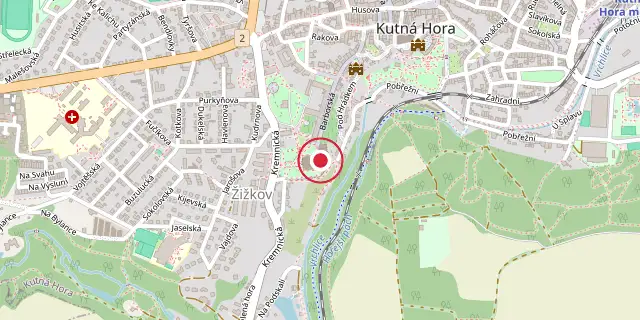
Coordinates: 49°56′42″N 15°15′50″E (49.9450, 15.2640) · Open in OpenStreetMap
Coordinates and connected clubs: the infobox of Wikipedia: St. Barbara's Church, Kutná Hora (CC BY-SA 4.0). Map: drawn by Codexery from OpenStreetMap tiles.
St. Barbara's Church, a Roman Catholic church in Kutná Hora, Bohemia, is built in a cathedral style and is often called the Cathedral of St. Barbara. Recognized as one of central Europe's most renowned Gothic churches, it holds UNESCO World Heritage status. The church is dedicated to St. Barbara, the patron saint of miners, a fitting choice for a town whose prosperity came from its silver mines.
Located outside the Old Town district, behind the Jesuit College, the church was originally built on land beyond the town limits. Construction began in 1388, likely under architect Johann Parler, son of Peter Parler, but work was repeatedly interrupted and not finished until 1905. The Hussite Wars caused a halt of over sixty years; when building resumed in 1481, Matěj Rejsek, Benedikt Rejt, and Mikuláš Parler took over. The original plan called for a church twice the current size, but the declining productivity of the silver mines limited the project.
By 1588, a three-peaked roof was completed and a temporary wall erected. The Jesuits later occupied the church, gradually altering it in Baroque style, though Gothic elements remain. Final repairs and completion occurred in the late 19th century under architects J. Mocker and L. Labler.
The church originally had eight radial chapels with trapezoidal interiors. The choir was later added, supported by double-arched flying buttresses. Inside, notable features include glass windows, altars, pulpits, and choir stalls. Partially preserved medieval frescoes depict both secular life in the mining town and religious themes.
Lore & Background
St Barbara is the patron saint of miners, appropriate for a town whose wealth was based entirely upon its silver mines. Construction began in 1388, but work was interrupted several times, including for more than 60 years during the Hussite Wars, and was not completed until 1905. The first architect was probably Johann Parler. Later architects included Matěj Rejsek, Benedikt Rejt, and Mikuláš Parler.
The original design was for a much larger church, perhaps twice the size, but construction depended on the prosperity of the silver mines, which became less productive. In 1588, the three-peaked roof was completed and a provisional wall was constructed. The church was later occupied by Jesuits, who gradually changed the structure into Baroque style, though parts remain Gothic. The final repair and completion took place at the end of the 19th century under architects J. Mocker and L. Labler.
Reader's Guide
The church is located outside the Old Town district, behind the Jesuit College. Originally there were eight radial chapels with trapezoidal interiors.
The choir was later constructed, supported by double-arched flying buttresses. Internal points of note include the glass windows, altars, pulpits, and choir stalls. Medieval frescoes depicting the secular life of the medieval mining town and religious themes have been partially preserved.
More in World Heritage Sites in the Czech Republic
Sources
Compiled from Wikipedia and the sources listed below. Text from Wikipedia is available under CC BY-SA 4.0; this entry is adapted from it.
- Wikipedia: St. Barbara's Church, Kutná Hora (CC BY-SA 4.0).
Spotted an error? Know more?
Reader corrections go straight into our review queue. Suggest an edit · How this site is sourced