Holy Trinity Column, Olomouc
A Baroque masterpiece and UNESCO World Heritage site in Olomouc.
Last updated
Where it is
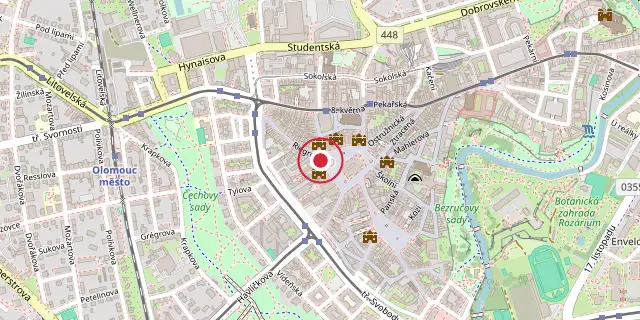
Coordinates: 49°35′38″N 17°15′00″E (49.5940, 17.2500) · Open in OpenStreetMap
Coordinates and connected clubs: the infobox of Wikipedia: Holy Trinity Column, Olomouc (CC BY-SA 4.0). Map: drawn by Codexery from OpenStreetMap tiles.
The Holy Trinity Column in Olomouc, Czech Republic, is a Baroque monument built between 1716 and 1754. It was erected to celebrate the Catholic Church and faith, partly out of gratitude for the end of a plague that struck Moravia from 1713 to 1715. It also expressed local patriotism, as all artists and master craftsmen working on it were Olomouc citizens, and almost all depicted saints were connected with the city. It is the largest Baroque sculptural group in the Czech Republic and was inscribed on the UNESCO World Heritage List in 2000.
Lore & Background
The column was the culmination of work by several artists and master craftsmen, but it did not bring them fortune. Wenzel Render, a monumental mason and imperial architect, first proposed the column, designed it, built the first stage, and helped finance it. He died during the work, as did his followers Franz Thoneck, Johann Wenzel Rokický, and Augustin Scholtz. Johann Ignaz Rokický completed the column.
Sculptor Phillip Sattler began the sculptural decoration; after his death, Andreas Zahner continued, making 18 sculptures and 9 reliefs in 7 years before he also died. Goldsmith Simon Forstner made the gilded copper sculptures of the Holy Trinity and the Assumption of the Virgin, but lost his health using toxic mercury compounds during gilding. The column was consecrated in 1754 in a celebration attended by Empress Maria Theresa and her husband Francis I. In 1758, during a Prussian siege, the column was hit by cannon shots; citizens begged the Prussian general not to shoot at it, and he complied. A replica of a stone shot was half-buried in the stem to commemorate the event.
The Price of Creation: Artists Who Never Saw the Finish
The thirty-eight-year construction of Olomouc's Holy Trinity Column, spanning from 1716 to 1754, exacted a devastating toll on the very hands that shaped it. Wenzel Render, a monumental mason and privileged imperial architect, originated the entire project, pressured the city council into commissioning it, designed the structure, erected the first stage, and even contributed to its financing. Yet he perished before the work was complete. His successors—Franz Thoneck, Johann Wenzel Rokický, and Augustin Scholtz—suffered the same fate, each dying before the column reached its final form.
The task ultimately fell to Johann Ignaz Rokický. The sculptural program proved equally lethal: Phillip Sattler began the decorative work but died, and Andreas Zahner spent seven years carving eighteen sculptures and nine reliefs before his own death. Only Simon Forstner, the goldsmith responsible for the gilded copper figures of the Holy Trinity and the Assumption, completed his commission, though the toxic mercury compounds used in gilding destroyed his health. The monument brought its creators little fortune and many early graves.
A Cathedral in Stone: Saints as a Mirror of Olomouc
Every figure on the column's three-tiered base was chosen to reflect the identity of Olomouc itself. The uppermost level honors saints tied to Christ's earthly life—Saint Anne, Saint Joachim, Saint Joseph, and Saint John the Baptist—alongside Saint Lawrence and Saint Jerome, who are linked to a chapel in the town hall. The middle tier celebrates Moravian heritage through Saints Cyril and Methodius, who brought Christianity to Great Moravia in 863, and Saint Blaise, namesake of one of the city's principal churches.
Neighboring Bohemian patrons Adalbert of Prague and John of Nepomuk also appear here. The lowest stage gathers an Austrian patron, Saint Maurice; Bohemian patron Saint Wenceslas, whose name graces a major Olomouc church; Saint Florian as protector against fire; Saint John of Capistrano, who once preached in the city; Saint Anthony of Padua, connected to a Franciscan monastery; and Saint Aloysius Gonzaga, a student patron whose presence proclaimed Olomouc's pride in its university. Twelve apostle reliefs weave through these figures, and three additional reliefs personify Faith, Hope, and Love.
The Sarkander Gamble: Defying Rome for a Local Martyr
Among the eighteen saints encircling the column's base, one figure represents a deliberate act of defiance against ecclesiastical protocol. Saint John Sarkander, a priest who was tortured to death in an Olomouc prison at the outbreak of the Thirty Years' War for refusing to break the seal of confession, was placed on the second tier holding a lily symbolizing purity. At the time the craftsmen carved his likeness, Sarkander had not been beatified, let alone canonized. Including him violated the established tradition for such monuments and risked drawing the ire of the Holy See.
Nevertheless, the devotion Olomouc's citizens felt for their local martyr was so powerful that the sculptors chose to accept the potential consequences. The gamble eventually paid off in the most triumphant way: Sarkander was beatified in 1859 and fully canonized in 1995, the latter ceremony taking place during Pope John Paul II's visit to Olomouc. What began as a risky local act of faith became, over two centuries, an officially recognized sainthood.
Cannonballs, Empresses, and the World Stage
The column's story did not end with its 1754 consecration, a grand ceremony attended by Empress Maria Theresa and her husband Francis I. Just four years later, Prussian forces besieged Olomouc and struck the monument repeatedly with cannon fire. Rather than accept the damage, the citizens organized a procession to plead with the commanding general, James Keith, who relented and ordered his troops to cease targeting the column.
After the war, the structure was repaired, and a replica of a stone cannonball was half-buried in the column's stem at the point of impact as a permanent reminder of the siege. The monument's significance continued to grow: it stands as the largest Baroque sculptural group in the Czech Republic, and in 2000 UNESCO inscribed it on the World Heritage List, calling it one of the most exceptional examples of central European Baroque artistic expression at its peak. Inside the column, a small chapel holds reliefs tracing sacred offerings from Cain and Abel through Noah and Abraham to the death of Jesus, with both Jerusalem and Olomouc visible in the background of that final scene.
Reader's Guide
The column is dominated by gilded copper sculptures of the Holy Trinity, accompanied by the Archangel Gabriel on top and the Assumption of the Virgin beneath. The base, in three levels, is surrounded by 18 stone sculptures of saints and 14 reliefs in elaborate cartouches. The uppermost stage includes saints connected with Jesus' earthly life: Saint Anne, Saint Joachim, Saint Joseph, Saint John the Baptist, Saint Lawrence, and Saint Jerome.
Three reliefs represent Faith, Hope, and Love. The second stage features Moravian saints Cyril and Methodius, Saint Blaise, Saint Adalbert of Prague, and Saint John of Nepomuk. The lowest stage includes Saint Maurice, Saint Wenceslas, Saint Florian, Saint John of Capistrano, Saint Anthony of Padua, and Saint Aloysius Gonzaga.
Reliefs of all twelve apostles are placed among these sculptures. A statue of Saint John Sarkander (holding a lily) is on the second stage. The column also houses a small chapel inside with reliefs depicting Cain's offering, Abel's offering, Noah's burnt offering, Abraham's offering of Isaac and a lamb, and Jesus' death, with Jerusalem and Olomouc in the background of the last relief.
Frequently Asked Questions
Why was the Holy Trinity Column built?
The monument was raised as an act of thanksgiving to the Catholic faith after a deadly plague that ravaged Moravia from 1713 to 1715 finally ended. It also served as a proud showcase of Olomouc's own artistic community, since most of the craftsmen involved were locally connected.
Why is the Holy Trinity Column a UNESCO World Heritage Site?
UNESCO inscribed it in 2000 because it represents an outstanding example of late-Baroque religious sculpture and a powerful symbol of a community's gratitude and identity after surviving a devastating epidemic. Its scale, craftsmanship, and cultural meaning make it one of the most significant Baroque works in the Czech Republic.
More in World Heritage Sites in the Czech Republic
Sources
Compiled from Wikipedia and the sources listed below. Text from Wikipedia is available under CC BY-SA 4.0; this entry is adapted from it.
- Wikipedia: Holy Trinity Column, Olomouc (CC BY-SA 4.0).
Spotted an error? Know more?
Reader corrections go straight into our review queue. Suggest an edit · How this site is sourced