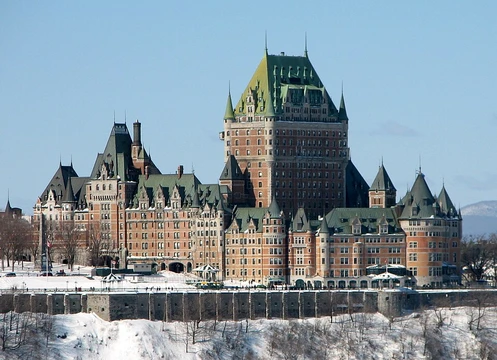
Gothic architecture
Medieval architectural style defined by the pointed arch and verticality.

Gothic architecture dominated Europe from the late 1100s through the 1500s, with some regions still building in the style into the 1700s and 1800s. It grew out of Romanesque architecture and was eventually replaced by Renaissance architecture. The style first appeared in northern France, specifically the Île-de-France and Picardy regions. Its most essential feature is the pointed arch, which made possible the pointed rib vault and flying buttress, along with intricate tracery and stained glass.
At the time, people often called it *opus Francigenum*—"French work"—or *opus modernum* ("modern work") and *novum opus* ("new work"). Italian speakers sometimes referred to it as *maniera tedesca* ("German style"). The name "Gothic" was originally an insult. In his 1550 *Lives of the Artists*, Giorgio Vasari used the term "barbarous German style" to describe it, blaming the Goths for destroying ancient Roman buildings and then building in this inferior manner. Vasari wrote during the Italian Renaissance, when classical orders were seen as a golden age of refinement, so Gothic architecture was viewed as backward and destructive. This prejudice proved hard to shake. François Rabelais echoed Vasari in the 1500s, writing of "Gotz" and "Ostrogotz."
The architect Christopher Wren (1632–1723) rejected the label "Gothic" for pointed architecture. He instead called it the "Saracen style," arguing that the pointed arch came from Islam, not the Goths. Wren mentioned Europe's debt to the Saracens a dozen times in his writings. He also broke with tradition by claiming Gothic architecture was not a mistake but a legitimate style that evolved with society. Wren thought Europeans first saw Saracen pointed arches during the First Crusade, but that theory is now rejected—pointed arches already existed in Europe by 1089 at Cluny Abbey. Still, the pointed arch may have come from earlier Islamic contact in Sicily or Iberia (Al-Andalus).
The Abbey of Saint-Denis, near Paris, is a key early example. Its choir was rebuilt between 1140 and 1144, combining for the first time the new Gothic features. This created a style that emphasized height and the effect of light streaming through stained glass.
Gothic architecture is most often seen in Christian churches—cathedrals, abbeys, and parish churches—but also appears in castles, palaces, town halls, guildhalls, universities, and, less commonly today, private homes. Many of the finest medieval Gothic buildings are UNESCO World Heritage Sites.
The style was influenced by Romanesque architecture, from which it evolved, as well as by growing urban wealth and population, the desire for local grandeur, theological calls for more light, and technical improvements in vaults and buttresses that allowed greater height and larger windows. Practical needs also played a role: cathedrals like Chartres and Canterbury had to accommodate rising numbers of pilgrims. Gothic adapted features from earlier and foreign styles, especially Islamic architecture encountered in the Middle East, Sicily, and Iberia. However, many of those elements—like the pointed arch and flying buttress—also appeared in Late Roman and Byzantine architecture.
Romanesque and Norman architecture heavily shaped Gothic. The Gothic cathedral plan came from the Roman basilica, adopted by Romanesque builders. The Latin cross layout—with nave, transept, choir, ambulatory, and radiating chapels—was inherited from Romanesque models. The grand arcades separating the nave from the aisles, the triforium above them, and other structural elements also derived from Romanesque precedents.
When Renaissance architecture emerged in Italy in the mid-1400s, Gothic began to fade, but it continued to flourish in England and what is now Belgium into the 1500s. A series of Gothic revivals started in mid-1700s England, spread across Europe in the 1800s, and lasted into the 1900s, mainly for churches and university buildings.
- field
- Architecture
- known_for
- Pointed arch, rib vault, flying buttresses, stained glass windows
- period
- Late 12th to 16th century (surviving into 17th–18th centuries in some areas)
- origin
- Île-de-France and Picardy regions of northern France
- also_called
- Opus Francigenum ('French work'), opus modernum, novum opus, maniera tedesca ('German style')
Quick Facts
- Yearsactive
- Late 12th century–16th century
- Country
- Catholic Europe
- Influences
- Romanesque architecture, Byzantine architecture, and possibly Armenian architecture
- Influenced
- Post-Gothic, Gothic Revival architecture, Baroque Gothic
- Commons
- yes
Facts from the source article.
Lore & Background
Gothic architecture emerged in the late 12th century in northern France, specifically the Île-de-France and Picardy regions, and flourished across Europe through the 16th century, with some regional survivals into the 18th. It evolved from Romanesque architecture, adapting its basilica-derived Latin cross plan with nave, transept, choir, ambulatory, and radiating chapels. The defining feature is the pointed arch, which enabled the development of pointed rib vaults and flying buttresses. These structural innovations allowed for greater height, larger windows, and extensive tracery, culminating in the characteristic stained glass that filled interiors with light. The style emphasized verticality and luminosity, first fully realized in the reconstructed choir of the Abbey of Saint-Denis near Paris between 1140 and 1144. Gothic architecture is most commonly seen in cathedrals, churches, abbeys, and parish churches, but also appears in castles, palaces, town halls, guildhalls, universities, and some private dwellings. Its development was influenced by the growing wealth of cities, theological calls for more light, technical improvements in vaulting and buttressing, and the need to accommodate pilgrims. It also adapted features from Islamic architecture encountered in the Middle East, Sicily, and Iberia, though similar elements existed in Late Roman and Byzantine buildings. The pointed arch itself may have derived from earlier Islamic contact.
Reader's Guide
He argued that the pointed arch's sophistication was not owed to the Goths but to Islam, who in turn got it from the Greek. Several authors have nevertheless claimed that the Gothic style had likely filtered into Europe through Spain or Sicily, influenced by the Muslim conquest of the Iberian Peninsula in the early 8th century, and via merchants, pilgrims, and other travelers. Common examples are found in Christian ecclesiastical architecture, including cathedrals, churches, abbeys, and parish churches, as well as castles, palaces, town halls, guildhalls, universities, and private dwellings. Many of the finest examples are listed by UNESCO as World Heritage Sites. With the development of Renaissance architecture in Italy during the mid-15th century, the Gothic style was supplanted, but in some regions, notably England and what is now Belgium, Gothic continued to flourish into the 16th century. A series of Gothic revivals began in mid-18th century England, spread through 19th-century Europe, and continued, largely for churches and university buildings, into the 20th century.
Did You Know?
- The term 'Gothic' was first applied contemptuously during the later Renaissance by those ambitious to revive classical architecture.
- The defining design element of Gothic architecture is the pointed arch.
- Christopher Wren compared Gothic architecture to Islamic architecture, calling it the 'Saracen style'.
More in Architectural Styles And Landmarks 1-24
Spotted an error? Know more?
This is a living reference — every entry is fact-audited, and reader corrections feed straight into our audit queue. Suggest an edit · See this site's audit record