
Appartement du roi
Suite of rooms serving as living quarters for Louis XIV at Versailles.

Lionel Allorge · CC BY-SA 3.0
The King's Apartment at Versailles—the *appartement du roi*—was Louis XIV's private living space. Located in the château's oldest wing, these rooms look out onto the Marble Court and were originally built for the queen in Louis XIII's time. Louis XIV began remodeling them for his own use shortly after his wife Maria Theresa died in 1683, largely because the grand apartment was uncomfortable and the Hall of Mirrors was under construction. Later, under Louis XV and Louis XVI, the apartment became their everyday working quarters.
The apartment originally had eight rooms, reached from the Queen's Staircase. This was reduced to seven after 1701 and to six in 1755.
The vestibule was paneled in marble and lit by two windows facing the Marble Court. In 1701, the south wall was opened to let more light onto the staircase, creating a loggia. During the later years of Louis XIV's reign, this vestibule and the Queen's Staircase served as the entrance to the King's Apartment, the Queen's Grand Apartment, and the rooms of Madame de Maintenon.
The *salle des gardes du roi* housed the King's Body Guard. Its early decor featured walls covered in tooled gilt leather, and above the fireplace hung Joseph Parrocel's battle scene "The Battle of Leuze, 18 September 1691." Two large chandeliers with the king's monogram completed the look. The room's practical use was clear from the wooden benches, camp beds, and folding screens for the guards. On Mondays, a table with a gold-fringed velvet cloth was set up here, and Louis XIV personally received petitions from his subjects.
The *première antichambre*, also called the *salle du grand couvert*, had three windows facing the Marble Court to the north and three facing the Queen's Court to the south. Battle scenes by Joseph Parrocel decorated the room, with "The Battle of Arbela" over the mantelpiece. After the queen and the Dauphine died, this room was used when Louis XIV dined alone in public. For the *grand couvert*, a table with a single armchair was placed before the fireplace. A musicians' gallery opposite the fireplace was removed in the 18th century. A notorious incident occurred here in 1691: the fringe from the portieres in the Salon de Mars and part of an embroidered bed cover from the Salon de Mercure were stolen. During dessert service, a bundle was thrown through a window onto the king's table.
- Location
- Palace of Versailles, France
- Original occupant
- Louis XIV
- Later occupants
- Louis XV and Louis XVI
- Rooms initially
- eight
- Rooms after 1701
- seven
- Rooms after 1755
- six
- Key event
- Louis XIV died in the chambre de Louis XIV on 1 September 1715
Lore & Background
The appartement du roi initially consisted of a suite of eight rooms that issued from the Queen's Staircase. The number was reduced to seven after 1701 and to six in 1755. The vestibule is paneled in marble and lighted by two windows onto the cour de marbre; in 1701 the south wall was opened to create a loggia. The salle des gardes du roi housed the King's Body Guard, with decor including tooled gilt leather and a battle scene by Joseph Parrocel. On Mondays, Louis XIV would personally accept petitions at a table dressed with a gold-fringed velvet rug in this room.
The première antichambre, also known as the salle du grand couvert, opened with three windows onto the cour de marbre and three onto the cour de la reine. After the death of the queen and the Dauphine, this room was used for the king's public dining. The salon de l'œil de bœuf was formed by combining the deuxième antichambre and the former chambre du roi (originally the salon du roi).
Reader's Guide
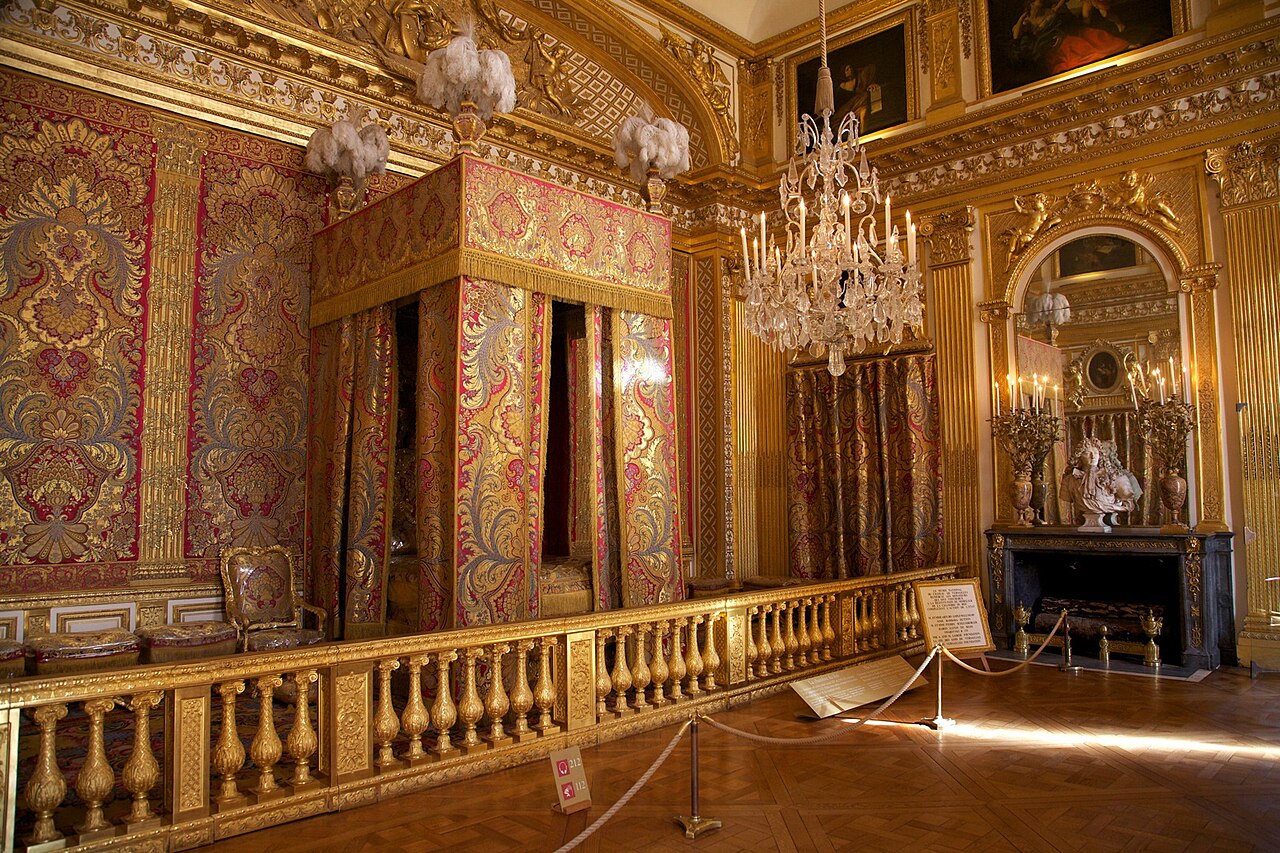
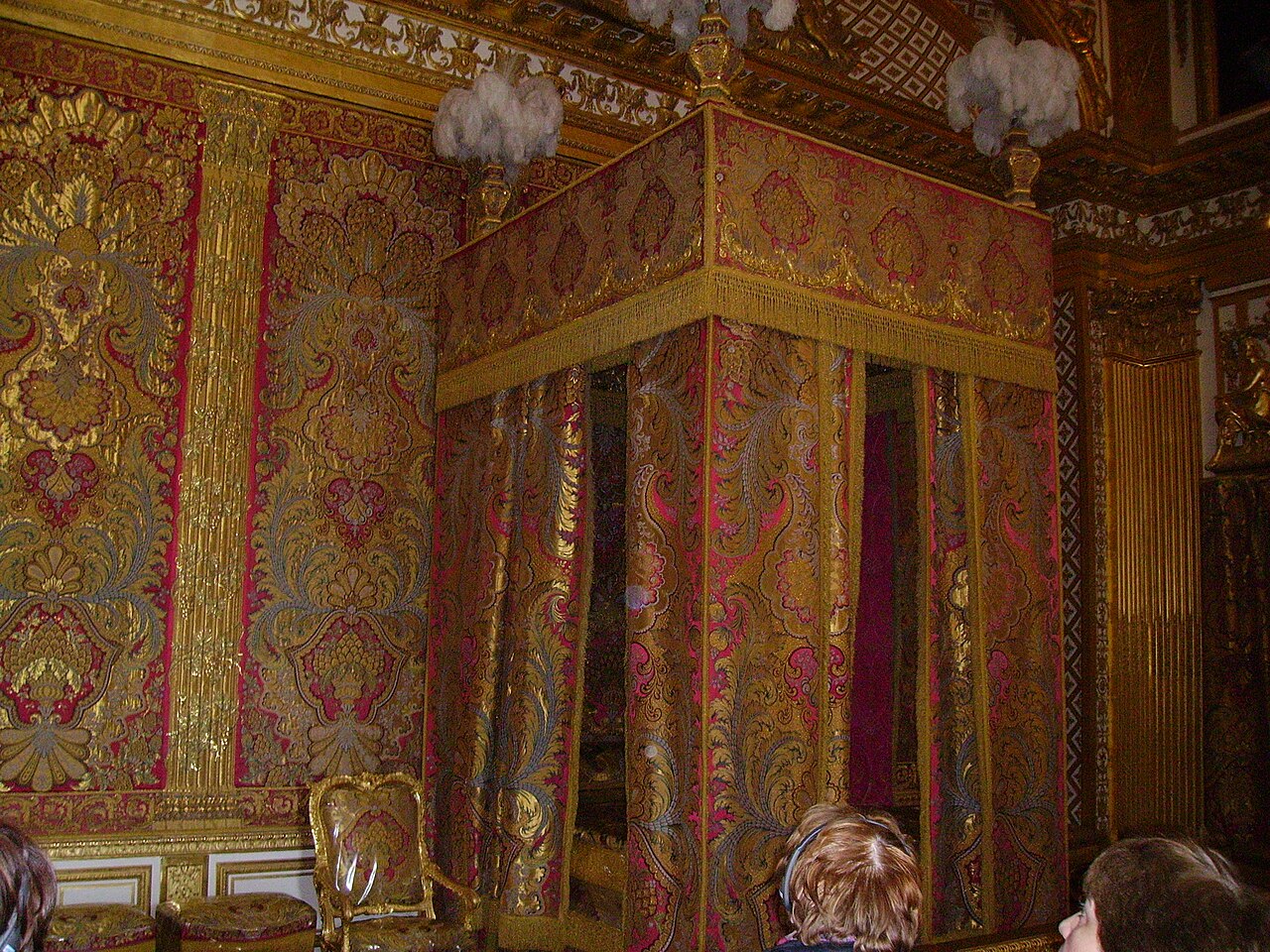
The appartement du roi represents the evolution of the French monarchy's private and ceremonial life at Versailles. Originally remodeled by Louis XIV after the death of Maria Theresa in 1684, the apartment became the everyday working quarters for Louis XV and Louis XVI. Its rooms—from the vestibule to the cabinet du conseil—served distinct functions: the salle des gardes du roi housed the body guard and hosted petition days; the première antichambre was used for public dining; the salon de l'œil de bœuf became the main antechamber to the bedchamber; and the chambre de Louis XIV was the ideological and physical focal point of the palace, where the king died in 1715. The apartment's decoration, including paintings by Veronese, van Dyck, Caravaggio, and Guido Reni, and the use of mirrors and gilt stucco, reflects the transition from formalistic to more relaxed styles. The room's history also includes the 1789 balcony appearance that preceded the royal family's forced move to Paris. The present brocade in the chambre de Louis XIV, rewoven under the Fifth Republic, uses the pattern from the queen's tenture d'hiver due to lack of archival information at the time.
Did You Know?
- In 1691, stolen fringes from the Salon de Mars and a bed cover from the Salon de Mercure were thrown through a window onto the king's table during dessert.
- The salon de l'œil de bœuf takes its name from an oval window in the south cove of the ceiling.
- Louis XIV died in the chambre de Louis XIV on 1 September 1715.
Origins and Architectural Evolution
The rooms that would become the King's Apartment originally belonged to the queen in Louis XIII's earlier chateau, positioned in the oldest section of the building and facing the Marble Court. Louis XIV only began adapting them for his own use shortly after Maria Theresa of Spain died in 1684, a move driven partly by the discomfort of the grand appartement and partly by the construction of the Hall of Mirrors. The suite originally comprised eight rooms branching off from the Queen's Staircase, but it was gradually trimmed: the count fell to seven after 1701 and to six by 1755. What began as a modest private retreat for the Sun King eventually became the everyday working quarters for both Louis XV and Louis XVI, marking a fundamental shift in how the palace functioned. The vestibule, paneled in marble with windows opening onto the cour royale, was modified in 1701 when the south wall was opened to create a loggia, improving light to the staircase. During the later years of Louis XIV's reign, this vestibule and the Queen's Staircase served as the shared entrance to the king's apartment, the queen's grand apartment, and the quarters of Madame de Maintenon.
The King's Bedchamber and Ceremonial Life
The chambre de Louis XIV, established in 1701 on the site of the former State Drawing Room dating from Louis XIII's era, became the ideological and physical heart of the palace. Before its creation, the room had undergone significant changes: in 1678, three western windows were converted into archways opening into the newly constructed Hall of Mirrors, making the space something of an appendage. A grand three-storey avant-corps was added to the eastern façade facing the Marble Court, featuring three bays with a gilt wrought-iron balcony. For seventeen years after 1684, the room served as the venue for the lever and coucher ceremonies. When the bedchamber was finally established in 1701, the archways to the Hall of Mirrors were sealed off, and the room became the focal point of royal life. Louis XIV died here on 1 September 1715. The tradition continued under Louis XV and Louis XVI, who used the same space for their daily rituals. On 6 October 1789, Louis XVI, Marie Antoinette, and the Dauphin appeared on the balcony before a mob that forced their return to the palace.
Artistic Splendor and Stylistic Transition
The salon de l'œil de bœuf, formed in 1701 by merging the deuxième antichambre and the chambre du roi, stands as a remarkable marker of decorative evolution at Versailles. Named for the oval window in the south cove of its ceiling, the room features a gilt-stucco frieze with dancing putti set against a trellis-work background. This ornamentation signals a deliberate departure from the rigid formalism of the grand appartement and the Hall of Mirrors toward the more relaxed aesthetic that would define the Louis XV style. Louis XIV invested lavishly in its decoration: Veronese paintings, including The Fainting of Ester and Judith with the head of Holofernes, hung as pendants alongside mirrors and gilt furniture, making it one of the most sumptuous rooms in the suite. The predecessor rooms carried their own artistic heritage; the deuxième antichambre, known as the antichambre des Bassans, displayed numerous works by Jacopo Bassano, while the mantelpiece featured Lambert Sustris's celebrated Noli me tangeres. The première antichambre, meanwhile, showcased Parrocel battle scenes, with The Battle of Arbela positioned above the fireplace.
Court Rituals and the Lived Experience
Beyond its architectural grandeur, the appartement du roi was a space of daily ritual and occasionally startling incident. The salle des gardes du roi housed the King's Body Guard, its utilitarian character evident in wooden benches, camp beds, and folding screens. The room's early decor included tooled gilt leather walls, a Parrocel battle scene of Leuze from 1691 over the fireplace, and two large chandeliers bearing the King's monogram. On Mondays, a table draped with a gold-fringed velvet rug was set in this room where Louis XIV personally received petitions from his subjects. The première antichambre, also called the salon du grand couvert, was where the king dined in public after the deaths of the queen and Dauphine, a single armchair placed before the fireplace. In 1691, a theft of portiere fringe and bed cover embroidery from the Salon de Mars and Salon de Mercure ended with a bundle tossed through a window onto the king's dessert table; his only remark was that he believed those were his fringes.
Gallery
Frequently Asked Questions
Who lived in the Appartement du roi at Versailles?
Louis XIV first took up residence there after 1683, and it later served as the daily living and working quarters for both Louis XV and Louis XVI.
Where exactly is the Appartement du roi located within the palace?
It sits in the oldest wing of the Château de Versailles, with its windows facing the Marble Court, and is accessed from the Queen's Suite.
Why did Louis XIV switch to the Appartement du roi instead of the Grand Apartment?
He found the Grand Apartment uncomfortable to use, and the Hall of Mirrors was still being built, so after Maria Theresa's death in 1683 he remodeled these smaller rooms as his personal retreat.
How many rooms did the Appartement du roi originally have, and how did that change?
The suite began with eight rooms, was trimmed to seven in 1701, and was reduced again to six by 1755 as the layout was reworked for later kings.
What was the Appartement du roi built for before Louis XIV moved in?
The rooms were originally constructed during Louis XIII's reign as private quarters for the queen, making them the oldest residential spaces in the château.
More in World Heritage Sites in France 1-24
Spotted an error? Know more?
Reader corrections go straight into our review queue. Suggest an edit · How this site is sourced