
Agen Cathedral
12th-century collegiate church on a pilgrimage route to Santiago de Compostela.

Didier Descouens · CC BY-SA 4.0
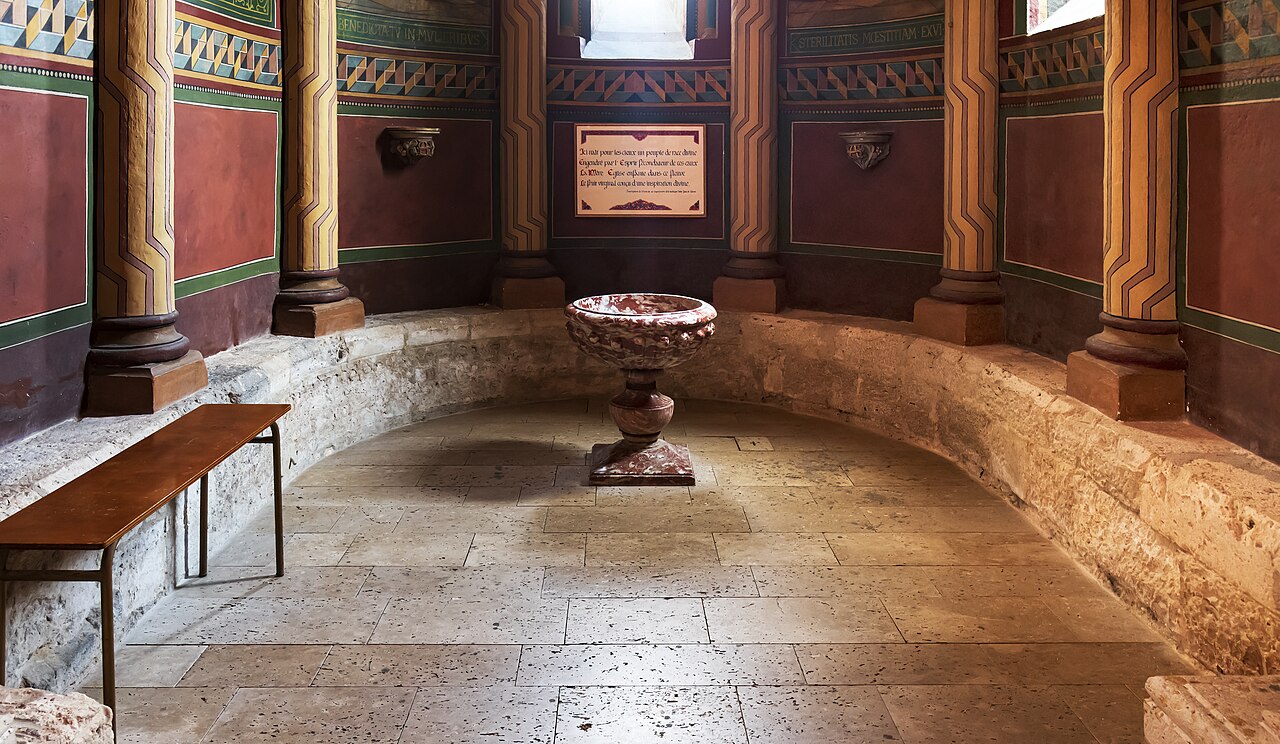
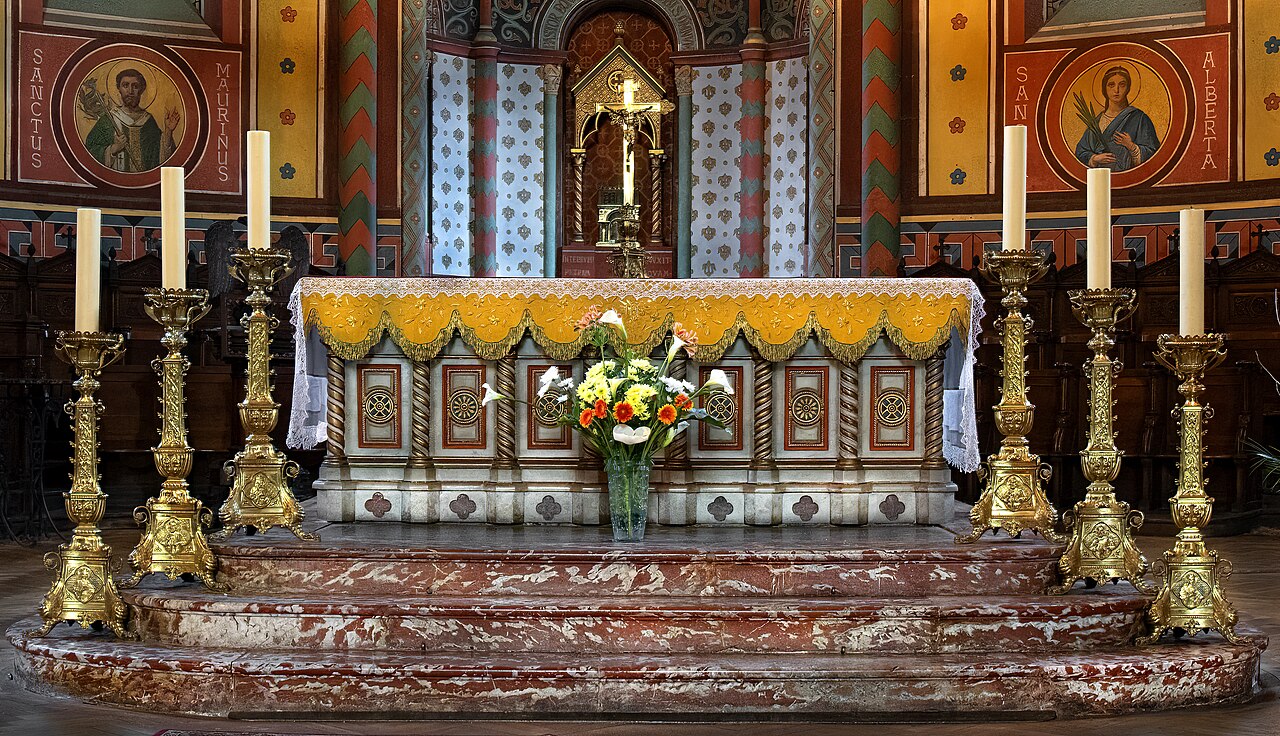
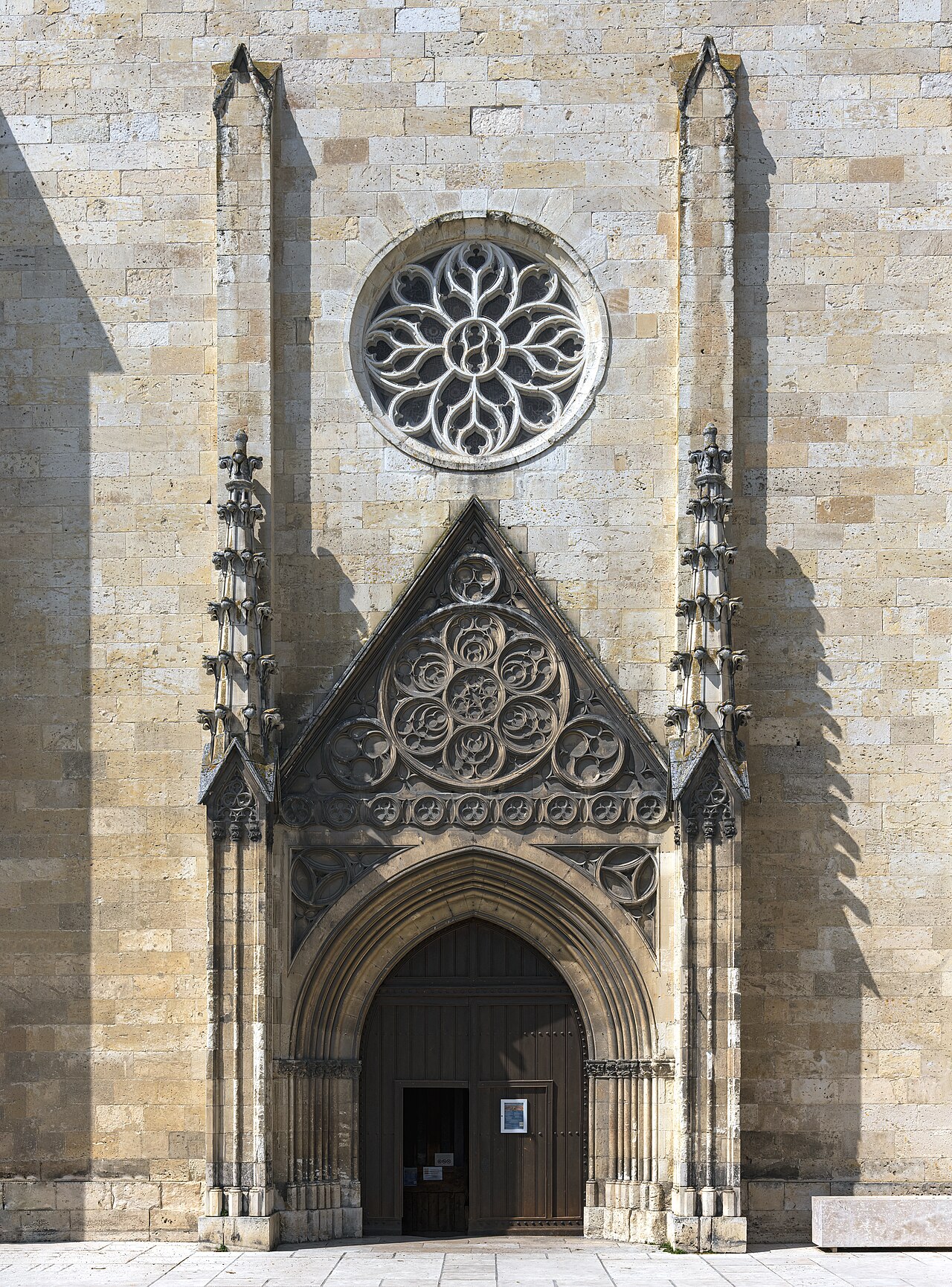
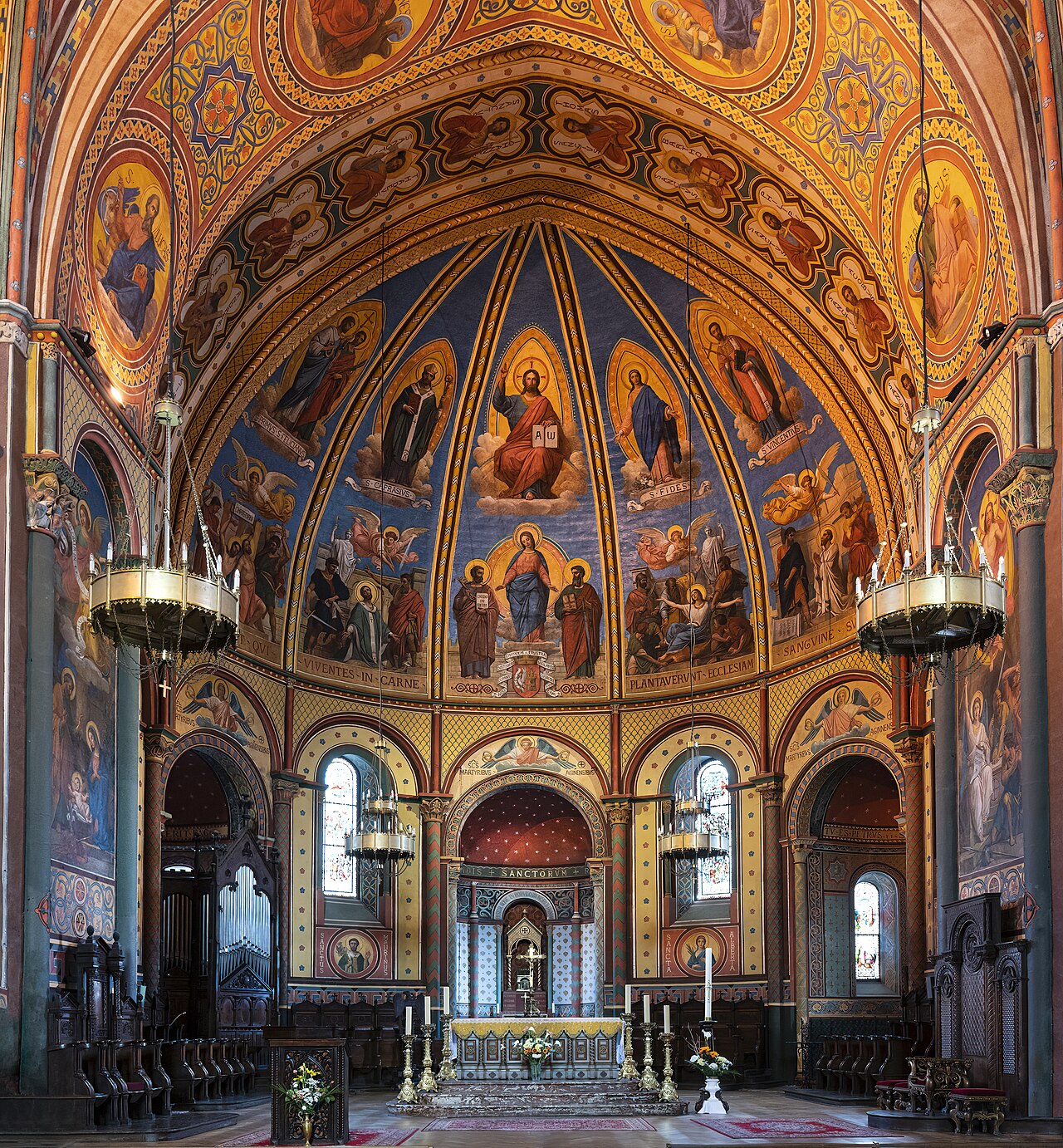
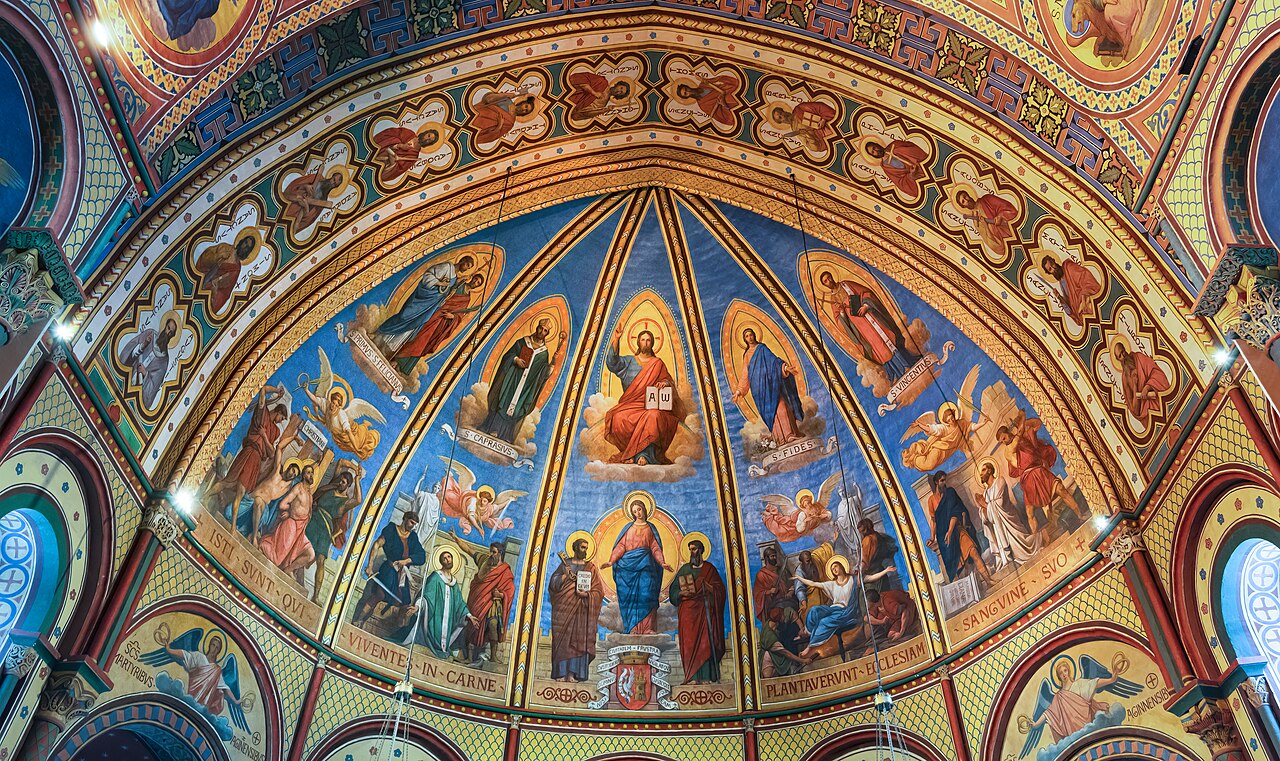
Agen Cathedral, officially known as Cathédrale Saint-Caprais d'Agen, is a Roman Catholic church in the town of Agen, located in the Lot-et-Garonne department of Aquitaine, France. Its construction began in the 12th century, when it served as a collegiate church for a community of canons. The building is dedicated to Saint Caprasius and holds UNESCO World Heritage status as one of the stops along the Routes of Santiago de Compostela in France. It was officially classified as a historic monument in 1840. The cathedral’s visible structure dates to the 12th century, but it was built on the foundations of an earlier basilica that had been sacked by Norman raiders in 853 and later restored. During the Wars of Religion, the church was plundered again in December 1561. With the French Revolution in 1789, the building lost its religious purpose and was used as a fodder store until it reopened for worship in 1796. In 1801, it was elevated to the status of cathedral for the Diocese of Agen, which had been suppressed during the Revolution and re-established with Saint-Caprais as its cathedral. In 1998, it was among the 71 component parts designated along the World Heritage route. The main organ, built by Aristide Cavaillé-Coll, was featured at the Universal Exposition of 1855 in Paris. According to tradition, Empress Eugénie contributed to its acquisition, and it was installed in the cathedral in 1858, which previously had no instrument. It is the largest organ in the Lot-et-Garonne department, with 45 registers spread across three manuals and a pedal-board. Both this organ and the choir organ, built by Magen in 1885 with 15 registers, two manuals, and a pedal-board, are listed as national historic monuments. Architecturally, the cathedral follows a Latin cross plan, common in southern France. The nave dates from the 13th century. Notable features include a Romanesque apse extended by a Gothic frame along a single nave. The current bell tower, built in 1835 at the request of Bishop Lévézou de Vezins, replaced an older wooden one. It is unusual in that it combines three Gothic styles arranged in reverse chronological order as it rises. The wall and ceiling paintings depict the arrival of Christianity in the region, with a central focus on the first martyrs of Agen.
- Historic monument listing
- 1840
Lore & Background
Agen Cathedral's visible structure dates to the 12th century, when it was built as a collegiate church of canons on the foundations of a basilica sacked by the Normans in 853 but thereafter restored. It was sacked again in December 1561 during the Wars of Religion. At the onset of the French Revolution in 1789 the church lost its religious function and was used as a fodder store before being reopened in 1796. It was elevated to the status of the cathedral of the diocese of Agen in 1801, replacing the former cathedral dedicated to Saint Stephen, which had been demolished in 1794—though the diocese had been suppressed during the Revolution and was re-established with Saint-Caprais as its cathedral.
Reader's Guide
Agen Cathedral stands as a significant monument along one of four pilgrims' ways toward Santiago de Compostela, Spain, earning its UNESCO World Heritage status under the Routes of Santiago de Compostela in France. Its architecture reflects a blend of Romanesque and Gothic styles, with a Romanesque apse extended by a Gothic frame along a single nave. The current bell tower, built in 1835, is composed of three Gothic styles presented in reverse chronological order ascending. The cathedral's main organ, built by Stoltz, featured in the Universal Exposition of 1855 in Paris and was offered by the Empress Eugénie in 1858; it is the largest instrument in Lot-et-Garonne. The cathedral appears in one of the earliest color photographs ever taken by Louis Arthur Ducos du Hauron in 1877. Its paintings on walls and ceilings depict the history of Christianity's arrival in the region, with a centrepiece given to the first martyrs of Agen.
From Romanesque Ambition to Gothic Reality
The cathedral's physical form tells a story of architectural ambition interrupted by war. The Romanesque structure, begun before 1170 atop the foundations of an earlier Carolingian church, featured a nave with three rectangular traverses and an asymmetric transept, with plans for multiple cupolas echoing the design at St. Maurice in Angers. Yet before this vision was realized, the building program pivoted toward the emerging Gothic idiom that had first appeared in the Ile-de-France region. The old sanctuary was gradually demolished, and today only a single wall in the nave survives as a reminder of the earlier phase. The Gothic reconstruction unfolded during a period when Bordeaux fell under English control, and the Hundred Years' War, which erupted in 1337, severely delayed nave construction. The original three-aisle plan was scaled back to a single aisle, and work shifted primarily toward decorative elements. A 1427 earthquake that toppled sections of the city ramparts prompted the addition of flying buttresses under master builder Imbert Boachon, while the separate bell tower, started in 1440, was not completed until 1500.
A Stage for Dynastic Marriages
The cathedral has served as a stage for some of the most consequential marriages in European history. In the summer of 1137, thirteen-year-old Eleanor of Aquitaine wed the future Louis VII of France within its walls. Just one week after the ceremony, the king's father passed away, elevating Eleanor to the position of Queen of France. That union was annulled in 1152, the same year she married the future Henry II, becoming Queen of England in 1154 and eventually giving birth to both Richard the Lionheart and King John. Centuries later, in 1615, the cathedral hosted the wedding of Louis XIII to Anne of Austria, daughter of Philip III of Spain and Archduchess of Austria. This marriage sealed a crucial alliance among Spain, Austria, and France, and its most famous fruit was the birth of Louis XIV in 1638. These events underscore how the building functioned not merely as a house of worship but as a political instrument, binding dynasties and kingdoms together in ways that reshaped the map of Europe.
Ecclesiastical Rivalry and Papal Ties
The cathedral's rise to preeminence in Aquitaine was neither automatic nor uncontested. During the eleventh and twelfth centuries, it engaged in a prolonged rivalry with the neighboring Basilica of Saint Severinus to attract pilgrims en route to Santiago de Compostela. Saint Severinus held advantages that Saint André lacked: the relics of Saint James's companions and the oliphant, the legendary hunting horn of Roland, which tradition held had been placed there by Charlemagne. Despite these disadvantages, Saint André gradually accumulated influence until it became the leading church of the region. Its ecclesiastical independence deepened under Pope Clement IV, who freed it from the jurisdiction of the Archbishop of Bourges and placed it under direct Roman authority. It also absorbed oversight of churches in Agen, Périgueux, Angoulême, and Saintes. The papal connection ran even deeper: Bertrand de Goth, who served as archbishop of Bordeaux from 1305 to 1314, went on to reign as Pope Clement V and channeled significant donations and concessions toward the cathedral's Gothic reconstruction. In 1998, UNESCO recognized the cathedral as part of the Routes of Santiago de Compostela in France, a World Heritage Site that also encompasses the basilicas of Saint Severinus and Saint Michael.
Revolution, Survival, and the Restoration Debate
The French Revolution dealt a severe blow to the cathedral's interior. Furniture was stripped away, much of the decoration was vandalized, and in March 1793 the building was officially nationalized and repurposed as a storage barn for military horse feed. The nave hosted political meetings and patriotic assemblies in 1797, and the tower itself faced the threat of demolition. Only a portion of the exterior sculpture on the north side escaped destruction, having been concealed behind neighboring buildings. When the structure was finally returned to the Church in 1798, most of its furnishings were already gone. The nineteenth century brought a long campaign of renovation, but it also sparked a heated philosophical debate. Paul Abadie, the architect later celebrated for Paris's Basilica of Sacré-Cœur and a student of Eugène Viollet-le-Duc, proposed sweeping reconstructions including new sacristies to replace the old cloister. The Bordeaux archaeologist Leo Drouyn fiercely opposed Abadie's vision, arguing it reflected the architect's romantic imagination of Gothic rather than the historical reality of the medieval building. Drouyn championed a stricter recreation of the local Bordeaux style. In the end, Abadie's more expansive interpretation prevailed, and his work, along with subsequent interventions in 1907, 1943, and 1958, shaped the cathedral as it stands today.
Gallery
Frequently Asked Questions
What is Agen Cathedral?
Agen Cathedral, formally called Cathédrale Saint-Caprais d'Agen, is a Roman Catholic church standing in the town of Agen in the Lot-et-Garonne department of Aquitaine, southwestern France. It is one of the most recognizable medieval religious buildings in the region.
Why does Agen Cathedral hold UNESCO World Heritage status?
It is inscribed as a designated waypoint along the Routes of Santiago de Compostela in France, a pilgrimage network that received UNESCO recognition. Its medieval role as a stop for travellers heading to the shrine of Saint James in Galicia is what secures its place on the World Heritage list.
When was Agen Cathedral built and what was its original purpose?
Construction began in the 12th century, and the architecture visible today largely dates from that period. It was originally established not as a bishop's seat but as a collegiate church serving a community of canons.
Who is Agen Cathedral dedicated to?
The building is dedicated to Saint Caprasius, a 3rd-century bishop of Agen who was martyred during the Roman persecutions. His name gives the cathedral its full title, Cathédrale Saint-Caprais d'Agen.
When was Agen Cathedral officially protected as a historic monument?
The French government classified the cathedral as a historic monument in 1840, placing it among the earliest structures in France to receive that legal safeguard. This protection preceded its later UNESCO World Heritage inscription tied to the Santiago pilgrimage routes.
More in World Heritage Sites in France 1-24
Spotted an error? Know more?
Reader corrections go straight into our review queue. Suggest an edit · How this site is sourced