
Abbey Church of Sainte-Foy
Romanesque pilgrimage church housing relics of Sainte-Foy, stolen from Agen.

Krzysztof Golik · CC BY-SA 4.0
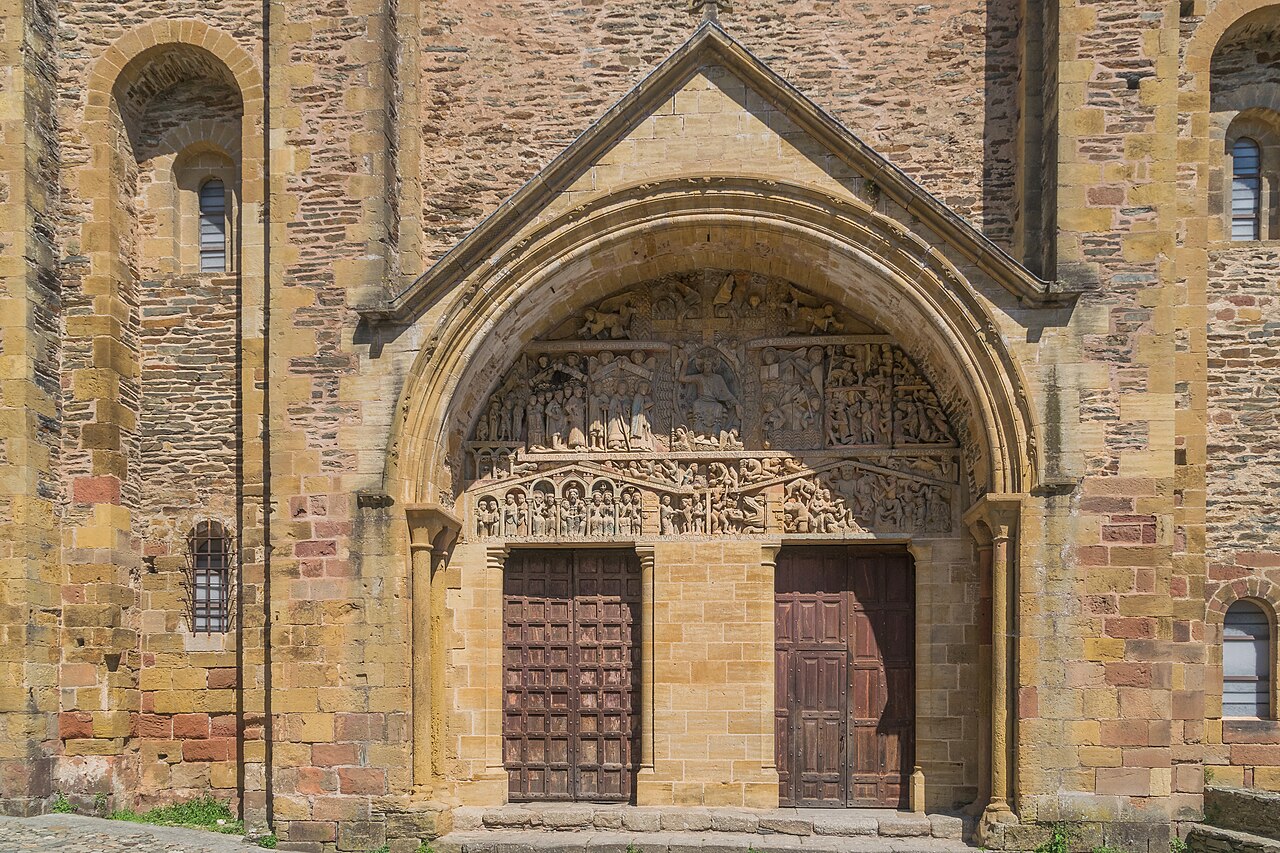
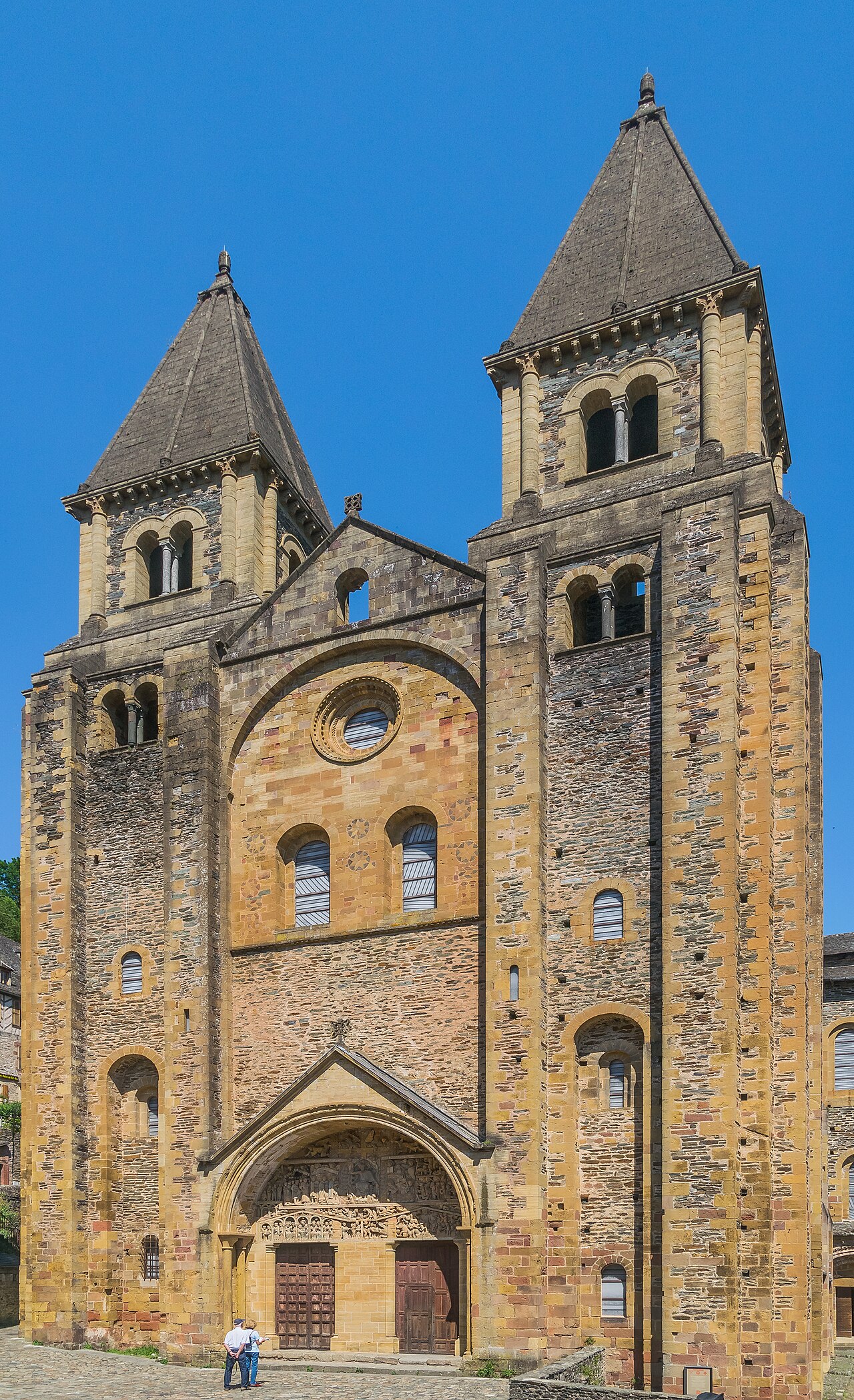
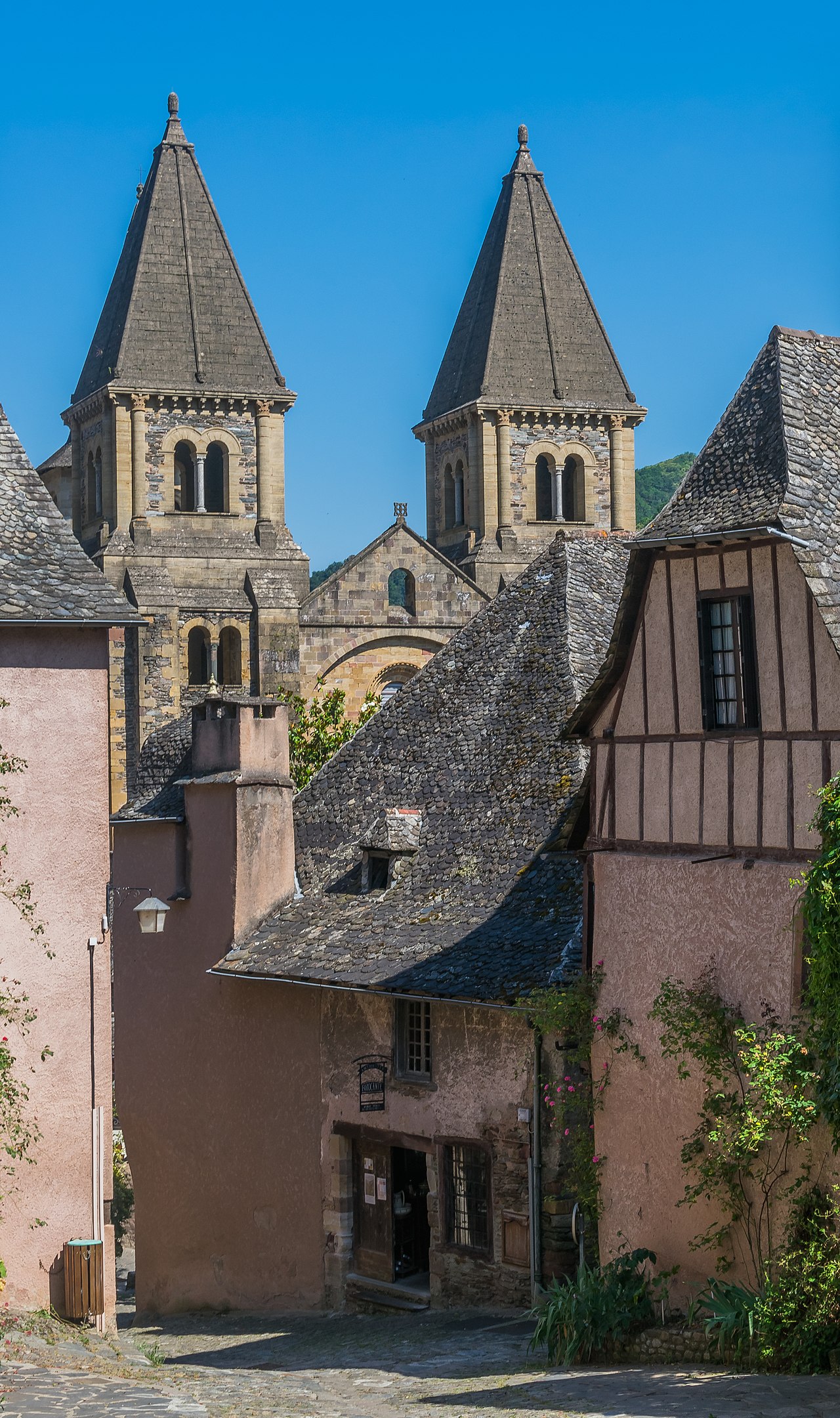
The Abbey Church of Sainte-Foy in Conques, France, was a popular stop for pilgrims traveling the Way of St. James to Santiago de Compostela. Its main draw was the relics of Sainte Foy, a fourth-century martyr, which were stolen from the monastery at Agen in 866 by a monk from Conques. The church is a notable example of Romanesque pilgrimage architecture, with a basilica plan modified into a cruciform form, and features a tympanum depicting the Second Coming.
- Location
- Conques, France
- Type
- Abbey church
- Classification
- National monument of France since 1840
- Exterior length
- 59 metres (193 ft 7 in)
- Interior length
- 56 metres (183 ft 9 in)
- Crossing tower height
- 26.40 metres (86 ft 7 in)
- Interior height
- 20.70 metres (67 ft 11 in)
Lore & Background
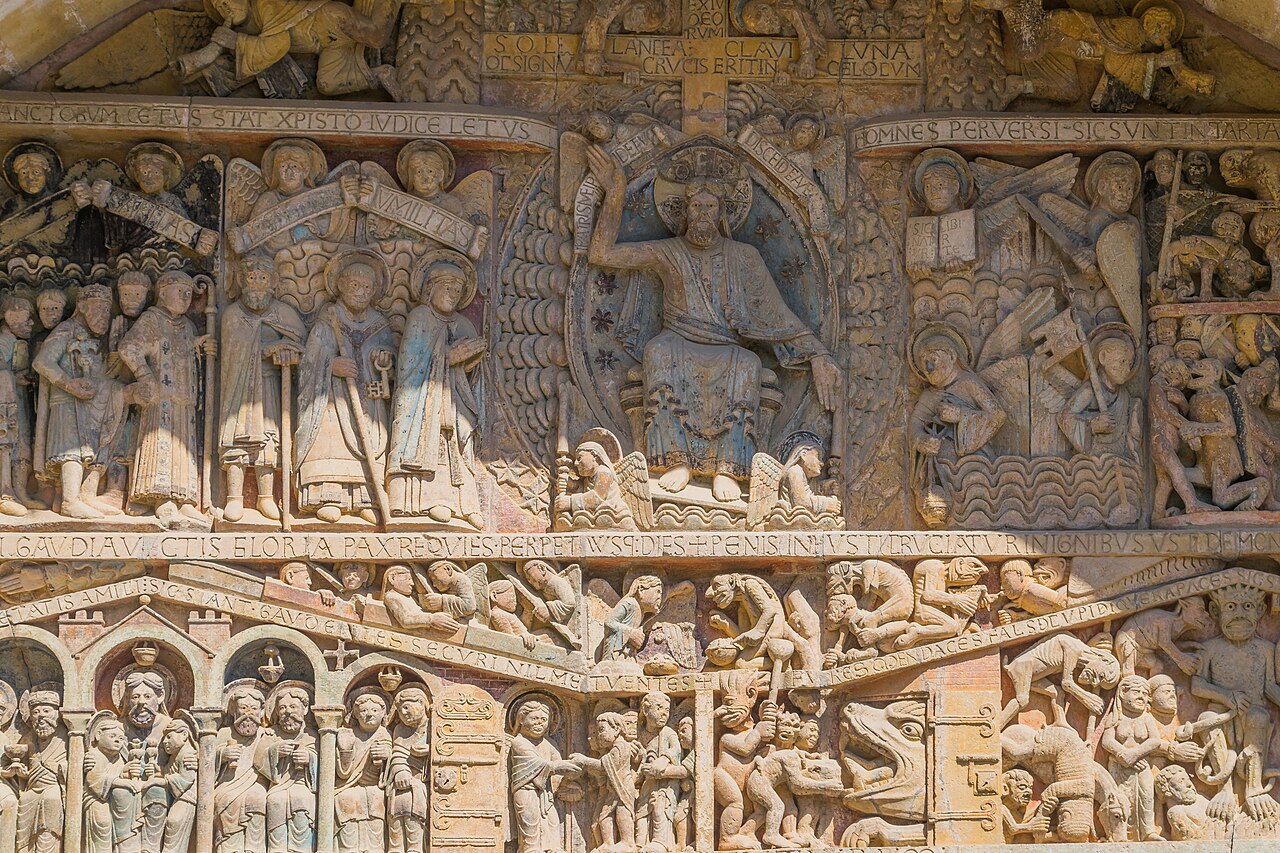
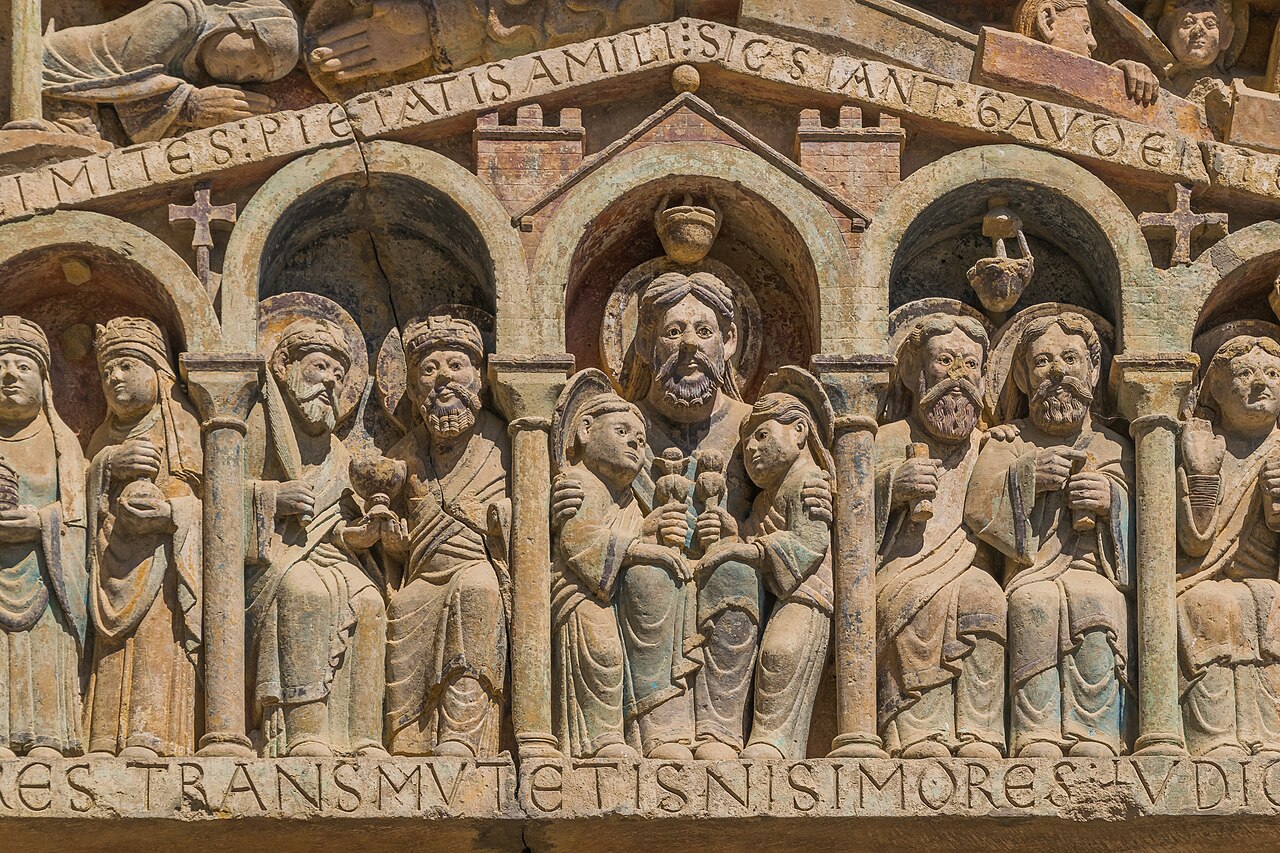
The original monastery was an early 8th-century oratory founded by a hermit named Dadon. After the relics of Sainte-Foy arrived, the pilgrimage route shifted from Agen to Conques, prompting the construction of a larger church in the 11th and 12th centuries. The building features five radiating chapels, an ambulatory, and galleries added to accommodate pilgrims. The tympanum above the western entrance depicts the Second Coming, with Christ in Majesty judging souls, including a specific bishop—often identified as Bishop Begon of Conques or a figure representing simony—caught in Hell's nets.
Reader's Guide
The Abbey Church of Sainte-Foy is significant as a major stop on the Way of St. James, drawing pilgrims to the relics of Sainte-Foy. Its architecture, with a continuous barrel vault and 212 decorated capitals, served as a didactic tool for monks and pilgrims. The church declined from the 13th century, was damaged by Protestants in 1568, and further destroyed during the Revolution. It was saved and restored by individuals such as Prosper Mérimée and Étienne Boissonnade, and returned to the Premonstratensians. Today it functions as a parish and pilgrimage church, and its 1986 stained-glass windows by Pierre Soulages are considered integral to its architecture and history.
Did You Know?
- The relics of Sainte-Foy were stolen from the monastery at Agen in 866 by a monk who posed as loyal for nearly a decade.
- The tympanum depicts a specific bishop—widely identified as Bishop Begon of Conques or a figure representing simony—being caught in the nets of Hell, not a generic corrupt bishop.
- The metal grill in the ambulatory was made from donated shackles of former prisoners freed by Sainte-Foy.
- The church has around 100 columns with decorated capitals showing biblical scenes and monsters, but they do not prominently depict scenes from Sainte-Foy's life.
The Relic Heist and the Pilgrimage Boom
In the ninth century, the small Benedictine community at Conques made a bold and somewhat audacious decision that would transform their obscure hilltop monastery into one of the most important pilgrimage destinations in medieval Europe. After failing to secure the relics of Saint Vincent of Saragossa and later those of St. Vincent Pompejac in Agen, the abbey's leaders turned their attention to the remains of Sainte-Foy, a young woman who suffered martyrdom in the fourth century, housed at the ancient St. Faith's Church in Sélestat. They established a priory beside that shrine and, remarkably, dispatched a monk who spent nearly a decade posing as a faithful member of the community in Agen, all to get close enough to the sacred remains. In 866, the relics were taken to Conques. The effect was immediate and profound: the great pilgrimage route to Santiago de Compostela, the Way of St. James, was rerouted to pass through this remote village in southern France, and the church was rebuilt on a grand scale to accommodate the flood of faithful who came to venerate the young martyr.
Three Phases of Sacred Architecture
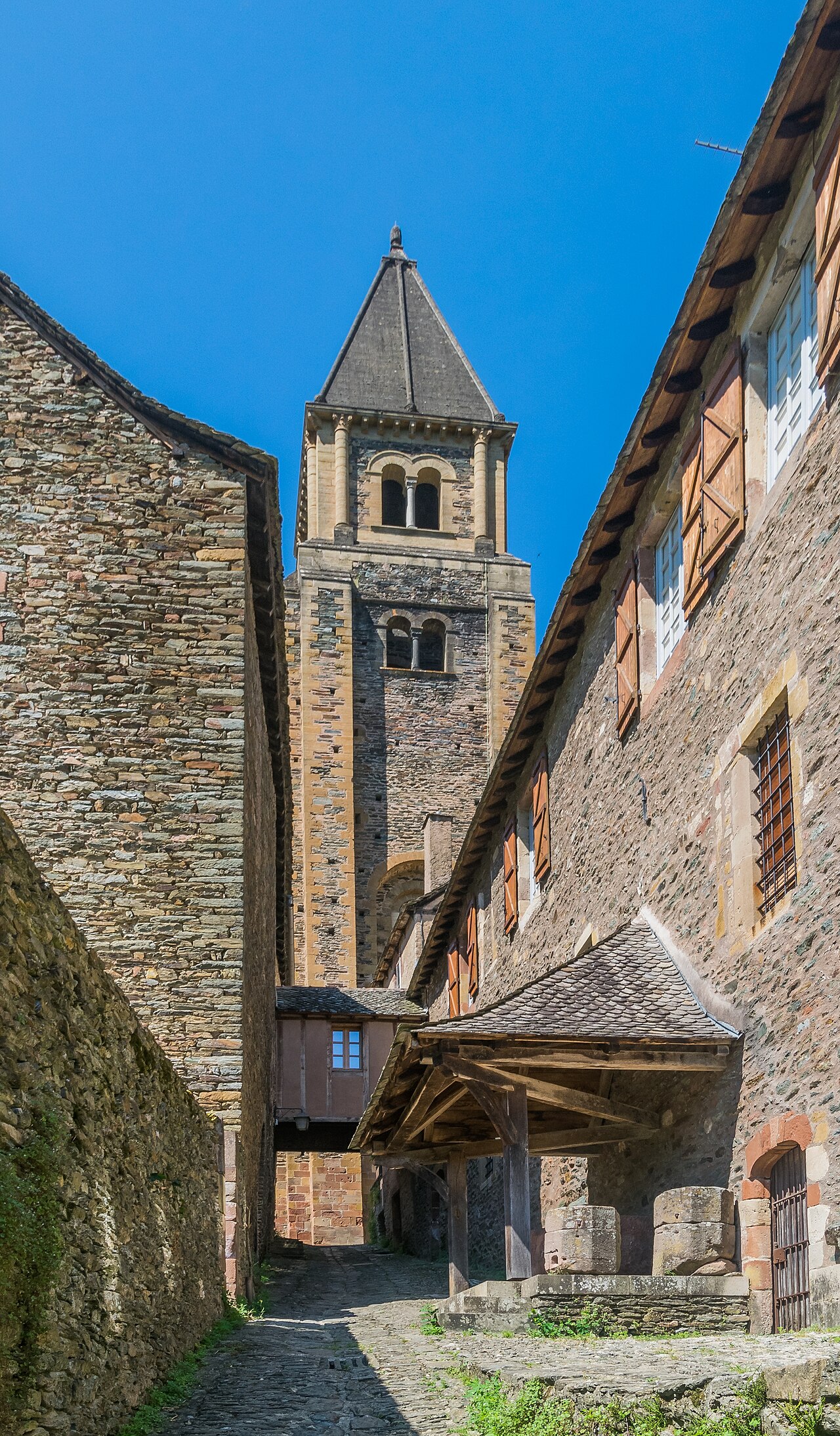
The building that pilgrims encounter today is the product of at least three distinct construction campaigns spanning several centuries. The earliest structure was a modest eighth-century oratory, erected by monks who had fled the advance of the Saracens in Spain. When the arrival of Sainte-Foy's relics redirected the pilgrimage route, that small chapel was demolished in the eleventh century to make room for something far more ambitious. The second major phase, finished by the close of the 1100s, produced the five radiating chapels, the ambulatory with its lower roofline, the choir, and the main nave. A third campaign in the early twelfth century drew inspiration from the great churches of Toulouse and Santiago de Compostela, adding galleries above the aisles, raising the roof over the transept and choir so visitors could circulate at an upper level, and inserting a western aisle to handle growing crowds. The result is a basilica plan adapted into a cruciform shape, measuring 59 metres in exterior length, with a crossing tower rising to 26.40 metres. Inside, 212 columns with richly carved capitals—depicting palm fronds, biblical creatures, and scenes from Sainte-Foy's life—served as an illustrated scripture for the largely illiterate faithful who passed through.
Centuries of Loss and Hard-Won Restoration
The medieval golden age of Conques did not last. By the thirteenth century, Sainte-Foy's fame was being overshadowed by other saints, and the village's remote position made it increasingly difficult to sustain the community. In 1537, Bishop Georges d'Armagnac of Rodez confiscated the abbey from the Benedictines and handed it to a chapter of regular canons. The violence of the Wars of Religion proved far more destructive: in 1568, Protestant forces seized Conques and set fire to much of the abbey, destroying parts of the church and, most visibly, the original towers. A brief revival came in the seventeenth century, but the French Revolution brought another wave of devastation. The canons were banished, and the impoverished villagers began quarrying stone from the buildings for their own use. The structure was ultimately saved through the intervention of figures such as Prosper Mérimée and Étienne Boissonnade, who oversaw its restoration, including the construction of the towers that stand today. The church was returned to the Premonstratensians, who sent monks from Mondaye Abbey. Classified as a national monument in 1840, it remains a living parish and pilgrimage site, hosting choral and organ services to this day.
Soulages and the Light of Conques
The original windows of the abbey church vanished long ago, and after the Second World War their openings were filled with colourful figurative glass. Over time, these later insertions came to be regarded as discordant with the austere, structural spirit of the Romanesque architecture they inhabited. In 1986, the French Culture Ministry, the Arts Delegation, and the Heritage Direction for St.-Foy Abbey-church extended an invitation to the artist Pierre Soulages to design new glazing for the building. He responded with a scheme of 104 windows—95 full windows and 9 oculi—each featuring abstract, gently curving lines whose direction changes from one panel to the next. Rather than using traditional coloured glass, Soulages worked with reconstituted crushed white glass, a deliberate choice to preserve the purity and structural power of the bay architecture. The effect was to let light flood the interior in a way that felt native to the stone rather than imposed upon it. Today, these windows are considered an integral part of Conques' architecture, its history, and its collective memory, fulfilling what the commissioning authorities described as the function of the architecture itself.
Gallery
Frequently Asked Questions
What is the Abbey Church of Sainte-Foy and where is it located?
It is a Romanesque pilgrimage church situated in the village of Conques, in southern France. The site became a major waypoint for travelers heading along the Way of St. James to Santiago de Compostela.
How did the relics of Sainte-Foy come to Conques?
In 866, a monk from Conques took the relics of the fourth-century martyr from the monastery at Agen, and they were installed in the local church. Those relics became the primary magnet drawing pilgrims to the site for centuries.
What makes the architecture of Sainte-Foy notable?
The church is a textbook example of Romanesque pilgrimage design, blending a basilica layout with a cruciform plan and a crossing tower that reaches 26.40 metres in height. Its exterior length spans 59 metres, making it a compact yet striking structure for a rural village.
What does the tympanum above the main portal depict?
The sculpted tympanum portrays the Second Coming, a theme frequently used in Romanesque churches to remind arriving pilgrims of the eschatological destination of their journey. It is one of the most recognizable sculptural programs of the French Romanesque tradition.
What is the Abbey Church of Sainte-Foy's official heritage status?
It has been classified as a National Monument of France since 1840, recognizing its outstanding architectural and historical value. Today it stands as one of the finest surviving examples of Romanesque pilgrimage architecture in the country.
More in World Heritage Sites in France 1-24
Spotted an error? Know more?
Reader corrections go straight into our review queue. Suggest an edit · How this site is sourced