
Abbey of Saint-Gilles
Monastery founded by Saint Giles, a UNESCO pilgrimage site.

Christian Ferrer · CC BY-SA 4.0
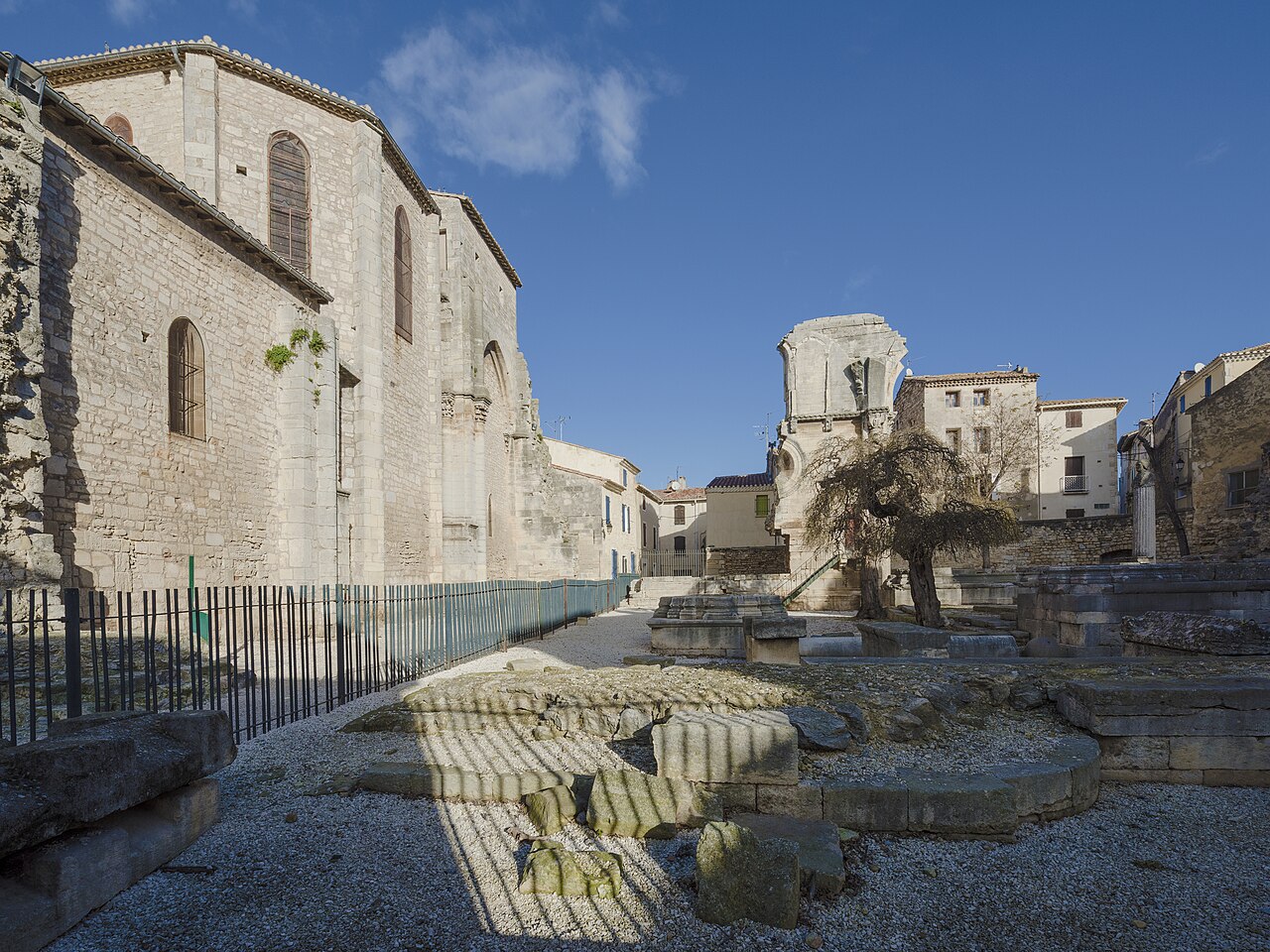
The Abbey of Saint-Gilles is a monastery in Saint-Gilles, southern France. Founded according to legend in the 7th century by Saint Giles, it is included in the UNESCO Heritage List as part of the World Heritage Sites of the Routes of Santiago de Compostela in France. The abbey became a major pilgrimage destination due to the relics of Saint Giles housed in its church.
- Founded
- 7th century (legendary)
- Location
- Saint-Gilles, southern France
- Type
- Monastery
- Dedication
- Originally St. Peter and St. Paul; changed to St. Giles in the 9th century
- Architectural style
- Southern French Romanesque
- Notable feature
- Façade with three portals, Corinthian columns, and medieval sculpture
Lore & Background
According to legend, the abbey was founded in the 7th century by Saint Giles on lands given him by a Visigoth king after the king's arrow struck Giles while he was protecting a hind. The monastery was initially dedicated to St. Peter and St. Paul, but in the 9th century the dedication was changed to Saint Giles himself, who had become one of the most venerated figures in the area. His relics were housed in the abbey church and attracted numerous pilgrims. In the 11th century, the monastery was attached to that of Cluny. Thanks to its prosperity, it was enlarged and decorated from the 12th to the 15th century, when the cloister was finished. In the 16th century, during the Wars of Religion, the church was devastated when the Huguenots took shelter in it. Restorations were held in the 17th century and again, after further damage during the French Revolution, in the 19th century. The tomb of St. Giles was rediscovered in 1865, becoming again a pilgrim destination from 1965. The abbey church is in typical southern French Romanesque style. The façade, built from 1120 to 1160, has a decorated entrance portico with three portals and medieval sculpture decorations including a bestiary, scenes from the Old and New Testaments, and a frieze inspired by Roman ones. The crypt dates to the 12th century (around 1116–1120) and contains the tomb of St. Giles. In the 16th century, his relics were moved to the Basilica of Saint Sernin at Toulouse.
Reader's Guide
The Abbey of Saint-Gilles holds significance as a major stop on the Routes of Santiago de Compostela, recognized by UNESCO as a World Heritage Site. Its legendary foundation by Saint Giles and the presence of his relics made it a key pilgrimage destination in medieval Europe. The abbey's architecture, particularly its Romanesque façade with intricate sculptural programs depicting biblical scenes and a bestiary, represents a notable example of southern French Romanesque art. The façade's frieze, inspired by Roman models, reflects the classical influence on medieval design. The crypt, dating to the early 11th century, is one of the oldest parts of the structure and houses the tomb of Saint Giles, which was rediscovered in 1865 and revived as a pilgrimage site in 1965. The abbey's history of destruction during the Wars of Religion and the French Revolution, followed by restorations in the 17th and 19th centuries, illustrates the challenges faced by religious sites over time. A plaster cast of the façade exists in the Hall of Architecture at the Carnegie Museum in Pittsburgh, Pennsylvania, allowing broader access to its artistic heritage.
Did You Know?
- The abbey was initially dedicated to St. Peter and St. Paul before being changed to St. Giles in the 9th century.
- The crypt measures 50 by 25 meters and is located under the choir and transept, not the entire nave.
The Legend of a Wounded Saint and a Royal Debt
According to tradition, the monastery traces its origins to the seventh century, when a Visigoth king named Wamba, during a hunting expedition, accidentally struck a man who would later be canonized as Saint Giles. Struck by guilt over the involuntary injury, Wamba granted the wounded man a stretch of land in what is now southern France, and on that ground the saint established a monastic community. The first church was consecrated to the apostles Peter and Paul, but by the ninth century the dedication had shifted entirely to Giles himself, whose growing reputation as a venerated local figure made his name the natural anchor for the site. His physical remains were interred within the abbey church, and over the centuries the tomb became a magnet for pilgrims traveling through the region, establishing a devotional tradition that would define the abbey's spiritual identity for more than a millennium.
A Façade Carved in Scripture and Stone
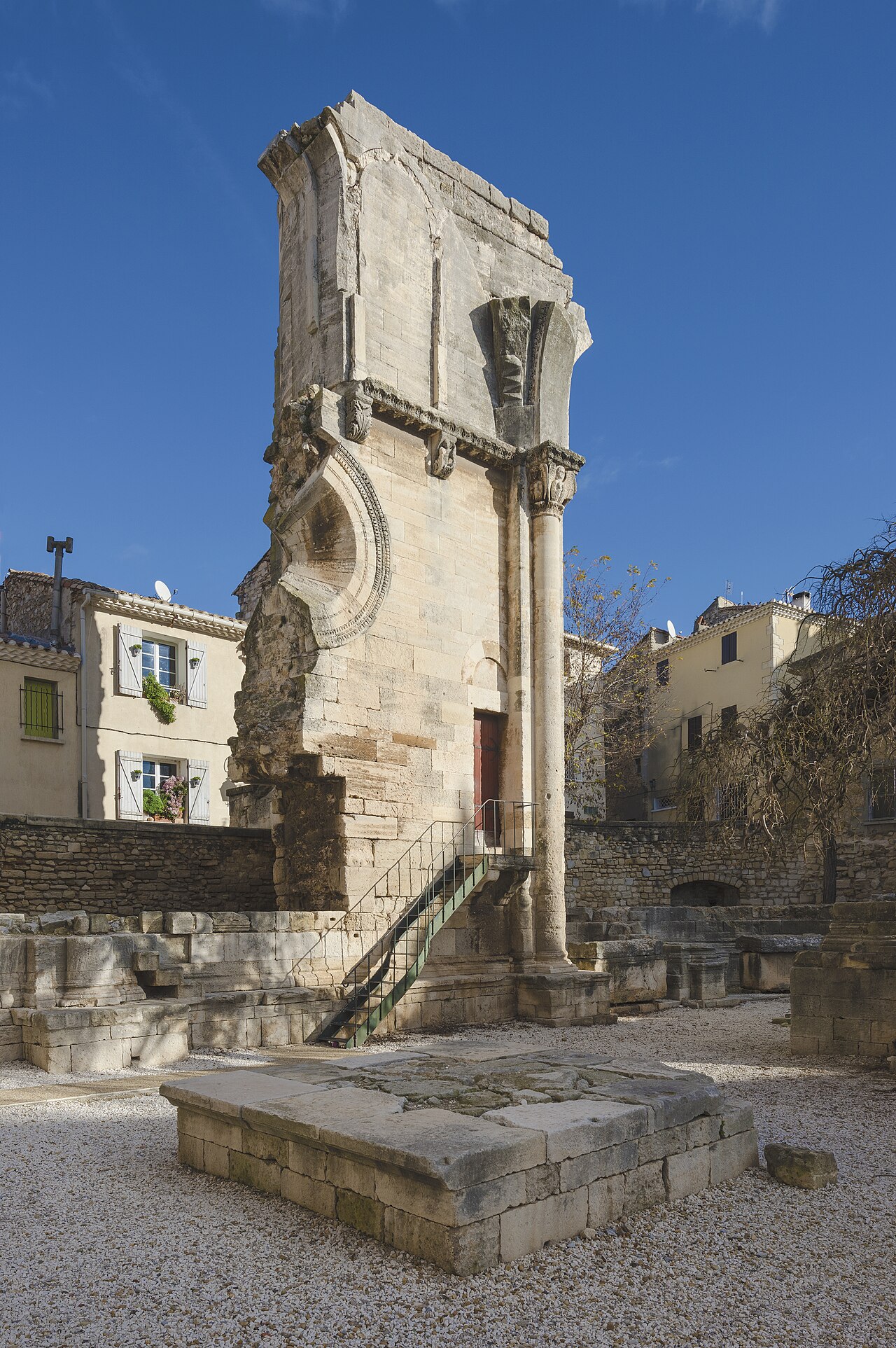
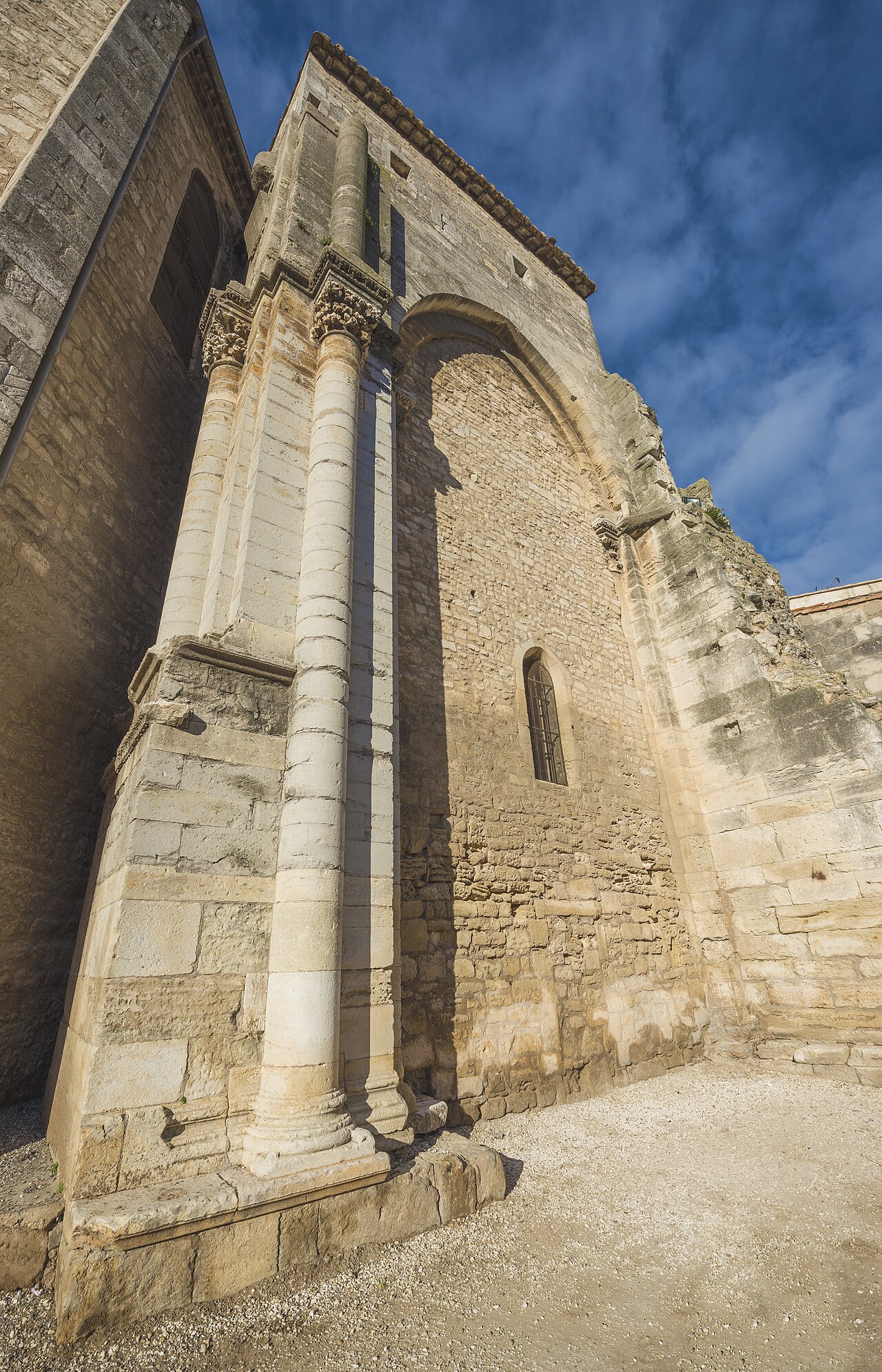
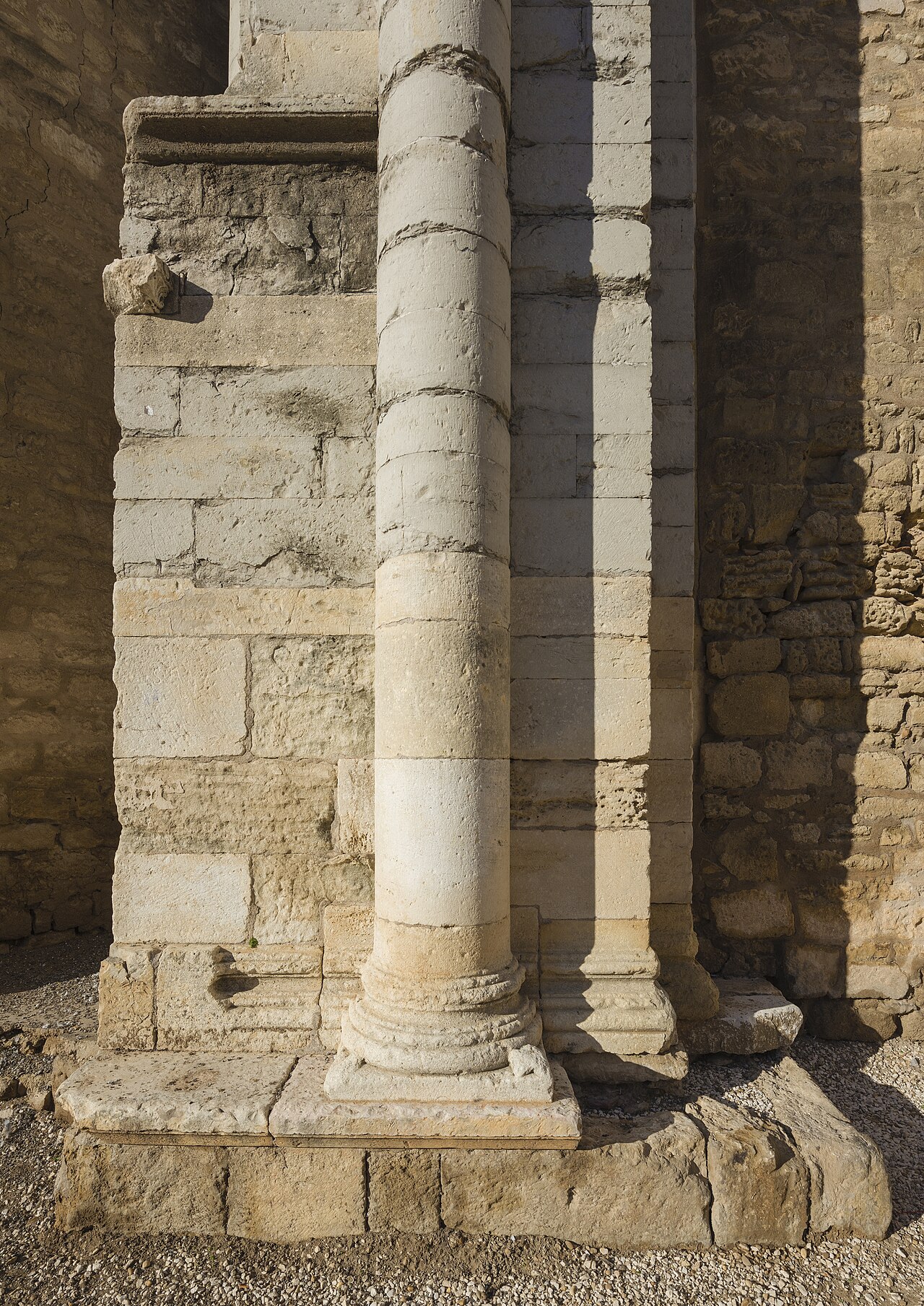
The abbey church stands as a textbook example of southern French Romanesque architecture. Its west façade, constructed between roughly 1120 and 1160, presents a triple-portal entrance portico supported by Corinthian columns, with the central opening noticeably larger than its flanking companions. The sculptural program is organized in horizontal bands: the lowest register features a bestiary alongside Old Testament narratives, the middle tier carries statues and figures drawn from the New Testament, and the frieze and tympana above continue the New Testament cycle with scenes including the Adoration of the Magi, the Crucifixion, and a Maestà. Notably, the frieze compositions draw on classical Roman models, and the upper façade originally bore additional classical-inspired ornamentation that has since been lost. Beneath the nave lies a vast crypt measuring fifty by twenty-five meters, dating to the early eleventh century, while behind the apse survive fragments of the original choir from a church that once stretched ninety-eight meters in length.
War, Revolution, and the Long Road Back
The abbey's golden age of expansion ran from the twelfth through the fifteenth century, a period during which the community, by then linked to the great Cluny monastery, enjoyed enough wealth to enlarge and embellish its buildings and complete the cloister. That prosperity was shattered in the sixteenth century when, amid the Wars of Religion, Huguenot fighters took refuge inside the church and inflicted severe damage on its fabric. A first round of repairs came in the seventeenth century, but the French Revolution dealt yet another blow, and it was not until the nineteenth century that a second major restoration campaign addressed the accumulated wounds. In 1865, workers rediscovered the tomb of Saint Giles beneath the crypt, a find that rekindled devotional interest in the site. By 1965 the abbey had once again become an active destination for pilgrims, and the upper church, largely a product of seventeenth-century rebuilding, retains its massive Corinthian-style pillars as a reminder of the layered history compressed into a single sacred space.
Pilgrimage Paths and a Place on the World Stage
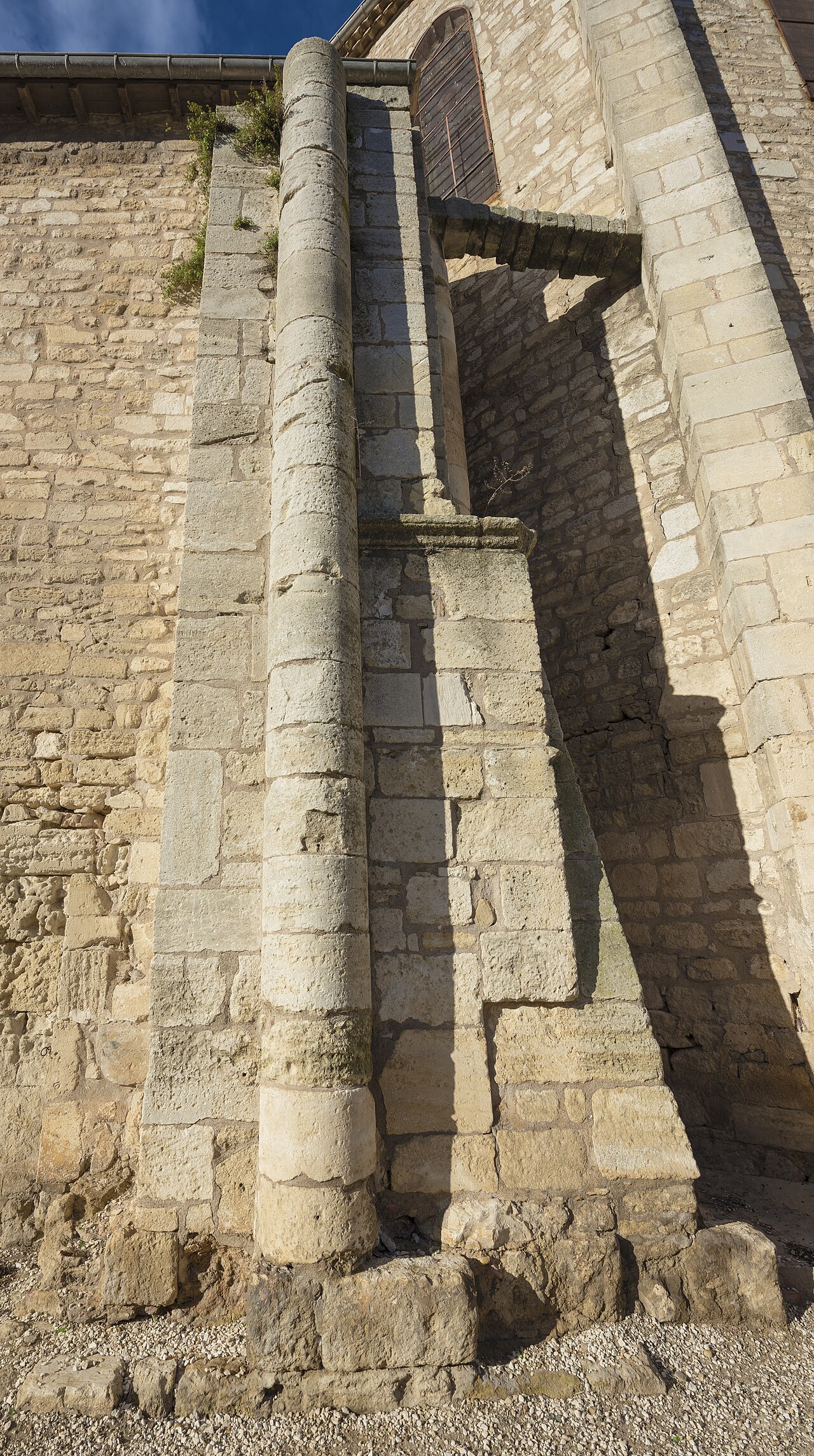
Today the Abbey of Saint-Gilles holds a place on the UNESCO World Heritage List as one component of the Routes of Santiago de Compostela in France, a designation that recognizes its role within a network of pilgrimage routes stretching across the continent. The site also serves as the starting point for the Regordane Way, a trail that commences in the town of Saint-Gilles-du-Gard and draws walkers into the surrounding landscape. The abbey's influence has even crossed the Atlantic: a full plaster cast of its sculpted west façade is preserved in the Hall of Architecture at the Carnegie Museum in Pittsburgh, Pennsylvania, where visitors can study the Romanesque carving up close without making the journey to southern France. Inside the ancient choir, a free-standing spiral staircase of cantilevered stone steps, known as the Screw of Saint Giles and dating to the twelfth century, offers a rare glimpse of medieval engineering. Together, these elements—pilgrimage, preservation, and public display—ensure that the abbey's story continues to unfold far beyond its original walls.
Gallery
Frequently Asked Questions
Who is the Abbey of Saint-Gilles named after?
According to legend, the monastery was established in the 7th century by Saint Giles himself in what is now southern France. The site was originally dedicated to St. Peter and St. Paul before being rededicated to Saint Giles in the 9th century.
Why is the Abbey of Saint-Gilles a UNESCO World Heritage Site?
It earned its UNESCO designation as part of the Routes of Santiago de Compostela in France, a network of medieval pilgrimage paths. The abbey served as a key stop for travelers heading toward Santiago de Compostela.
What makes the Abbey of Saint-Gilles architecturally notable?
The structure is a prime example of Southern French Romanesque design, most recognizable for its façade featuring three portals, Corinthian columns, and intricate medieval sculpture.
Why did pilgrims travel to the Abbey of Saint-Gilles?
The church housed the relics of Saint Giles, which drew large numbers of devoted visitors over the centuries. This made the monastery one of the most significant pilgrimage destinations along the French routes to Santiago.
Where is the Abbey of Saint-Gilles located?
It sits in the town of Saint-Gilles in the south of France. The site functions as a historic monastery and remains a recognized cultural landmark within the region.
More in World Heritage Sites in France 1-24
Spotted an error? Know more?
Reader corrections go straight into our review queue. Suggest an edit · How this site is sourced