Moscow State University
Russia's oldest university, a center of learning and controversy.

Suicasmo · CC BY-SA 4.0
Moscow State University (MSU), formally known as M. V. Lomonosov Moscow State University, is a public research university located in Moscow, Russia. It comprises 15 research institutes, 43 faculties, more than 300 departments, and six branches. Its alumni include former leaders of the Soviet Union and other governments. As of 2019, the university counted 13 Nobel laureates, six Fields Medal winners, and one Turing Award winner among its affiliates.
The idea for a university in Moscow was promoted by Ivan Shuvalov and Mikhail Lomonosov, and Empress Elizabeth decreed its establishment on 23 January 1755 (Old Style 12 January). The first lectures were given on 7 May (Old Style 26 April) of that year. Both Moscow State University and Saint Petersburg State University claim to be Russia’s oldest university. While MSU was founded in 1755, Saint Petersburg—which has existed continuously as a university since 1819—considers itself the successor of an academy established by a decree of Peter the Great in 1724. From 1755 to 1787, MSU was housed in the Principal Medicine Store on Red Square itself, on the site of the current State Historical Museum. During the reign of Catherine the Great, the university moved into a newly constructed building on the opposite side of Mokhovaya Street, built between 1782 and 1793 to a design by Matvei Kazakov and later rebuilt by Domenico Giliardi after a fire consumed much of Moscow in 1812.
In the 18th century, the university had three departments: philosophy, medicine, and law. A preparatory college was attached to the university until it was abolished in 1812. In 1779, Mikhail Kheraskov founded a boarding school for noblemen, which became a gymnasium for the Russian nobility in 1830. The university press, run by Nikolay Novikov in the 1780s, published the newspaper *Moskovskie Vedomosti*. In 1804, medical education split into clinical, surgical, and obstetrics faculties. Between 1884 and 1897, the Department of Medicine built a medical campus at Devichye Pole, designed by Konstantin Bykovsky with input from doctors such as Nikolay Sklifosovskiy and Fyodor Erismann. This campus and medical education as a whole were separated from Moscow University in 1930; Devichye Pole later operated under the independent I.M. Sechenov First Moscow State Medical University and other institutions.
Quick Facts
- Former Names
- Imperial Moscow University
- Motto Lang
- ru
- Motto Eng
- Science is clear knowledge of the truth, enlightenment of the mind / Scientia est clara cognitio veritatis, illustratio mentis (Latin)
- Established
- 1755-01-23
- Founders
- Mikhail Vasilyevich Lomonosov [https: · openday.msu.ru/en/history] and Ivan Shuvalov [https: · www.prlib.ru/en/history/619712]
- Rector
- Viktor Sadovnichiy
- Academic Staff
- 5,000
- Students
- 39,282
- City
- Moscow
- Country
- Russia
- Campus
- Urban
- Language
- Russian
Facts from the source article.
Lore & Background
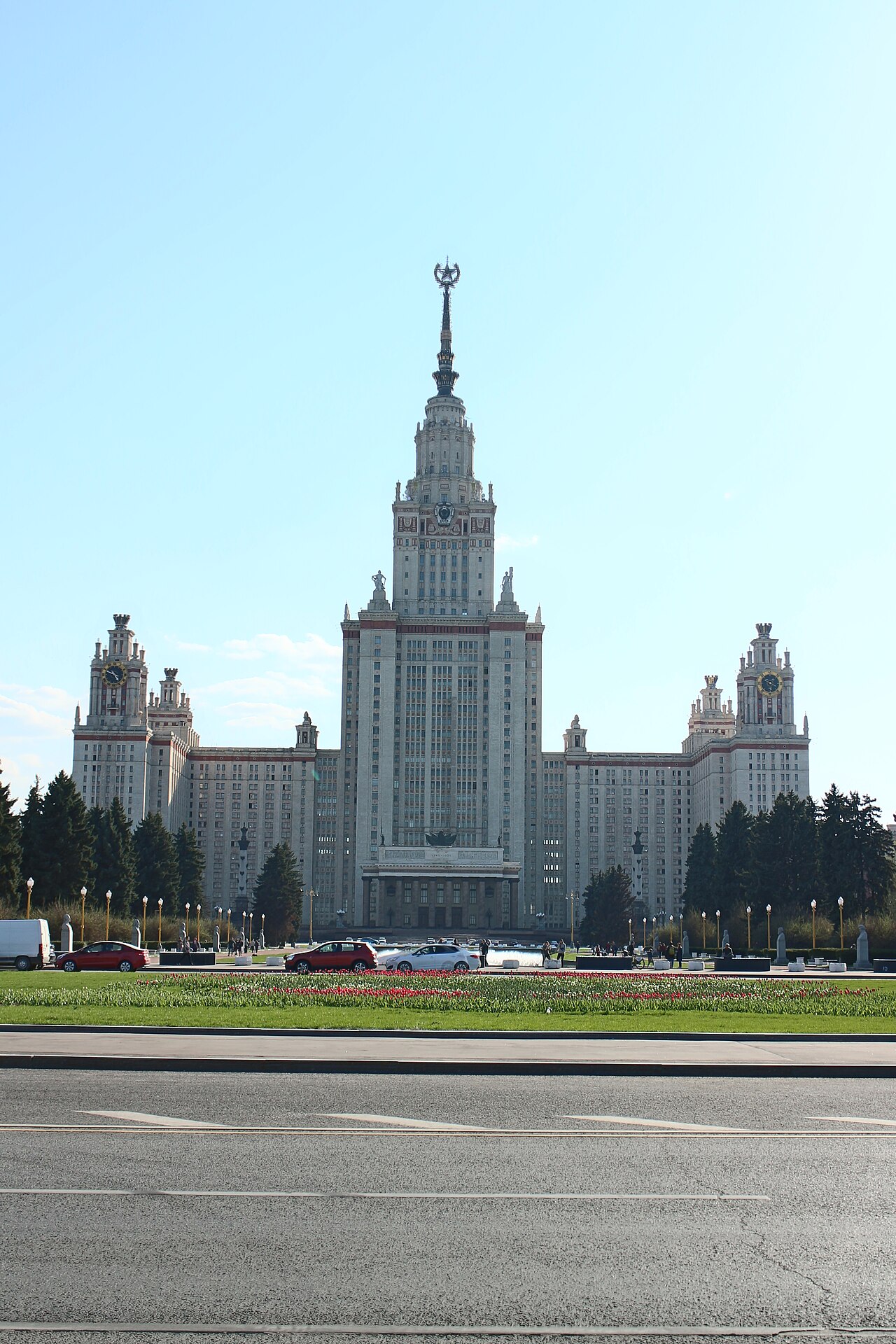
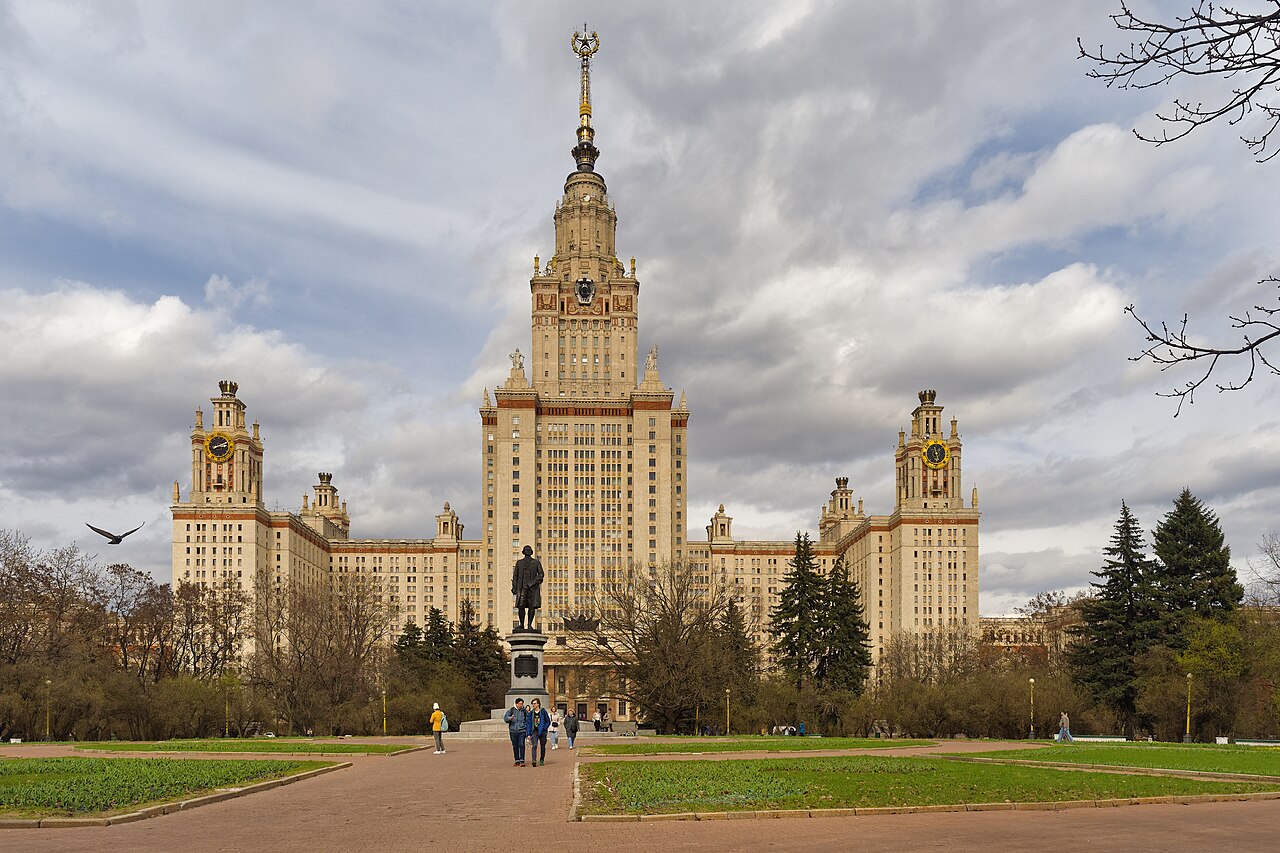
After the October Revolution, the university began admitting children of the proletariat and peasantry, abolished tuition fees in 1919, and expanded during Stalin's first five-year plan. In 1970, it imposed a 2% quota on Jewish students. The main campus on Sparrow Hills, built with Gulag labor, was completed in 1953 and was the tallest habitable building in Europe until 1990. In 2022, rector Victor Sadovnichy endorsed the Russian invasion of Ukraine, leading to suspensions of academic relationships with several universities.
Reader's Guide
Moscow State University holds a significant place in Russian and global education as a historic institution that has shaped the country's intellectual and political elite. Its alumni include past leaders of the Soviet Union and other governments, and its affiliates have won numerous Nobel Prizes, Fields Medals, and a Turing Award. The university has faced periods of unrest, including student protests and faculty resignations in 1911, and later controversies over antisemitism and corruption. Its post-1991 status as a directly state-funded institution underscores its importance to the Russian government. The 2022 invasion of Ukraine led to international academic and corporate sanctions, reflecting the university's entanglement with state policy. Despite these challenges, MSU remains a major research center with 15 research institutes and a wide range of faculties.
Did You Know?
- MSU's main building on Sparrow Hills was the tallest habitable building in Europe until 1990.
- In 1970, the university imposed a 2% quota on Jewish students.
- The university's supercomputer, SKIF MSU, launched in 2008, was one of the most powerful in the CIS.
From Red Square to the Sparrow Hills: A University's Physical Journey
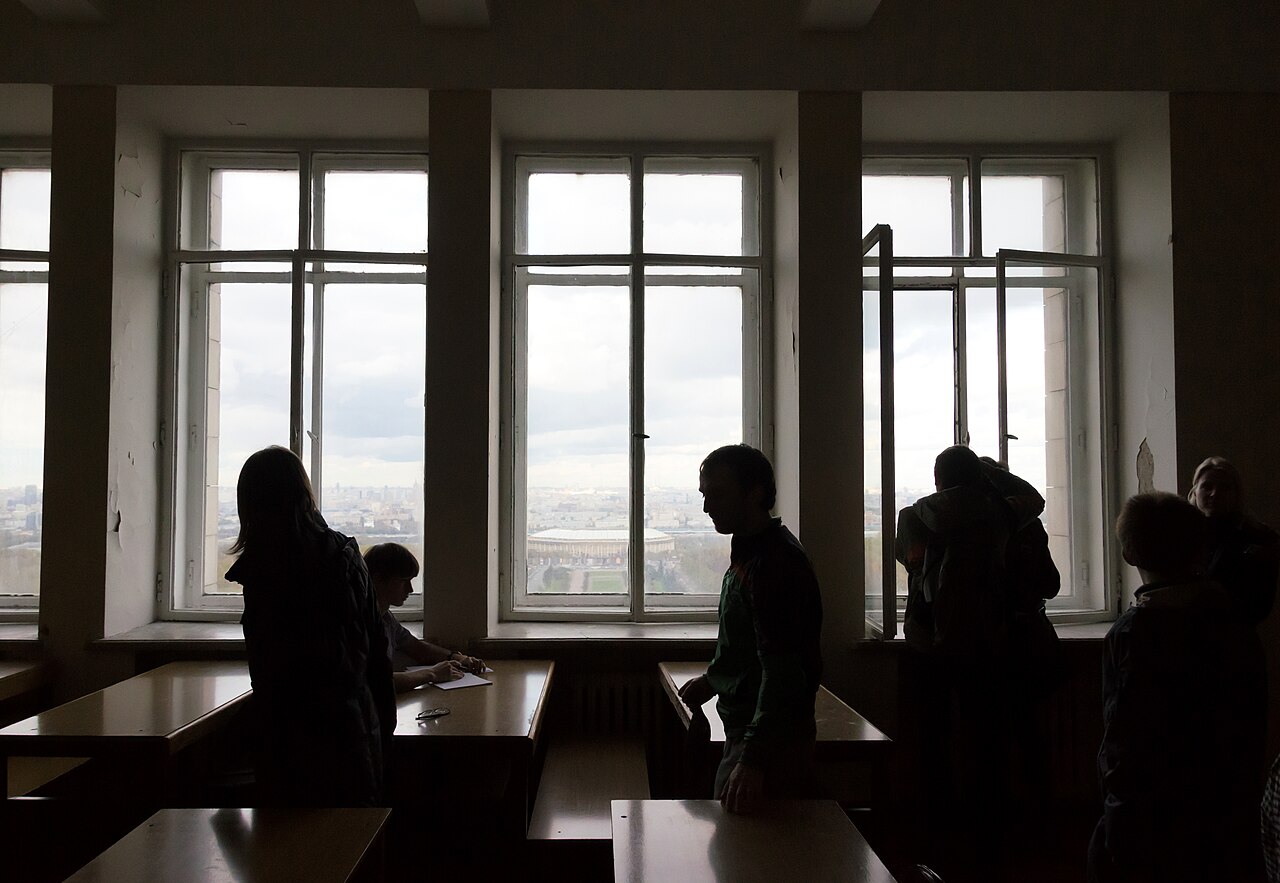
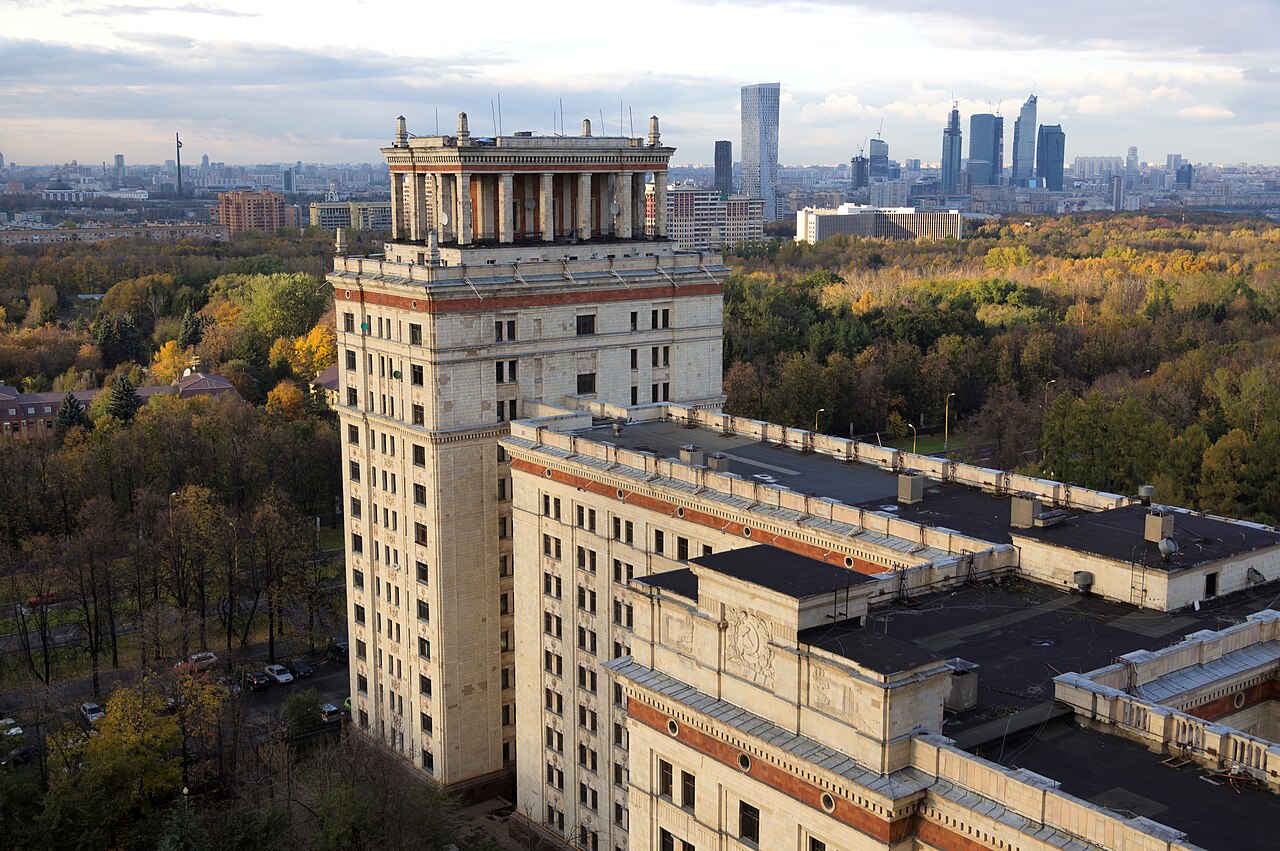
The story of Moscow State University begins not in a grand campus but in a modest medicine store on Red Square, where the institution first took root after Empress Elizabeth signed its founding decree in January 1755. Ivan Shuvalov and Mikhail Lomonosov had championed the idea, and the first lectures rang out in May of that same year. For over three decades the university operated from that cramped location before Catherine the Great ordered a move across Mokhovaya Street to a purpose-built structure designed by Matvei Kazakov. When the 1812 fires ravaged the city, Domenico Giliardi was called in to rebuild what remained. The early university was compact—just three departments covering philosophy, medicine, and law—but it grew steadily. By the late nineteenth century, medical education had branched into clinical, surgical, and obstetrics tracks, and a full medical campus was erected in Devichye Pole. That medical wing eventually became its own institution in 1930. The university's physical identity was finally redefined after the war, when Stalin's grand construction program placed seven towering neoclassic structures on Sparrow Hills, built with Gulag labor. The central tower, rising 240 meters across 36 stories, held the title of Europe's tallest building until 1990.
Political Tides and the Campus: From Revolution to Quotas
After the October Revolution of 1917, the university's doors swung open to children of the proletariat and peasantry, and by 1919 tuition fees were abolished entirely. A preparatory facility was set up to help working-class students prepare for entrance examinations. During Stalin's first five-year plan, the institution expanded significantly. Yet the campus was never free from political pressure. In 1905, a social-democratic organization formed within the university and openly called for the overthrow of the Czarist government. The imperial authorities repeatedly threatened closure. The most dramatic rupture came in 1911, when 130 scientists and professors—including Nikolay Zelinskiy, Pyotr Lebedev, and Sergei Chaplygin—resigned en masse in protest against troops being deployed onto campus and the mistreatment of certain faculty. Thousands of students were expelled in the aftermath. Decades later, in 1970, the university imposed a two-percent quota on Jewish students. A 2014 article in The Mathematics Enthusiast examined how antisemitism permeated the Department of Mathematics through the 1970s and 1980s. After 1991, nine new faculties were established, and in 1992 the university received a unique funding status: it is financed directly from the state budget, bypassing the Ministry of Education.
Intellectual Giants and Modern Marvels
The university's roster of distinguished minds reads like a who's-who of twentieth-century science. As of 2019, thirteen Nobel laureates, six Fields Medal winners, and one Turing Award recipient had been affiliated with the institution. Its alumni include former leaders of the Soviet Union and other governments, underscoring the university's role as a crucible for both scientific and political power. The modern era has brought its own landmarks. In September 1997, French electronic musician Jean Michel Jarre staged a concert using the university's front as a backdrop, drawing a paying crowd of half a million people. In March 2008, Russia's most powerful supercomputer to that date, SKIF MSU, was launched on campus. With a peak performance of 60 TFLOPS, it became the fastest supercomputer in the Commonwealth of Independent States. The university's scale is staggering: fifteen research institutes, forty-three faculties, more than three hundred departments, and six branches spread across the institution. This breadth makes it one of the most comprehensive research centers in the Russian-speaking world.
Scandals, Sanctions, and the 2022 Rupture
Corruption has cast a long shadow over the university. In 2007, Rector Viktor Sadovnichy publicly described corruption in Russia's education system as a "systemic illness," revealing he had seen an advertisement guaranteeing a perfect entrance-exam score for a hefty fee. In November 2012, Deputy Dean Mikhail Basharatyan was fired for accepting a bribe from a student. The following February, Andrei Andriyanov resigned as head of the Kolmogorov Special Educational and Scientific Center after an investigation found fake references in his doctoral thesis. The most consequential rupture came in March 2022, when Sadovnichy, also president of the Russian Union of Rectors, was the lead signatory on a public statement endorsing Russia's invasion of Ukraine. Academia Europaea immediately suspended his membership. Yale University, Hamburg University of Applied Sciences, the University of Potsdam, and HKU Business School all severed their longstanding partnerships, and the University of St Andrews halted a joint master's degree program. Intel, AMD, and Nvidia suspended processor deliveries to Russia, directly threatening the hardware underpinning the university's supercomputer.
Gallery
Frequently Asked Questions
What is Moscow State University?
It is a public research university in Moscow, Russia, officially named after M. V. Lomonosov. As Russia's oldest university, it has long served as both a premier center of scholarship and a focal point for public debate.
When and how was Moscow State University founded?
Ivan Shuvalov and Mikhail Lomonosov lobbied for a university in Moscow, and Empress Elizabeth issued the founding decree on January 23, 1755. That date marks the birth of what is now the country's oldest institution of higher learning.
How large is Moscow State University in terms of structure?
As of 2019 the university operated 41 faculties, more than 300 departments, and 15 dedicated research institutes. It also maintained six regional branches extending its reach beyond the Moscow campus.
Who are the most distinguished people linked to Moscow State University?
By 2019 its alumni and faculty included 13 Nobel laureates, six Fields Medal winners, and a single Turing Award recipient. Former heads of the Soviet Union and other national governments also count among its graduates.
Why does Moscow State University matter in the broader academic landscape?
For over 260 years it has trained generations of scientists, mathematicians, and political leaders who shaped Russia and the wider world. Its sheer depth of top-tier research awards and its role in producing state leaders keep it at the heart of Russian intellectual life.
More in Universities 1-24
Spotted an error? Know more?
Reader corrections go straight into our review queue. Suggest an edit · How this site is sourced