Istanbul University
First university in modern Turkey, founded in 1453.

Kadı · CC BY 4.0
Istanbul University (Turkish: İstanbul Üniversitesi), also called the University of Istanbul, is a public research university in Istanbul, Turkey. Its origins trace back to a madrasah established shortly after the Ottoman conquest of Constantinople in 1453, but the modern university was formally established in 1933. It is recognized as the first university in modern Turkey.
The university enrolls 58,809 undergraduate, graduate, and doctoral students across 112 academic units—including faculties, institutes, colleges, and vocational schools—spread over nine campuses. Its main campus sits next to Beyazıt Square in Fatih, a district of Istanbul, on the European side of the city.
Notable alumni include Nobel Prize in Chemistry winner Aziz Sancar, former Turkish President Abdullah Gül, and six Turkish Prime Ministers: Suat Hayri Ürgüplü, Sadi Irmak, Nihat Erim, Refik Saydam, Naim Talu, and Yıldırım Akbulut. Other distinguished graduates are Grand Mufti of Bosnia and Herzegovina Mehmed Džemaludin Čaušević and the longest-serving President of Israel Yitzhak Ben-Zvi.
The university’s origins trace back to a madrasah founded in 1453, when Mehmed II established a school teaching philosophy, medicine, law, mathematics, and letters. The earlier University of Constantinople, established in 425 CE by Emperor Theodosius II as the Pandidacterium, later became the Phanar Greek Orthodox College after the city fell. Right after the conquest, Sultan Mehmet II assigned Molla Mehmet Zeyrek Efendi to turn the Pantokrator Monastery into a madrasah and made him its first rector. Madrasah education continued there until new buildings near the Fatih Mosque were completed, and then students and teachers moved. In its early years, this institution operated as a medrese, an Islamic theological school. Astronomer Ali Qushji helped establish higher education in the city and taught mathematics at the madrasah. This madrasah is seen as the forerunner of the Darülfünûn, a technical institute or university (meaning "House of Natural Sciences"), which became Istanbul University in 1933. Instruction in fields like medicine, mathematics, astronomy, cartography, geography, history, philosophy, religion, literature.
Quick Facts
- Native Name
- tr · İstanbul Üniversitesi
- Latin Name
- Universitas Istanbulensis
- Former Names
- Sahn-ı Seman Medresesi / (1453–1846) / Dârülfünûn-ı Şâhâne / (1846–1912) / İstanbul Dârülfünûnu / (1912–1933)
- Motto
- tr · Tarihten Geleceğe Bilim Köprüsü
- Motto Eng
- Science Bridge from Past to the Future
- Established
- 1453-05-30
- Founders
- Mehmed II
- Rector
- Prof. Dr. Osman Bülent Zülfikar
- Students
- 58,809
- Undergrad
- 42,066
- Postgrad
- 16,268
- Academic Staff
- 4,339
Facts from the source article.
Lore & Background
The origins of Istanbul University date back to a madrasah established in 1453 by Ottoman Sultan Mehmed II as a school of philosophy, medicine, law, mathematics and letters. Immediately after the conquest of Constantinople, Sultan Mehmet II assigned Molla Mehmet Zeyrek Efendi to convert the Pantokrator Monastery into a madrasah and appointed him as the first rector. Famous astronomer Ali Qushji took part in the establishment of higher education in the city and taught mathematics at the madrasah. This madrasa is regarded as the precursor to the Darülfünûn, which evolved into Istanbul University in 1933.
An institution of higher education named the Darülfünûn-u Osmanî was created in 1863, but suppressed in 1871. In 1874 the Darülfünûn-u Sultanî began offering law classes in French, but was closed in 1881.
Reader's Guide
Istanbul University holds a central place in Turkish higher education as the first university in modern Turkey, tracing its roots to the Ottoman madrasa system established after the conquest of Constantinople. Its evolution from a theological school to a modern research university reflects broader reforms in Turkish education, particularly the 1933 reorganization under Atatürk. The university has produced notable alumni including Nobel laureates Aziz Sancar and Orhan Pamuk, former Turkish President Abdullah Gül, six Prime Ministers of Turkey, and Israeli leaders Yitzhak Ben-Zvi, David Ben-Gurion, and Moshe Sharett. Its main campus on Beyazıt Square occupies a historically layered site, with Roman and Byzantine ruins, and its main building once served as the Ottoman Ministry of War. The university's Rare Books Library holds significant collections, including the Abdülhamid II photograph collection. Istanbul University continues to operate as a major public research institution with nine campuses and over 58,000 students.
Did You Know?
- Istanbul University was founded by Mehmed II on May 30, 1453, one day after the Ottoman conquest of Constantinople.
- The main building was originally the Ottoman Ministry of War and was designed by French architect Bourgerois.
- Alumni include Nobel Prize winners Aziz Sancar and Orhan Pamuk, as well as three Israeli prime ministers.
- The Rare Books Library holds approximately 93,000 volumes, including the Abdülhamid II Collection of 36,585 photographs.
Ottoman Origins and the Madrasah Legacy
Istanbul University traces its institutional memory to a single dramatic day: May 30, 1453, the morning after Ottoman Sultan Mehmed II's forces breached the walls of Constantinople. Rather than leaving the city's intellectual life in disarray, the conqueror immediately commissioned a new center of learning covering philosophy, medicine, law, mathematics, and letters. Molla Mehmet Zeyrek Efendi was tasked with transforming the Pantokrator Monastery into a madrasah and serving as its inaugural rector. For years, instruction continued within those monastic walls until purpose-built structures rose around the Fatih Mosque, prompting the community to relocate. The polymath astronomer Ali Qushji contributed to the early curriculum, teaching mathematics within the madrasah framework. Over the following centuries, the institution expanded its reach into astronomy, cartography, geography, history, religion, philology, and law, becoming the principal engine for training the administrative and scholarly elite of Ottoman society. This layered tradition of Islamic theological and scientific education is widely regarded as the direct precursor to the Darülfünûn, the 'House of Natural Sciences,' which would eventually evolve into the modern university.
A Century of Reorganization (1863–1933)
The path from Ottoman madrasah to modern Turkish university was neither linear nor smooth. In 1863, the Darülfünûn-u Osmanî was inaugurated under its first rector, the renowned scholar Hasan Tahsini, and on December 31 of that same year the institution delivered what is considered Turkey's first modern applied physics lecture. Yet the experiment was shut down just eight years later in 1871. A second attempt, the Darülfünûn-u Sultanî, opened law classes conducted in French in 1874, with some sessions held at the Lycée de Galatasaray, but it too was closed by 1881. The third iteration, the Darülfünûn-u Şahâne, was reestablished in 1900 with departments spanning theology, arts, mathematics, science, and philology. In 1912 the name changed again to İstanbul Darülfünûnu, accompanied by a modernized curriculum. The young Republic of Turkey formally recognized the institution as a state university in 1924, granted it administrative autonomy in 1925, and codified academic freedom under Law 493. The final transformation came on August 1, 1933, when Mustafa Kemal Atatürk's educational reforms reorganized it as İstanbul Üniversitesi, with classes commencing on November 1 of that year.
A Global Roster of Distinguished Alumni
Few institutions in Turkey can claim an alumni network that spans Nobel laureates, heads of state, and foundational figures of a foreign nation. Istanbul University's graduates include Aziz Sancar, who received the Nobel Prize in Chemistry, and Orhan Pamuk, honored with the Nobel Prize in Literature. In domestic politics, the university's alumni list features Abdullah Gül, who served as President of Turkey, along with six individuals who held the office of Prime Minister: Suat Hayri Ürgüplü, Sadi Irmak, Nihat Erim, Refik Saydam, Naim Talu, and Yıldırım Akbulut. The institution's reach extends well beyond Turkish borders. Mehmed Džemaludin Čaušević, who served as Grand Mufti of Bosnia and Herzegovina, studied here. Perhaps most strikingly, the university educated three of Israel's most prominent early leaders: Yitzhak Ben-Zvi, the country's longest-serving president, and two prime ministers, David Ben-Gurion and Moshe Sharett. This extraordinary breadth—spanning science, literature, governance, theology, and the founding of a new state—underscores the university's role as a crucible for intellectual and political leadership across multiple civilizations and centuries.
A Campus Layered with Civilizations
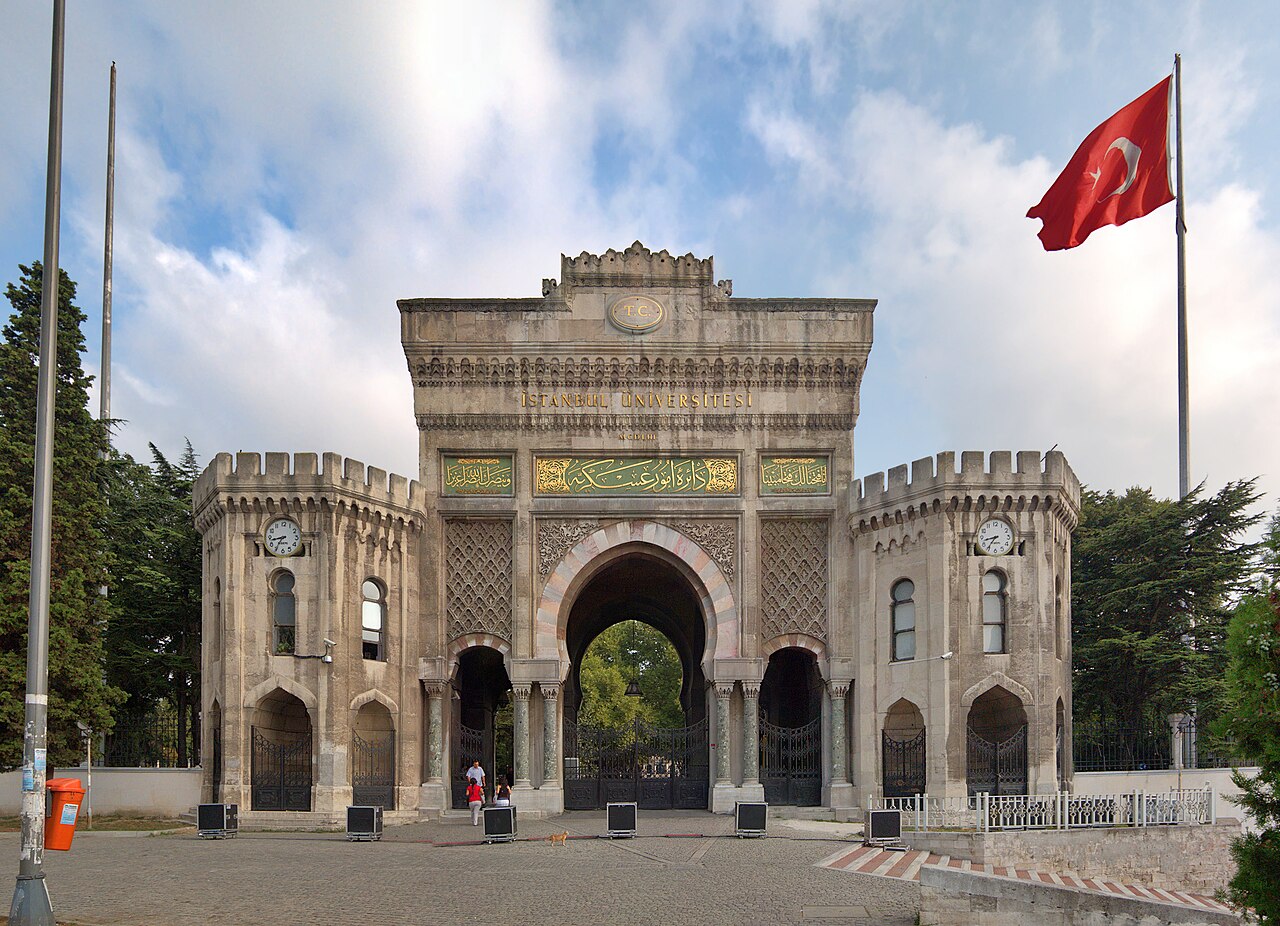
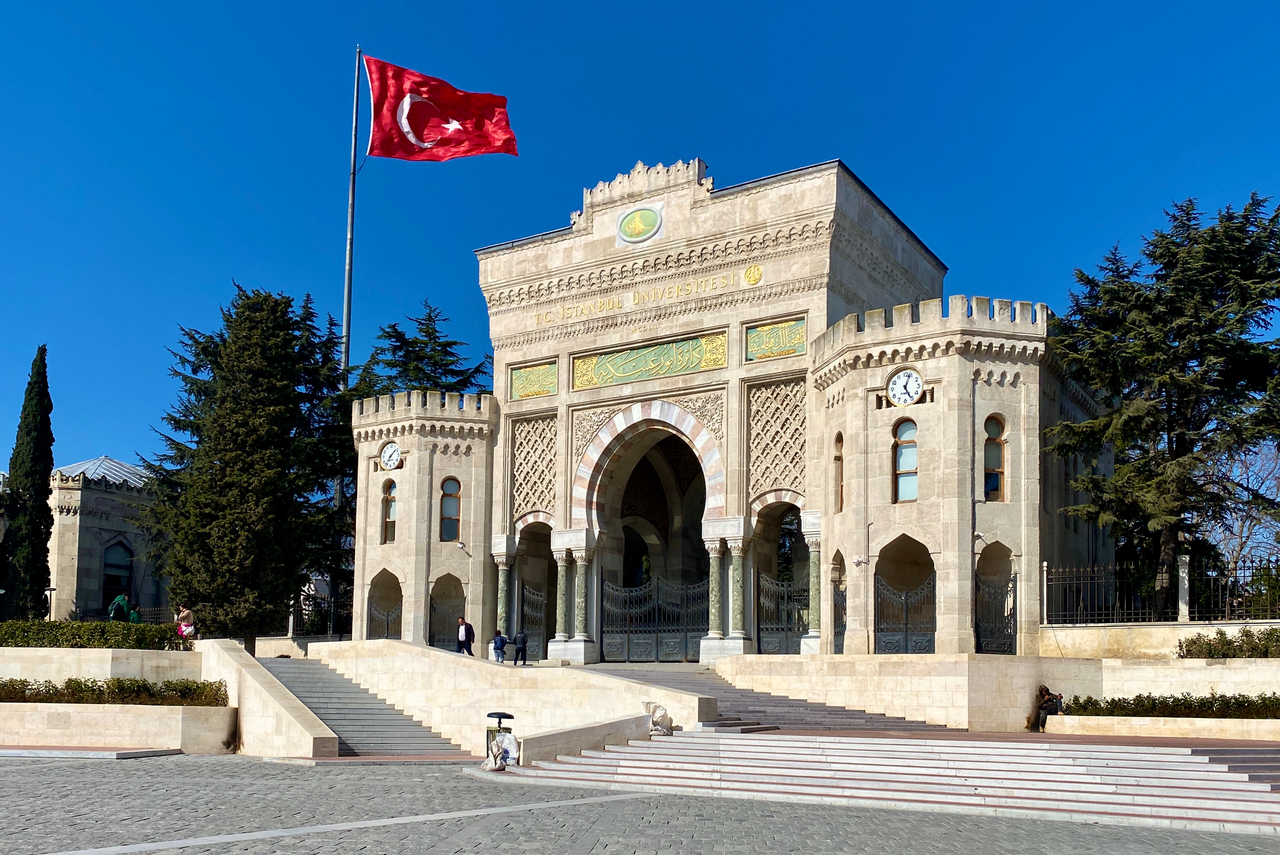
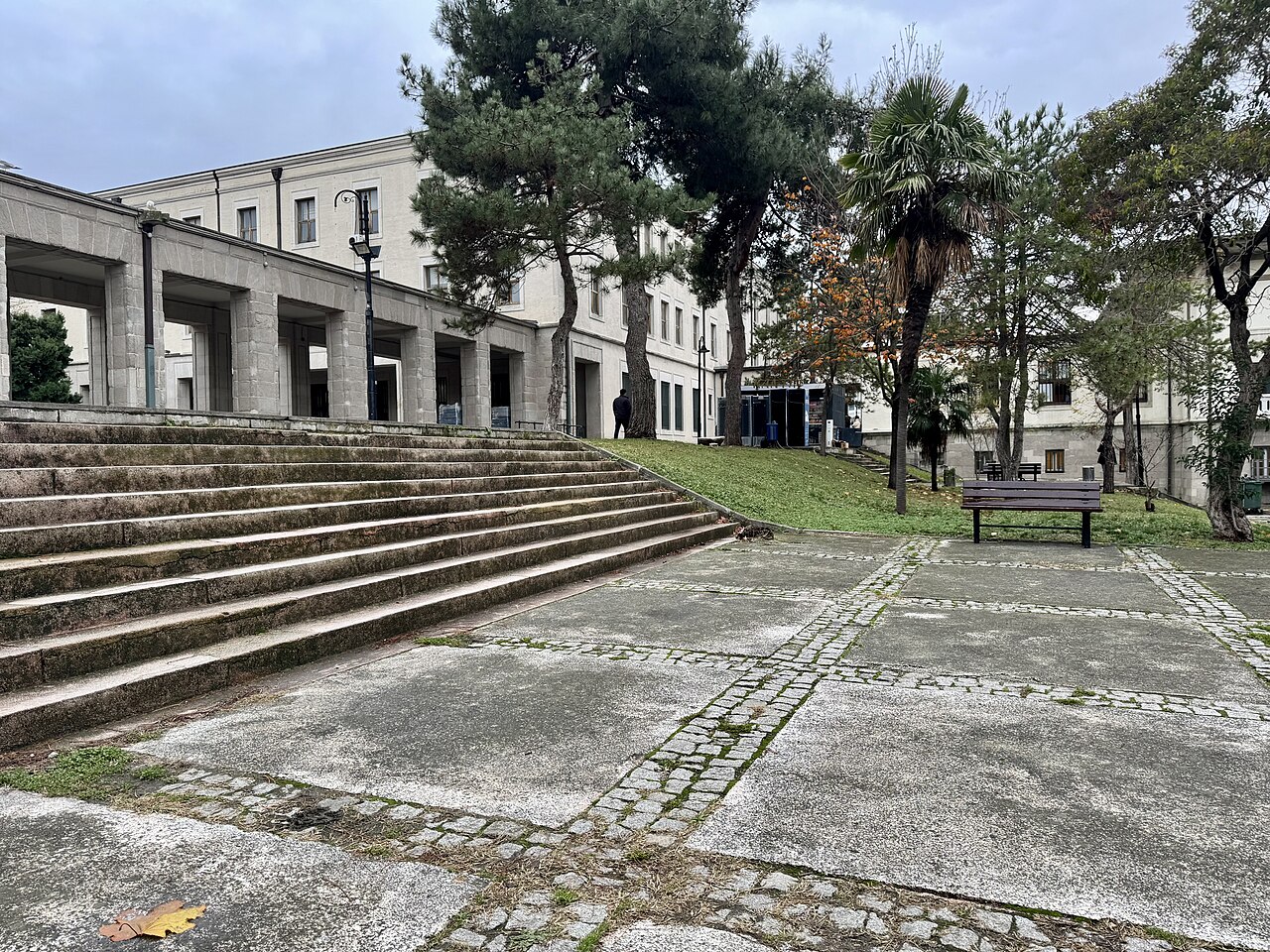
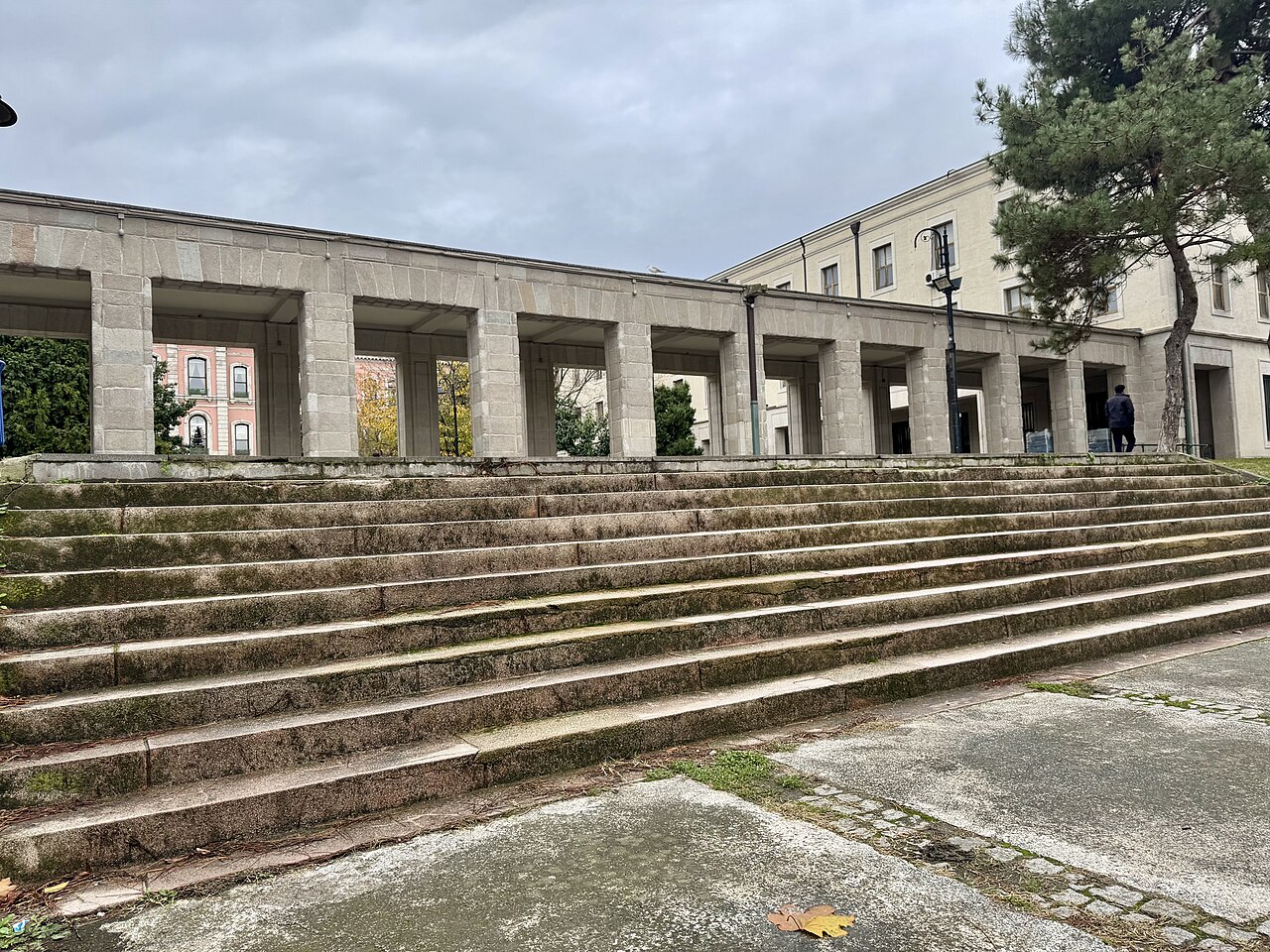
The main campus of Istanbul University occupies a site of almost incomprehensible historical density. It sits adjacent to Beyazıt Square in the Fatih district on the European side of the city, a location first laid out as the Forum Tauri under the direction of Constantine the Great and later expanded by Theodosius the Great into the Forum of Theodosius during the Roman era. Fragments of Roman and Byzantine stonework remain visible within the grounds, a silent testament to the layers of empire that once occupied the same ground. The university building itself stands on the footprint of the Old Palace, the first residence constructed by the Ottoman Turks in Istanbul. After the Republic was established in 1923 and the Ministry of War relocated its operations to Ankara, the building was transferred to the university. Today the institution operates at a considerable scale: nearly 59,000 undergraduate, graduate, and doctoral students are enrolled across 112 academic units—faculties, institutes, colleges, and vocational schools—distributed over nine campuses, making it one of the most historically rooted centers of higher learning in the region.
Gallery

Frequently Asked Questions
What is Istanbul University?
Istanbul University is a public research university located in Istanbul, Turkey, and it holds the distinction of being the first university established in modern Turkey.
When was Istanbul University founded?
Its roots go back to a madrasah set up right after the Ottoman conquest of Constantinople in 1453, though the institution we recognize today was formally reorganized as a modern university in 1933.
Who founded Istanbul University?
Sultan Mehmed II is credited with establishing the original madrasah that served as the university's predecessor following the 1453 conquest, while the modern university structure came into being in 1933.
How big is Istanbul University in terms of students and programs?
The university enrolls roughly 58,809 students spread across 112 academic units—including faculties, institutes, colleges, and vocational schools—housed on nine separate campuses.
Where is Istanbul University's main campus located?
The main campus sits in Istanbul, Turkey, and it is one of nine campuses that together make up the university's physical footprint across the city.
More in Universities 1-24
Spotted an error? Know more?
Reader corrections go straight into our review queue. Suggest an edit · How this site is sourced