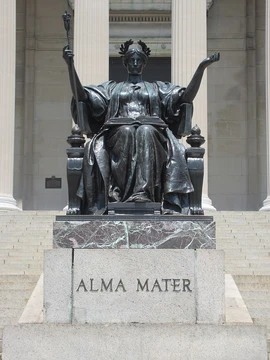
KAIST
South Korea's first public research-oriented science and engineering university.

Roost · CC0
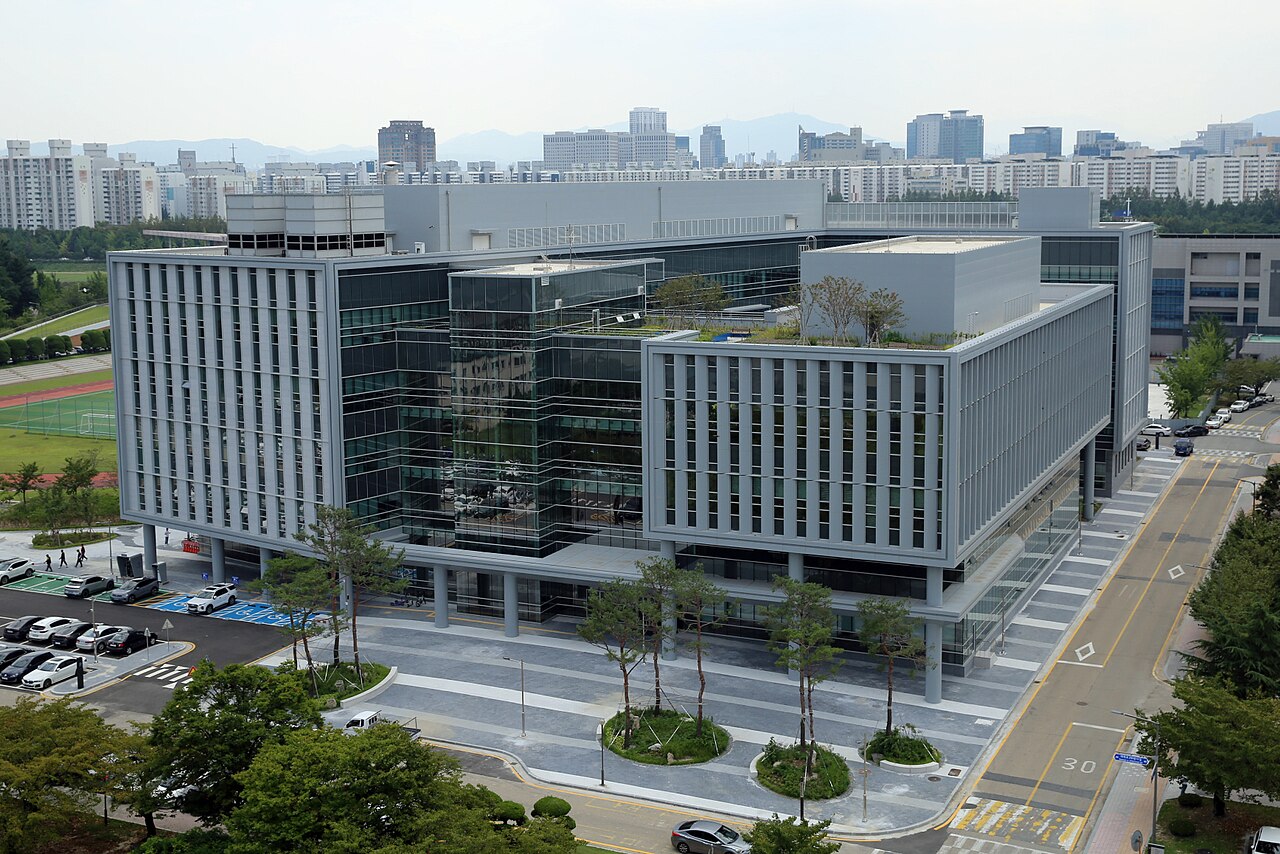
KAIST is a national research university located in Daedeok Innopolis, Daejeon, South Korea. Established by the Korean government in 1971 as the nation's first public, research-oriented science and engineering institution, it was originally named the Korea Advanced Institute of Science (KAIS). The university plays a central role in South Korea's science and technology education and research, with a strong emphasis on graduate education and international partnerships.
Quick Facts
- Native Name
- ko · 한국과학기술원
- Established
- 1971
- President
- Choongsik Bae / (ko · 배충식)
- City
- Yuseong
- Province
- Daejeon
- Country
- South Korea
- Faculty
- 704 (2024)
- Administrative Staff
- 973 (2024)
- Students
- 12,348 (2024)
- Undergrad
- 4,009
- Postgrad
- 3,767
- Doctoral
- 2,896
Facts from the source article.
Lore & Background
The institute was founded in 1971 as the Korea Advanced Institute of Science (KAIS) with a US$6 million loan from the United States Agency for International Development (USAID), supported by President Park Chung-Hee. Its academic scheme was mainly designed by Frederick E. Terman, then vice president of Stanford University, and Dr. KunMo Chung, a professor at the Polytechnic Institute of Brooklyn. Research studies began by 1973, and undergraduates studied for bachelor's degrees by 1984.
In 1981, the government merged KAIS and the Korea Institute of Science and Technology (KIST) to form the Korea Advanced Institute of Science and Technology (KAIST) under physics professor Choochon Lee. Due to differing research philosophies, KIST and KAIST split in 1989. That same year, KAIST combined with the Korea Institute of Technology (KIT) and moved from Seoul to the Daedeok Science Town in Daejeon. In January 2008, the university dropped its full name and changed its official name to only KAIST.
KAIST began partnering with international institutions for dual degree programs in 2007. Partner institutions include New York University, the Technical University of Denmark, Carnegie Mellon University, the Georgia Institute of Technology, Technische Universität Berlin, and the Technical University of Munich.
Reader's Guide
KAIST is significant as South Korea's first public research-oriented science and engineering institution, established in 1971 to train advanced scientists and engineers and develop graduate education. Its founding with USAID support and design by prominent academics reflects a strategic national investment in technological development. The university's evolution—including mergers and splits with KIST and KIT, and its relocation to Daedeok Science Town—illustrates the dynamic growth of South Korea's research infrastructure. KAIST's international dual degree programs, begun in 2007, and its partnerships with leading global universities underscore its commitment to global collaboration. With a large budget heavily reliant on research contracts, KAIST exemplifies a model of research-intensive education. Its open major system, full scholarships, and English-taught courses attract a diverse student body, including many from specialized science high schools and international students from 81 countries. The university's alumni network of nearly 70,000 graduates, including many doctorates, highlights its role in producing highly skilled scientists and engineers. KAIST's presence in Daedeok Innopolis, a hub of research institutes and companies, further cements its position as a cornerstone of South Korea's innovation ecosystem.
Origins & Founding Vision
KAIST traces its roots to 1971, when the Korean government, with a US$6 million loan from USAID and the backing of President Park Chung-Hee, established what was then called the Korea Advanced Institute of Science (KAIS). The academic blueprint was shaped by Frederick E. Terman, then vice president of Stanford University, alongside Dr. KunMo Chung of the Polytechnic Institute of Brooklyn. The founding mission was twofold: train advanced scientists and engineers, and build a graduate education structure for the nation. Research activity commenced by 1973, and undergraduate bachelor's programs followed in 1984. The institute was conceived as South Korea's first public, research-oriented science and engineering institution, setting a precedent that would define the country's higher education landscape for decades to come.
Institutional Transformation
KAIST's identity was forged through a series of dramatic reorganizations. In 1981, the government merged the original KAIS with the Korea Institute of Science and Technology (KIST) under physics professor Choochon Lee, creating the full Korea Advanced Institute of Science and Technology. However, conflicting research philosophies led to a split in 1989. That same year, KAIST absorbed the Korea Institute of Technology (KIT) and relocated from Seoul to the Daedeok Science Town in Daejeon, where it remains today. A pivotal moment came in 2006 when President Suh's first official act was unveiling the KAIST Development Plan. The five-year plan, finalized in February 2007, set ambitious targets: become a world-class science and technology university and crack the global top ten by 2011. In January 2008, the institution shed its lengthy formal name and rebranded simply as KAIST, signaling a confident, streamlined identity.
Academic Philosophy & Student Life
KAIST's academic culture is defined by radical student autonomy and rigorous output expectations. Admission eschews university-administered standardized tests, instead weighing overall grades, math and science performance, teacher recommendations, study plans, and personal statements. The acceptance rate hovers around 15% for domestic applicants and 13% for internationals. Once enrolled, undergraduates benefit from an open major system permitting three exploratory terms before committing to a discipline, with the freedom to switch majors at any point. Full scholarships cover every student—domestic and international—across bachelor's, master's, and doctoral levels, and doctoral candidates receive exemption from South Korea's compulsory military service. Up to 80% of coursework is delivered in English. Graduation demands publication in internationally recognized journals, and an integrated master's-doctoral track with early-completion options accelerates research careers.
Global Footprint & Diversity
KAIST has cultivated a remarkably international character. Since 2007, the university has partnered with institutions including New York University, Carnegie Mellon University, the Georgia Institute of Technology, the Technical University of Denmark, Technische Universität Berlin, and the Technical University of Munich to offer dual degree programs. As of spring 2021, 817 international students from 81 countries were enrolled, making KAIST one of South Korea's most ethnically diverse universities. The largest international alumni communities hail from China, Vietnam, Pakistan, and Indonesia. The KAIST International Students Association (KISA) advocates for the needs of this global community. Between 1975 and 2021, the university graduated 69,388 alumni—19,457 with bachelor's degrees, 35,513 with master's, and 14,418 doctorates. More than 70% of undergraduates arrive from specialized science high schools, underscoring the institution's deep roots in the nation's STEM pipeline.
Gallery
Frequently Asked Questions
What is KAIST?
KAIST is South Korea's first national university built specifically around science and engineering research. It was created in 1971 under the name Korea Advanced Institute of Science and has since grown into a major graduate-focused research institution.
Where is KAIST located?
The campus is situated in Daedeok Innopolis, Daejeon, South Korea, placing it well outside the Seoul metro area and making it a key academic anchor for the country's midwestern region.
How was KAIST founded?
The Korean government established the institution in 1971 as a public, research-oriented body to strengthen the nation's capabilities in science and engineering. Its founding mission centered on producing advanced graduates and driving original research rather than broad undergraduate education.
Why is KAIST considered so important in South Korea?
As the country's first public university dedicated to STEM research, KAIST has long shaped South Korea's technological trajectory and international academic partnerships. Its heavy emphasis on graduate education distinguishes it from most other Korean universities.
How large is KAIST in terms of students and budget?
In Fall 2019 the university counted about 10,500 full-time students and roughly 1,342 faculty researchers. Its 2013 operating budget stood at approximately US$765 million, reflecting its scale as a national research institution.
More in Universities 1-24
Spotted an error? Know more?
Reader corrections go straight into our review queue. Suggest an edit · How this site is sourced