Humboldt University of Berlin
A public research university in Berlin, Germany, known for pioneering the Humboldtian model of higher education.

Neuköllner · CC BY 4.0
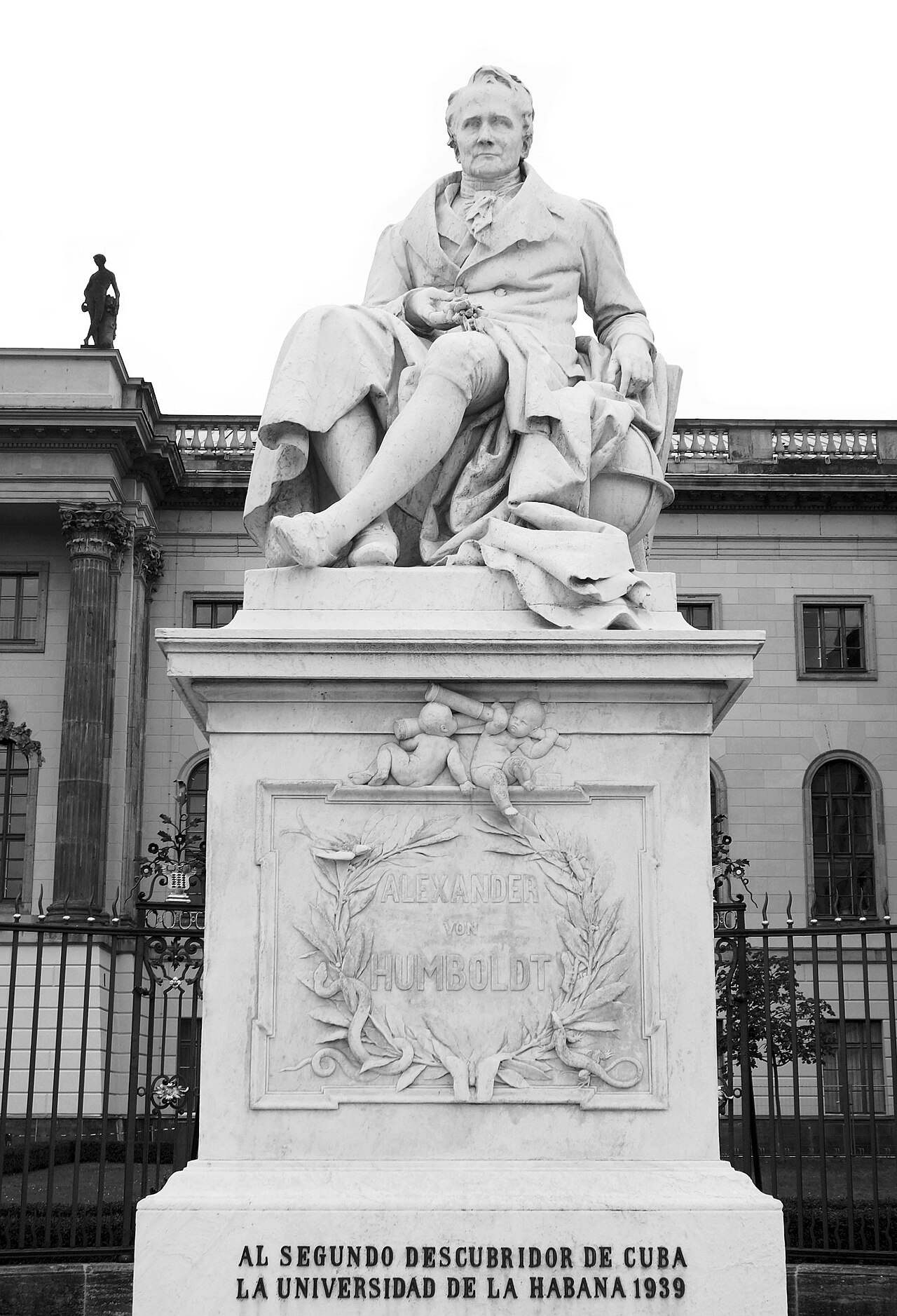
The Humboldt University of Berlin, often shortened to HU Berlin, is a public research university located in the central Mitte district of Berlin, Germany. It was founded in 1809 at the urging of Wilhelm von Humboldt, Johann Gottlieb Fichte, and Friedrich Daniel Ernst Schleiermacher, and opened its doors in 1810. From 1828 until the end of World War II in 1945, it was known as the Royal Friedrich Wilhelm University of Berlin. During the Cold War, the university was situated in East Berlin and effectively split when the Free University of Berlin was established in West Berlin. In 1949, it was renamed in honor of the brothers Alexander and Wilhelm von Humboldt.
The university is organized into nine faculties, including a medical school it shares with the Freie Universität Berlin. It enrolls roughly 35,000 students and offers degree programs across about 171 disciplines, from undergraduate to post-doctorate levels. Its main campus is located on Unter den Linden boulevard in central Berlin. The institution is globally recognized for pioneering the Humboldtian model of higher education, which has deeply shaped other European and Western universities.
During the 19th and early 20th centuries, it was widely considered the world’s leading university for the natural sciences, associated with major breakthroughs in physics and other fields by professors like Albert Einstein. Its past and present faculty and notable alumni include 57 Nobel Prize laureates—more than any other German university—alongside figures such as Johannes Müller, Theodor Schwann, Rudolf Virchow, Hermann von Helmholtz, Emil du Bois-Reymond, Robert Koch, Theodor Mommsen, Karl Marx, Friedrich Engels, Otto von Bismarck, W. E. B. Du Bois, Arthur Schopenhauer, Georg Wilhelm Friedrich Hegel, Jacob Burckhardt, Walter Benjamin, Max Weber, Georg Simmel, Karl Liebknecht, Ernst Cassirer, Heinrich Heine, Ivan Turgenev, Eduard Fraenkel, Max Planck, Wernher von Braun, and the Brothers Grimm.
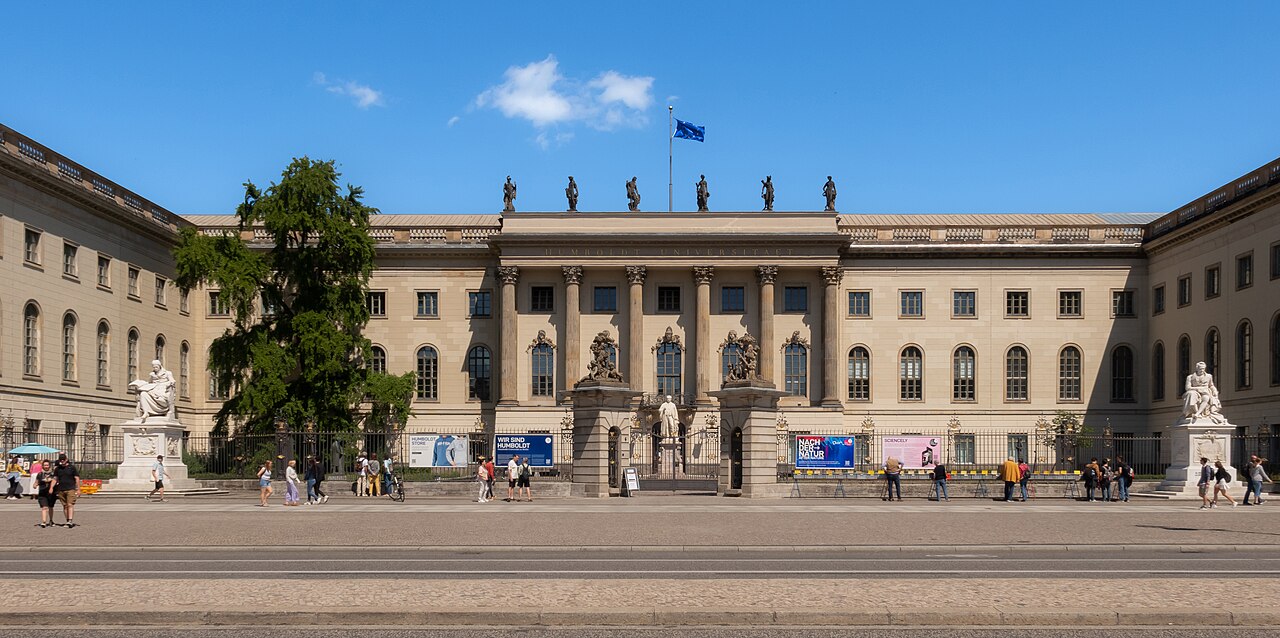
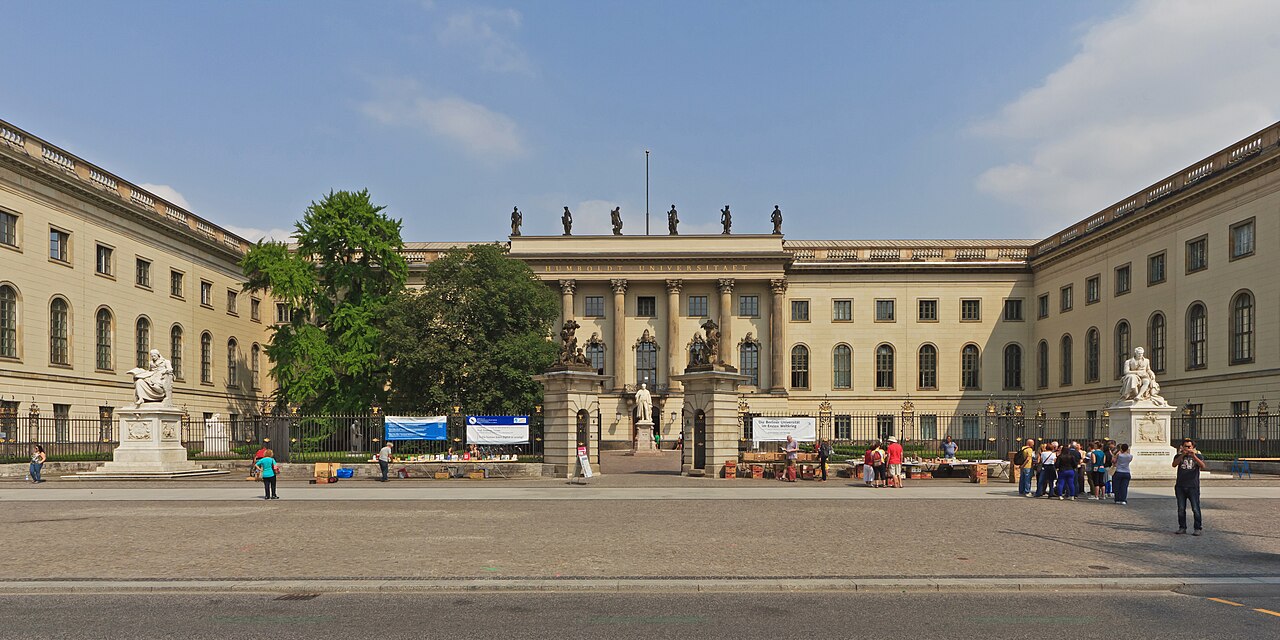
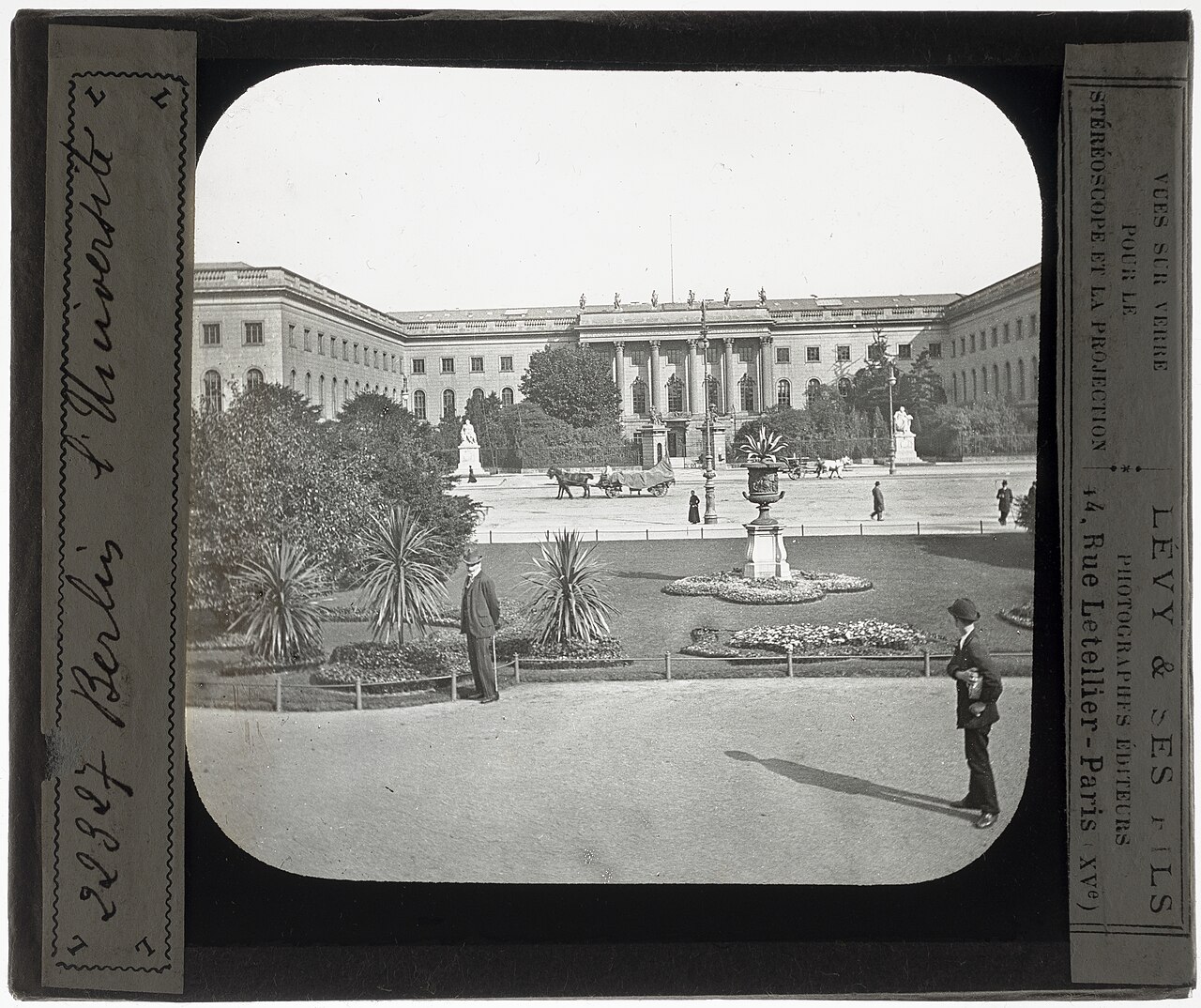
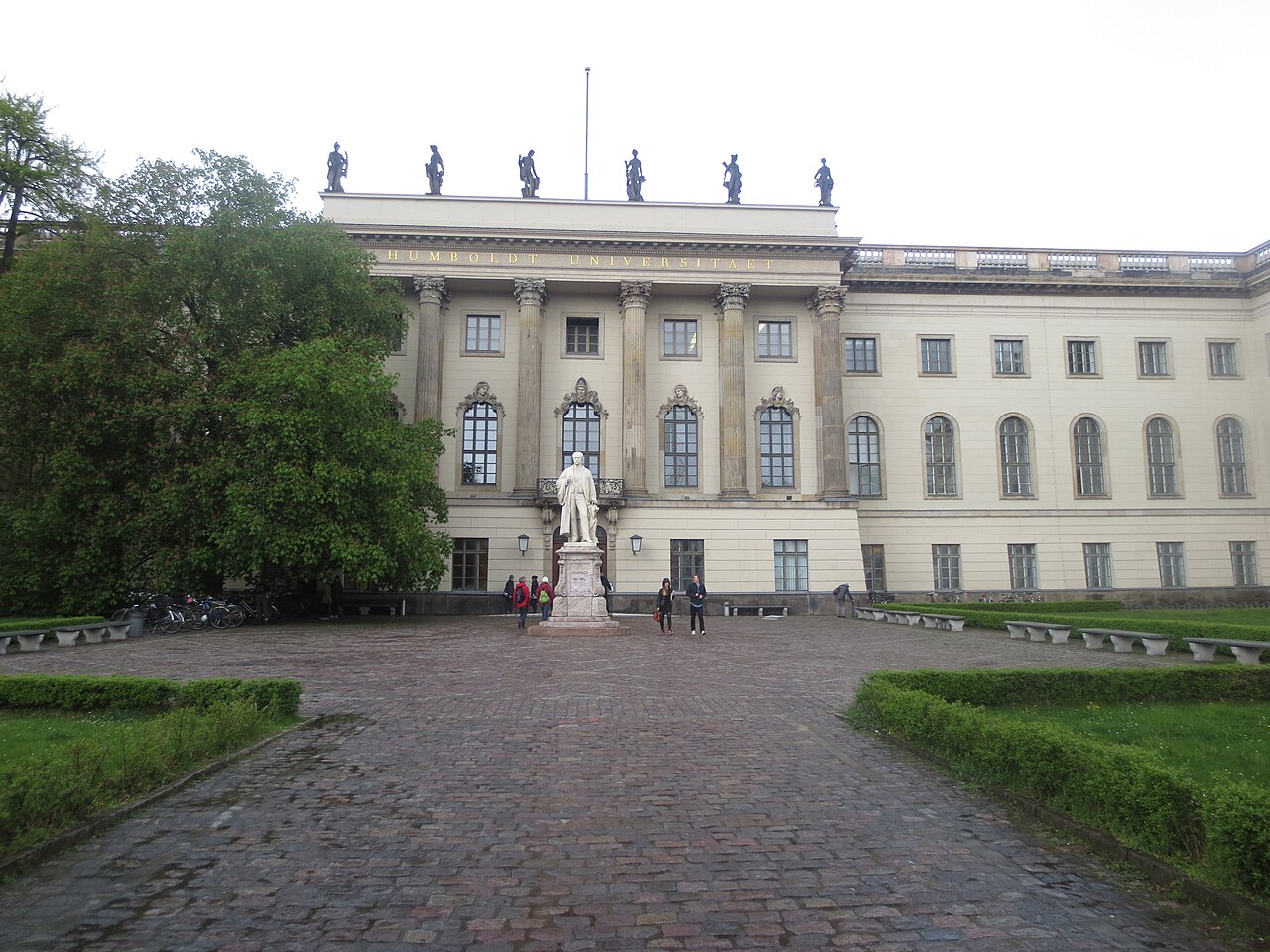
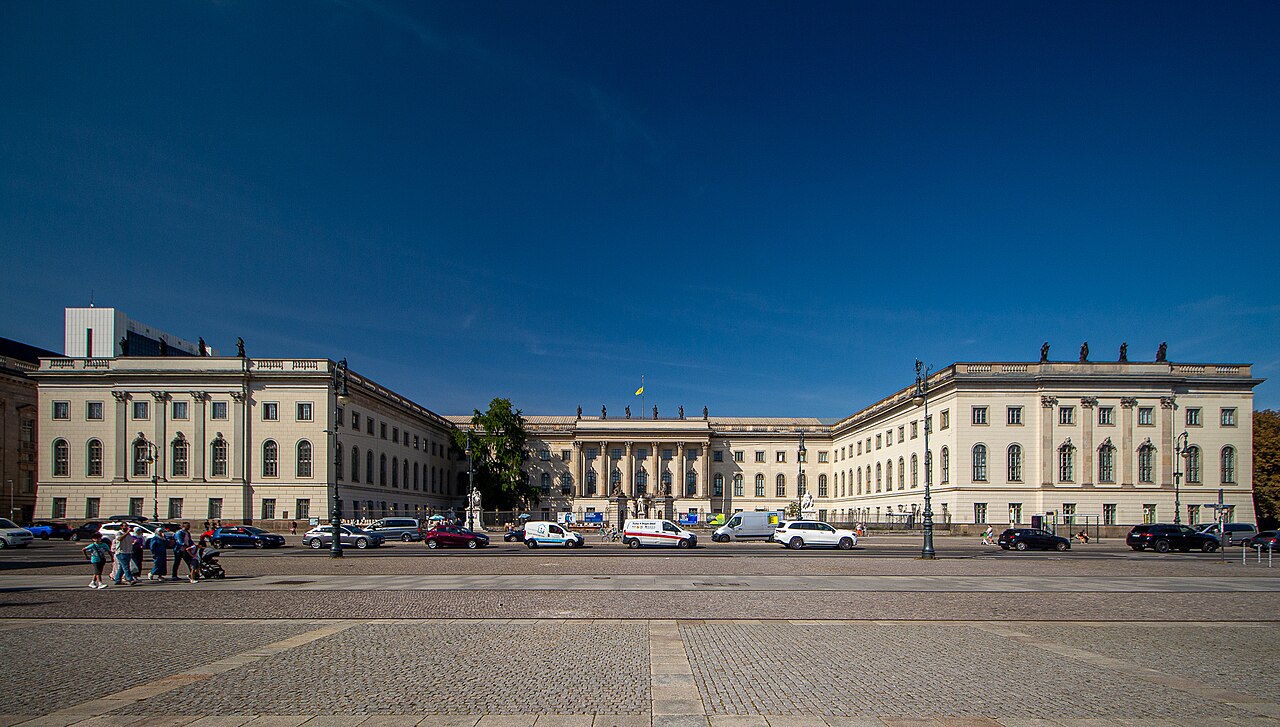
The main building of Humboldt-Universität is the Prinz-Heinrich-Palais (Prince Henry’s Palace) on Unter den Linden in Berlin’s historic center. It was built between 1748 and 1753 for Prince Henry of Prussia, brother of Frederick the Great, in the Baroque style according to plans by Johann Boumann. In 1809, the former royal Prussian residence was converted into a university building. Damaged by Allied bombing during World War II, it was rebuilt from 1949 to 1962. In 1967, eight statues from the destroyed Potsdam City Palace were placed on the side wings of the university building. There is currently debate about returning these statues to the Potsdam City Palace, which was rebuilt as the Landtag of Brandenburg in 2013.
Like the University of Bonn, the University of Berlin was established by King Friedrich Wilhelm III on 16 August 1809, during the Prussian Reform Movement, at the initiative of the liberal Prussian philosopher and linguist Wilhelm von Humboldt. The university was housed in a palace built from 1748 to 1766 for the late Prince Henry. After his widow and her ninety-member staff moved out, the first unofficial lectures were given there in the winter of 1809. Humboldt faced strong resistance to his ideas while setting up the university; he submitted his resignation to the King in April 1810 and was not present when the school opened that fall. The first students were admitted on 6 October 1810, and the first semester began on 10 October 1810, with 256 students and 52 lecturers in faculties of law, medicine, theology, and philosophy, under rector Theodor Schmalz. The university marks 15 October 1810 as its official opening date. In 1810, it established the world’s first academic chair in history. From 1828 to 1945, the school was called the Royal Friedrich Wilhelm University of Berlin in honor of its founder.
The university has been home to many of Germany’s greatest thinkers over the past two centuries, including subjective idealist philosopher Johann Gottlieb Fichte, theologian Friedrich Schleiermacher, absolute idealist philosopher G. W. F. Hegel, Romantic legal theorist Friedrich Carl von Savigny, anti-optimist philosopher Arthur Schopenhauer, objective idealist philosopher Friedrich Schelling, cultural critic Walter Benjamin, and leading physicists Albert Einstein and Max Planck. The founders of Marxist theory, Karl Marx and Friedrich Engels, attended the university, as did poet Heinrich Heine, novelist Alfred Döblin, founder of structuralism Ferdinand de Saussure, German unifier Otto von Bismarck, Communist Party of Germany founder Karl Liebknecht, African American Pan-Africanist W. E. B. Du Bois, European unifier Robert Schuman, and influential surgeon Johann Friedrich Dieffenbach in the early 1800s. The structure of German research-intensive universities served as a model for institutions like Johns Hopkins University, and it has been claimed that the Humboldtian university became a model for the rest of Europe, with its central principle being the union of teaching and research in the work of the individual scholar or scientist.
Beyond traditional subjects like science, law, philosophy, history, theology, and medicine, the university expanded to encompass many new scientific disciplines.
Quick Facts
- Native Name
- Humboldt-Universität zu Berlin
- Motto
- Universitas litterarum / (Latin)
- Motto Lang
- la
- Motto Eng
- The University of Letters
- Established
- 1810-10-15
- Former Names
- Universität zu Berlin / (1809–1827) · Friedrich-Wilhelms-Universität zu Berlin / (1828–1948)
- Budget
- EUR 536.0 million / (2022)
- President
- Julia von Blumenthal
- Academic Staff
- 2,403
- Administrative Staff
- 1,516
- Students
- 37,222
- Undergrad
- 18,712
Facts from the source article.
Reader's Guide
The university is divided into nine faculties, including its medical school shared with the Freie Universität Berlin. It has a student enrollment of around 35,000 students and offers degree programs in some 171 disciplines from undergraduate to post-doctorate level. Its main campus is located on the Unter den Linden boulevard in central Berlin. The university is known worldwide for pioneering the Humboldtian model of higher education.
Did You Know?
- Past and present faculty and notable alumni include 57 Nobel Prize laureates, though the claim of 'the most of any German university' is disputed depending on counting method.
- The university was originally named the University of Berlin and later the Royal Friedrich Wilhelm University of Berlin.
- The main building was originally a palace built for Prince Henry of Prussia, brother of Frederick the Great.
Founding and the Humboldtian Model
The University of Berlin was born out of the Prussian Reform Movement when King Frederick William III formally established it on 16 August 1809, acting on the vision of liberal philosopher Wilhelm von Humboldt alongside Johann Gottlieb Fichte and Friedrich Daniel Ernst Schleiermacher. The new institution took up residence in a former royal palace, and although Humboldt encountered fierce opposition to his educational ideas—so much so that he tendered his resignation to the King in April 1810 and was absent when the doors opened—his philosophical framework endured. The first semester commenced on 10 October 1810 with 256 students and 52 lecturers spread across four faculties: law, medicine, theology, and philosophy. That same year, the university created the world's first dedicated academic chair in history. The institution's defining contribution was the so-called Humboldtian model, which wove together teaching and research into a single scholarly vocation. This principle of integrated academic life went on to shape the structure of research-intensive universities across Europe and beyond, with institutions as far afield as Johns Hopkins University drawing directly on its example.
A Constellation of Intellectual Giants
Few institutions in the modern world can claim a constellation of intellectual giants quite like the Humboldt University. Over its two-century span, it has been associated with 57 Nobel Prize laureates—the highest tally of any German university—and is widely regarded as the preeminent center for the natural sciences throughout the nineteenth and into the early twentieth century. Physicists Albert Einstein and Max Planck, biologists Robert Koch and Theodor Schwann, pathologist Rudolf Virchow, and physiologist Hermann von Helmholtz all contributed to its scientific reputation. The humanities and social sciences were equally served: German idealist philosophers G. W. F. Hegel, Arthur Schopenhauer, and Johann Gottlieb Fichte anchored its philosophical tradition, while Karl Marx and Friedrich Engels developed the theoretical foundations of their political philosophy within its walls. The university's alumni and faculty also include cultural critics Walter Benjamin and Jacob Burckhardt, sociologists Max Weber and Georg Simmel, historian Theodor Mommsen, poet Heinrich Heine, novelist Ivan Turgenev, and even the Brothers Grimm. In the political sphere, Otto von Bismarck, Karl Liebknecht, and W. E. B. Du Bois all passed through its gates, underscoring the institution's role as a crucible for ideas that reshaped the modern world.
The Prinz-Heinrich-Palais and Its Storied Façade
The heart of the university's physical identity is the Prinz-Heinrich-Palais, a Baroque palace standing on the Unter den Linden boulevard in Berlin's Mitte district. Originally commissioned between 1748 and 1753 for Prince Henry of Prussia, the younger brother of Frederick the Great, the building was designed by architect Johann Boumann and served as a royal residence for decades. When the university was founded in 1809, the former Prussian royal dwelling was converted into an academic home, and the palace has remained the institution's principal seat ever since. Its history is marked by the scars of conflict: Allied bombing during World War II left it heavily damaged, and a lengthy reconstruction campaign ran from 1949 through 1962 before the palace could once again host lectures and research. In 1967, eight sculptural figures recovered from the ruins of the Potsdam City Palace were installed on the university's side wings, adding a layer of artistic history to the façade. A public debate continues over whether those statues should be returned to Potsdam, where the city palace was reconstructed and reopened in 2013 as the parliament building of Brandenburg. Set against the tree-lined boulevard, the palace's grand Baroque architecture remains one of Berlin's most recognizable academic landmarks.
Division, Renaming, and Modern Structure
The twentieth century subjected the university to a geopolitical fracture that few academic institutions have endured. When the Cold War divided Berlin into East and West sectors, the university found itself located in East Berlin, and the opening of the Free University of Berlin in the western sector effectively split the city's higher-education landscape in two. The institution received its present name in 1949, honoring both Alexander and Wilhelm von Humboldt, a naming that has carried it through the post-war era and into the present day. Today, the Humboldt University operates as a public research university organized into nine faculties, with a student body of roughly 35,000 enrolled across some 171 degree programs spanning undergraduate, graduate, and post-doctorate levels. Notably, its medical school is shared with the Free University of Berlin, a practical arrangement that echoes the historical division of the city while fostering collaboration. The university's global reputation rests not only on its research output but on the enduring influence of the Humboldtian model it pioneered—a framework that has shaped the structure of universities across Europe and the Western world, ensuring that the principles first articulated in a converted palace on Unter den Linden continue to resonate in academic institutions far beyond Berlin's borders.
Gallery
Frequently Asked Questions
Who is Humboldt University of Berlin?
It is a public research university based in Berlin's Mitte district, Germany, founded in 1809 and opened in 1810. Its creation was driven by Wilhelm von Humboldt, Johann Gottlieb Fichte, and Friedrich Daniel Ernst Schleiermacher under the patronage of King Frederick William III.
What made Humboldt University of Berlin so influential on modern academia?
The institution is credited with developing the Humboldtian model, which wove together teaching and original research as a single academic purpose. That combined approach became the blueprint for universities across Europe and the broader Western world.
How many Nobel Prize winners are connected to Humboldt University of Berlin?
A total of 57 Nobel laureates have been linked to the university as faculty or alumni. That tally places it among the most scientifically decorated institutions on the planet.
Where is Humboldt University of Berlin located and how big is it?
The campus sits in the central Mitte borough of Berlin, Germany. It currently enrolls roughly 35,000 students across its various faculties.
Why is Humboldt University of Berlin considered historically important?
Throughout the 19th and early 20th centuries it was widely regarded as the world's leading center for the natural sciences. Its founding principles—tying rigorous inquiry directly to classroom instruction—reshaped what a university was expected to be.
More in Universities 1-24
Spotted an error? Know more?
Reader corrections go straight into our review queue. Suggest an edit · How this site is sourced