
Testosterone
Primary male sex hormone influencing development, behavior, and health.

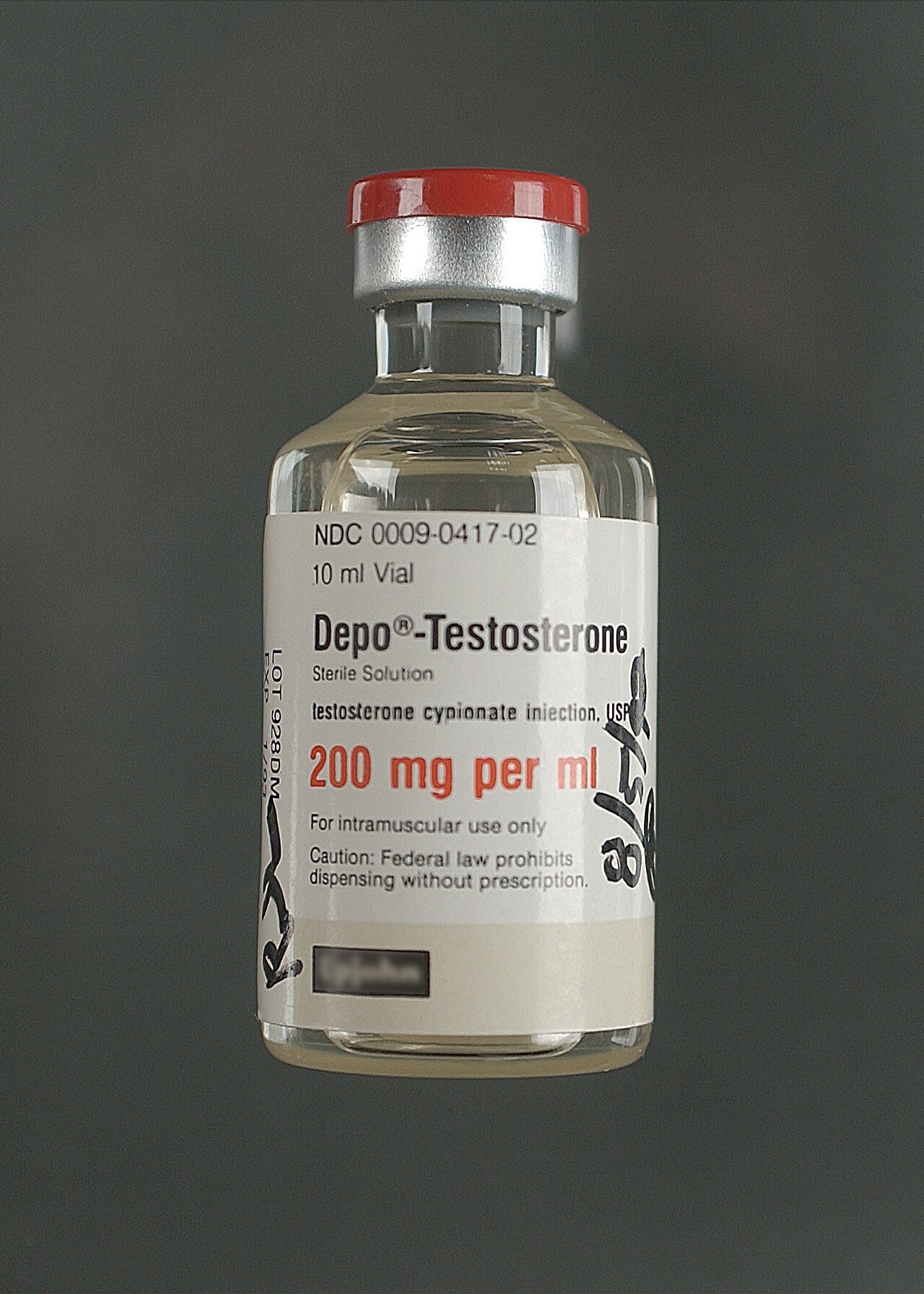
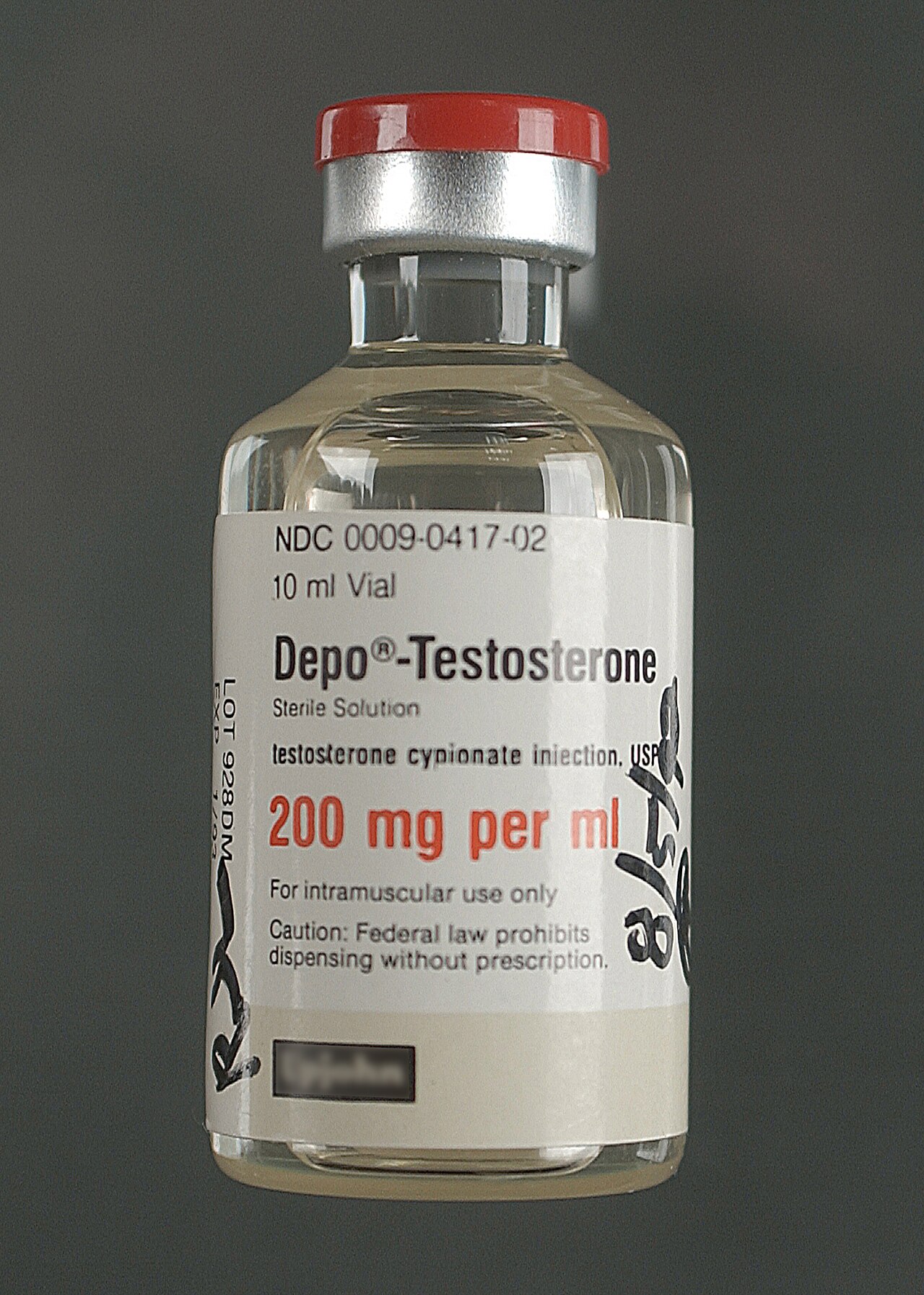
U.S. Drug Enforcement Administration · Public domain
It is used as a medication for hypogonadism, gender dysphoria, and certain breast cancers, and is listed as an essential medicine by the World Health Organization.[1][2] In humans, testosterone is the key male sex hormone and androgen, responsible for the growth of male reproductive structures like the testicles and prostate, and for secondary sexual characteristics including increased muscle and bone mass and body hair.[3] Adult males typically have serum testosterone concentrations seven to eight times higher than adult females, and because of greater metabolic clearance, their daily production is roughly 20 times higher.[4]
Quick Facts
- Field
- Endocrinology, Reproductive Biology
- Type
- Hormone (steroid androgen)
Facts from the source article.
Key facts and history
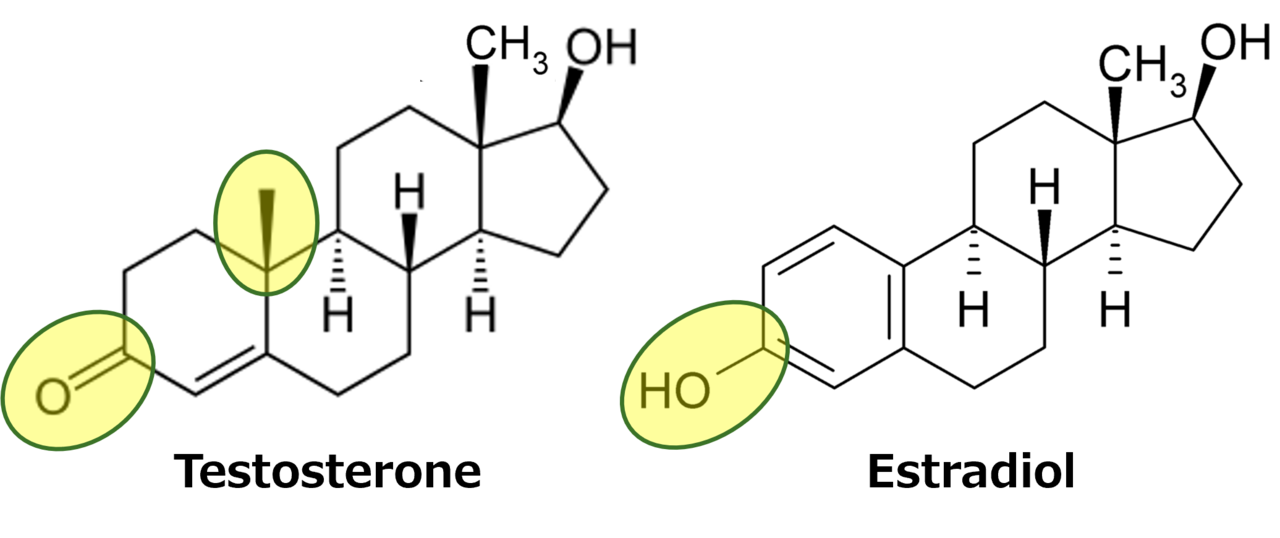
Before puberty, rising androgen levels in both sexes produce adult-type body odor, increased oiliness of skin, acne, pubic and armpit hair, and accelerated bone maturation.[5] Testosterone is necessary for normal sperm development and activates genes in Sertoli cells that promote spermatogonia differentiation.[6] The body synthesizes testosterone from cholesterol through several steps; it then binds to and activates the androgen receptor to produce its effects.[7] In males, the testicles are the primary site of testosterone secretion; in females, the ovaries secrete it in smaller amounts.[7]
Male infants experience a rise in testosterone during their first weeks of life, with levels staying in a pubertal range for several months and then falling to very low childhood levels by 4–7 months of age.[8] In males at puberty, testosterone leads to the growth of spermatogenic tissue, enlargement of the penis, increased libido, and the final maturation of bone.[9]
What the cited sources add
The same source states that no widely accepted testosterone threshold exists below which symptoms of androgen deficiency occur.[10] The guideline advises reassessing men's symptoms within 12 months of starting testosterone treatment and discontinuing if no improvement is seen.[10][11]
Gallery

References
- Wikipedia, "Testosterone" (CC BY-SA 4.0), which cites: "Testosterone", Drugs.com, December 4, 2015; "List of Gender Dysphoria Medications (6 Compared)", Drugs.com (original not read by us) en.wikipedia.org
- Wikipedia, "Testosterone" (CC BY-SA 4.0), which cites: "19th WHO Model List of Essential Medicines (April 2015)", WHO, April 2015; "Testosterone", Drugs.com, December 4, 2015; "Testosterone", Drugs.com, December 4, 2015 (original not read by us) en.wikipedia.org
- Wikipedia, "Testosterone" (CC BY-SA 4.0), which cites: "Understanding the risks of performance-enhancing drugs", Mayo Clinic (original not read by us) en.wikipedia.org
- Wikipedia, "Testosterone" (CC BY-SA 4.0), which cites: "Serum testosterone in women as measured by an automated immunoassay and a RIA", Clinical Chemistry, Mar 2004, p. 678; author reply 678–9; "Mean plasma concentration, metabolic clearance and basal plasma production rates of testosterone in normal young men and women using a constant infusion procedure: effect of time of day and plasma concentration on the m; "Plasma production rates of testosterone in normal adult men and women and in patients with the syndrome of feminizing testes", The Journal of Clinical Endocrinology & Metabolism, Nov en.wikipedia.org
- Wikipedia, "Testosterone" (CC BY-SA 4.0), which cites: "Puberty-timing is everything!", Journal of Pediatric Nursing, 2005, p. 75–82 (original not read by us) en.wikipedia.org
- Wikipedia, "Testosterone" (CC BY-SA 4.0), which cites: "The social endocrinology of dominance: basal testosterone predicts cortisol changes and behavior following victory and defeat", Journal of Personality and Social Psychology, Jun 2008, p. 1078–1093 (original not read by us) en.wikipedia.org
- Wikipedia, "Testosterone" (CC BY-SA 4.0), which cites: "Testosterone: Action, Deficiency, Substitution", Cambridge University Press, 2012, p. 15–32; "Testosterone: Action, Deficiency, Substitution", Cambridge University Press, 2012, p. 15–32 (original not read by us) en.wikipedia.org
- Wikipedia, "Testosterone" (CC BY-SA 4.0), which cites: "Evidence of testicular activity in early infancy", The Journal of Clinical Endocrinology & Metabolism, July 1973, p. 148–51; "The neonatal testosterone surge: a comparative study", Archives Internationales de Physiologie, de Biochimie et de Biophysique, 1992, p. 127–31 (original not read by us) en.wikipedia.org
- Wikipedia, "Testosterone" (CC BY-SA 4.0), which cites: "Puberty-timing is everything!", Journal of Pediatric Nursing, 2005, p. 75–82; "Ganong's Review of Medical Physiology", TATA McGRAW Hill, 2012, p. 423–25; "Cellular and molecular mechanisms of bone remodeling", The Journal of Biological Chemistry, 2010, p. 25103–8 (we also read that source) en.wikipedia.org
- "New Guideline for Testosterone Treatment in Men With 'Low T'", Medscape.com, 7 January 2020. facts only, no text reused. medscape.com
- Wikipedia, "Testosterone" (CC BY-SA 4.0), which cites: "Testosterone Treatment in Adult Men With Age-Related Low Testosterone: A Clinical Guideline From the American College of Physicians", Annals of Internal Medicine, January 2020, p. 126–133; "New Guideline for Testosterone Treatment in Men With 'Low T'", Medscape.com, 7 January 2020; "Testosterone Therapy in Men With Hypogonadism: An Endocrine Society Clinical Practice Guideline", The Journal of Clinical Endocrinology and Metabolism, May 2018, p. 1715–1744; "Evaluation and Management of Testosterone Deficiency: AUA Guideline", The Journal o en.wikipedia.org
Each numbered sentence above was checked against the source it cites before publication. Sentences citing Wikipedia adapt text from the English Wikipedia article Testosterone (contributors), used under CC BY-SA 4.0; this entry is available under the same licence. Other sources were used for facts only; no text or images are copied from them.
More in Reproduction & Development
Spotted an error? Know more?
Reader corrections go straight into our review queue. Suggest an edit · How this site is sourced