Spermatogenesis
Process producing haploid sperm from germ cells in testes.

L'Hernault, S.W. · CC BY 2.5
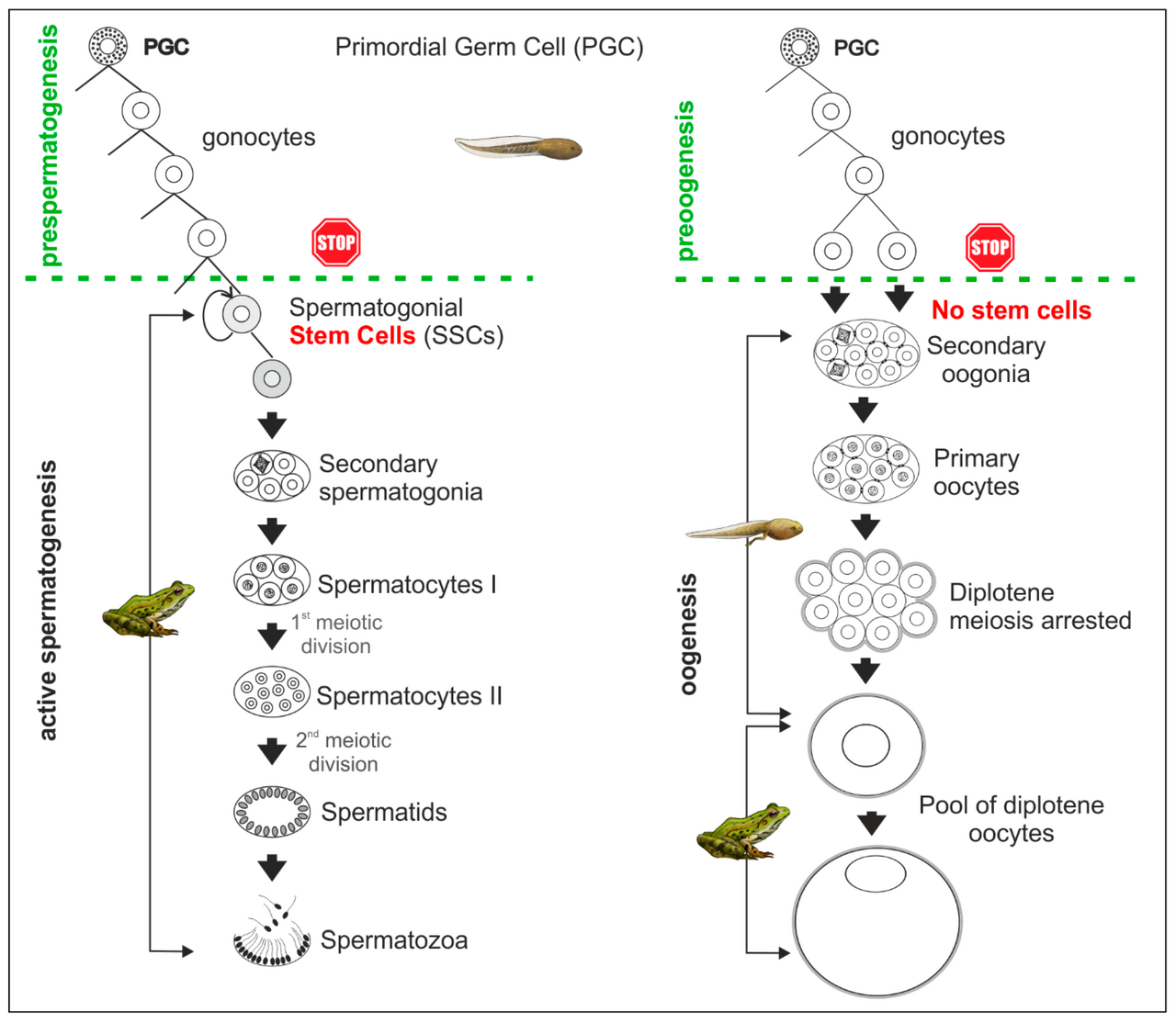
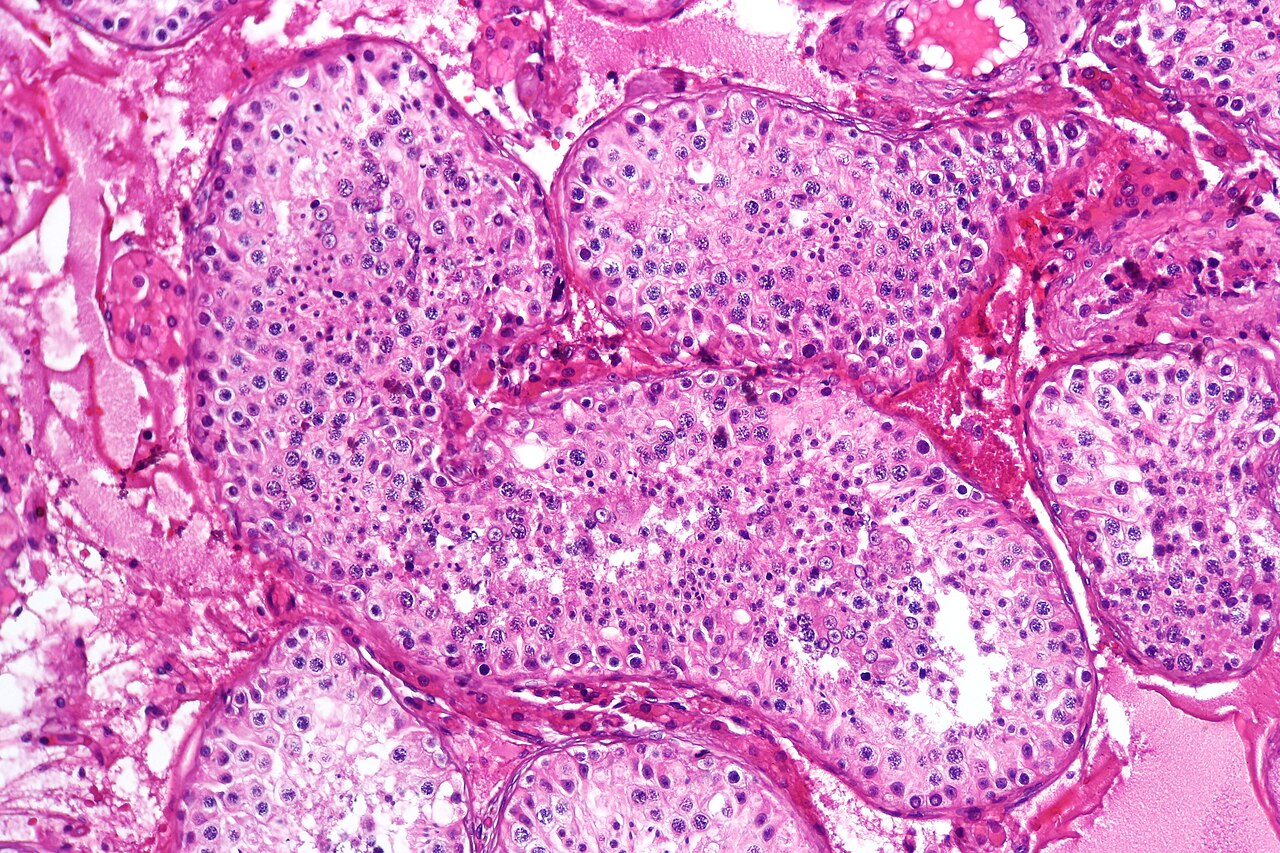
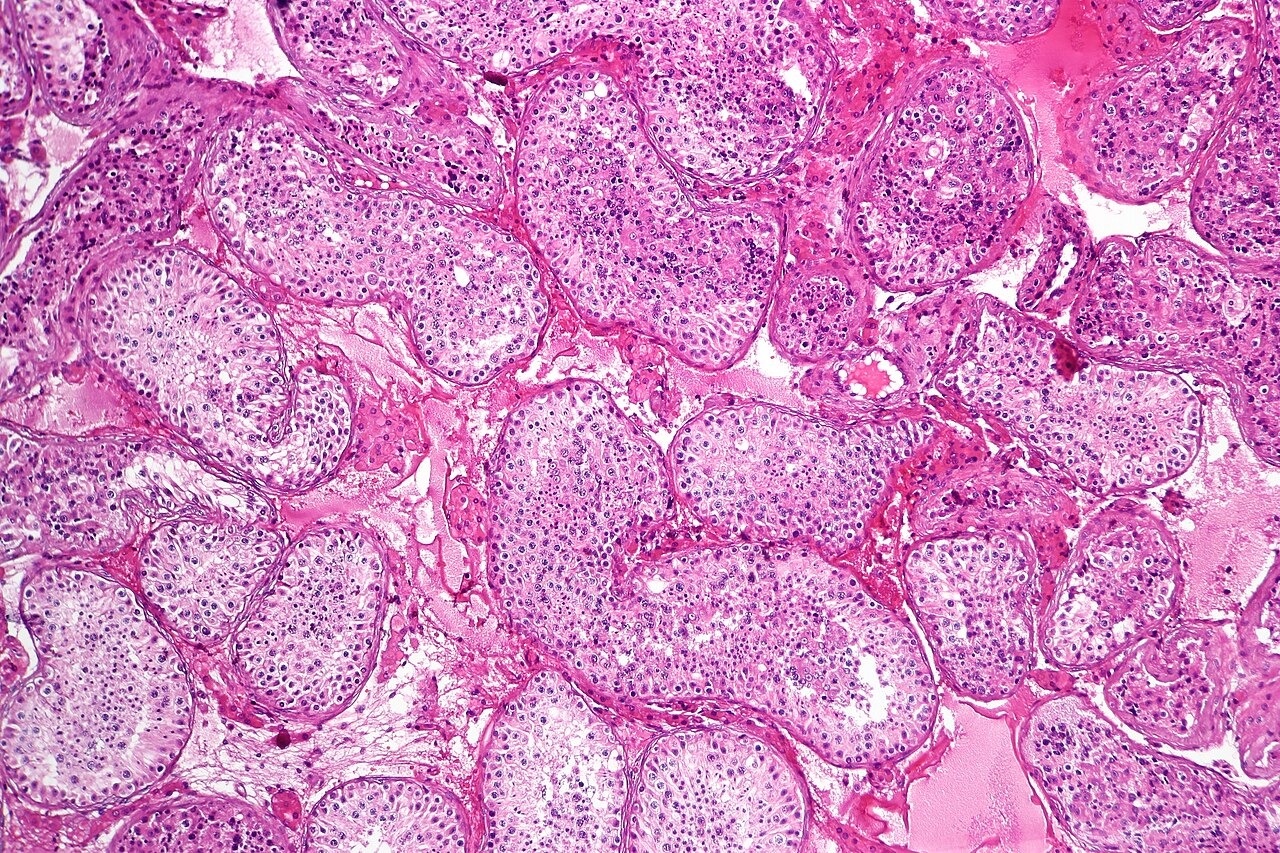
Spermatogonial stem cells, situated near the tubules' basement membrane, undergo mitotic division to initiate this process.[1]
Quick Facts
- Type
- Male gametogenesis
- Location
- Seminiferous tubules of testes; maturation in epididymis
- Temperature requirement
- 1°–8°C below body temperature (37°C)
- Key regulation
- DNA methylation and histone modification
Facts from the source article.
Key facts and history
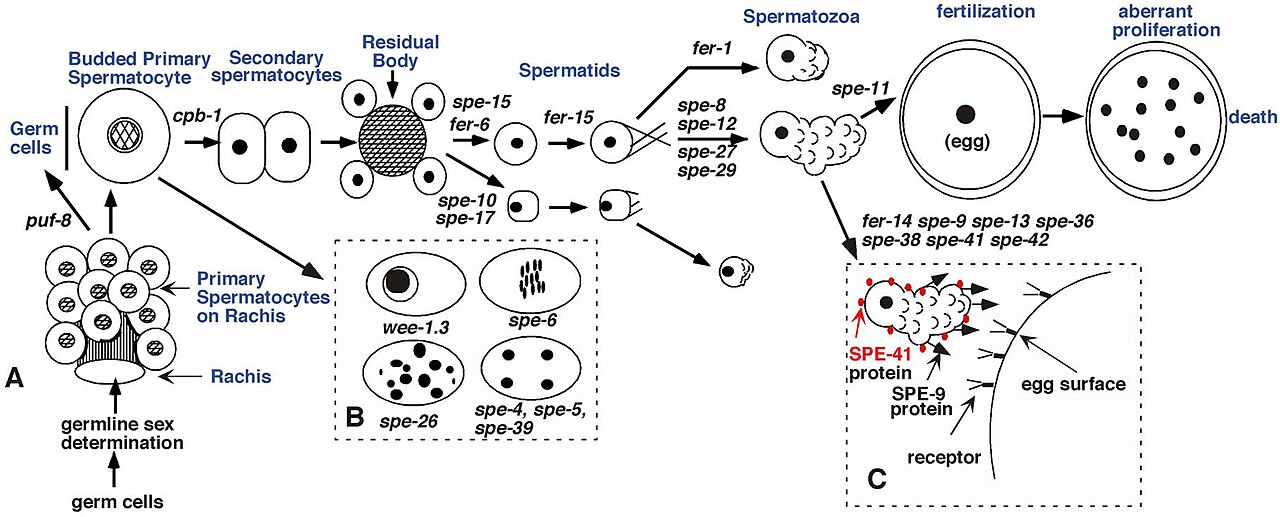
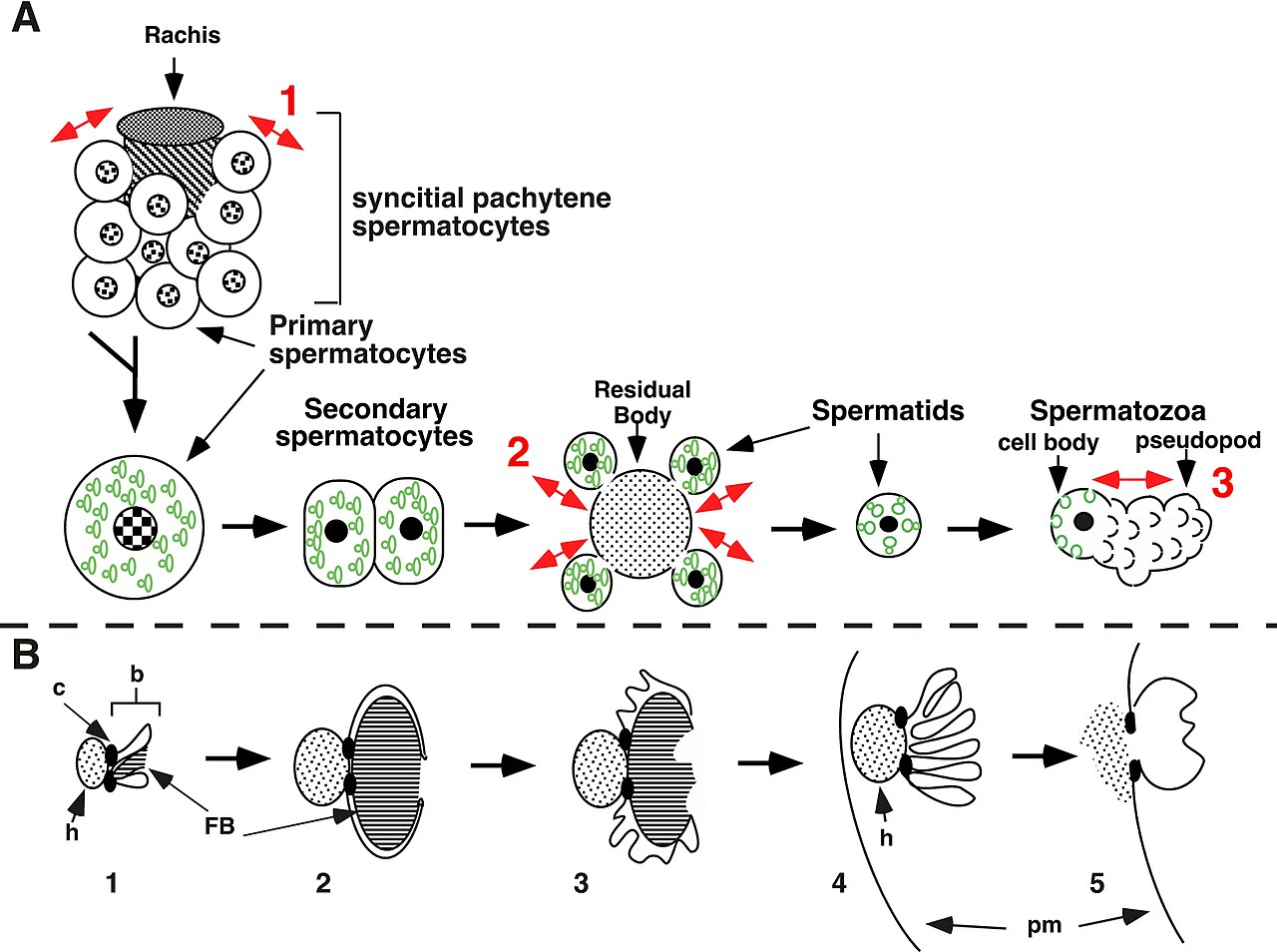
The spermatids are transformed into spermatozoa by the process of spermiogenesis.[2] Spermatogenesis starts at puberty and usually continues uninterrupted until death.[3] Sertoli cells support developing gametes by maintaining the environment necessary for development and maturation via the blood-testis barrier.[4] Two cell types arise from the mitotic division of spermatogonial stem cells: type A cells, which maintain the stem cell population, and type B cells, which develop into primary spermatocytes.[2]
Meiotic division of a primary spermatocyte yields two secondary spermatocytes; each secondary spermatocyte then divides to form two haploid spermatids.[2][5] Based on tritium-labelled biopsy studies, the total duration of spermatogenesis in humans is estimated to range from 72 to 74 days.[6] A daily production of 200 to 300 million spermatozoa occurs in the testes, yet only about 100 million of these are viable.[7] The hormonal regulation of spermatogenesis differs across species; for humans, the full mechanism remains incompletely understood.[8]
What the cited sources add
The source "Spermatogenesis" notes that six stages have been noted in man, and four 16-day cycles are needed to complete spermatogenesis.[9] The same source states that sperm cells will not mature at core body temperature in most mammals because spermatogenic DNA polymerase b and recombinase activities exhibit unique temperature optima.[9] The source "Spermatogenesis" also reports that genes carried on the X chromosome that inhibit spermatogenesis are inactivated in XY somatic cells.[9]
Gallery
References
- Wikipedia, "Spermatogenesis" (CC BY-SA 4.0), which cites: de Kretser, "Spermatogenesis", Human Reproduction, 1998-04-01, p. 1–8 (original not read by us) en.wikipedia.org
- Wikipedia, "Spermatogenesis" (CC BY-SA 4.0), which cites: "Localization of epithelial sodium channel (ENaC) and CFTR in the germinal epithelium of the testis, Sertoli cells, and spermatozoa.", Journal of Molecular Histology, 2018, p. 195–208; "The Spermatozoön, in Gray's Anatomy" (we also read that source) en.wikipedia.org
- Wikipedia, "Spermatogenesis" (CC BY-SA 4.0), which cites: Song, "Immunohistochemical Analysis of Histone H3 Modifications in Germ Cells during Mouse Spermatogenesis", Acta Histochemica et Cytochemica, 2011, p. 183–90 (original not read by us) en.wikipedia.org
- Wikipedia, "Spermatogenesis" (CC BY-SA 4.0), which cites: Hadley, "Endocrinology", Prentice Hall, 2007, p. 369 (original not read by us) en.wikipedia.org
- "The Spermatozoön, in Gray's Anatomy". facts only, no text reused. theodora.com
- Wikipedia, "Spermatogenesis" (CC BY-SA 4.0), which cites: "Kinetics of the germinal epithelium in man", Recent Prog Horm Res, 1964, p. 545–571; "The cycle of the seminiferous epithelium in humans: a need to revisit?", J Androl, 2008, p. 469–487; "Elevated germline mutation rate in teenage fathers", Proc R Soc B, 2015 (original not read by us) en.wikipedia.org
- Wikipedia, "Spermatogenesis" (CC BY-SA 4.0), which cites: "Shaw's Textbook of Gynaecology", Elsevier (A Divisionof Reed Elsevier India Pvt. Limited), 2011, p. 201; "Further quantification of human spermatogenesis: germ cell loss during postprophase of meiosis and its relationship to daily sperm production", Biol. Reprod., 1983, p. 207–15 (original not read by us) en.wikipedia.org
- Wikipedia, "Spermatogenesis" (CC BY-SA 4.0), which cites: "The Encyclopaedia of Sports Medicine: An IOC Medical Commission Publication, The Endocrine System in Sports and Exercise", John Wiley & Sons, 15 April 2008, p. 286–; "The Encyclopaedia of Sports Medicine: An IOC Medical Commission Publication, The Endocrine System in Sports and Exercise", John Wiley & Sons, 15 April 2008, p. 286–; "Effects of drugs on the male and female reproductive systems", Ann. Clin. Lab. Sci., 1985, p. 451–8 (we also read that source) en.wikipedia.org
- "Spermatogenesis", Spermatogenesis. facts only, no text reused. uwyo.edu
Each numbered sentence above was checked against the source it cites before publication. Sentences citing Wikipedia adapt text from the English Wikipedia article Spermatogenesis (contributors), used under CC BY-SA 4.0; this entry is available under the same licence. Other sources were used for facts only; no text or images are copied from them.
More in Reproduction & Development
Spotted an error? Know more?
Reader corrections go straight into our review queue. Suggest an edit · How this site is sourced