Uterus
Organ for embryonic and fetal development in female mammals.

DeuxPlusQuatre · CC0
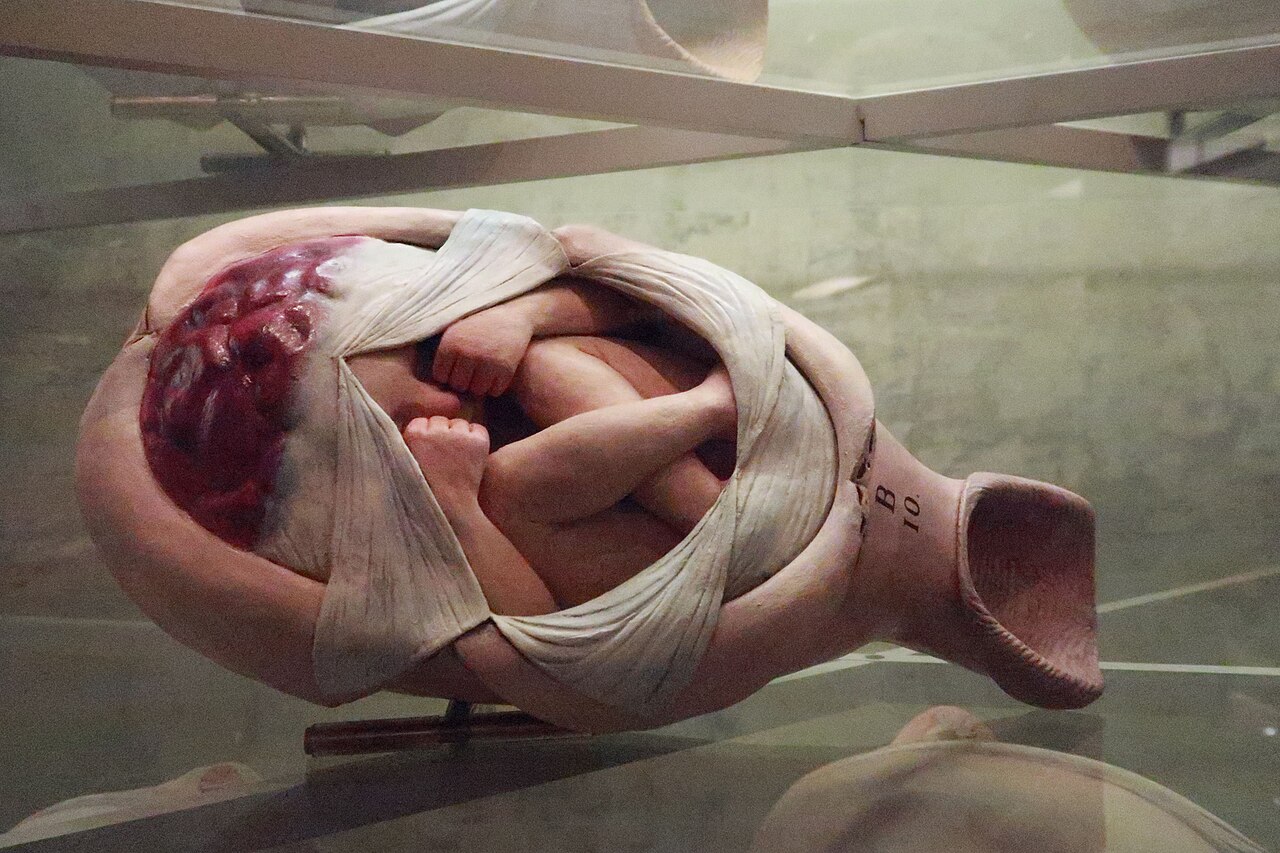
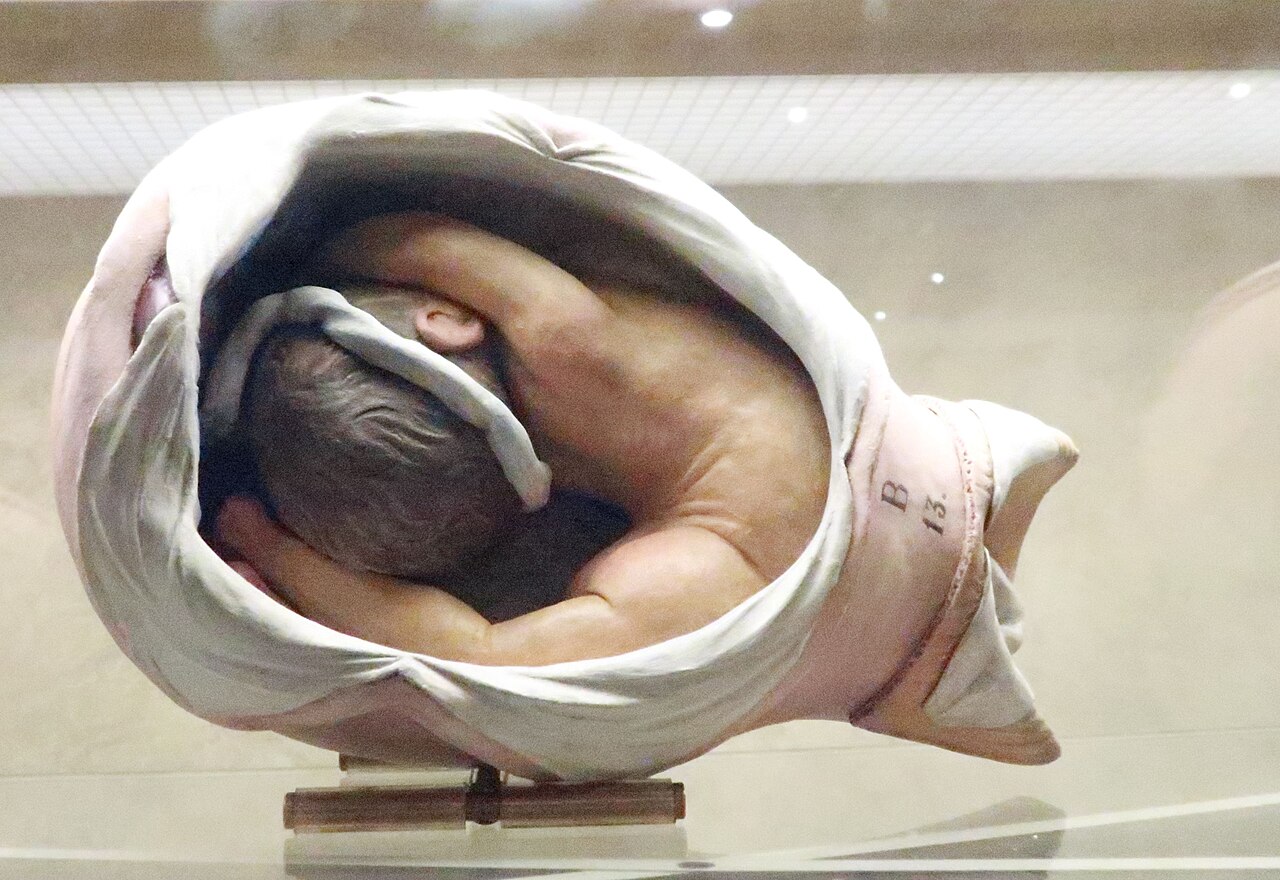
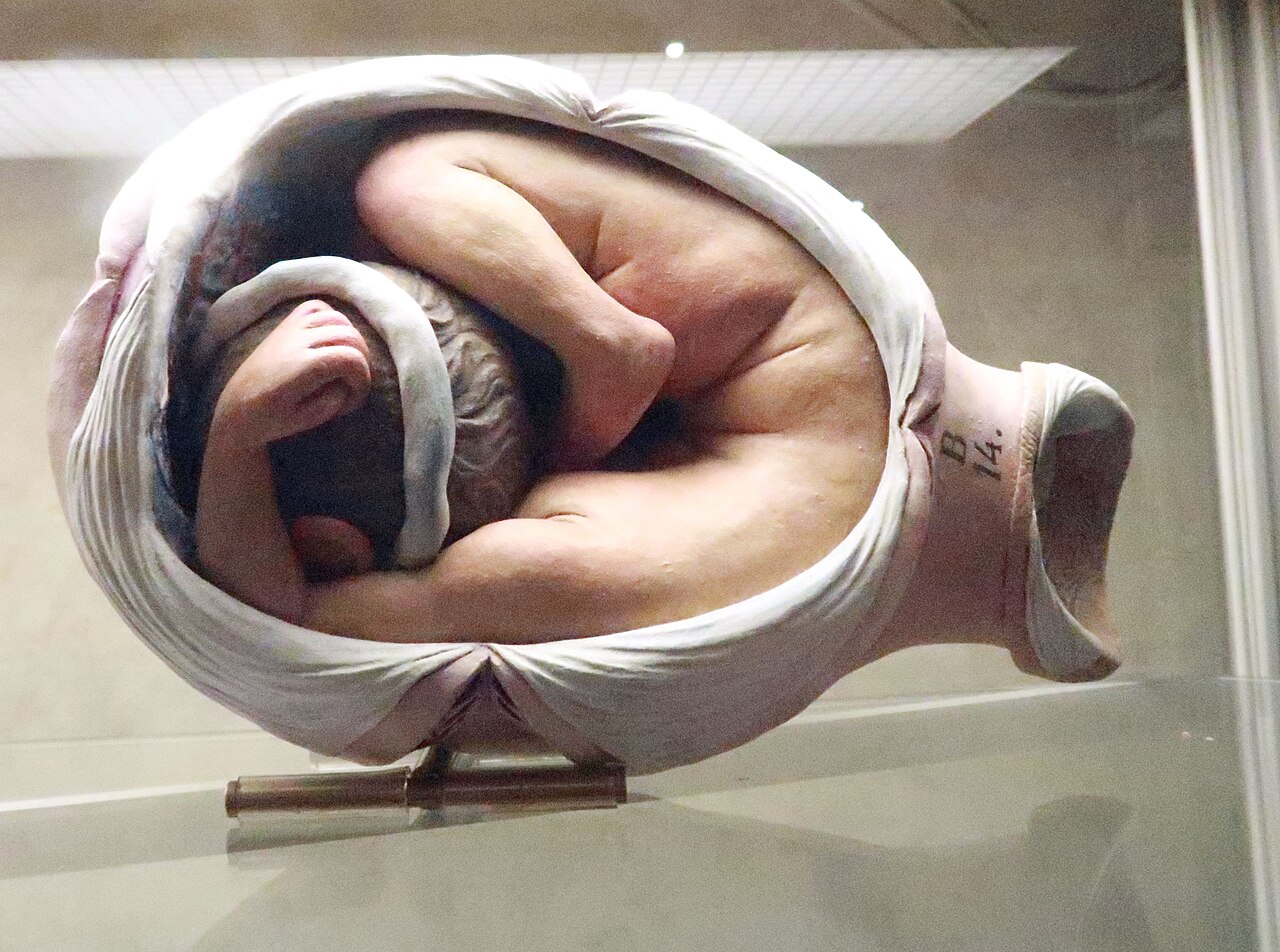
The uterus is a hormone-responsive sex organ that houses developing embryos and fetuses in most female mammals.[1] In humans, it is a pear-shaped organ located in the pelvic region behind the bladder and in front of the sigmoid colon.[2] The human uterus typically has a mass of roughly 60 grams and a length of about 7.6 cm.[2]
Quick Facts
- Greek
- ὑστέρα (hystéra)
- Precursor
- Paramesonephric ducts
- System
- Reproductive system
- Artery
- Ovarian artery and uterine artery
- Vein
- Uterine veins
Facts from the source article.
Key facts and history
The human uterus has four anatomical regions: the fundus, body, cervix, and cervical canal.[3] The vaginal canal receives the protruding cervix.[4] The uterine wall is composed of three distinct strata: the innermost endometrium, the middle myometrium, and the outermost perimetrium.[5] Smooth muscle constitutes the majority of the myometrium.[6]
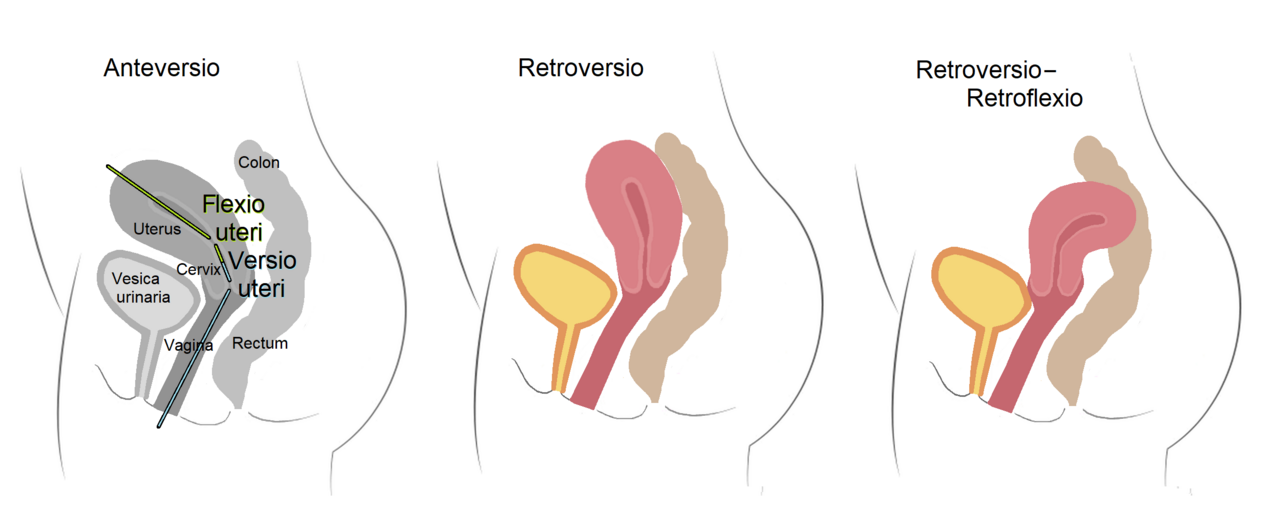
Visceral peritoneum forms the serous perimetrium, which coats the uterus's exterior.[7] The uterus is typically angled forward (anteversion) and bent forward (anteflexion), positioning it against the urinary bladder in most women.[8] Among women, 50% have an anteverted uterus, 25% have a retroverted uterus, and the remaining 25% have a midposed uterus.[8]
What the cited sources add
The OpenStax anatomy resource notes that the uterus is the muscular organ that nourishes and supports the growing embryo.[9] The same source states that the cervix is the narrow inferior portion of the uterus that projects into the vagina.[9] According to the GLOWM surgical review, agenesis of the uterus and vagina is termed Mayer-Rokitansky-Küster-Hauser syndrome.[10] The GLOWM source explains that a defect in mesoderm organization can cause abnormalities in the kidney, uterus, and vagina.[10]
A Popular Science article reports that nine Swedish women received transplanted uteruses from a University of Gothenburg team.[11] The same article notes that the transplant is designed to be temporary, with the uterus removed after one or two children.[11] The BBC News account states that a 36-year-old woman born without a uterus received a donated womb from a friend in her 60s.[12]
Gallery

References
- Wikipedia, "Uterus" (CC BY-SA 4.0), which cites: Linzey, "Vertebrate Biology: Systematics, Taxonomy, Natural History, and Conservation", JHU Press, 2020-08-04 (original not read by us) en.wikipedia.org
- Wikipedia, "Uterus" (CC BY-SA 4.0), which cites: Manual of Obstetrics. (3rd ed.). Elsevier 2011. pp. 1–16. .; Donita, "Health & physical assessment in nursing", Pearson, 2015, p. 645 (original not read by us) en.wikipedia.org
- Wikipedia, "Uterus" (CC BY-SA 4.0), which cites: "27.2 Anatomy and Physiology of the Female Reproductive System - Anatomy and Physiology OpenStax", openstax.org, 25 April 2013 (we also read that source) en.wikipedia.org
- Wikipedia, "Uterus" (CC BY-SA 4.0), which cites: Gray's Anatomy for Students, 2nd edition (original not read by us) en.wikipedia.org
- Wikipedia, "Uterus" (CC BY-SA 4.0), which cites: Tortora, "Principles of anatomy & physiology.", Wiley, 2011, p. 1105 (original not read by us) en.wikipedia.org
- Wikipedia, "Uterus" (CC BY-SA 4.0), which cites: "NCI Dictionary of Cancer Terms", National Cancer Institute (original not read by us) en.wikipedia.org
- Wikipedia, "Uterus" (CC BY-SA 4.0), which cites: Ross, "Histology, a text and atlas", p. 848 (original not read by us) en.wikipedia.org
- Wikipedia, "Uterus" (CC BY-SA 4.0), which cites: Snell, Clinical Anatomy by regions, 8th edition; Manual of Obstetrics. (3rd ed.). Elsevier 2011. pp. 1–16. . (original not read by us) en.wikipedia.org
- "27.2 Anatomy and Physiology of the Female Reproductive System - Anatomy and Physiology OpenStax", openstax.org, 25 April 2013. facts only, no text reused. openstax.org
- "Surgical Correction of Uterovaginal Anomalies GLOWM", www.glowm.com. facts only, no text reused. glowm.com
- Ossola, Alexandra, "Everything You Need To Know About Uterus Transplants", Popular Science, 18 February 2014. facts only, no text reused. popsci.com
- "BBC News", 4 October 2014. facts only, no text reused. bbc.co.uk
Each numbered sentence above was checked against the source it cites before publication. Sentences citing Wikipedia adapt text from the English Wikipedia article Uterus (contributors), used under CC BY-SA 4.0; this entry is available under the same licence. Other sources were used for facts only; no text or images are copied from them.
More in Reproduction & Development
Spotted an error? Know more?
Reader corrections go straight into our review queue. Suggest an edit · How this site is sourced