Vagina
Elastic muscular canal for copulation, birth, and menstruation.

I, Michael E. Arth, took this photo of Andy Warhol's 1975 drawing to me in the d · CC0
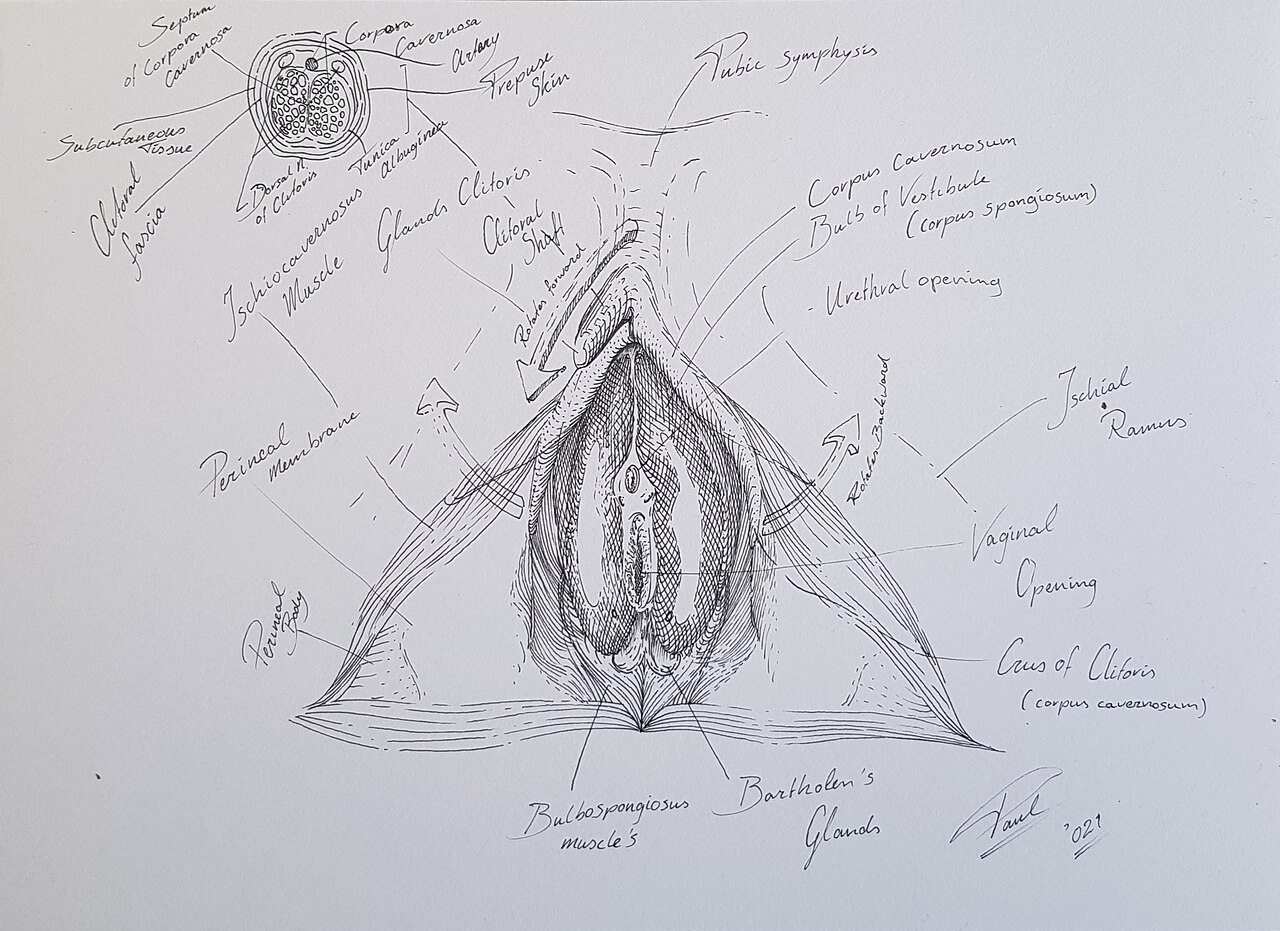
The vagina is an elastic, muscular canal that extends from the vulva to the cervix and serves as the organ for copulation and childbirth.[1][2] The Latin term vāgīna, which translates to "sheath" or "scabbard", is the origin of the word "vagina".[3]
Quick Facts
- Precursor
- Urogenital sinus and paramesonephric ducts
- Artery
- Superior part to uterine artery, middle and inferior parts to vaginal artery
- Vein
- Uterovaginal venous plexus, vaginal vein
- Nerve
- Sympathetic: lumbar splanchnic plexus, Parasympathetic: pelvic splanchnic plexus
- Lymph
- Upper part to internal iliac lymph nodes, lower part to superficial inguinal lymph nodes
Facts from the source article.
Key facts and history
The front vaginal wall is approximately 7.5 cm long, while the back wall is about 9 cm long.[4] The vaginal opening is at the posterior end of the vulval vestibule, behind the urethral opening.[5] The vaginal wall consists of a mucosa, a smooth muscle layer, and an outer connective tissue layer called the adventitia.[6] In its unaroused state, the vagina is not open but rather flattened, with its front and rear walls touching, and this configuration gives it an H-shaped appearance when viewed in cross-section.[7]
Both the length and the width of the vagina increase when a person becomes sexually aroused.[4] Surrounding or partially covering the vaginal opening is a slim membrane of mucosal tissue known as the hymen.[8] An inspection of the hymen cannot provide a definitive determination of whether someone is a virgin.[9] The cellular composition of the vaginal epithelium includes basal, parabasal, intermediate, and superficial squamous flat cells.[10]
For a period of two to four weeks after birth, a newborn's vagina is coated with a thick stratified squamous epithelium, a condition resulting from the influence of maternal estrogen.[11]
What the cited sources add
The National Cancer Institute states that carcinomas of the vagina are uncommon, comprising about 2% of cancers in the female genital system.[12] Squamous cell carcinoma accounts for approximately 80% to 90% of vaginal cancer cases.[12] The National Cancer Institute reports that estimated new cases of vaginal and other female genital cancer in the United States in 2025 are 8,070.[12] Risk factors for vaginal cancer include human papillomavirus (HPV) infection.[12]
Women who have had a hysterectomy are at risk of vaginal carcinomas.[12] Possible signs of vaginal cancer include metrorrhagia.[12] The National Cancer Institute notes that treatment options for stage I vaginal cancer have not been directly compared in randomized trials.[12]
Gallery


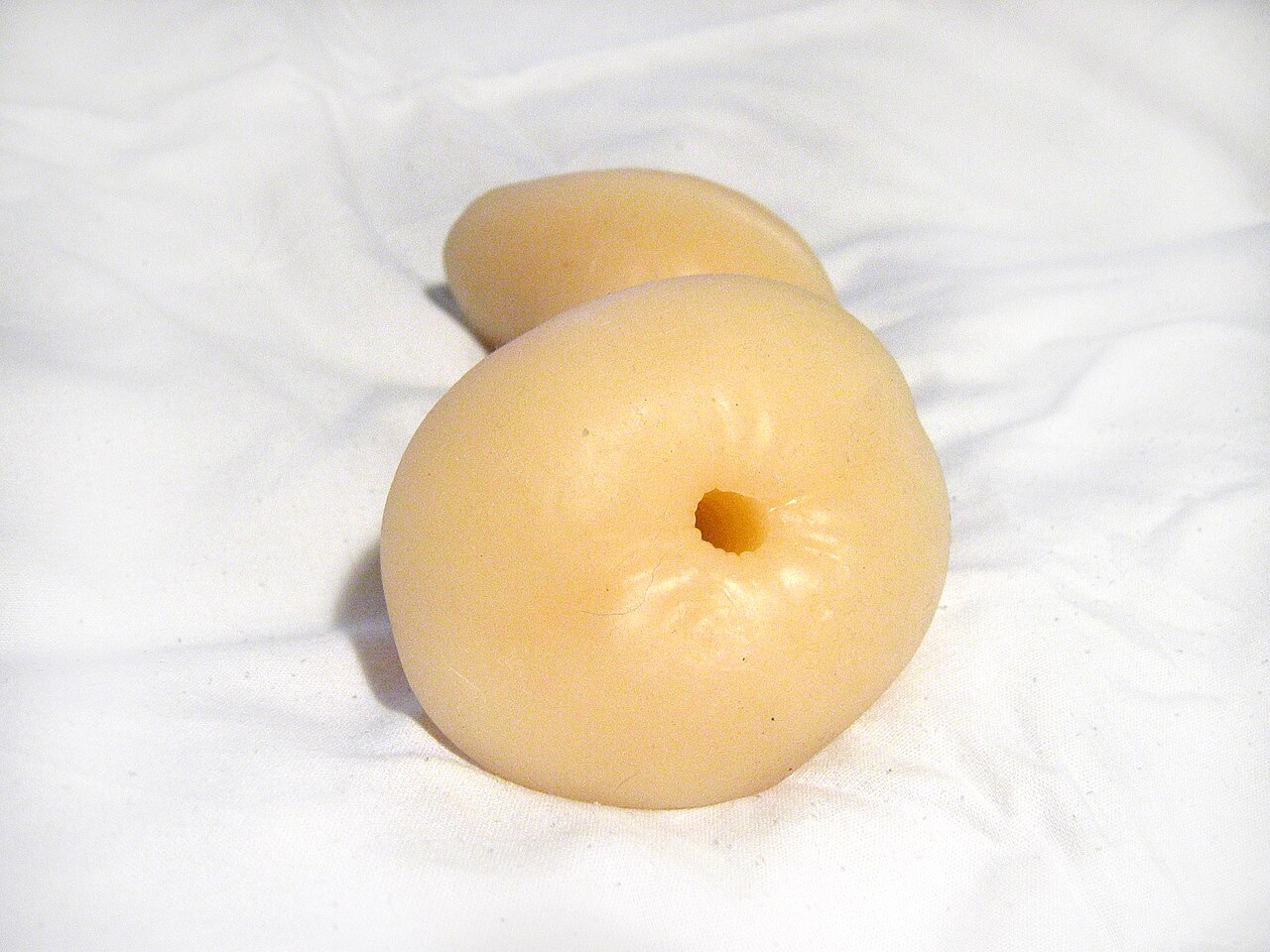
References
- Wikipedia, "Vagina" (CC BY-SA 4.0), which cites: "Oxford Dictionary of English", Oxford University Press, 2010, p. 1962 (original not read by us) en.wikipedia.org
- Wikipedia, "Vagina" (CC BY-SA 4.0), which cites: "Clinical Anatomy: An Illustrated Review with Questions and Explanations", Lippincott Williams & Wilkins, 2004, p. 98; "DC Dutta's Textbook of Gynecology", JP Medical Ltd, 2014, p. 2–7 (we also read that source) en.wikipedia.org
- Wikipedia, "Vagina" (CC BY-SA 4.0), which cites: "Oxford Dictionary of English", Oxford University Press, 2010, p. 1962; "Health in the New Millennium: The Smart Electronic Edition (S.E.E.)", Macmillan, 1998, p. 297; "American Medical Association Concise Medical Encyclopedia", Random House Reference, 2006, p. 96; "Forensic Gynaecology", Cambridge University Press, 2014, p. 65; "Health Humanities Reader", Rutgers University Press, 2014, p. 231–232 (original not read by us) en.wikipedia.org
- Wikipedia, "Vagina" (CC BY-SA 4.0), which cites: "DC Dutta's Textbook of Gynecology", JP Medical Ltd, 2014, p. 2–7; "Essential Anatomy and Physiology in Maternity Care", Elsevier Health Sciences, 2005, p. 157–158 (original not read by us) en.wikipedia.org
- Wikipedia, "Vagina" (CC BY-SA 4.0), which cites: Ricci, "Maternity and Pediatric Nursing", Wolters Kluwer Health/Lippincott Williams & Wilkins, 2009, p. 77; Zink, "Dictionary of Obstetrics and Gynecology", De Gruyter, 2011, p. 174 (original not read by us) en.wikipedia.org
- Wikipedia, "Vagina" (CC BY-SA 4.0), which cites: "Pathology of the Vulva and Vagina", Springer Science+Business Media, 2012, p. 6–7; "Oxford Desk Reference: Obstetrics and Gynaecology", Oxford University Press, 2011, p. 471 (original not read by us) en.wikipedia.org
- Wikipedia, "Vagina" (CC BY-SA 4.0), which cites: "DC Dutta's Textbook of Gynecology", JP Medical Ltd, 2014, p. 2–7; "Obstetrics and Gynecology", Lippincott Williams & Wilkins, 2010, p. 37; "Gray's anatomy: the anatomical basis of clinical practice", Churchill Livingstone, 2008, p. 1281–4; "Clinical Anatomy: An Illustrated Review with Questions and Explanations", Lippincott Williams & Wilkins, 2004, p. 98; "DC Dutta's Textbook of Gynecology", JP Medical Ltd, 2014, p. 2–7; "DC Dutta's Textbook of Gynecology", JP Medical Ltd, 2014, p. 2–7 (we also read that source) en.wikipedia.org
- Wikipedia, "Vagina" (CC BY-SA 4.0), which cites: "DC Dutta's Textbook of Gynecology", JP Medical Ltd, 2014, p. 2–7 (original not read by us) en.wikipedia.org
- Wikipedia, "Vagina" (CC BY-SA 4.0), which cites: "Simpson's Forensic Medicine", Arnold, 1997, p. 114; "Clinical protocols in pediatric and adolescent gynecology", Parthenon, 2004, p. 131 (original not read by us) en.wikipedia.org
- Wikipedia, "Vagina" (CC BY-SA 4.0), which cites: "Structure and function of intercellular junctions in human cervical and vaginal mucosal epithelia.", Biology of Reproduction, July 2011, p. 97–104; "Modern Colposcopy Textbook and Atlas", Lippincott Williams & Wilkins, 2011; "Blaustein's Pathology of the Female Genital Tract", Springer, 2002, p. 154; "DC Dutta's Textbook of Gynecology", JP Medical Ltd, 2014, p. 2–7; "Obstetrics and Gynecology", Lippincott Williams & Wilkins, 2010, p. 241–245; "Robboy's Pathology of the Female Reproductive Tract", Elsevier Health Sciences, 2009, p. 111; "Robboy' en.wikipedia.org
- Wikipedia, "Vagina" (CC BY-SA 4.0), which cites: "Robboy's Pathology of the Female Reproductive Tract", Elsevier Health Sciences, 2009, p. 111; "Guyton and Hall textbook of medical physiology", Saunders/Elsevier, 2011, p. 993; "Forensic Gynaecology", Cambridge University Press, 2014, p. 65; "Robboy's Pathology of the Female Reproductive Tract", Elsevier Health Sciences, 2009, p. 111; "DC Dutta's Textbook of Gynecology", JP Medical Ltd, 2014, p. 2–7; "Obstetrics and Gynecology", Lippincott Williams & Wilkins, 2010, p. 241–245; "Pharmaceutical Manufacturing Handbook: Production and Processes", J en.wikipedia.org
- "Stage I Vaginal Cancer", National Cancer Institute, February 9, 2017. facts only, no text reused. cancer.gov
Each numbered sentence above was checked against the source it cites before publication. Sentences citing Wikipedia adapt text from the English Wikipedia article Vagina (contributors), used under CC BY-SA 4.0; this entry is available under the same licence. Other sources were used for facts only; no text or images are copied from them.
More in Reproduction & Development
Spotted an error? Know more?
Reader corrections go straight into our review queue. Suggest an edit · How this site is sourced