Yolk
Nutrient-bearing part of an egg, essential for embryo development.
Unlike protoplasm, which is living cellular material, yolk consists of deutoplasm, a largely inert substance.[1] The process of oogenesis supplies both the nutrients and the regulatory structures that accompany them.[1] Some of the stored material arrives from the mother's body in its original form, some is modified by non-germ tissues, and some is further processed within the oocyte itself.[1]
Quick Facts
- Primary function
- Supply food for embryo development
- Major fatty acids
- Oleic acid 47%
- palmitic acid 23%
- linoleic acid 16%
- Color source
- Lutein and zeaxanthin (xanthophylls)
- Lecithin content
- About 9% by weight
Facts from the source article.
Key facts and history
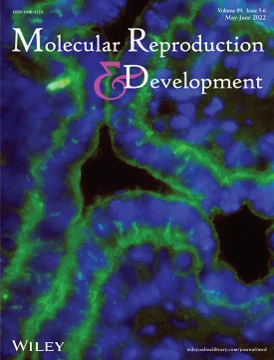
The yolk mass, together with the ovum proper, is enclosed by the vitelline membrane, whose structure differs from a cell membrane.[2] Yolk is part of the egg's cytoplasm, occupying over 90% of it by fertilization in the form of yolk granules.[2] Surrounding each yolk granule are maternal mRNA and glycogen, while the granules themselves consist of lipids, proteins, and enzymes.[3] For the developing embryo, phosvitins play a crucial role in binding calcium, iron, and other positively charged ions.[4]
With a phosphate content of 10%, phosvitins rank among the most heavily phosphorylated proteins known, and these phosphate groups create clusters that efficiently bind metals.[4] Lipovitellins function in storing both lipids and metals; they carry roughly 16% noncovalently attached lipid by weight, the majority of which is phospholipid.[4] The terms "dwarf egg," "wind egg," and the older expression "cock egg" all refer to eggs that lack a yolk.[5][6]
What the cited sources add
The poultryhelp.com account states that double-yolk eggs are a "mistake" in the chicken's reproductive system that sometimes happens when a hen just starts laying.[6] The same source notes that a double-yolk guinea egg weighed just over 2 ounces.[6] According to poultryhelp.com, no-yolk eggs can occur if a bit of reproductive tissue breaks away and stimulates the egg-producing glands.[6] The poultryhelp.com account reports that the greatest number of yolks found in one egg is nine.[6]
The Guinness Book of Records lists the world's largest chicken egg as having five yolks, according to poultryhelp.com.[6] According to the Wikipedia entry, every bony fish, along with certain sharks and rays, possesses a yolk sac during at least one developmental phase.[7]
References
- Wikipedia, "Yolk" (CC BY-SA 4.0), which cites: Barnes, Richard Stephen Kent (2001). The Invertebrates: A Synthesis. Wiley-Blackwell, p. 347. . (original not read by us) en.wikipedia.org
- Wikipedia, "Yolk" (CC BY-SA 4.0), which cites: Bellairs, Ruth; Osmond, Mark (2005). Atlas of Chick Development (2 ed.). Academic Press. pp. 1–4. link.; Bellairs, R., Harkness, M. & Harkness, R. D. (1963). The vitelline membrane of the hen's egg: a chemical and electron microscopical study. Journal of Ultrastruc (original not read by us) en.wikipedia.org
- Wikipedia, "Yolk" (CC BY-SA 4.0), which cites: Patten, B. M. (1951). Early Embryology of the Chick, 4th edition. McGraw-Hill, New York, p. 17.; Ramos, "Open questions on the functional biology of the yolk granules during embryo development", Molecular Reproduction and Development, 2022, p. 86–94 (original not read by us) en.wikipedia.org
- Wikipedia, "Yolk" (CC BY-SA 4.0), which cites: "Identification of two forms of vitellogenin-derived phosvitin and elucidation of their fate and roles during oocyte maturation in the barfin flounder, Verasper moseri", Zool. Sci., 2006, p. 1021–9; "Oligophosphopeptides of varied structural complexity derived from the egg phosphoprotein, phosvitin", J. Protein Chem., 1996, p. 1–9 (original not read by us) en.wikipedia.org
- Wikipedia, "Yolk" (CC BY-SA 4.0), which cites: Rookledge, "Dwarf Eggs and the Timing of Ovulation in the Domestic Fowl", Nature, 1996-06-25, p. 1371; "Cock's egg" (original not read by us) en.wikipedia.org
- "Odd Eggs, Double Yolks, No Yolks, etc", poultryhelp.com, 2005-03-04. facts only, no text reused. poultryhelp.com
- Wikipedia, "Yolk" (CC BY-SA 4.0), which cites: "Viviparity in the Halfbeak Genera Dermogenys and Nomorhamphus (Teleostei: Hemiramphidae)", Journal of Morphology, 1997, p. 295–317; Peter Scott: Livebearing Fishes, p. 13. Tetra Press 1997.; Leonard J. V. Compagno (1984). Sharks of the World: An annotated and illustrated catalogue of shark species known to date. Food and Agriculture Organization of (original not read by us) en.wikipedia.org
Each numbered sentence above was checked against the source it cites before publication. Sentences citing Wikipedia adapt text from the English Wikipedia article Yolk (contributors), used under CC BY-SA 4.0; this entry is available under the same licence. Other sources were used for facts only; no text or images are copied from them.
More in Reproduction & Development
Spotted an error? Know more?
Reader corrections go straight into our review queue. Suggest an edit · How this site is sourced