
Antique radio
Collectible radio receivers valued for age and rarity.

An antique radio is a radio receiving set that is collectible because of its age and rarity. Early radio receivers were initially only capable of receiving continuous wave transmissions encoded with Morse code, but later speech-capable (wireless telephony) sets became common. The idea of radio as entertainment took off in 1920 with the opening of the first broadcast stations, and radio ownership steadily gained in popularity.
- First broadcast stations
- KDKA in Pittsburgh and WWJ in Detroit (1920)
- Rural electrification act
- 1936
- Patent expiration for superheterodyne
- Early 1930s
- Homemade sets dominant until
- Early 1930s
Lore & Background
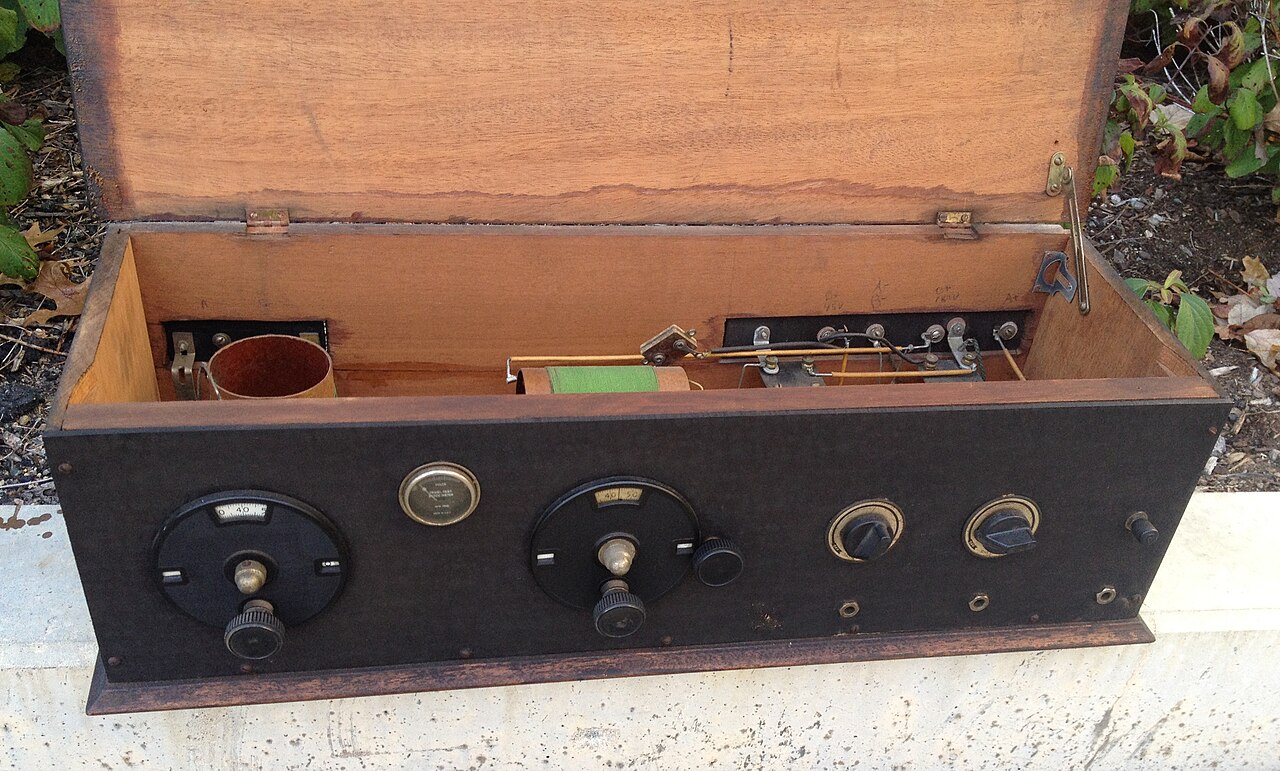
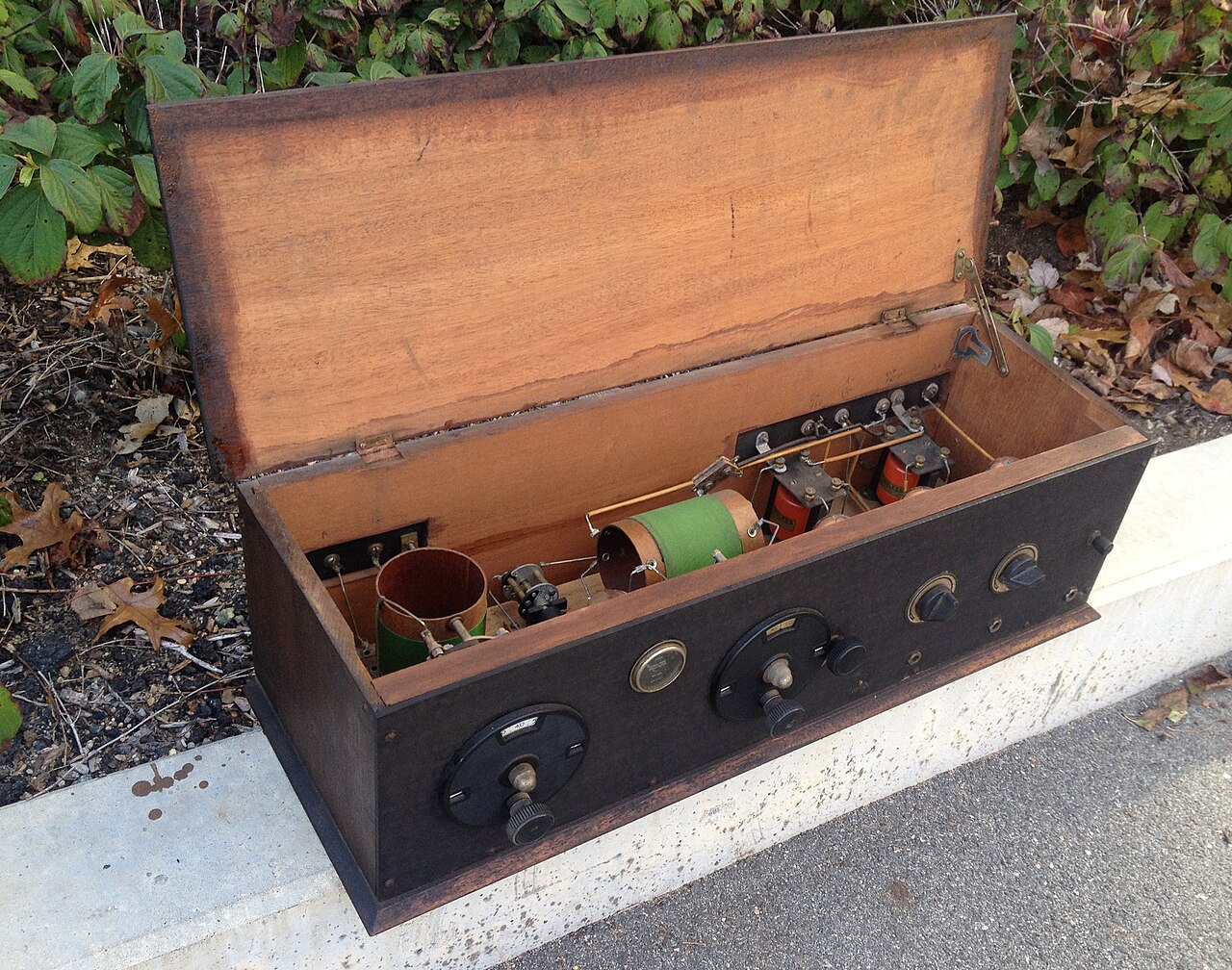
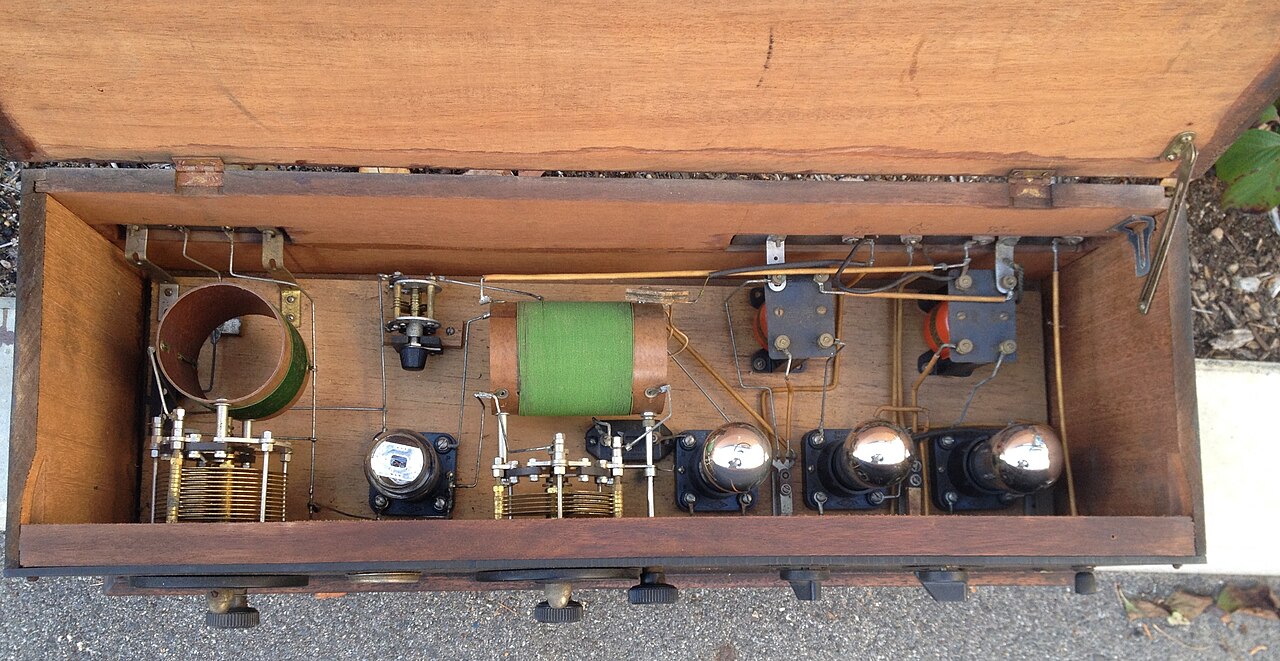
Early radio sets from before 1920 are rarities and are probably military artifacts. Sets made prior to approximately 1924 were usually constructed on wooden breadboards, in small cupboard style cabinets, or on open sheet metal chassis. Homemade sets remained a strong sector of radio production until the early 1930s; until then there were more homemade sets in use than commercial sets. Early sets used technologies such as crystal sets, tuned radio frequency (TRF) sets, reaction (regenerative) sets, super-regenerative receivers, and superheterodyne receivers.
Crystal sets used no battery, had no amplification, and could only operate high-impedance headphones, receiving only very strong local signals. Some users added carbon or mechanical turntable amplifiers, or even flame amplifiers, to drive a speaker. TRF sets were the most popular early class of radio, primarily because RCA held a monopoly on superheterodyne patents. TRF sets used several valves for RF amplification, detection, and audio amplification, and by the mid-1920s often powered a loudspeaker. Reaction sets used positive feedback for high gain with few tubes but radiated RF interference, causing hostility from neighbors.
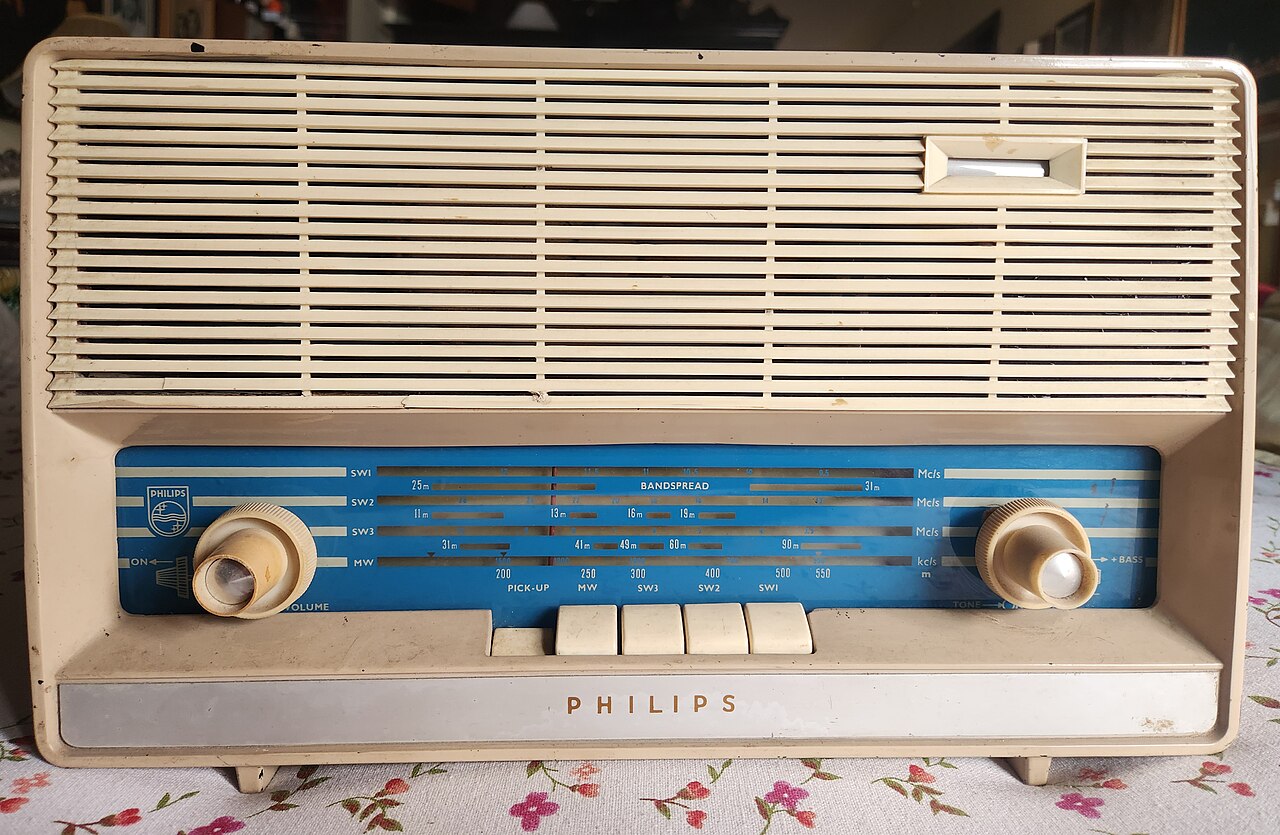
Superheterodyne receivers offered excellent sensitivity and selectivity, ease of multi-band operation, high stability, and well-controlled bandwidth. However, before about 1932 they carried high patent-licensing costs and required specialized test equipment for alignment. Once the patents expired in the early 1930s, a flood of low-cost superheterodyne receivers hit the market, and most post-1932 commercial radios were superhets. Farm radios were made to run on DC power before rural electrification, using batteries or vibrator systems. Foxhole radios were simple crystal sets built during World War 2 from salvaged parts, using a razor blade and pencil lead as a detector.
Reader's Guide
The significance of antique radios lies in their role as the foundation of broadcast entertainment and communication technology. The transition from Morse-only receivers to speech-capable sets marked the beginning of radio as a mass medium. Homemade sets, which outnumbered commercial sets until the early 1930s, demonstrate the widespread hobbyist engagement with early radio technology. The patent battles over the superheterodyne circuit shaped the industry, with RCA's monopoly driving the popularity of TRF sets until the early 1930s. Once superheterodyne patents expired, the TRF set quickly became obsolete due to the superhet's technical and manufacturing advantages. Farm radios and foxhole radios illustrate the adaptability of radio technology to resource-limited environments. The console radio became the centerpiece of household entertainment, often housed in beautifully made wood cabinets and sometimes coupled with a phonograph. Antique radios are collectible because of their age and rarity, preserving the history of early electronics and broadcast culture.
Did You Know?
- The first radio receivers used a coherer and sounding board and could only receive Morse code.
- Crystal sets could operate only high-impedance headphones and required no battery.
- RCA had exclusive rights to superheterodyne circuit patents and extracted high licensing fees.
- Foxhole radios used a double-edged safety-razor blade and pencil lead as a detector.
From Morse Keys to Living Voices: The Birth of Broadcast Radio
Before 1920, radio was essentially a tool for military and telegraphic communication. The earliest receivers relied on a coherer paired with a sounding board, capable only of picking up continuous-wave Morse code transmissions. While voice broadcasting eventually became possible, Morse telegraphy lingered as a practical mode well into the 1990s. The true cultural turning point arrived in 1920, when stations like KDKA in Pittsburgh and WWJ in Detroit began broadcasting specifically for public entertainment. In the years that followed, new stations sprang up across North American cities, and radio ownership climbed steadily. Sets predating 1920 are now exceedingly rare and are often military artifacts rather than consumer products. Throughout the early 1920s, most receivers were built on wooden breadboards, housed in small cupboard-style cabinets, or mounted on open sheet-metal chassis. Remarkably, homemade sets continued to outnumber commercial units until the early 1930s, meaning that for nearly a decade the average listener was tuning in through a device assembled in a garage or workshop rather than purchased from a store.
Crystal Sets: Radio for the Many
The crystal set stands as the most accessible entry point into the world of early radio. These rudimentary receivers required no battery and offered no electronic amplification, meaning they could only drive high-impedance headphones and could only pick up very strong signals from nearby stations. Their appeal lay in their remarkably low construction cost and zero operating expense, making them the radio of choice for listeners who could not afford more sophisticated equipment. A significant limitation was their poor station separation: when two or more high-power stations broadcast simultaneously, a listener often could not isolate one without the other bleeding through. Some enthusiasts attempted to overcome the headphone-only constraint by adding a carbon amplifier or a mechanical turntable amplifier to produce enough output for a speaker. A few even experimented with a flame amplifier. Despite these constraints, crystal sets represented a genuine democratization of wireless entertainment, bringing the voice of the broadcast station into homes that might otherwise never have heard one.
The TRF Era: Patents, Speakers, and the Ganged-Tuning Revolution
Tuned radio frequency sets dominated early commercial radio largely because of a single corporate decision. RCA held exclusive rights to the superheterodyne circuit patents and charged high licensing fees, which made it far more profitable for manufacturers to build TRF sets instead. These receivers employed several vacuum tubes to handle RF amplification, detection, and audio amplification in a straightforward series of tuned stages. Early models drove only headphones, but by the mid-1920s additional amplification stages powered loudspeakers, even at considerable expense. The sound from the common moving-iron speakers was often described as harsh, prompting the gradual adoption of the Kellogg-Rice dynamic moving-coil speaker by the late 1920s for its markedly superior reproduction. Operation of early TRF sets was far from simple: two or three tuning knobs plus tube filament rheostats all had to be adjusted correctly. The late-1920s introduction of ganged tuning, AC house-current operation, and the elimination of filament adjustments transformed radio from a skilled hobbyist's project into a household appliance a child could operate.
The Superheterodyne: From Patent Fortress to Ubiquitous Standard
During the 1920s, building a superheterodyne receiver was a privilege reserved for RCA and a small circle of prestige manufacturers. RCA's exclusive patent rights allowed it to extract substantial licensing fees from any competitor seeking to use the circuit, and the company aggressively pursued infringers in court. This patent moat propelled RCA to the forefront of the industry, as the superhet's superior efficiency made it the technically superior design. The situation changed dramatically when the patents expired in the early 1930s, unleashing a flood of low-cost superheterodyne receivers onto the market. By 1932, most commercial radios were built on this architecture. The superhet's advantages—excellent sensitivity and selectivity, straightforward multi-band design for shortwave reception, high stability, and a well-shaped RF passband that avoided the uncontrolled tone variations of TRF sets—ensured its dominance. Before 1932, however, the high licensing costs and the need for specialized test equipment to align conversion-stage filters kept the technology out of reach for most builders. The superheterodyne principle remains in widespread use in modern receivers, now implemented with transistors and integrated circuits rather than vacuum tubes.
Gallery
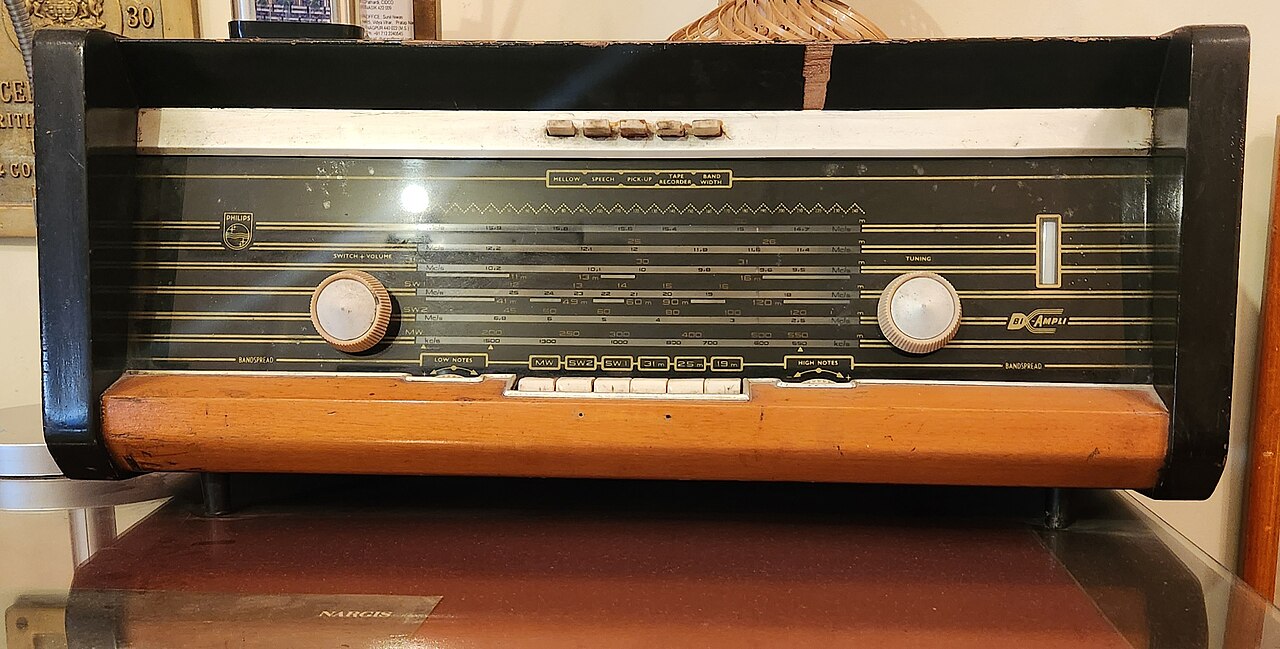
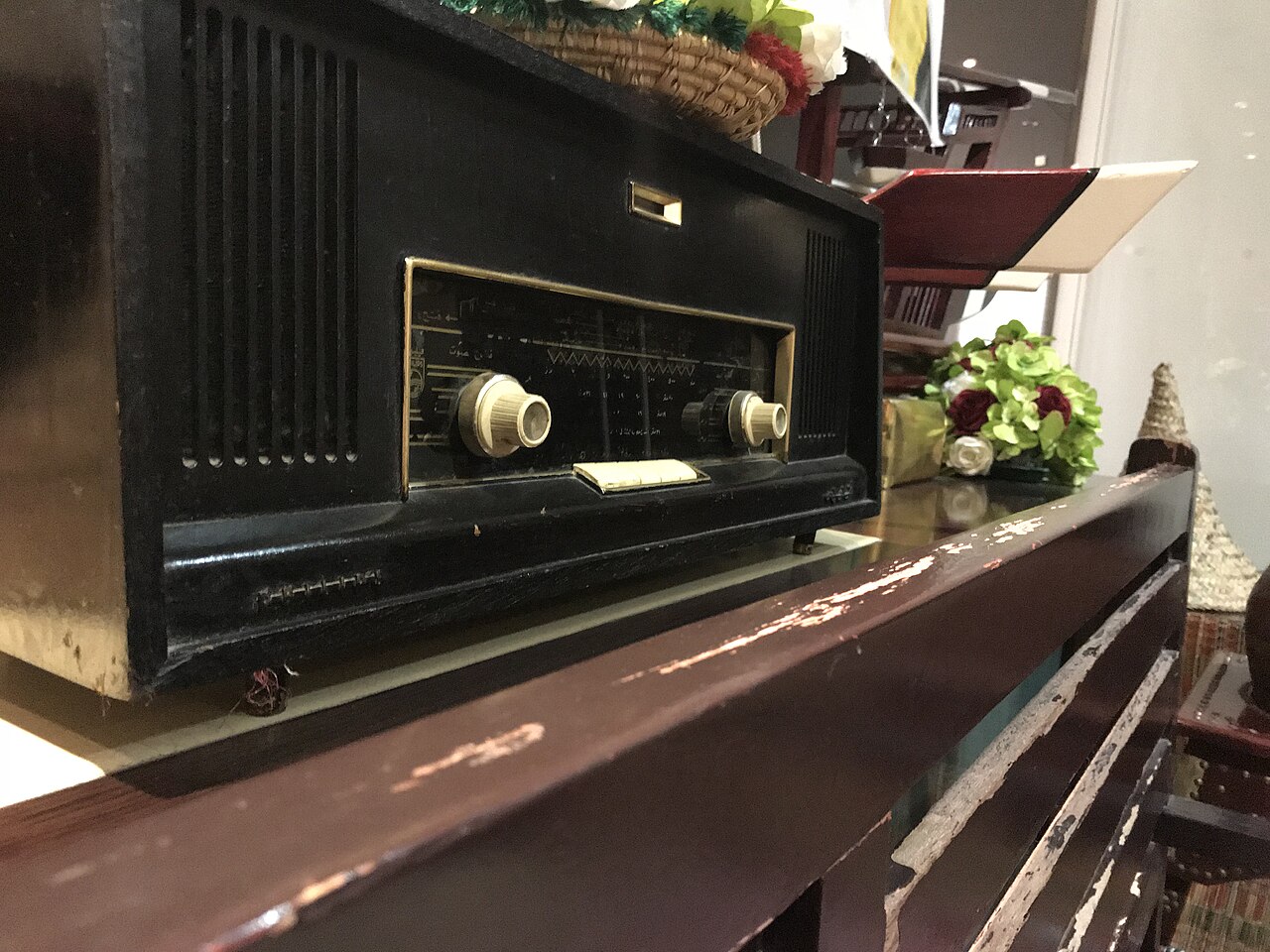
More in Radio Electronics 1-24
Spotted an error? Know more?
Reader corrections go straight into our review queue. Suggest an edit · How this site is sourced