Semnan province
Iranian province along the Alborz range, bordering the Kavir desert.

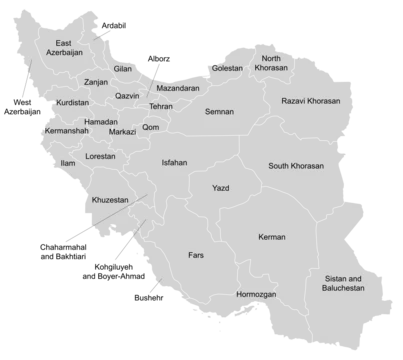
Semnan province is one of the 31 provinces of Iran, situated in the northern part of the country, with the city of Semnan serving as its capital. Covering an area of 96,816 square kilometers, the province stretches along the Alborz mountain range, while its southern reaches border the Kavir desert. In June 2014, it became part of Region 1, a grouping of provinces established for coordination and development. Historically, during the Median and Achaemenid eras, Semnan was among the largest provinces of those empires, corresponding to the ancient region of Parthia. In the Islamic period, it was part of the historical region known as Gomess or Komesh. The province is divided geographically into a mountainous area, which offers recreational opportunities and mineral resources, and plains at the mountain foot that contain ancient cities, including a former capital of the Parthian Empire. The population was recorded as 702,360 in the 2016 census, with nearly 80 percent residing in urban areas. Ethnically, the majority are Persian, but the province is home to a notable diversity of groups, including Kurds, Azeris, Lors, Arabs, Baloch, and Gilaks, earning it the nickname "Island of the Tribes." Linguistically, the Semnani languages, a group of Northwestern Iranian tongues with about 68,700 native speakers in 2019, are spoken here. These include Semnani, Biyabunaki, Sangsari, Sorkhei, Aftari, and Lasgerdi, some of which may be dialects. Semnani proper, like other Caspian languages, shows resemblance to Old Iranian Median but was later influenced by Parthian. The province neighbors Golestan, Mazandaran, North Khorasan, Tehran, Qom, Isfahan, South Khorasan, and Razavi Khorasan provinces. Within its borders lies the Abr forest, one of Iran’s oldest forests and a remnant from the third geological age, which was the subject of controversy over a road construction project.
- capital
- Semnan
- languages
- Semnani languages (Northwestern Iranian, including Semnani, Biyabunaki, Sangsari, Sorkhei, Aftari, Lasgerdi)
Lore & Background
Semnan province lies in northern Iran, stretching along the southern slopes of the Alborz mountain range and bordering the Kavir desert to the south. Its terrain is divided into two distinct zones: a mountainous northern region, rich in minerals and suitable for recreation, and southern plains at the mountain base that contain several ancient cities, including one of the capitals of the Parthian Empire. The province spans 96,816 square kilometers, accounting for 5.6% of Iran’s total area, with elevation decreasing from north to south until it meets the desert. Its defining characteristics include the Abr forest, one of Iran’s oldest forests and a remnant from the third geological age, located near the border with Golestan province. The province is home to a diverse population; while most residents are Persian, it hosts minority groups of Kurdish, Azeri, Lor, Arab, Baloch, and Gilak origins, earning it the nickname “Island of the Tribes.” Six Semnani languages—Semnani, Biyabunaki, Sangsari, Sorkhei, Aftari, and Lasgerdi—are spoken here, with some considered dialects. These Northwestern Iranian languages, with about 68,700 native speakers in 2019, descend from extinct Parthian or Median, and Semnani proper is classified among the Caspian languages. Historically, Semnan was a major province in Median and Achaemenid times, corresponding to ancient Parthia, and later formed part of the Islamic-era region of Gomess or Komesh.
Reader's Guide
Semnan province’s significance is rooted in its historical continuity from ancient Parthia through the Islamic era, and in its exceptional linguistic and ethnic diversity. In Median and Achaemenid times, the province was one of the largest in those empires, corresponding to the borders of the ancient region of Parthia. During the Islamic period, it formed part of the historical region of Gomess or Komesh. The province is known as the “Island of the Tribes” because of the variety of ethnic groups—Kurdish, Azeri, Lor, Arab, Baloch, and Gilak—who have settled there alongside the Persian majority. Linguistically, the area preserves a group of Northwestern Iranian languages called Semnani or Komisenian, which are descendants of extinct Parthian or, in the case of Semnani proper, of extinct Median. Six named varieties exist—Semnani, Biyabunaki, Sangsari, Sorkhei, Aftari, and Lasgerdi—though their relationships are poorly documented and some may be dialects. Geographically, the province stretches along the Alborz mountain range, with mountainous northern areas offering recreational potential and mineral resources, while the southern plains descend to the Kavir desert and contain ancient cities, including one of the capitals of the Parthian Empire. The province also contains the Abr forest, one of Iran’s oldest forests and a remnant of the third geological age. A controversial road construction through this forest was initially halted by the Prosecutor General after protests, but permission was later granted by the government in 2008.
Did You Know?
- The province is known as the 'Island of the Tribes' due to its ethnic diversity.
- The Abr forest in Semnan is one of the oldest forests in Iran, a remnant of the third geological age.
Frequently Asked Questions
Where exactly is Semnan province located geographically?
The province stretches along the Alborz mountain range on its northern side while its southern edge borders the vast Kavir desert. This dual landscape of highlands and arid plains shapes much of its local character.
Why is Semnan province important culturally?
It is home to a cluster of rare Northwestern Iranian languages, including Semnani, Biyabunaki, Sangsari, Sorkhei, Aftari, and Lasgerdi. These linguistic communities make the province a notable site for Iranian language diversity.
More in Provinces Of Iran 1-24
Spotted an error? Know more?
This is a living reference — every entry is fact-audited, and reader corrections feed straight into our audit queue. Suggest an edit · See this site's audit record