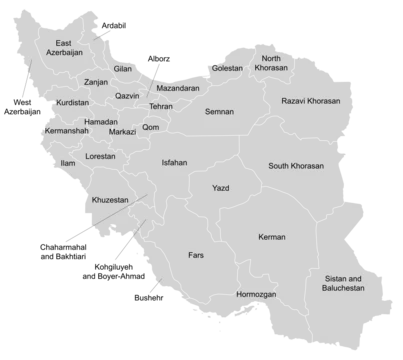
Chaharmahal and Bakhtiari province
A linguistically diverse province in Iran's Zagros Mountains.

Erik Anonby, Laurentia Schreiber, Mortaza Taheri-Ardali, Mahnaz Talebi-Dastenaee · CC BY 4.0
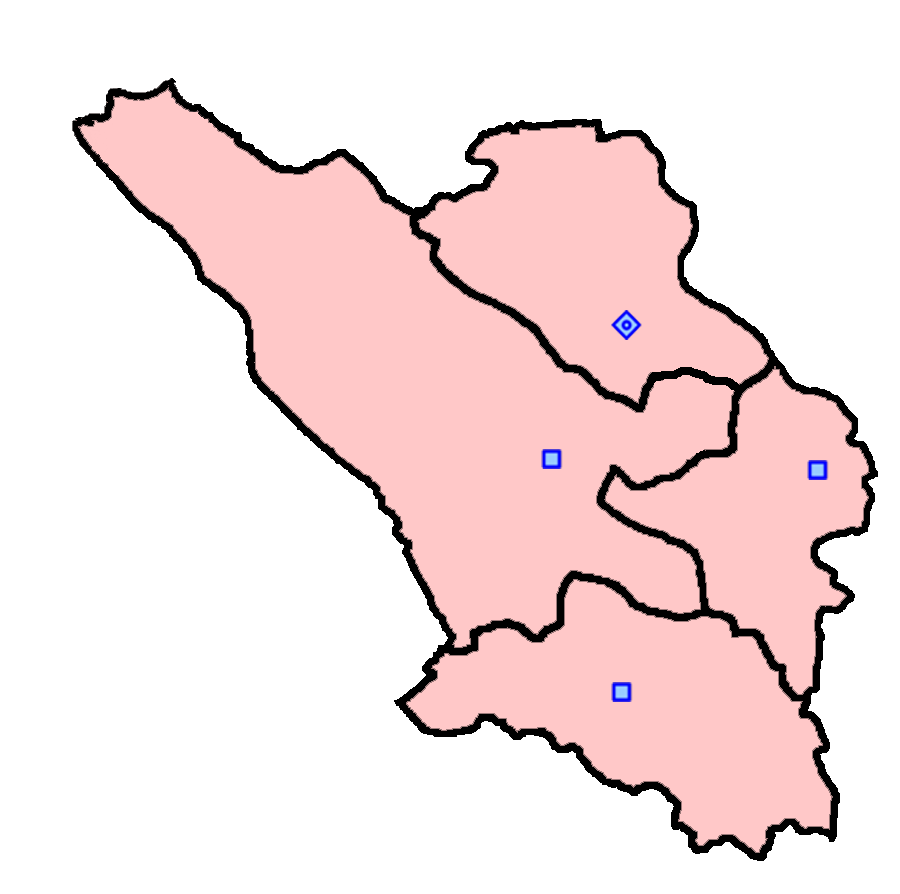
Chaharmahal and Bakhtiari Province is one of the 31 provinces of Iran, situated in the southwestern part of the country. Its administrative capital is the city of Shahr-e Kord. The province covers an area of 16,332 square kilometers and is located in the heart of the Zagros Mountains, a major mountain range that extends across northwestern Iran. In 2014, the province was designated as part of Region 2, a classification created solely for the purposes of coordination and development. The population has grown steadily, reaching 947,763 people in 270,434 households according to the 2016 census, with over 64 percent of residents living in urban areas.
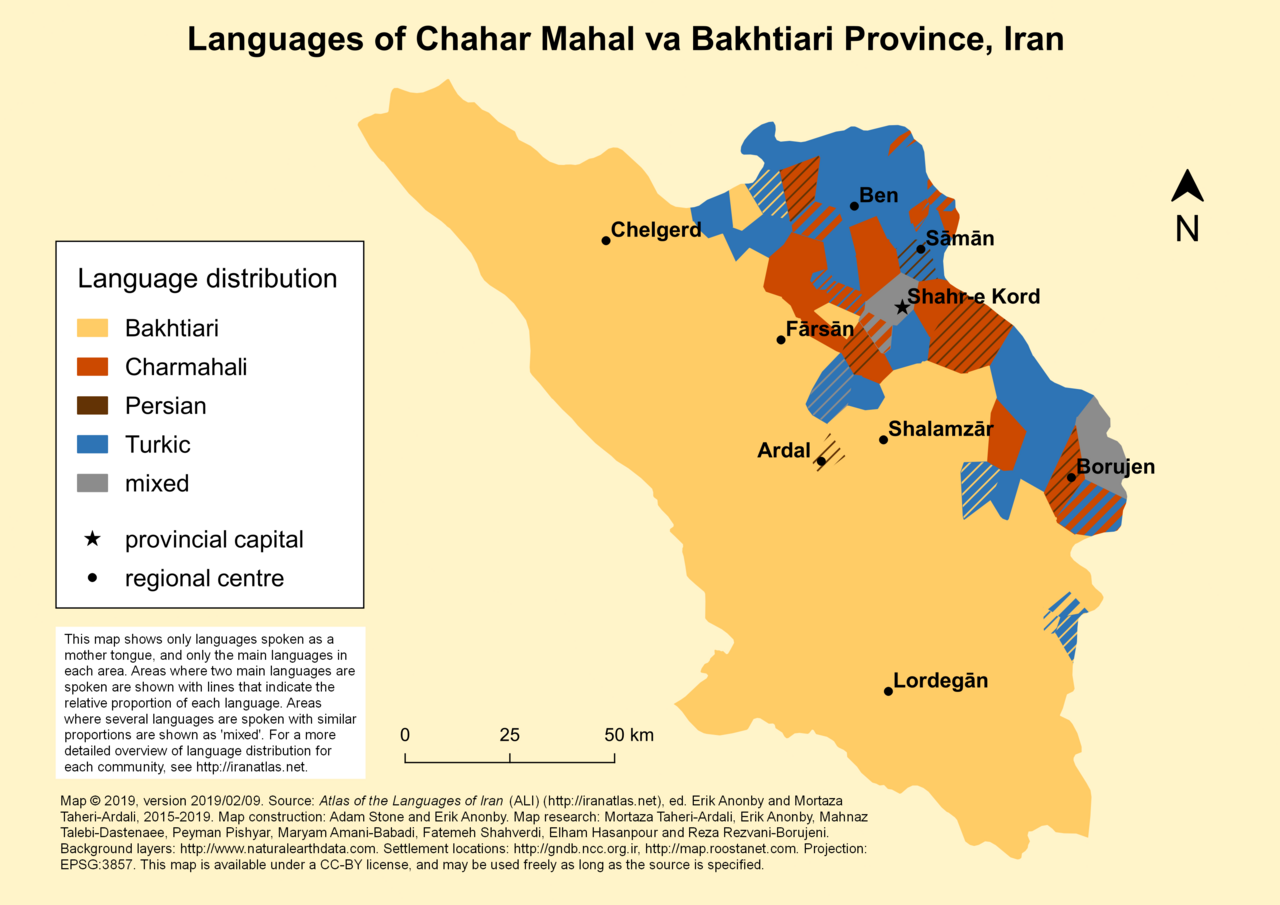
The province is characterized by significant linguistic diversity. The primary language is Bakhtiāri, a variety of the Luri language within the Iranian family, spoken mainly in the higher valleys of the western half and in lower areas around Lordegān. In the northeastern quarter, most people speak either Chārmahāli, a transitional form between Bakhtiāri and the Persian varieties of Isfahan province, or a Turkic language similar to Qashqa'i and transitional to Azerbaijani. Specific Chārmahāli varieties include Dehkordi in Shahr-e Kord, Ghafarrokhi in Farrokh Shahr, Heysheguni in Hafshejān, and Borujeni in Borujen. These language areas overlap, and in larger cities and the Zagros foothills, they intermingle with Bakhtiāri. Tehrani-type Persian is increasingly taught as a first language by parents in some parts of the province, particularly in cities.
The economy is primarily agricultural, with most industrial activity concentrated around the provincial center. The province has strong potential for tourism due to its natural resources. It is the source of many springs, rivers, and waterfalls that feed the Zayanderud and Karoon rivers, including attractions such as the Zayanderud river, Kouhrang 1 Dam, Choghakhor Wetland, Tang Sayyad National Park, and Gandoman wetland. Higher education institutions include Shahrekord University, Shahrekord University of Medical Sciences, and Islamic Azad University branches in Borujen and Shahrekord.
- Capital
- Shahr-e Kord
- Main Language
- Bakhtiāri (Luri language family)
- Major Rivers Sourced
- Zayanderud and Karoon
Lore & Background
Chaharmahal and Bakhtiari province is situated in the heart of the Zagros Mountains, a major mountain range that forms a natural barrier between Iran and Iraq. The province is the source of numerous springs, rivers, and waterfalls, which feed the two vital rivers of Zayanderud and Karoon. Its natural attractions include the Zayanderud river, Zamankhan bridge, Kouhrang 1 Dam, Dime spring, Sheik Ali Khan waterfall, Chama Ice cave, Darkesh varkesh canyon, Rostam Abad Sardab spring, Do Polan, Karoon-4 dam, Darreh Esgh (love valley), Atashgah waterfall, Choghakhor Wetland, Pire Ghar cave, Siasard spring, Helen protected area, Barm spring, Sendegan spring, Tang Sayyad national Park, Parvaz national park, Sarab cave, Gandoman wetland, Zard lime waterfall, and Kordikon waterfall. The province’s main language is Bakhtiāri, a variety of Luri spoken in the higher western valleys, around Lordegān in the south, and by migrants in northeastern cities. In the northeast quarter, people speak Chārmahāli—transitional between Bakhtiari and Persian varieties of Isfahan province—or Chaharmahali Turkic, which is similar to Qashqa'i and transitional to Azerbaijani. Tehrani-type Persian is also taught as a first language in some cities. The province’s population was 947,763 in the 2016 census, with over 64% living in urban areas.
Reader's Guide
Chaharmahal and Bakhtiari Province holds significance for its linguistic richness, featuring Bakhtiāri, Chārmahāli, and Turkic languages, with Tehrani-type Persian emerging as a first language in some urban areas. Its natural resources, including springs, rivers, and waterfalls, supply water to the Zayanderud and Karoon rivers, supporting many cities. The province has potential for tourism due to attractions like the Zayanderud river, Kouhrang 1 Dam, and several national parks and wetlands. The Atlas of the Languages of Iran has published detailed language maps for the province, and academic institutions such as Shahrekord University and Islamic Azad University branches operate there.
Did You Know?
- The province's main language is Bakhtiāri, a Luri language spoken in the western valleys and around Lordegān.
- Chārmahāli varieties include Dehkordi, Ghafarrokhi, Heysheguni, and Borujeni, spoken in different cities.
- The province is the source of the Zayanderud and Karoon rivers, vital for many Iranian cities.
Geography & Natural Heritage
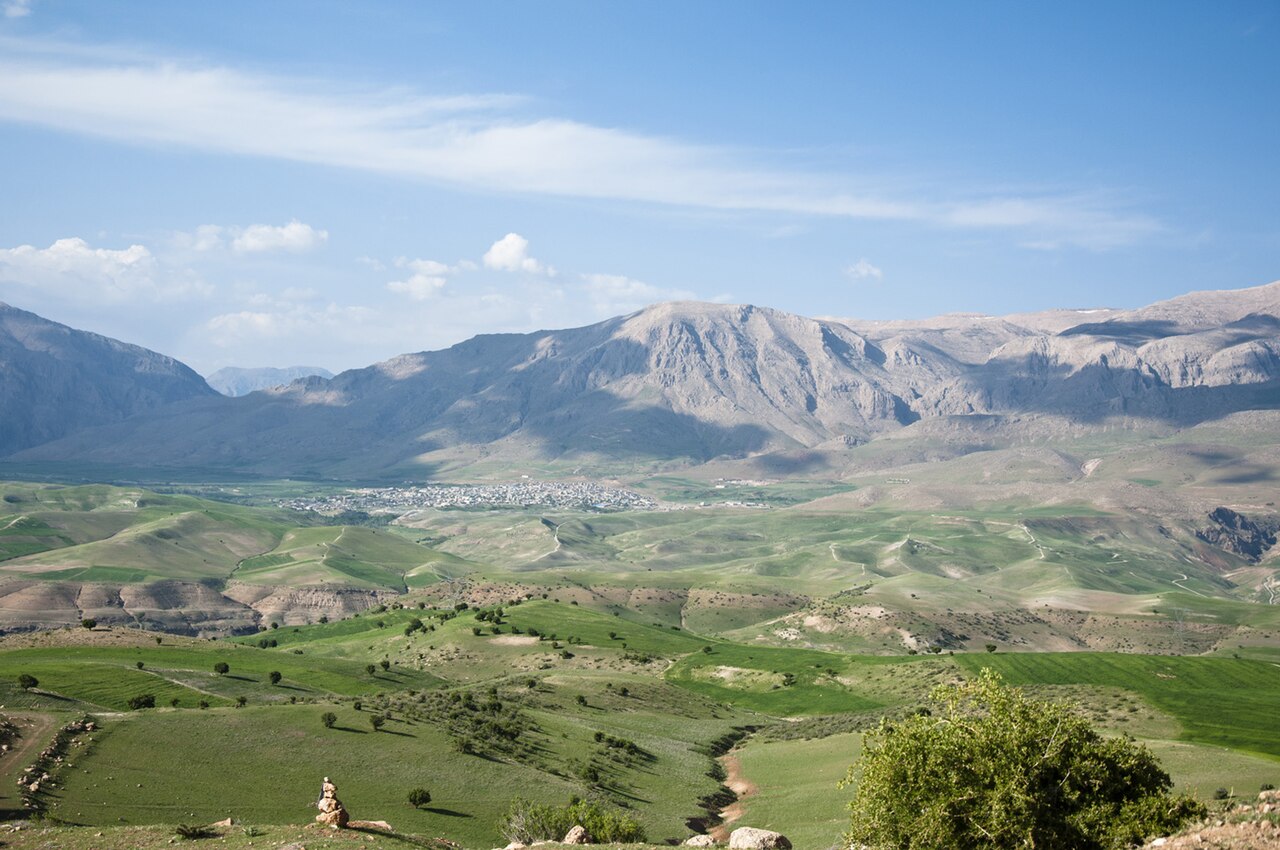
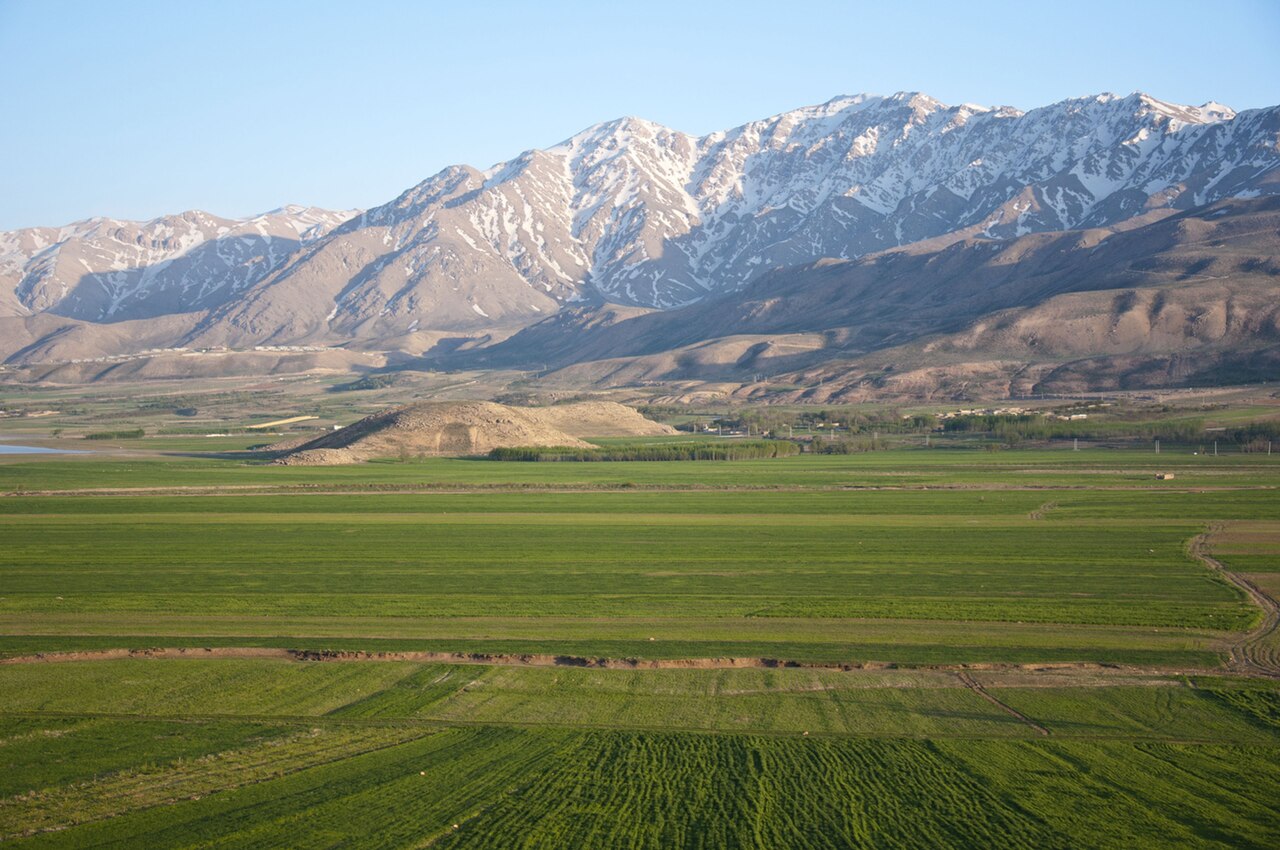
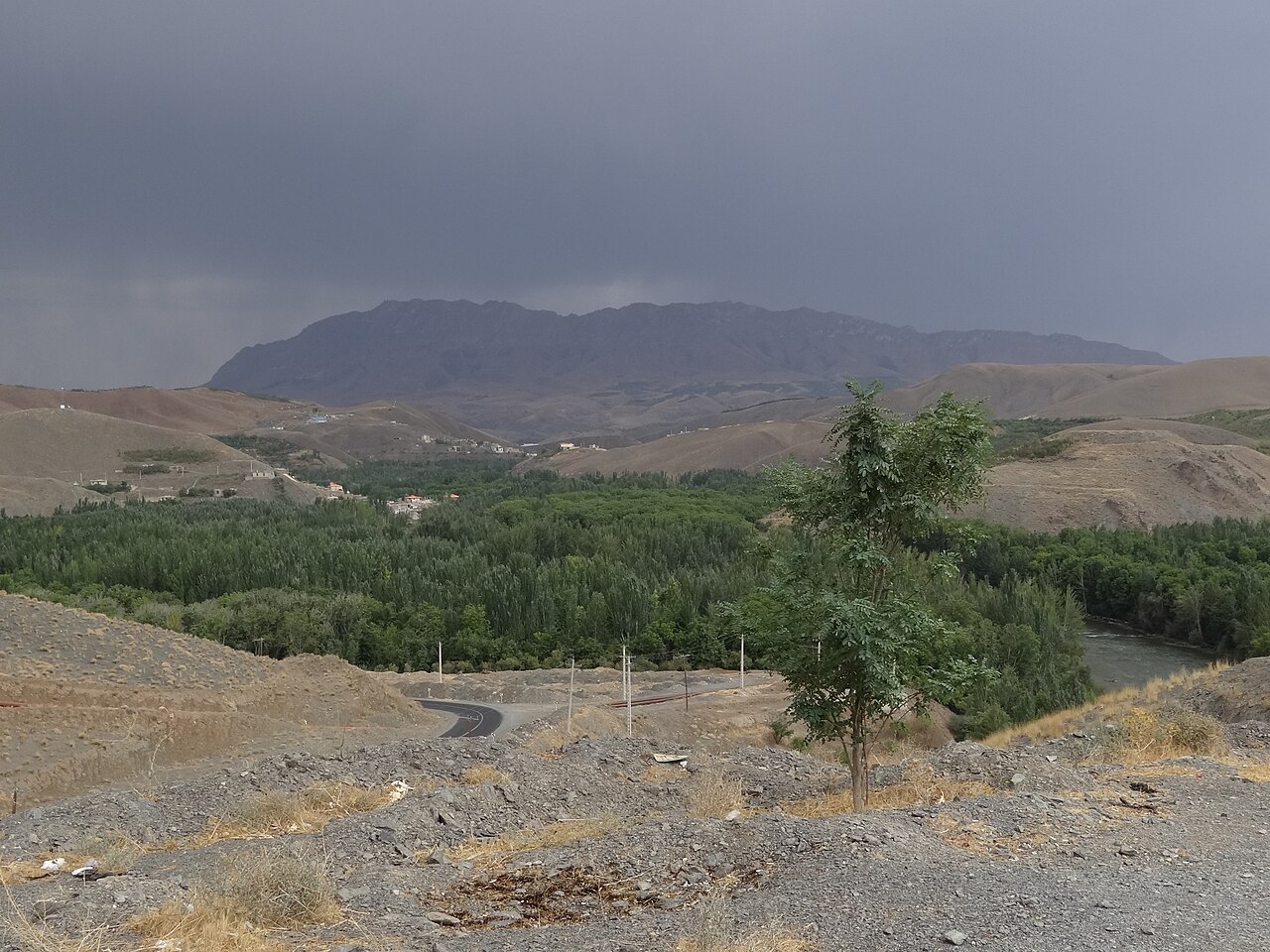
Nestled in the heart of the Zagros Mountains, Chaharmahal and Bakhtiari Province occupies roughly 16,332 square kilometers in Iran's southwest. The Zagros range, which sweeps across northwestern Iran, serves as a natural boundary separating the country from Iraq, and this province sits squarely within its rugged core. That mountainous position has made the region a hydrological powerhouse: it is the birthplace of countless springs, rivers, and waterfalls whose waters ultimately feed two of Iran's most vital waterways, the Zayanderud and the Karoon. Those two rivers, in turn, have shaped the growth of numerous cities far beyond the province's borders. The local landscape is studded with remarkable natural features, including the Chama Ice cave, the Darkesh varkesh canyon, the Darreh Esgh valley (locally called the love valley), the Atashgah and Kordikon waterfalls, the Choghakhor and Gandoman wetlands, and the Tang Sayyad and Parvaz national parks. Dams such as Kouhrang 1 and Karoon-4, along with the historic Zamankhan bridge, further mark the terrain. Officials have noted that the province's rich natural endowments give it strong potential to develop into a vibrant destination for nature-based tourism.
Linguistic Tapestry
No single tongue dominates Chaharmahal and Bakhtiari. The province's principal language, Bakhtiari, belongs to the Luri branch of the Iranian language family and is most concentrated in the highland valleys of the western half, though it also persists in the lower settlements around Lordegan in the south and among migrants who have settled in the northeastern cities. In the northeastern quarter, residents of most towns and villages speak either Chaharmahali, a Southwestern Iranian variety that sits between Bakhtiari and the Persian dialects of Isfahan (leaning closer to the latter), or Chaharmahali Turkic. Chaharmahali itself fragments into urban varieties such as Dehkordi in Shahr-e Kord, Ghafarrokhi in Farrokh Shahr, Heysheguni in Hafshejan, and Borujeni in Borujen, alongside numerous rural forms. The Turkic varieties echo Qashqa'i from neighboring Fars province while transitioning toward Azerbaijani in the far northwest. In the Zagros foothills and larger cities, all three language groups intermingle. More recently, parents in urban areas have begun raising children with Tehrani-type Persian as their first language. The Atlas of the Languages of Iran has produced both point-based and area-based distribution maps for the province, and a written lexicon of Bakhtiari has also been published.
Population & Urban Shift
Over a decade of national censuses reveals a steady climb in both the number of residents and the pace of urbanization in Chaharmahal and Bakhtiari. The 2006 count recorded 843,784 people spread across 194,171 households. By 2011 that figure had risen to 895,263 in 234,416 households, and the 2016 census pushed the total to 947,763 people living in 270,434 households. A striking share of that growth is urban: according to the 2016 data, 607,444 residents—more than 64 percent of the provincial population—now live in the province's designated cities rather than in rural villages. The administrative capital, Shahr-e Kord, anchors this urban network. In June 2014, the Iranian government reorganized its 31 provinces into five coordination regions for development planning, and Chaharmahal and Bakhtiari was assigned to Region 2. The province's internal administrative divisions have also undergone structural changes visible across the three consecutive censuses, reflecting the ongoing shift of people from scattered rural settlements into concentrated urban centers.
Economy & Academic Infrastructure
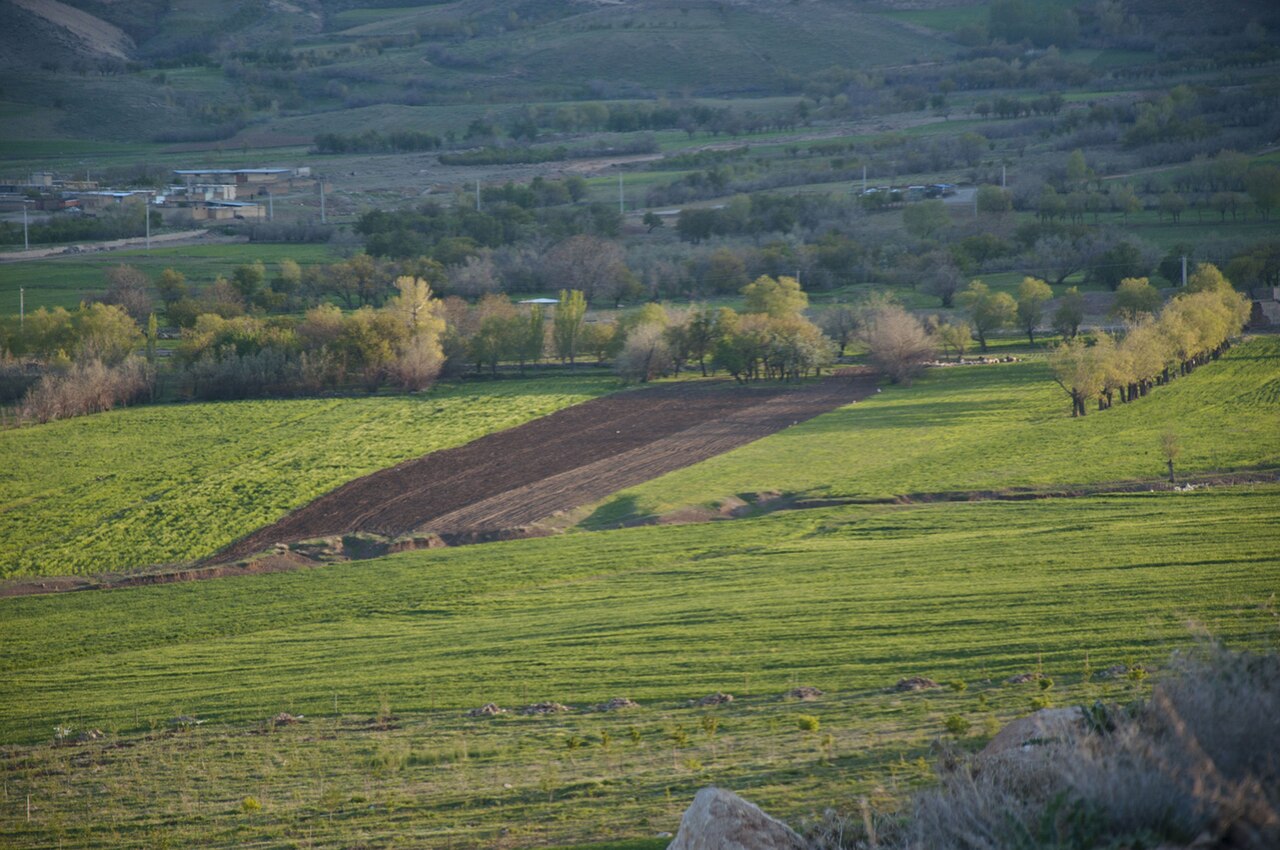
Agriculture remains the backbone of Chaharmahal and Bakhtiari's economy, employing the majority of the working population across its valleys and foothills. Industrial activity, by contrast, is relatively concentrated around the central part of the province rather than spread evenly. The region's extraordinary natural endowments—its springs, waterfalls, wetlands, and national parks—also position it as a candidate for tourism development, a sector that has yet to reach its full commercial potential. On the educational front, the province hosts several higher-education institutions. Shahrekord University and Shahrekord University of Medical Sciences serve the capital city, while the Islamic Azad University maintains branches in both Shahrekord and Borujen. Together these four institutions provide the province's residents with access to degree programs in a range of fields without requiring them to travel to larger metropolitan centers. The presence of a dedicated medical sciences university is particularly notable given the province's relatively small population, suggesting a deliberate investment in local healthcare training. The combination of an agriculture-based economy, a growing urban population, and expanding academic infrastructure paints a picture of a province in gradual transition.
Gallery
Frequently Asked Questions
What languages are spoken in Chaharmahal and Bakhtiari province?
Bakhtiāri, a member of the Luri language family, is the dominant local tongue. Residents also use Chārmahāli and several Turkic dialects, giving the province a notably multilingual character.
Which major rivers are sourced in Chaharmahal and Bakhtiari province?
The province gives rise to two significant waterways: the Zayanderud and the Karoon. Both rivers flow out of the Zagros highlands and support agriculture and ecosystems well beyond the province's borders.
More in Provinces Of Iran 1-24
Spotted an error? Know more?
This is a living reference — every entry is fact-audited, and reader corrections feed straight into our audit queue. Suggest an edit · See this site's audit record