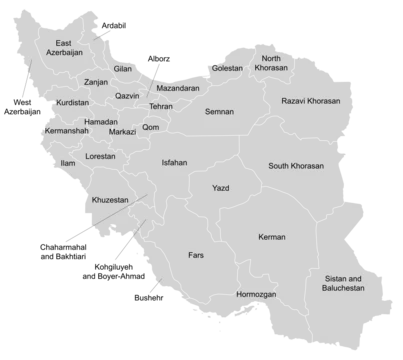
Kermanshah province
Western Iranian province with Paleolithic sites and border trade.

Kermanshah province, one of Iran’s 31 provinces, lies in the country’s west along the border with Iraq. Its capital is the city of Kermanshah, and the province is part of the region often referred to as Iranian Kurdistan. In a 2014 administrative reorganization by the Ministry of Interior, Kermanshah was designated the center of Region 4, with the region’s central secretariat located in the capital. The province is noted for its significant Paleolithic heritage; numerous caves in the Bisetun area and north of Kermanshah have been surveyed or excavated, yielding remains from that era. Notably, the first physical evidence of Neanderthal man in Iran was uncovered at Bisitun Cave. Other Middle Paleolithic sites include Do-Ashkaft Cave, Kobeh, Warwasi, and Mar Tarik. Kermanshah also contains important Neolithic settlements, such as Ganj Dareh, Sarab, and Asiab. At Ganj Dareh, archaeologists have documented the earliest known evidence of goat domestication. In 2009, research by the University of Hamedan and University College London led to the announcement that the oldest prehistoric village in the Middle East, dating to around 9800 BC, had been discovered in Sahneh, west of Kermanshah. The province’s monuments reflect two periods of glory: the Achaemenid and Sassanid eras. Local tradition attributes the founding of the city to the mythical Pishdadian ruler Tahmores Divband, while another account credits its construction to Sassanid king Bahram IV in the 4th century CE. Kermanshah flourished under Sassanid rulers Hormizd IV and Khosrau I, later declining to a secondary royal residence. It suffered heavily during the Arab invasions but recovered under the Safavids. Following the Afghan attack and the fall of Isfahan, the province was nearly destroyed by an Ottoman invasion. During the Iran–Iraq War, Kermanshah saw intense fighting; many towns, including Sar-e Pol-e Zahab and Qasr-e Shirin, were largely demolished. A major earthquake in November 2017 killed over 600 people. In late December 2017, the province was among several in Iran where protests broke out; the Supreme Leader attributed these to foreign interference, while some women’s organizations, such as the National Council of Resistance of Iran, claimed partial credit for organizing them. The majority of the population is Shia Muslim, with Sunni and Yarsani minority groups.
- Capital
- Kermanshah
- Area
- Not specified in source
- Majority religion
- Shia Islam
- Minority religions
- Sunni and Yarsani
- Borders
- Iraq and Iranian provinces of Kurdistan, Hamadan, Lorestan, Ilam
- UNESCO World Heritage Site
- Bisotun inscription
Lore & Background
Kermanshah province has a long history, with Paleolithic remains found in caves such as Bisetun, Do-Ashkaft, Kobeh, Warwasi, and Mar Tarik. The earliest evidence for goat domestication was documented at Ganj Dareh. The province saw two glorious periods under the Achaemenid and Sassanid dynasties. The city of Kermanshah was possibly founded by the mythical ruler of the Pishdadian or built by Bahram IV of the Sassanid dynasty during the 4th century CE. It reached a peak under Hormizd IV and Khosrau I, then suffered during Arab invasions, recovered in the Safavid period, and was nearly destroyed by Ottoman invasion after the Afghan attack on Isfahan.
Reader's Guide
Kermanshah province, located in western Iran along the Iraqi border, is a region of profound archaeological and historical importance. Its Paleolithic heritage is exceptional, with numerous caves such as Bisetun, Do-Ashkaft, Kobeh, Warwasi, and Mar Tarik yielding Middle Paleolithic remains. Notably, the first Neanderthal remains found in Iran were discovered in Bisitun Cave. The province also contains key Neolithic sites, including Ganj Dareh, which provided the earliest evidence for goat domestication, and Sarab and Asiab. In 2009, researchers from the University of Hamedan and UCL identified the oldest known prehistoric village in the Middle East, dating to around 9800 B.C., near Sahneh. The province flourished during the Achaemenid and Sassanid eras, with its capital city traditionally linked to the mythical Pishdadian ruler and later to Sassanid king Bahram IV. It reached its peak under Hormizd IV and Khosrau I before declining after Arab invasions. The region suffered severe damage during Ottoman invasions and was heavily devastated in the Iran–Iraq War, with towns like Sar-e Pol-e Zahab and Qasr-e Shirin nearly destroyed. A major earthquake in November 2017 killed over 600 people. Demographically, a majority of the population is Shia, with Sunni and Yarsani minorities. The province’s economy is heavily reliant on border trade with Iraq, featuring five official border markets. In the 2021-22 fiscal year, its non-oil exports reached $2.7 billion, accounting for a significant share of Iran’s total exports, with major goods including tomato products, air conditioners, cheese, and industrial oils.
Did You Know?
- The first known physical remains of Neanderthal man in Iran were discovered in Bisitun Cave in Kermanshah province.
- The Behistun inscription at Bisotun is a trilingual inscription in Old Persian, Elamite, and Akkadian, crucial for deciphering cuneiform.
Frequently Asked Questions
What is Kermanshah province?
Kermanshah is one of Iran's 31 provinces, situated in the western part of the country and forming part of the region colloquially called Iranian Kurdistan. Its capital city is also named Kermanshah, and the province shares a direct border with Iraq.
Which provinces and countries border Kermanshah?
Kermanshah shares its international border with Iraq and is flanked domestically by the Iranian provinces of Kurdistan, Hamadan, Lorestan, and Ilam. This position makes it a key node for cross-border trade and movement in western Iran.
Why do fans and travelers consider Kermanshah province important?
Beyond its role as a western Iranian border province, Kermanshah offers a rare concentration of deep prehistoric archaeology alongside living cultural traditions of the Iranian Kurdish region. Its combination of Paleolithic sites, border-trade economy, and distinct religious diversity sets it apart within Iran's provincial landscape.
More in Provinces Of Iran 1-24
Spotted an error? Know more?
This is a living reference — every entry is fact-audited, and reader corrections feed straight into our audit queue. Suggest an edit · See this site's audit record