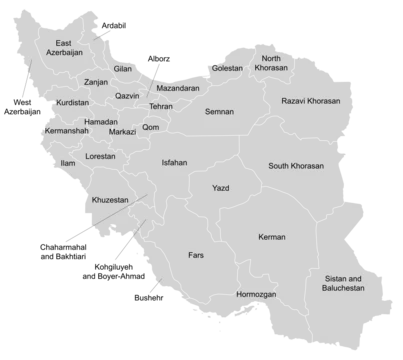
Bushehr province
Southern Iranian province on the Persian Gulf coast.

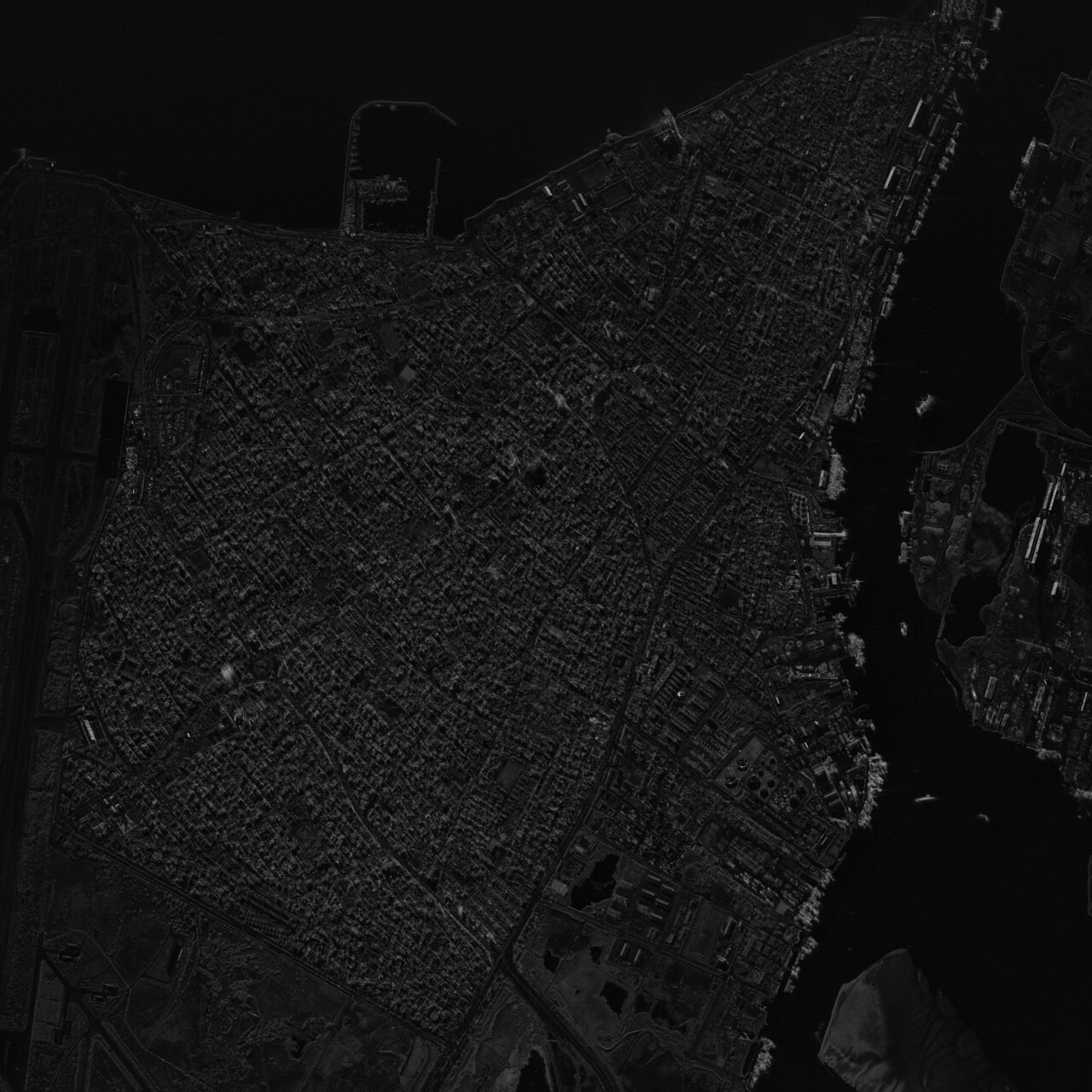
Umbra Lab, Inc. · CC BY 4.0
Bushehr Province is one of the 31 provinces of Iran, situated in the southern part of the country along the Persian Gulf, with its capital at the city of Bushehr. The province holds considerable strategic importance due to its lengthy coastline and key infrastructure. Historically, the Portuguese Empire occupied the city of Bushehr in 1506, holding it until Shah Abbas Safavi expelled them, reasserting Persian control over the Gulf region. During the Safavid period, members of the Kurdish Zanganeh tribe migrated from Kermanshah to settle in villages between Ahram and Borazjan, establishing a local government; this area was known as the Zanganeh bloc from that time until the beginning of the Qajar era. In more recent history, a powerful earthquake measuring 6.1 on the Richter scale struck the town of Shonbeh and surrounding villages in Dashti County on 9 April 2013, resulting in at least 37 fatalities. The province is home to Iran’s first nuclear power plant, a light-water pressurized water reactor originally designed by Siemens and built by Russian engineers. Additionally, Kharg Island, located within the province, serves as a critical oil terminal, handling up to 90 percent of Iran’s oil exports. Demographically, the vast majority of residents speak Persian, primarily the Fars dialect, with a minority of Arabic speakers. Religiously, most of the population are Shia Muslims, while Sunnis constitute about 8.5 percent. According to the 2016 census, the province had a population of 1,163,400 inhabitants, with over 71 percent living in urban areas. The city of Bushehr itself functions as Iran’s second main naval port after Bandar Abbas. The province is also known for its football clubs, Shahin-e Bushehr and Pars Jonoubi Jam, and has produced notable writers including Manouchehr Atashi, Sadeq Chubak, Najaf Daryabandari, and Moniro Ravanipour. Educational institutions include Persian Gulf University, Bushehr University of Medical Sciences, and Payame Noor University of Bushehr.
- capital
- Bushehr
- majority_language
- Persian (Fars dialect)
- majority_religion
- Shia Islam
- minority_religion
- Sunni (8.5%)
- notable_industry
- Oil exports, nuclear power
Lore & Background
Bushehr Province lies along the southern coast of Iran, fronting the Persian Gulf with an extensive shoreline. Its capital is the city of Bushehr. The province’s defining characteristic is this long coastal exposure, which has shaped its history and economy. The terrain includes the coast itself, islands such as Kharg Island, and inland villages. The Portuguese invaded the city of Bushehr in 1506 and held it until Shah Abbas Safavi expelled them, reclaiming the Persian Gulf region. In the Safavid period, members of the Kurdish Zanganeh tribe migrated from Kermanshah to the area between Ahram and Borazjan, establishing a local government; this territory was known as the Zanganeh bloc until the early Qajar era. The population speaks Persian predominantly, with a Fars dialect, alongside a minority of Arabic speakers. The vast majority are Shia Muslims, with a Sunni minority comprising 8.5 percent. Bushehr hosts Iran’s first nuclear power plant, a light-water PWR reactor originally designed by Siemens and built by Russia. Kharg Island, part of the province, is strategically vital, historically carrying up to 90 percent of Iran’s oil exports through its terminal. The province also includes the city of Bushehr, which serves as Iran’s second main naval port after Bandar Abbas.
Reader's Guide
Bushehr Province holds strategic importance for Iran due to its long coastline on the Persian Gulf and its role in energy infrastructure. The city of Bushehr is the second main naval port of Iran after Bandar Abbas. The Bushehr Nuclear Reactor represents Iran's first nuclear power plant, a landmark in the country's energy program. The province is also home to football teams Shahin-e Bushehr and Pars Jonoubi jam, and has produced notable writers such as Manouchehr Atashi, Sadeq Chubak, Najaf Daryabandari, and Moniro Ravanipour. Its population is predominantly Shia Muslim, with a Sunni minority of 8.5%, and most residents speak Persian, with a minority of Arabic speakers.
Did You Know?
- Kharg Island carries up to 90% of Iran's oil exports through its terminal.
Strategic Coastline and Maritime Significance
Bushehr Province occupies a commanding stretch of Iran's southern shoreline along the Persian Gulf, making it one of the country's most geographically consequential provinces. Its capital, the city of Bushehr, serves as Iran's second principal naval port, trailing only Bandar Abbas in maritime importance. The province's waters also encompass Kharg Island, a facility of enormous strategic weight: as of March 2026, during the 2026 Iran War, the island's terminal handled as much as ninety percent of the nation's oil exports. This concentration of energy infrastructure on a single offshore site underscores how critical the province's coastal geography is to Iran's economic lifelines. The long gulf coastline also shapes daily life, trade, and defense considerations across the region, positioning Bushehr as a focal point where maritime power, energy logistics, and national security intersect in ways few other provinces can match.
Historical Layers and Cultural Mosaic
The human story of Bushehr stretches back centuries and carries the imprint of both conquest and migration. In 1506, Portuguese forces seized the city of Bushehr and held it until Shah Abbas Safavi drove them out, restoring Persian control over the broader Gulf littoral. Centuries later, during the Safavid era, members of the Kurdish Zanganeh tribe relocated from Kermanshah to the villages between Ahram and Borazjan, establishing a local governance structure that gave the area the name Zanganeh bloc until the early Qajar period. Linguistically, the province is overwhelmingly Persian-speaking, with the Fars dialect predominating, while a smaller community of Arabic speakers adds to the regional texture. Religiously, the population is predominantly Shia Muslim, with Sunni Muslims accounting for roughly 8.5 percent of residents. These overlapping layers of invasion, tribal settlement, and linguistic and religious diversity give Bushehr a cultural depth that extends well beyond its coastal identity.
Energy Ambition and Modern Vulnerabilities
In the twenty-first century, Bushehr has become a symbol of Iran's push into advanced energy technology. The Bushehr Light Water PWR Nuclear Reactor, a design originally developed by Siemens and subsequently constructed by Russian engineers, stands as the country's first nuclear power plant reactor, marking a milestone in the nation's energy independence. Yet modern progress coexists with vulnerability: on 9 April 2013, a 6.1-magnitude earthquake struck the town of Shonbeh and surrounding villages in the Tasuj District of Dashti County, claiming at least thirty-seven lives and reminding residents of the province's seismic exposure. Administratively, the province was folded into Region 2 on 22 June 2014, a reorganization aimed at streamlining coordination and development across Iran's thirty-one provinces. Together, these threads—nuclear ambition, natural hazard, and bureaucratic restructuring—paint a picture of a province navigating the tensions between rapid modernization and the persistent risks of its geography.
Population Growth, Education, and Cultural Voices
Bushehr's demographic trajectory over the past two decades reflects steady and significant expansion. The 2006 national census recorded 886,490 residents across 188,762 households; by 2011 that figure had risen to 1,032,949 in 246,742 households, and the 2016 census tallied 1,163,400 inhabitants in 321,826 households. By that latest count, more than seventy-one percent of the provincial population—835,955 people—lived in the province's principal cities, signaling a pronounced urbanization trend. The province also nurtures a notable literary tradition, having been associated with writers such as Manouchehr Atashi, Sadeq Chubak, Najaf Daryabandari, and Moniro Ravanipour. Higher education is anchored by institutions including Persian Gulf University, Bushehr University of Medical Sciences, and the Bushehr branch of Payame Noor University. In sport, local football clubs Shahin-e Bushehr and Pars Jonoubi jam provide community identity and competitive presence, rounding out a cultural life that balances scholarly and athletic pursuits.
Gallery
Frequently Asked Questions
What is Bushehr Province?
Bushehr Province is one of Iran's 31 provinces, stretching along the southern coastline where the land meets the Persian Gulf. The city of Bushehr serves as its administrative capital.
Why is Bushehr Province so strategically important to Iran?
The province anchors Iran's energy sector by housing the country's first nuclear power plant and the Kharg Island terminal, through which roughly 90% of national oil exports pass. That dual role in nuclear generation and petroleum shipping makes it a linchpin of Iran's economy.
What is the religious composition of Bushehr Province?
Shia Islam is the dominant faith among residents, while a Sunni minority accounts for roughly 8.5% of the population.
Where is Bushehr Province located geographically?
It occupies a band of Iran's southern border, fronting directly onto the Persian Gulf. That coastal position is what gives the province its outsized role in maritime trade and energy shipping.
More in Provinces Of Iran 1-24
Spotted an error? Know more?
This is a living reference — every entry is fact-audited, and reader corrections feed straight into our audit queue. Suggest an edit · See this site's audit record