Qom province
Central Iranian province, key center of Shia Islam and pilgrimage.

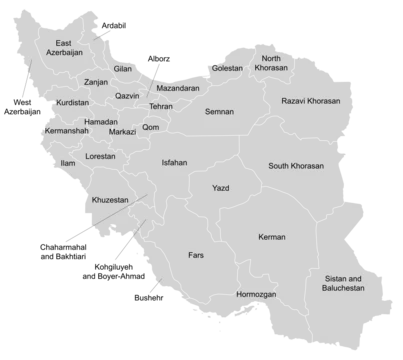
Qom Province is one of the 31 provinces of Iran, covering 11,237 square kilometers, which accounts for 0.89% of the country’s total area. Its capital is the city of Qom. The province is situated in central Iran and was created from a portion of Tehran Province in 1996. In 2014, it was assigned to Region 1 as part of a national reorganization of provinces into five regions for coordination and development. The area has been inhabited since at least the 5th millennium BCE, with archaeological finds indicating a settlement from that period. In pre-Islamic times, the city of Qom was known as “Kom,” the name of its ancient rampart, and it was a large urban center. During the Arab conquests, Muslims captured the area under Caliph Umar around 644–645 CE, leading to conflicts between the invaders and local residents. Many Alavids, fleeing persecution under the Abbasids and Umayyads, settled in Qom permanently. The city suffered massacres and destruction under Caliph Al-Ma’mun in 825 CE and again under his successor Al-Mu’tasim after a revolt. Stability and growth returned under the Buyid dynasty, which was of Alavid origin, and the city flourished again during the Seljuk era. Mongol invasions brought destruction, but after the Ilkhanate ruler Sultan Öljeitü converted to Islam, Qom received renewed attention and revival. Tamerlane’s forces plundered the city in the late 14th century, massacring inhabitants. Qom gained prominence under the Safavids, and by 1503 it had become a major center of Shia theology and pilgrimage. It suffered during the Afghan invasion and under Nader Shah, as well as during conflicts between the Zand and Qajar dynasties. In 1798, Agha Mohammad Khan Qajar took control, and later Fath-Ali Shah Qajar repaired the shrine of Fatima Masumeh. During World War I, after Russian forces entered Karaj in 1915, many Tehran residents moved to Qom, and a plan to transfer the capital there was discussed but abandoned under British and Russian pressure. A National Defense Committee formed in Qom, making it a political and military center against colonial powers. The province later served as the base for Ayatollah Khomeini’s opposition to the Pahlavi dynasty. The climate is dry, varying between desert and semi-desert, with low rainfall and limited agriculture. Two large salt lakes, Howz-e Soltan and Namak Lake, lie within the province. The city of Qom remains
- capital
- Qom
- climate
- Desert and semi-desert, dry with low rainfall
Lore & Background
The city became a refuge for Alavids fleeing persecution by the Abbasids and Umayyads. Stability returned under the Buyid dynasty, and the city expanded. It flourished again in the Seljuk era, suffered under the Mongol invasion, but revived after Sultan Öljeitü Khoda bandeh converted to Islam. In the late 14th century, Tamerlane plundered the city and massacred inhabitants. It suffered during the Afghan invasion, under Nader Shah, and in conflicts between the Zand and Qajar dynasties. A 'National Defense Committee' was set up, making Qom a political and military apex against colonial powers. Later, Ayatollah Khomeini based his opposition to the Pahlavi dynasty from Qom.
Reader's Guide
Qom Province holds enduring significance as a focal center of Shia Islam, with its theological institutions and the shrine of Fatima Masumeh drawing pilgrims and scholars. Its history reflects cycles of destruction and revival under various dynasties, from the Buyids to the Safavids, and its role as a refuge for Alavids shaped its religious identity. In modern times, Qom was a base for Ayatollah Khomeini's opposition to the Pahlavi dynasty and has been considered as a possible candidate for moving Iran's political capital due to Tehran's earthquake risk and pollution. Ecologically, the province lies in a dry, inland region with a desert-to-semi-desert climate, low humidity, and scant rainfall, making agriculture largely unviable except away from its salt lakes. Two large salt lakes—Howz e Soltan Lake and Namak Lake—lie within its borders, with nearly a fifth of Namak Lake in the province. Politically, Qom Province is a conservative area. Culturally, 195 sites of historical and cultural significance are listed by Iran’s Cultural Heritage Organization, including the Fatima Masumeh Shrine, Kahak cave, Vashnuh cave, and the two salt lakes. The province was formed from part of Tehran province in 1996 and covers 11,237 km², or 0.89% of Iran’s total area. Its capital, the city of Qom, also hosts the Jamkaran mosque, a popular Shia pilgrimage site, and was revealed in 2009 to be near Iran’s second uranium enrichment facility.
Did You Know?
- The province contains two large salt lakes: Howz e Soltan Lake and Namak Lake.
Frequently Asked Questions
Why is Qom Province considered so important in Iranian religious life?
The province houses the shrine of Fatima Masumeh, a major Shia pilgrimage site, along with the Feyzieh Seminary, one of the most influential centers of Shia theological study. This makes it a spiritual heartland for Shia Islam across the region.
What role did Qom Province play in modern Iranian political history?
The province served as a key base for Ayatollah Khomeini's opposition movement against the Pahlavi dynasty, giving it a prominent place in the events that led to the 1979 revolution. Its religious institutions and scholarly community have continued to shape Iranian political discourse since then.
More in Provinces Of Iran 1-24
Spotted an error? Know more?
This is a living reference — every entry is fact-audited, and reader corrections feed straight into our audit queue. Suggest an edit · See this site's audit record