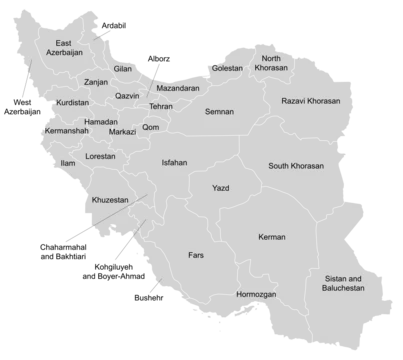
Lorestan province
Western Iranian province known for ancient bronze artworks.

Lorestan province, one of Iran’s 31 provinces, lies in the western Zagros Mountains, covering 28,392 square kilometers. Its capital is Khorramabad, a city situated in a scenic valley surrounded by mountains, approximately 100 kilometers east of the Iraqi border. The name Lorestan means “land of the Lurs.” The province’s ancient history is deeply connected to the broader Ancient Near East. During the 3rd and 4th millennia BC, migrant tribes settled in the Zagros highlands. The Kassites, a people speaking neither an Indo-European nor Semitic language, originated in Lorestan and later controlled Babylonia from around 1531 BC to 1155 BC. Iranian Medes invaded and settled parts of the region in the 2nd millennium BC, absorbing the indigenous Kassites and Gutians before the area was conquered by the Persians in the 1st millennium BC. Lorestan is renowned for its Luristan bronze artworks, typically dated to about 1000–650 BC, though the bronze-making tradition began in the mid-3rd millennium BC. These objects, valued for their vigorous animal representations, have been found in museums worldwide. The region was integrated into the Achaemenid, Parthian, and Sasanian empires, while parts remained independent during Arab, Seljuk, and Mongol invasions. Under the Qajar dynasty, Lorestan suffered territorial loss, economic decline, and increased pastoral nomadism due to state policies that pitted tribes against each other and failed to maintain order. By 1917, Khorramabad was the only remaining city, with all villages ruined or deserted.
- Capital
- Khorramabad
- Location
- Western Iran, Zagros Mountains
- Name meaning
- Land of the Lurs
Lore & Background
Lorestan province is situated in western Iran within the Zagros Mountains, covering an area of 28,392 square kilometers. Its capital is the city of Khorramabad, which lies in a scenic valley surrounded by mountains, approximately 100 kilometers east of the Iraqi border. The name Lorestan means "land of the Lurs." The region’s ancient history is closely tied to the Ancient Near East. Migrant tribes settled in the mountainous Zagros area during the 3rd and 4th millennium BC. The Kassites, who spoke a non-Indo-European and non-Semitic language, originated here and later controlled Babylonia from around 1531 BC to 1155 BC. Iranian Medes invaded and settled parts of Lorestan in the 2nd millennium BC, absorbing indigenous peoples like the Kassites and Gutians before the Persians conquered the area in the 1st millennium BC. Lorestan is renowned for its Luristan bronzes, small artworks dating roughly from 1000 to 650 BC, though the bronze-making tradition began in the mid-3rd millennium BC. These objects, valued for their vigorous animal representations, have been found in museums worldwide. The region was integrated into the Achaemenid, Parthian, and Sasanian empires, while parts remained independent during Arab, Seljuk, and Mongol invasions. During the Qajar era, a policy of divide and rule led to economic decline, political instability, and increased pastoral nomadism, with many villages ruined or deserted by 1917. In the 1920s, Reza Shah’s Pahlavi forces conquered Lorestan, equating nomadic life with savagery and subduing local tribes, notably the Beiranvand.
Reader's Guide
Lorestan province holds significance as a historical region in western Iran, bridging ancient civilizations and modern state formation. Its archaeological heritage, particularly the Luristan bronzes, provides insight into metallurgical practices and artistic styles from the Bronze and Iron Ages. The province's location in the Zagros Mountains and proximity to Iraq made it a crossroads for migrations and empires, including the Kassites, Medes, Persians, and later Islamic dynasties. The state's alliance with some tribes eventually subdued the region. Lorestan's legacy includes its role in ancient bronze production, its resistance to central authority, and its cultural identity as the 'land of the Lurs.' The province remains a subject of archaeological interest and historical study, reflecting broader patterns of state-tribe relations in Iran.
Did You Know?
- The name Lorestan means 'land of the Lurs.'
- In February 2017, the first Achaemenid-era archaeological discoveries in Lorestan were made.
Frequently Asked Questions
What is Lorestan province most famous for?
Lorestan is globally recognized for its ancient Luristan bronze artworks, which are prized for their bold and dynamic artistic style. The region also carries deep historical weight as the homeland of the Kassite civilization.
What is the capital of Lorestan province?
Khorramabad serves as the provincial capital and functions as the administrative and cultural hub of this mountainous western Iranian province.
Why is Lorestan province important in Iranian history?
The province is a cradle of ancient civilization, being the birthplace of the Kassites who went on to influence broader Mesopotamian culture. Its bronze artifacts remain highly sought after by collectors and museums worldwide for their distinctive vigorous craftsmanship.
More in Provinces Of Iran 1-24
Spotted an error? Know more?
This is a living reference — every entry is fact-audited, and reader corrections feed straight into our audit queue. Suggest an edit · See this site's audit record