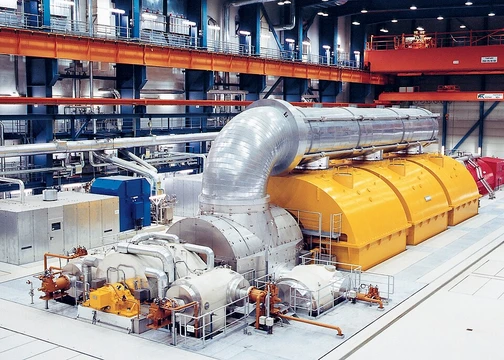
Nuclear power
Nuclear reactions produce electricity via fission, decay, or fusion.

Nuclear power generates electricity by harnessing energy from atomic reactions. Today, this almost always means splitting heavy atoms like uranium or plutonium inside a nuclear power plant—a process called fission. Radioactive decay, a different type of nuclear reaction, powers small devices like the radioisotope thermoelectric generators on space probes such as Voyager 2. Fusion, the process that powers the sun, has been tested in controlled reactors since 1958, but no fusion plant has yet produced more energy than it consumes, and commercial fusion is not expected anytime soon.
The first nuclear power plant came online in the 1950s. Global nuclear capacity hit 100 gigawatts (GW) in the late 1970s and climbed to 300 GW by 1990. Two major accidents—Three Mile Island in the United States (1979) and Chernobyl in the Soviet Union (1986)—led to stricter regulations and growing public opposition. In 2023, nuclear plants supplied 2,602 terawatt-hours of electricity, about 9% of the world’s total, making it the second-largest low-carbon source after hydropower. As of November 2025, there are 416 civilian fission reactors operating worldwide, with a combined capacity of 376 GW. Another 63 reactors are under construction (66 GW total), and 87 are planned (84 GW total). The United States runs the largest fleet, generating nearly 800 terawatt-hours per year with an average capacity factor of 92%. The global average capacity factor is 89%. Most new reactors being built are Generation III designs, located mainly in Asia.
Nuclear power is considered a safe and sustainable energy source that cuts carbon emissions. It causes fewer deaths per unit of energy than coal, oil, natural gas, or hydropower, largely because it avoids the air pollution linked to fossil fuels. One study estimated that each nuclear plant built could have saved 800,000 life-years by preventing pollution-related deaths. Nuclear plants emit no greenhouse gases during operation, and their life-cycle carbon footprint is lower than that of many renewables. However, the radiological risks—especially the potential for accidents like the 2011 Fukushima disaster in Japan—are the main concerns of the anti-nuclear movement. Critics also argue that nuclear power is too expensive compared to other sustainable energy options.
**History**
**Origins**
Scientists discovered nuclear fission in 1938, building on decades of research into radioactivity and atomic structure. They soon realized that a fissioning nucleus could release neutrons that split nearby nuclei, creating a self-sustaining chain reaction. After this was confirmed experimentally in 1939, researchers in several countries urged their governments to support fission research, just as World War II began, with the goal of building a nuclear weapon.
In the United States, this work led to the first human-made nuclear reactor, Chicago Pile-1, built under the Stagg Field stadium at the University of Chicago. It achieved criticality on December 2, 1942, as part of the Manhattan Project, the Allied effort to develop atomic bombs. Larger production reactors followed, making weapons-grade plutonium for the first nuclear weapons. The United States tested its first atomic bomb in July 1945 (the Trinity test) and dropped bombs on Hiroshima and Nagasaki a month later.
Despite the military origins, the 1940s and 1950s were filled with optimism that nuclear power would provide cheap, limitless energy. On December 20, 1951, the EBR-I experimental station near Arco, Idaho, became the first reactor to generate electricity, producing about 100 kilowatts. In 1953, U.S. President Dwight Eisenhower delivered his “Atoms for Peace” speech at the United Nations, calling for rapid development of peaceful nuclear applications. The Atomic Energy Act of 1954 followed, declassifying U.S. reactor technology and encouraging private-sector involvement.
**First Power Generation**
The U.S. Navy was the first to develop practical nuclear power, building the S1W reactor to power submarines and aircraft carriers. The first nuclear submarine, USS Nautilus, launched in January 1954. The S1W was a pressurized water reactor (PWR), chosen for its simplicity, compactness, and ease of operation—qualities that made it ideal for submarines. This decision later shaped civilian power generation, as PWRs became the dominant reactor design for electricity production.
On June 27, 1954, the Obninsk Nuclear Power Plant in the Soviet Union became the world’s first to feed electricity into a power grid, generating about 5 megawatts. The first commercial nuclear station, Calder Hall at Windscale, England, connected to the national grid on August 27, 1956. Like many early Generation I reactors, Calder Hall served a dual purpose: producing electricity and plutonium-239 for Britain’s nuclear weapons program.
**Expansion and First Opposition**
Global installed nuclear capacity continued to grow through the 1970s and 1980s, reaching 300 GW by 1990. But the accidents at Three Mile Island and Chernobyl sparked increased regulation and public resistance, shaping the industry’s trajectory ever since.
- average_global_capacity_factor
- 89%
Lore & Background
Nuclear power plants are large industrial facilities, typically dominated by a containment building—a robust, often dome-shaped structure designed to contain radioactive materials. The most common type of reactor in these plants is the pressurized water reactor, a design originally developed for compact use in naval submarines. The global installed capacity of nuclear power grew to 100 gigawatts by the late 1970s and reached 300 gigawatts by 1990. As of 2023, there are 416 civilian fission reactors worldwide, with a combined capacity of 376 gigawatts, and an additional 63 reactors under construction and 87 planned. The United States operates the largest fleet, generating nearly 800 terawatt-hours annually with an average capacity factor of 92%, while the global average capacity factor is 89%. Most new reactors being built are Generation III designs, primarily located in Asia. Nuclear power plants supply about 9% of global electricity, making them the second largest low-carbon power source after hydroelectricity. The first nuclear power plant connected to a grid was the Obninsk plant in the USSR, which began operation in 1954. The industry’s expansion was slowed by major accidents, including the 1979 Three Mile Island incident in the United States and the 1986 Chernobyl disaster in the Soviet Union, which led to stricter regulations and public opposition.
Reader's Guide
Nuclear power has played a pivotal role in electricity generation as a low-carbon source, second only to hydroelectricity among low-carbon power sources. It has resulted in one of the lowest levels of fatalities per unit of energy generated compared to other energy sources, with coal, petroleum, natural gas, and hydroelectricity each causing more fatalities per unit of energy due to air pollution and accidents. However, the radiological hazards associated with nuclear power are the primary motivations of the anti-nuclear movement, which cites potential accidents like the Fukushima nuclear disaster and argues that nuclear power is too expensive compared to alternative sustainable energy sources. Despite these challenges, nuclear power continues to be a significant part of the global energy mix, with the United States having the largest fleet of nuclear reactors.
More in Power Generation 1-20
Spotted an error? Know more?
This is a living reference — every entry is fact-audited, and reader corrections feed straight into our audit queue. Suggest an edit · See this site's audit record