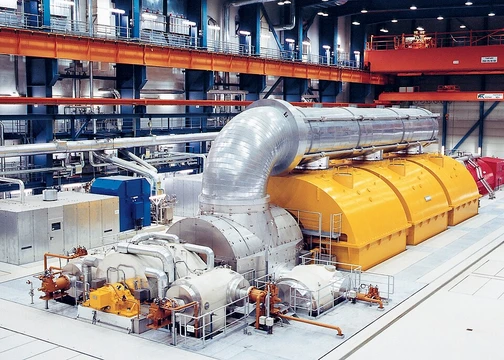
Combined-cycle power plant
Two heat engines share one heat source for higher efficiency.

Harald the Bard · CC BY-SA 4.0
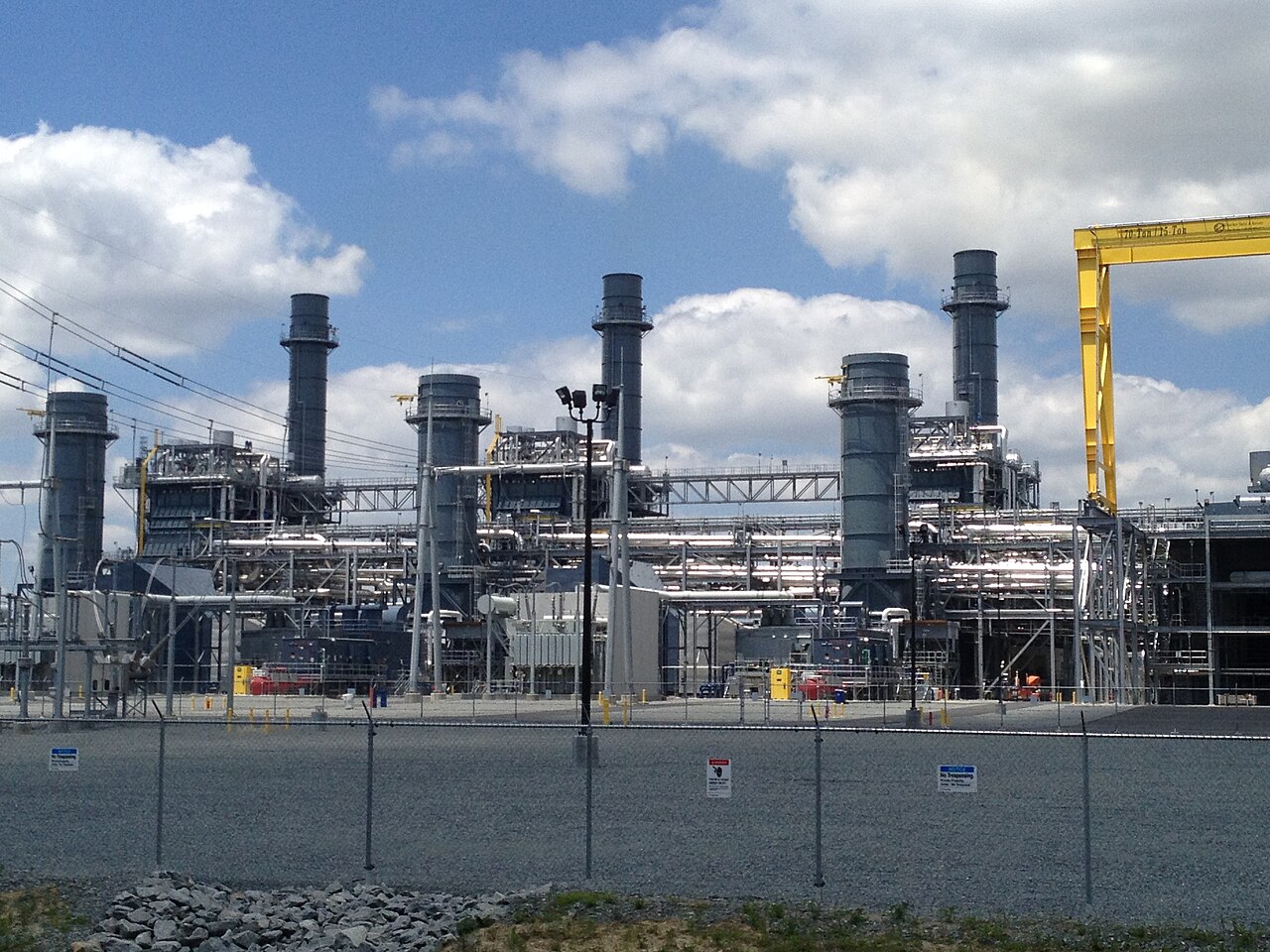
A combined-cycle power plant uses two or more heat engines together, all drawing from the same heat source to produce mechanical energy. On land, the most common type for electricity generation is the combined-cycle gas turbine (CCGT) plant, a form of gas-fired power plant. The same concept applies to marine propulsion, where it is called a combined gas and steam (COGAS) plant. By linking multiple thermodynamic cycles, overall efficiency rises, cutting fuel costs.
The basic idea is that after the first engine—usually a gas turbine—completes its cycle, its exhaust remains hot enough for a second engine to extract more energy. A heat exchanger typically transfers this heat so the two engines can use different working fluids. This approach can boost overall efficiency by about 50–60%, raising it from around 43% for a simple gas turbine alone to as much as 64% net with the full combined cycle.
Multiple-stage turbine or steam cycles are possible, but CCGT plants offer specific advantages for both power generation and marine use. The gas turbine cycle can start very quickly, providing immediate power. This eliminates the need for separate, expensive peaker plants or allows a ship to maneuver. Over time, the secondary steam cycle warms up, further improving fuel efficiency and delivering additional power.
In November 2013, the Fraunhofer Institute for Solar Energy Systems ISE estimated the levelised cost of energy for newly built power plants in Germany. For CCGT plants running on natural gas, costs ranged from 78 to €100 per MWh. Additionally, the capital cost of combined-cycle power is relatively low, around $1000 per kW, making it one of the cheapest types of generation to install.
Historically, successful combined cycles have used mercury vapour turbines, magnetohydrodynamic generators, and molten carbonate fuel cells, with steam plants serving as the low-temperature bottoming cycle. Very-low-temperature bottoming cycles have proven too costly because of the large equipment needed to handle big mass flows and small temperature differences. However, in cold climates, it is common to sell hot power-plant water for hot water and space heating, with vacuum-insulated piping allowing this utility to reach up to 90 km.
In stationary and marine power plants, a widely used combined cycle pairs a large gas turbine (operating on the Brayton cycle) with a steam power plant (operating on the Rankine cycle) that runs on the turbine's hot exhaust. This is the CCGT plant. These achieve a best-of-class real thermal efficiency of around 64% in base-load operation. By contrast, a single-cycle steam power plant is limited to efficiencies of 35 to 42%. Many new power plants use CCGTs. Stationary CCGTs burn natural gas or synthesis gas from coal, while ships burn fuel oil.
The thermodynamic cycle of a basic combined cycle has two parts. The first is the Joule, or Brayton, cycle—the gas turbine cycle—which is the topping cycle. It handles heat and work transfer in the high-temperature region. The second is the Rankine steam cycle, which operates at a lower temperature and is called the bottoming cycle. In the bottoming cycle, a waste-heat recovery boiler transfers heat energy from the high-temperature exhaust gas to water and steam. During the constant-pressure process, the gas turbine exhaust rejects heat, and the feed water, wet steam, and superheated steam absorb some of this heat.
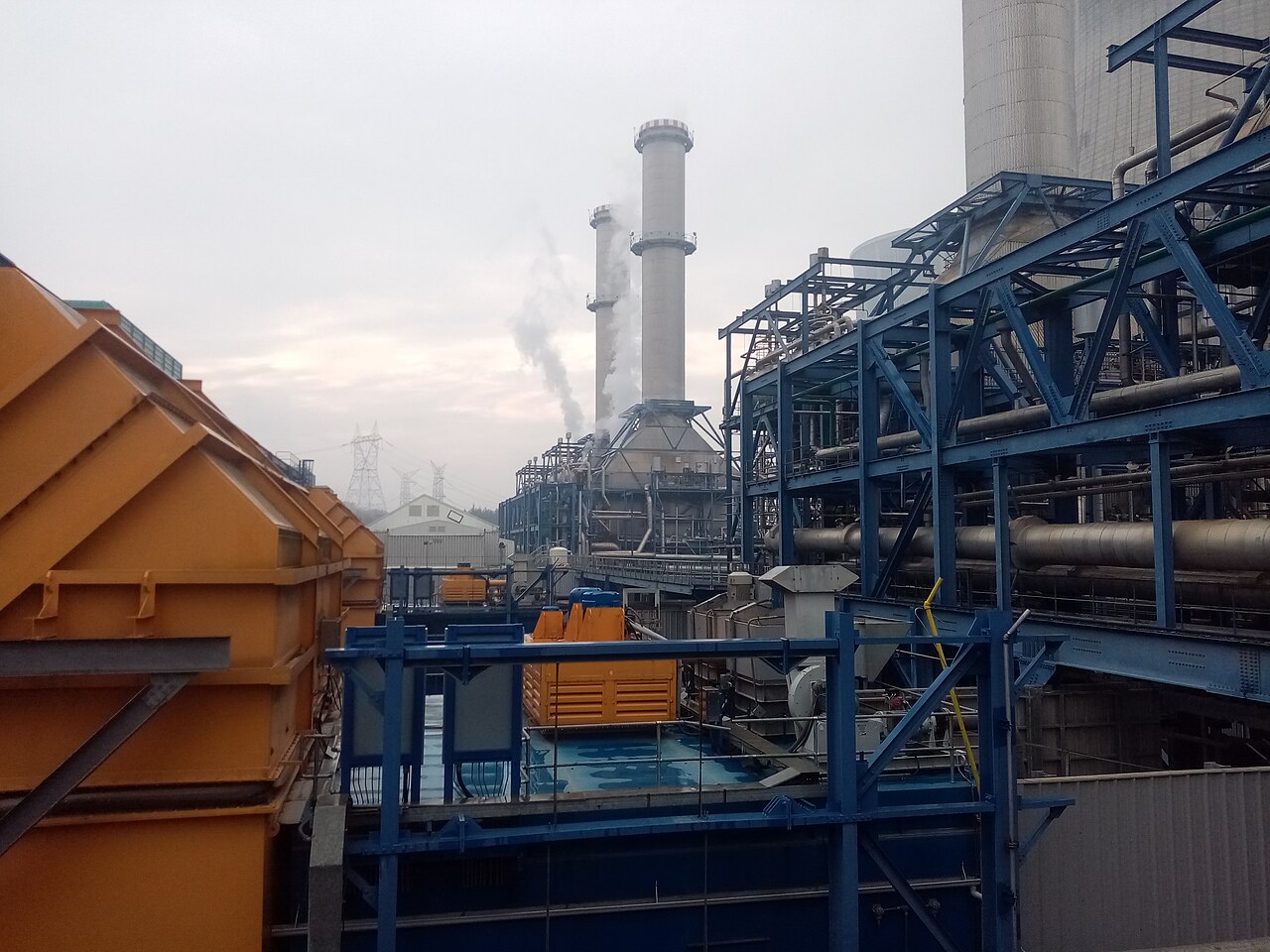
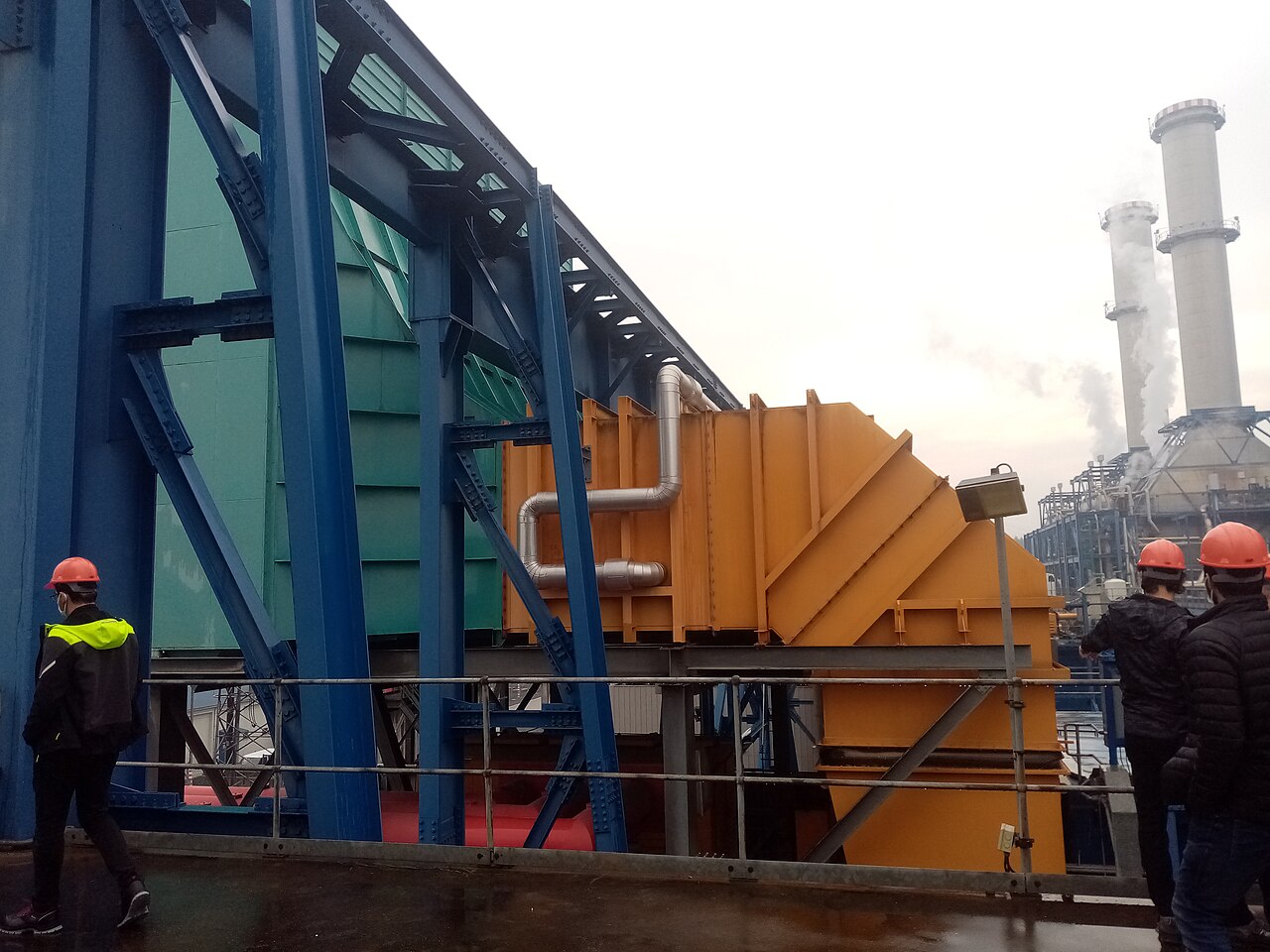
The steam power plant takes its input heat from the gas turbine's high-temperature exhaust. The steam generated drives a steam turbine. The waste-heat recovery boiler has three sections: an economiser, an evaporator, and a superheater.
The Cheng cycle is a simplified form of combined cycle that eliminates the steam turbine by injecting steam directly into the combustion turbine. Used since the mid-1970s, it recovers waste heat with less total complexity but loses the additional power and redundancy of a true combined-cycle system. It has no separate steam turbine or generator, so it cannot provide backup or supplementary power. It is named after American professor D. Y. Cheng, who patented the design in 1976.
The efficiency of a heat engine—the fraction of input heat converted to useful work—is limited by the temperature difference between the heat entering the engine and the exhaust heat leaving it. In a thermal power station, water is the working medium. High-pressure steam requires strong, bulky components, while high temperatures demand expensive alloys made from nickel or cobalt rather than inexpensive steel. These alloys limit practical steam temperatures to 655°C, and the lower temperature of a steam plant is fixed by the cooling water. With these limits, a steam plant has a fixed upper efficiency of 35–42%.
An open-circuit gas-turbine cycle has a compressor, a combustor, and a turbine. For gas turbines, the amount of metal that must withstand high temperatures and pressures is small, so lower quantities of expensive materials can be used. In this cycle, the input temperature to the turbine (the firing temperature) is relatively high—900 to 1,400°C—and the output temperature of the flue gas is also high, at 450 to 650°C. This is high enough to provide heat for a second cycle.
- field
- Power generation and marine propulsion
- known_for
- Improving thermal efficiency by 50–60% over simple-cycle plants
- typical_efficiency
- Up to 64% net in base-load operation
- common_fuels
- Natural gas, synthesis gas from coal, and fuel oil (for ships)
Lore & Background
The combined-cycle power plant integrates two distinct thermodynamic cycles: the high-temperature Brayton (gas turbine) cycle, which serves as the topping cycle, and the lower-temperature Rankine (steam turbine) cycle, which acts as the bottoming cycle. In a typical land-based configuration, known as a combined-cycle gas turbine (CCGT) plant, the gas turbine burns natural gas or synthesis gas from coal, while marine versions (called combined gas and steam, or COGAS, plants) burn fuel oil. The hot exhaust from the gas turbine is not wasted; instead, it passes through a waste-heat recovery boiler containing three sections—an economiser, an evaporator, and a superheater—which transfers heat to water and steam. This generated steam then drives a steam turbine, extracting additional work. The overall efficiency of such a plant can reach around 64% in base-load operation, a substantial improvement over the 35–42% efficiency of a single-cycle steam plant. The gas turbine can start very quickly, providing immediate power and eliminating the need for separate peaker plants, while the secondary steam cycle warms up over time to improve fuel efficiency. Historically, successful combined cycles have also employed mercury vapour turbines, magnetohydrodynamic generators, and molten carbonate fuel cells paired with steam bottoming cycles. Very-low-temperature bottoming cycles have proven uneconomical due to the large equipment required for small temperature differences, though in cold climates, hot water from the plant is often sold for district heating via vacuum-insulated piping up to 90 km away.
Reader's Guide
Combined-cycle power plants achieve substantially higher thermal efficiency than single-cycle plants, with net efficiencies up to 64% compared to 35–42% for a steam-only plant. The gas turbine can start very quickly, providing immediate power and avoiding the need for separate peaker plants. In cold climates, hot power-plant water can be sold for hot water and space heating via vacuum-insulated piping up to 90 km. The Cheng cycle, a simplified form, injects steam directly into the combustion turbine, eliminating the steam turbine but losing backup power capability. Historically, successful combined cycles have used mercury vapour turbines, magnetohydrodynamic generators, and molten carbonate fuel cells paired with steam bottoming cycles. Very-low-temperature bottoming cycles have been impractical due to the large equipment required for small temperature differences. The most common modern type is the combined-cycle gas turbine (CCGT) plant, which pairs a gas turbine operating on the Brayton cycle with a steam plant on the Rankine cycle. The gas turbine exhaust heats water in a waste-heat recovery boiler, which has three sections: economiser, evaporator, and superheater. This design allows fuel cost reductions by improving overall efficiency. CCGT plants are used for both stationary power generation and marine propulsion, where the marine version is called combined gas and steam (COGAS). The capital cost is relatively low, around $1000/kW, making it one of the cheapest generation types to install. In 2013, levelised costs for natural-gas-fired CCGT plants in Germany were estimated between 78 and €100 per MWh.
Did You Know?
- The overall efficiency of a combined-cycle plant can be increased by about 50–60% over a simple gas turbine alone.
- Vacuum-insulated piping can carry hot power-plant water for heating as far as 90 km.
Thermodynamic Principle and Efficiency Gains
The core idea behind a combined-cycle power plant is deceptively simple: rather than allowing the exhaust from a gas turbine to dissipate into the atmosphere, that still-hot working fluid is routed into a second heat engine that extracts additional mechanical work. In practice, a heat exchanger separates the two engines so each can operate with its own working fluid. The gas turbine executes the Brayton, or Joule, cycle as the high-temperature topping stage, while the steam turbine carries out the Rankine cycle as the lower-temperature bottoming stage. The waste-heat recovery boiler sits between them, its economiser, evaporator, and superheater sections capturing thermal energy that would otherwise be wasted. The payoff is substantial: a standalone gas turbine might reach roughly 43 percent thermal efficiency, but pairing it with the steam cycle lifts net efficiency to around 64 percent in base-load operation. That represents a 50 to 60 percent relative improvement in how much useful work is drawn from the same fuel input, directly cutting operating fuel costs.
Engineering Constraints and Material Science
Why not simply build a larger steam plant? The answer lies in material science. The lower boundary is pinned by cooling-water temperature, capping a single-cycle steam plant at 35 to 42 percent efficiency. A gas turbine, by contrast, needs far less metal to endure extreme conditions because hot gas flows through open passages rather than pressurised vessels. This staggered temperature architecture is what makes the combined approach so thermodynamically favourable.
Historical Cycles and Simplified Variants
Long before the modern gas-turbine-plus-steam configuration became dominant, engineers experimented with other topping cycles paired with steam bottoming cycles. Mercury vapour turbines, magnetohydrodynamic generators, and molten carbonate fuel cells all saw commercial use in combined arrangements. At the opposite extreme, very-low-temperature bottoming cycles proved impractical because the enormous mass flows and tiny temperature differentials demanded prohibitively large equipment. One pragmatic compromise in cold climates is selling the plant's warm cooling water for district heating, with vacuum-insulated piping extending the utility up to 90 kilometres. A notable simplified variant is the Cheng cycle, patented by American professor D. Y. It injects steam directly into the combustion turbine, recovering waste heat without a separate steam turbine or generator. The trade-off is the loss of supplementary power output and the redundancy that a true two-turbine system provides.
Economics and Operational Flexibility
From a cost perspective, combined-cycle gas turbine plants occupy a particularly attractive position in the generation mix. Operationally, the gas turbine cycle can spool up and deliver immediate electrical power, a feature that eliminates the need for separate, expensive peaker plants in a grid or allows a vessel to manoeuvre under its own propulsion. As the secondary steam cycle gradually warms over time, fuel efficiency climbs and additional power becomes available. This dual-mode flexibility is why the same thermodynamic principle underpins both stationary electricity generation and marine COGAS propulsion, with ships typically burning fuel oil while land-based units favour natural gas or coal-derived synthesis gas.
Gallery
Frequently Asked Questions
What exactly is a combined-cycle power plant?
It is a power-generation assembly in which two or more heat engines run in tandem, both drawing work from the same heat source. The best-known land-based form is the combined-cycle gas turbine (CCGT), while the marine variant is called COGAS (combined gas and steam).
Why does combining cycles boost efficiency so dramatically?
Stacking multiple thermodynamic cycles on one heat source lets the system capture energy a single engine would otherwise release as waste. This design pushes net efficiency to roughly 64 % in base-load service, a 50–60 % gain over simple-cycle plants.
What fuels can a combined-cycle unit burn?
Natural gas is the standard fuel for land-based CCGT units, though synthesis gas derived from coal is also viable. Marine COGAS installations typically run on fuel oil.
Is combined-cycle only for electricity generation?
No—the same tandem-cycle principle is applied to ship propulsion under the COGAS name. On land, however, it is overwhelmingly associated with gas-fired electricity production.
More in Power Generation 1-20
Spotted an error? Know more?
This is a living reference — every entry is fact-audited, and reader corrections feed straight into our audit queue. Suggest an edit · See this site's audit record