Biomass (energy)
Organic matter from recently living organisms used for bioenergy.

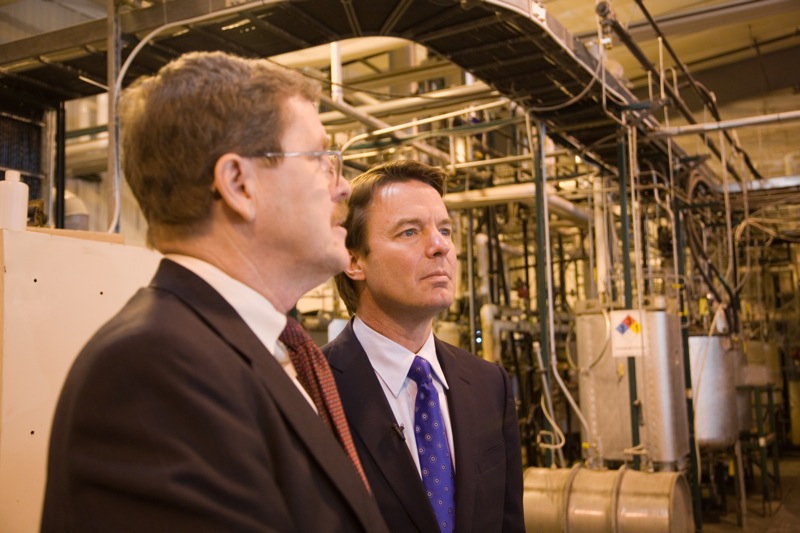
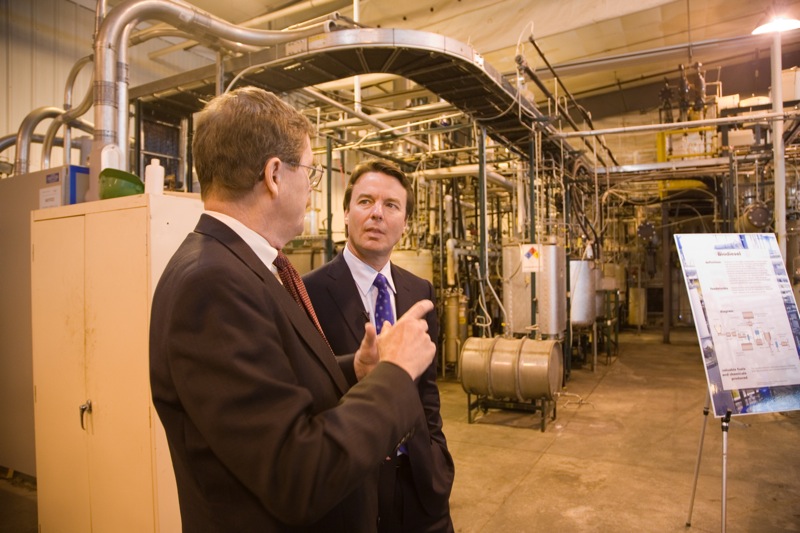
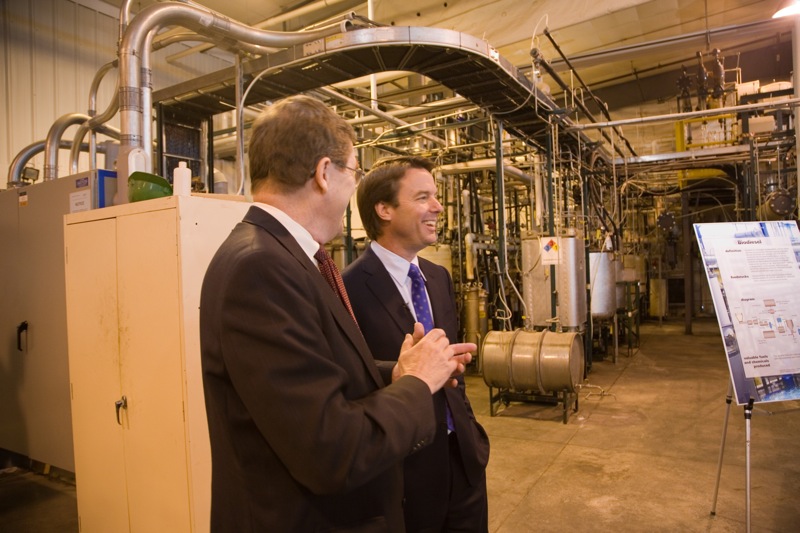
John Edwards · CC BY-SA 2.0
Biomass energy comes from the recently living (now dead) matter of organisms, used to generate power. Common sources include wood, wood residues, energy crops, agricultural leftovers like straw, and organic waste from homes and factories. Wood and its residues are the most widely used biomass fuel today. This material is considered a renewable energy source and could help fight climate change, but its environmental impact depends heavily on where the biomass comes from and how it’s grown.
Burning wood for energy releases carbon dioxide. This can be largely balanced if new trees are planted in a well-managed forest, since they absorb CO₂ as they grow. However, growing biomass crops can harm biodiversity, degrade soil, and compete with land for food production. It may also require water for irrigation and the use of fertilizers. Globally, there is enough cultivable land and water to produce biomass for both food and energy needs where renewable electricity isn’t cost-effective. Replacing fossil fuels with biomass and renewable electricity for the world’s peak population wouldn’t increase human-caused greenhouse gas emissions. A biomass economy could develop alongside a renewable energy economy.
In energy terms, biomass is matter from recently dead organisms used for bioenergy. Definitions vary—some include only plants, others plants and algae, or plants and animals—but most biomass for energy comes from plants. Bioenergy is a renewable energy type that could help mitigate climate change. The terms biomass and biofuel are sometimes used interchangeably, but it’s now more common to define biofuel as a liquid or gaseous fuel for transportation, making it a subset of biomass. The European Union’s Joint Research Centre defines solid biofuel as raw or processed organic matter of biological origin used for energy, like firewood, wood chips, and wood pellets.
A key drawback of biomass like sawdust is its much lower energy content compared to fossil fuels. Different biomass types serve different purposes. Primary sources for heat or electricity—but not transport—include wood, wood residues, wood pellets, agricultural residues, and organic waste. Biomass processed into transport fuels comes from corn, sugarcane, and soy. Biomass is categorized as either primary (harvested directly for energy) or secondary (residues and waste).
Primary biomass harvested directly for energy includes wood, some food crops, and all perennial energy crops. One-third of the world’s 4 billion hectares of forest is used for wood production or other commercial purposes, and forests supply 85% of all biomass used for energy globally. In the EU, forests provide 60%, with wood residues and waste being the largest source. Woody biomass is often used for traditional cooking and heating in developing countries, providing 25 EJ per year. This practice is highly polluting, and the World Health Organization estimates it causes 3.8 million deaths annually. The United Nations Sustainable Development Goal 7 aims to phase out traditional biomass cooking by 2030. Short-rotation coppices and forests, harvested directly for energy, provide 4 EJ and are considered sustainable. Their potential, along with perennial energy crops, could reach at least 25 EJ annually by 2050. Food crops for energy include sugar-producing crops (like sugarcane), starch-producing crops (like maize), and oil-producing crops (like rapeseed). Sugarcane is perennial; corn and rapeseed are annual. Sugar and starch crops make bioethanol; oil crops make biodiesel. The US is the largest bioethanol producer, and the EU is the largest biodiesel producer. Global production of bioethanol and biodiesel provides 2.2 and 1.5 EJ per year, respectively. Biofuel from food crops is called “first-generation” or “traditional” biofuel and has relatively low emission savings. The IPCC estimates that 0.32 to 1.4 billion hectares of marginal land are suitable for bioenergy worldwide.
Residues and waste are by-products from biological material harvested mainly for non-energy purposes. The most important are wood residues, agricultural residues, and municipal/industrial waste. Wood residues come from forestry operations or wood processing. If not collected for bioenergy, they would decay on the forest floor or in landfills, or be burned at roadside, releasing emissions.
- field
- Energy production
- known_for
- Renewable energy source from organic matter
- largest_source
- Wood and wood residues
- global_forest_area_used_for_wood
- One third of 4 billion hectares
- forest_share_of_global_biomass_energy
- 85%
- annual_deaths_from_cooking_pollution
- 3.8 million
Lore & Background
Residues and waste are by-products from biological material harvested mainly for non-energy purposes. Key types include wood residues, agricultural residues, and municipal/industrial waste. Wood residues come from forestry operations or wood processing; if not collected, they would decay or be burnt, producing emissions. Agricultural residues have a large untapped potential, with global production estimated at 78 EJ annually. The sustainable potential for wood waste is estimated at 2–10 EJ. Raw biomass can be upgraded via thermal, chemical, or biochemical conversion, such as torrefaction, pyrolysis, or gasification.
Reader's Guide
Biomass is significant as a renewable energy source that can supplement carbon-neutral energy needs where renewable electricity cannot be used economically. Its climate impact depends on feedstock sourcing and management: burning wood releases carbon dioxide, but emissions can be offset if trees are replaced in well-managed forests. However, farming biomass can reduce biodiversity, degrade soils, take land from food production, and consume water and fertilizers. The biomass economy has potential to emerge alongside the renewable energy economy. Global cultivable land and water resources are adequate to produce required biomass for food and supplementing carbon-neutral energy needs. The chief problem with biomass as an energy source is its far lower energy content relative to fossil fuels. The legacy of biomass lies in its dual role: a traditional, often polluting fuel for billions, and a modern, potentially sustainable component of a diversified energy portfolio.
Did You Know?
- Wood and wood residues are the largest biomass energy source today.
- The World Health Organization estimates that cooking-related pollution from biomass causes 3.8 million annual deaths.
- The IPCC estimates that between 0.32 and 1.4 billion hectares of marginal land are suitable for bioenergy worldwide.
- The energy content in the global production of agricultural residues has been estimated to 78 EJ annually.
Global Standing and Capacity Milestones
India ranks as the world's third-largest electricity consumer and holds the third-largest renewable energy installed capacity on the planet, trailing only China and the United States.
The Structural Displacement of Fossil Fuels
However, the operational hierarchy is undergoing a fundamental reordering. Solar, wind, and run-of-the-river hydro—cheaper and cleaner—have been reclassified as must-run base-load sources, while coal-fired plants are being shifted into load-following and peaking roles. Some daily peak demand is already being met by renewable peaking hydro capacity. Critically, solar and wind paired with four-hour battery storage have become cost-competitive with new coal and gas plants in India without any government subsidy. CREA further observes that managing the flexibility of renewable capacity presents a harder engineering challenge than simply ensuring adequate renewable supply.
Policy Architecture and Investment Commitments
India's renewable energy trajectory rests on institutional and fiscal frameworks stretching back more than four decades. Funding for the Reformed Linked Distribution Scheme rose fifteen percent to eighteen thousand crore rupees, with emphasis on smart metering and network modernization. Ernst and Young's Renewable Energy Country Attractiveness Index has evaluated India's installed capacity and investment climate, reflecting the country's growing appeal to clean-energy investors. These layered policy instruments collectively signal a sustained governmental commitment to scaling clean power infrastructure.
Generation Records and Emissions Context
India's renewable generation has set successive records in recent years. The generation mix spans hydro, solar, wind, biomass, bagasse, nuclear, and fossil fuels, with India ranking as the third-largest energy generator globally. The trajectory points toward continued displacement, but the scale of remaining emissions underscores the magnitude of the transition still ahead.
Gallery
Frequently Asked Questions
Who is Biomass (energy)?
Biomass (energy) is a renewable energy pathway that converts organic matter from recently living organisms into usable bioenergy. Its feedstock roster spans wood, agricultural residues, dedicated energy crops, and organic waste from households and industry.
What are Biomass (energy)'s powers and role?
Its core function is turning carbon-based organic material into heat, electricity, or transport fuel. Wood and wood residues are its dominant power source, supplying roughly 85 percent of all global biomass energy, drawn from a forest area that represents about one-third of the planet's four billion hectares of woodland.
How does Biomass (energy)'s story end?
Its long-term arc remains unresolved: while it is frequently cited as a climate-change mitigation tool, its net environmental benefit swings widely depending on where feedstocks are sourced and how they are cultivated. There is no single definitive ending—its legacy is still being written by policy and practice.
Why is Biomass (energy) important?
It offers a renewable route to energy production that can displace fossil fuels, making it a key player in the broader decarbonization narrative. Yet its human toll is severe, with an estimated 3.8 million deaths each year linked to indoor air pollution from biomass cooking.
What is Biomass (energy)'s biggest weakness?
Its climate impact is not fixed; it varies considerably based on feedstock origin, land-use change, and growing conditions. This context-dependence makes it difficult to assign a single, universal carbon footprint to the category.
More in Power Generation 1-20
Spotted an error? Know more?
This is a living reference — every entry is fact-audited, and reader corrections feed straight into our audit queue. Suggest an edit · See this site's audit record