Hydropower
Hydropower uses falling or fast-running water to produce electricity or power machines.

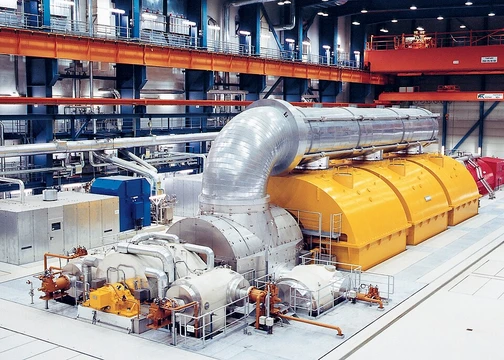
Hydropower, also called water power or water energy, harnesses falling or fast-moving water to generate electricity or operate machinery. It works by converting the gravitational potential or kinetic energy of a water source into usable power. This is a sustainable energy method, now mainly used for hydroelectric generation and as one part of pumped-storage hydroelectricity systems.
Compared to fossil fuels, hydropower is appealing because it produces no direct carbon dioxide or other air pollutants and offers a fairly steady power supply. However, it comes with economic, social, and environmental drawbacks, and it requires a sufficiently energetic water source, like a river or a high-altitude lake. Organizations such as the World Bank view it as a low-carbon option for economic development.
People have used hydropower from watermills since ancient times as a renewable energy source for irrigation and to run mechanical devices like gristmills, sawmills, textile mills, trip hammers, dock cranes, domestic lifts, and ore mills. A trompe, which creates compressed air from falling water, is sometimes used to power other machinery at a distance.
The available power from a hydropower resource depends on the hydraulic head and volumetric flow rate. Head is the energy per unit weight or mass of water: static head is proportional to the height the water falls, while dynamic head relates to the water's velocity. Each unit of water can do work equal to its weight multiplied by the head.
The power from falling water can be calculated using the flow rate, water density, fall height, and gravitational acceleration. The formula is: power output equals negative efficiency times mass flow rate times gravity times height difference, or negative efficiency times density times volumetric flow rate times gravity times height difference. For example, a turbine with 85% efficiency, a flow rate of 80 cubic meters per second, and a head of 145 meters produces about 97 megawatts. Hydroelectric station operators measure the total electrical energy produced against the theoretical potential energy of the water passing through the turbine to determine efficiency.
- field
- Energy production
- known_for
- Hydroelectric power generation and pumped-storage hydroelectricity
- type
- Sustainable energy method
- key_components
- Hydraulic head, volumetric flow rate, turbine efficiency
- applications
- Electricity generation, mechanical devices, compressed air production
Lore & Background
Since ancient times, hydropower from watermills has been used as a renewable energy source for irrigation and the operation of mechanical devices such as gristmills, sawmills, textile mills, trip hammers, dock cranes, domestic lifts, and ore mills. A trompe, which produces compressed air from falling water, is sometimes used to power other machinery at a distance. The power available from falling water can be calculated from the flow rate and density of water, the height of fall, and the local acceleration due to gravity, with efficiency accounted for by the turbine's performance. A hydropower resource is evaluated by its available power, which is a function of hydraulic head and volumetric flow rate. The static head is proportional to the height difference through which water falls, while the dynamic head relates to the water's velocity. Some systems, like water wheels, can draw power from a body of water's flow without changing its height, capturing kinetic energy. Over-shot water wheels can efficiently capture both potential and kinetic energy. Stream flow varies seasonally, so site development requires analysis of flow records, sometimes spanning decades, to assess reliable annual energy supply. Dams and reservoirs smooth these seasonal changes but have significant environmental impact. Dam design must account for the probable maximum flood, often including a spillway. Operators compare total electrical energy produced with the water's theoretical potential energy to calculate efficiency, using test codes such as ASME PTC 18 and IEC 60041. Field testing validates manufacturer efficiency guarantees, and detailed calculations account for head lost to friction, tailwater rise, station location, gravity variation, air temperature, barometric pressure, water density, and forebay and tailbay altitudes.
Reader's Guide
International institutions such as the World Bank view hydropower as a low-carbon means for economic development. However, it has economic, sociological, and environmental downsides, including catastrophic dam failures, negative impacts on river ecosystems, habitat loss, greenhouse gas emissions from underwater rotting vegetation, and methane production equivalent to almost a billion tonnes of CO2 per year. Dams and reservoirs can prevent animal migration, cool and de-oxygenate water, and cause loss of nutrients. People living near hydro plant sites may be displaced during construction or when reservoir banks become unstable. The development of a hydropower site requires analysis of flow records spanning decades to assess reliable annual energy supply, and dam design must account for the probable maximum flood.
Did You Know?
- Hydropower does not directly produce carbon dioxide or other atmospheric pollutants.
- A trompe, which produces compressed air from falling water, is sometimes used to power other machinery at a distance.
- Hydropower produces methane equivalent to almost a billion tonnes of CO2 greenhouse gas a year.
More in Power Generation 1-20
Spotted an error? Know more?
This is a living reference — every entry is fact-audited, and reader corrections feed straight into our audit queue. Suggest an edit · See this site's audit record