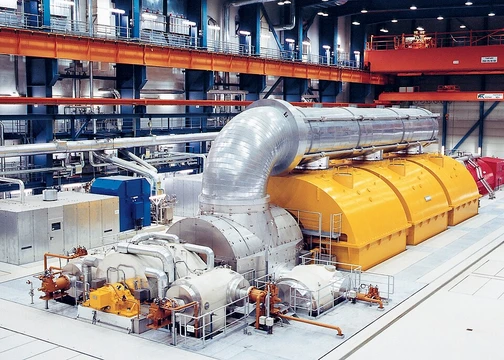
Geothermal power
Renewable electricity from Earth's internal heat.

Geothermal power is electricity produced by harnessing heat from within the Earth. The main technologies used are dry steam, flash steam, and binary cycle power stations. As of the most recent data, 26 countries generate geothermal electricity, while 70 use geothermal energy for heating. This form of energy is considered sustainable and renewable because the amount of heat extracted is tiny compared to the Earth's total heat content.
The Earth holds an enormous amount of internal heat—about 1×10¹⁹ terajoules. This heat flows to the surface naturally at a rate of 44.2 terawatts and is continuously replenished by radioactive decay at a rate of 30 terawatts. These rates are more than double the world's current primary energy consumption, but the heat is so diffuse (averaging about 0.1 watts per square meter) that most of it cannot be recovered. The crust acts as a thick insulator, so fluid conduits—such as magma, water, or steam—are needed to bring the heat to the surface.
Electricity generation requires high-temperature resources found deep underground. The heat must be carried upward by circulating fluid, whether through magma channels, hot springs, or hydrothermal systems. Because geothermal power does not depend on variable sources like wind or sunlight, its capacity factor can be very high—up to 96% has been demonstrated—though the global average in 2008 was 74.5%. The thermal efficiency of geothermal plants is low, typically 7 to 10%, because the fluids are at a lower temperature than steam from boilers. This low temperature limits the efficiency of heat engines by the laws of thermodynamics. Exhaust heat is wasted unless it can be used locally, for example in greenhouses, timber mills, or district heating. Unlike fossil fuel plants, the efficiency does not directly affect operational costs, but it does affect the plant's viability: to produce more energy than the pumps consume, high-temperature fields and specialized heat cycles are required.
Historically, the first geothermal power generator was tested by Prince Piero Ginori Conti in Larderello, Italy, on 4 July 1904, successfully lighting four light bulbs. The world's first commercial geothermal power station was built there in 1911. Experimental generators were built in Beppu, Japan, and at the Geysers in California during the 1920s, but Italy remained the only industrial producer of geothermal electricity until 1958. That year, New Zealand became the second major producer when its Wairakei station began operation, the first to use flash steam technology. Over the following 60 years, net fluid production at Wairakei exceeded 2.5 cubic kilometers, and subsidence at the Wairakei-Tauhara system has been a concern in environmental consent hearings for expanded development. In 1960, Pacific Gas and Electric started the first successful U.S. geothermal power station at the Geysers in California; its original turbine lasted over 30 years and produced 11 megawatts net.
A binary cycle power station using organic fluid was first demonstrated in 1967 in the Soviet Union and later introduced to the United States in 1981, following the 1970s energy crisis and regulatory changes. This technology can use resources as low as 81°C (178°F). In 2006, a binary cycle station at Chena Hot Springs, Alaska, began producing electricity from a record low fluid temperature of 57°C (135°F). Until recently, geothermal stations were built only where high-temperature resources were near the surface. Advances in binary cycle plants and drilling technology may enable enhanced geothermal systems over a much wider area. Demonstration projects are operating in Landau-Pfalz, Germany, and Soultz-sous-Forêts, France; an earlier project in Basel, Switzerland, was shut down after triggering earthquakes. Other demonstration projects are under construction in Australia, the United Kingdom, and the United States.
Globally, as of 2019, geothermal power capacity totaled 15.4 gigawatts, with 23.9% (3.68 GW) installed in the United States. International markets grew at an average annual rate of 5% over the three years to 2015, and capacity was expected to reach 14.5–17.6 GW by 2020. The Geothermal Energy Association estimates that only 6.9% of the total global potential has been tapped, while the IPCC reports potential in the range of 35 GW to 2 terawatts. Countries generating more than 15% of their electricity from geothermal sources include El Salvador, Kenya, the Philippines, Iceland, New Zealand, and Costa Rica. Indonesia has the world's largest estimated potential at 29 GW, but its installed capacity in 2017 was only 1.8 GW.
Greenhouse gas emissions from geothermal plants average 45 grams of carbon dioxide per kilowatt-hour, less than 5% of emissions from conventional coal-fired plants. Geothermal power has the potential to meet 3 to 5% of global energy demand by 2050, and with economic incentives, it could meet 10% by 2100.
- Global capacity (2019)
- 15.4 GW
- Largest national potential
- Indonesia, estimated 29 GW
- Countries with >15% geothermal electrici
- El Salvador, Kenya, Philippines, Iceland, New Zealand, Costa Rica
- Global average capacity factor (2008)
- 74.5%
- Greenhouse gas emissions
- 45 g CO2 per kWh (less than 5% of coal)
Lore & Background
Geothermal power is electrical power generated from geothermal energy, a sustainable and renewable source because the heat extracted is minuscule compared to the Earth’s vast internal heat content. Technologies include dry steam, flash steam, and binary cycle power stations. The first geothermal generator was tested in Italy in 1904, and the world’s first commercial station opened there in 1911. New Zealand became the second major producer in 1958 with the first flash steam station. The first successful U.S. station began operation in California in 1960. Binary cycle technology, which can use lower-temperature resources, was first demonstrated in the Soviet Union in 1967 and later introduced to the U.S. in 1981. Geothermal stations have historically been built where high-temperature resources are near the surface, but binary plants and improved drilling may expand the geographic range. Thermal efficiency is low, around 7 to 10%, because geothermal fluids are cooler than boiler steam, but capacity factors can reach up to 96%. Greenhouse gas emissions average 45 grams of CO₂ per kilowatt-hour, less than 5% of coal plants. As of 2019, global capacity was 15.4 GW, with the U.S. leading at 3.68 GW. Countries generating over 15% of their electricity from geothermal include El Salvador, Kenya, the Philippines, Iceland, New Zealand, and Costa Rica. Only 6.9% of total global potential has been tapped, with potential estimated between 35 GW and 2 TW.
Reader's Guide
Its significance lies in its sustainability and low greenhouse gas emissions—averaging 45 grams of CO2 per kWh, less than 5% of conventional coal-fired plants. The Geothermal Energy Association estimates only 6.9% of total global potential has been tapped, while IPCC reports potential in the range of 35 GW to 2 TW. Enhanced geothermal systems, demonstrated in Germany and France, may expand geographical range, though earlier efforts in Basel, Switzerland were shut down after triggering earthquakes. Thermal efficiency is low (7–10%) due to low fluid temperatures, but capacity factors can reach 96%.
More in Power Generation 1-20
Spotted an error? Know more?
This is a living reference — every entry is fact-audited, and reader corrections feed straight into our audit queue. Suggest an edit · See this site's audit record