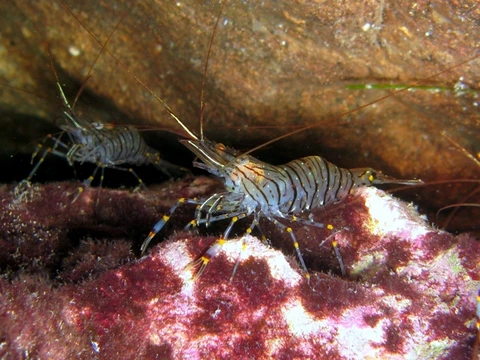
Metabetaeus lohena
A snapping shrimp native to Hawaii and Easter Island.

Metabetaeus lohena, called the alpha snapping shrimp or anchialine snapping shrimp, belongs to the alpheid family and is found only in Hawaii and Easter Island. This shrimp acts as a scavenger and also hunts small invertebrates living in anchialine pools. Adults reach up to 18 millimeters in length and range in color from pale pink to vivid red. They have large claws and a noticeable spot on the mandible. When a female becomes gravid, she produces a clutch of 20 to 29 eggs. The larvae lack a yolk sac, indicating a planktotrophic feeding stage where they feed on plankton. The species has a recorded lifespan of up to six years.
The shrimp is widespread across many Hawaiian islands and also occurs on Easter Island. Its habitat consists of anchialine pools—landlocked bodies of water with subterranean connections to the ocean. These pools typically have fresh or brackish water near the surface and saltier water at depth. Metabetaeus lohena lives naturally in salinities ranging from 2 to 36 parts per thousand and water temperatures around 20 °C (68 °F) or higher. In Hawaii, its range completely overlaps with that of its prey, the ʻōpaeʻula shrimp (Halocaridina rubra).
The shrimp appears in a Maui folktale called *The Legend of the Waiʻanapanapa Caves*. The story tells of a princess, Popoalaea, who fled her cruel husband, Chief Kakae, and hid inside a cave. Her servant fanned her with a feather kāhili, and the chief saw the reflection in the water, found her, and killed her. According to the tale, tiny red shrimp sometimes appear in the pool, turning the water red as a reminder of the princess’s blood.
Quick Facts
- Taxon
- Metabetaeus lohena
Facts from the source article.
Lore & Background
Metabetaeus lohena is an alpheid scavenger that also hunts small anchialine invertebrates. It grows to lengths of 18 mm and ranges in color from pale pink to vibrant red. The shrimp possess large claws and a clearly visible mandibular spot. Females, once gravid, produce a mass of 20 to 29 eggs. Larvae lack a yolk sack, suggesting a planktotrophic larval feeding phase. The species has been recorded to live for up to 6 years.
The species has a widespread distribution in Hawaii, where it is native to many islands, and is also found on Easter Island. They inhabit anchialine pools—landlocked bodies of water with underground connections to the ocean, often possessing fresh or brackish water near the surface but saline water at depth. Shrimp live naturally at salinities from 2 to 36 ppt and water temperatures around 20 °C (68 °F) or higher. Hawaiian populations coexist alongside their prey species ʻōpaeʻula shrimp (Halocaridina rubra), with their known range entirely overlapping.
In Maui folklore, the anchialine ecosystem shrimp are described in the legend of the Waiʻanapanapa Caves—the story of a princess murdered by her husband, a chief. A summary posted outside the caves states that a Hawaiian princess named Popoalaea fled from her cruel husband, chief Kakae, and hid inside a cave. Noticing the reflection of a feather kāhili in the water, Kakae discovered her and killed her. At certain times of the year, tiny red shrimp appear in the pool, turning the water red, said to be a reminder of the blood of the slain princess.
Reader's Guide
Metabetaeus lohena is significant as a native species of Hawaii and Easter Island, occupying a specialized ecological niche in anchialine pools. As an alpheid scavenger and predator, it plays a role in controlling populations of small invertebrates, including the ʻōpaeʻula shrimp (Halocaridina rubra), with which its range entirely overlaps. Its ability to tolerate a wide salinity range (2 to 36 ppt) and temperatures around 20 °C or higher allows it to thrive in the variable conditions of anchialine pools. The species' planktotrophic larval phase, indicated by the absence of a yolk sack, suggests a dependence on planktonic food sources during early development. Its legacy is intertwined with Hawaiian culture through the legend of the Waiʻanapanapa Caves, where the appearance of tiny red shrimp is interpreted as a reminder of the blood of the murdered princess Popoalaea. This folklore connection highlights the shrimp's role in local storytelling and the cultural significance of anchialine ecosystems.
Did You Know?
- Metabetaeus lohena grows to lengths of 18 mm and ranges from pale pink to vibrant red.
- Hawaiian populations coexist with their prey species ʻōpaeʻula shrimp (Halocaridina rubra).
Frequently Asked Questions
What is Metabetaeus lohena and what are its common names?
Metabetaeus lohena is a small snapping shrimp in the alpheid family, most often referred to as the alpha snapping shrimp or the anchialine snapping shrimp. It is a fully marine species restricted to just two island groups in the Pacific.
Where in the world can you actually see Metabetaeus lohena?
This shrimp is endemic to anchialine pools on Hawaii and Easter Island, meaning you will not find it anywhere else on the planet. Within those pools it scavenges detritus and picks off tiny invertebrates for a meal.
How large is Metabetaeus lohena and what does it look like?
Adults top out at roughly 18 millimeters in length and display a color palette that runs from soft pale pink all the way to a striking vibrant red. They are recognizable by their oversized claws and a distinct spot on the mandible.
How does Metabetaeus lohena reproduce and how many offspring does it produce?
A gravid female carries a clutch of 20 to 29 eggs, and once the larvae hatch they have no yolk sac to feed on, so they must capture plankton during a planktotrophic stage. This obligate plankton-feeding phase is a key part of their early development.
What is the maximum lifespan of Metabetaeus lohena?
Under natural conditions an individual can live up to about six years, which is relatively long for a shrimp of only 18 millimeters. That span gives the species enough time to complete multiple reproductive cycles in its anchialine-pool habitat.
More in Pistol and Cleaner Shrimp 1-15
Spotted an error? Know more?
Reader corrections go straight into our review queue. Suggest an edit · How this site is sourced